
Recent federal and state legislation has made it more difficult for CSU universities to maintain and teach a diverse student body. Sacramento State has worked to ensure that students see themselves represented in authors, researchers and educators.
Students who were at Sac State for the 2021-22 academic year were likely affected by AB 1460. This bill, passed by the California Legislature in 2020, started offering ethnic studies courses and will require all public university students to take an ethnic studies course to graduate by the 2029-30 school year, if funding is available.
California was the first state in the country to require ethnic studies as a graduation requirement at four-year public universities.
Gitego Shema graduated from Sac State in 2011, before the ethnics studies requirement, and now works at the Cooper-Woodson College Enhancement Program.
“I think it sounds pretty good. We have to take social sciences anyway and it gives more perspective on different communities in the school, city and state,” Shema said.
According to the University Catalog, Sac State students are expected to graduate with the skill of ethical reasoning and action and skills for lifelong learning anchored through active involvement with diverse communities.
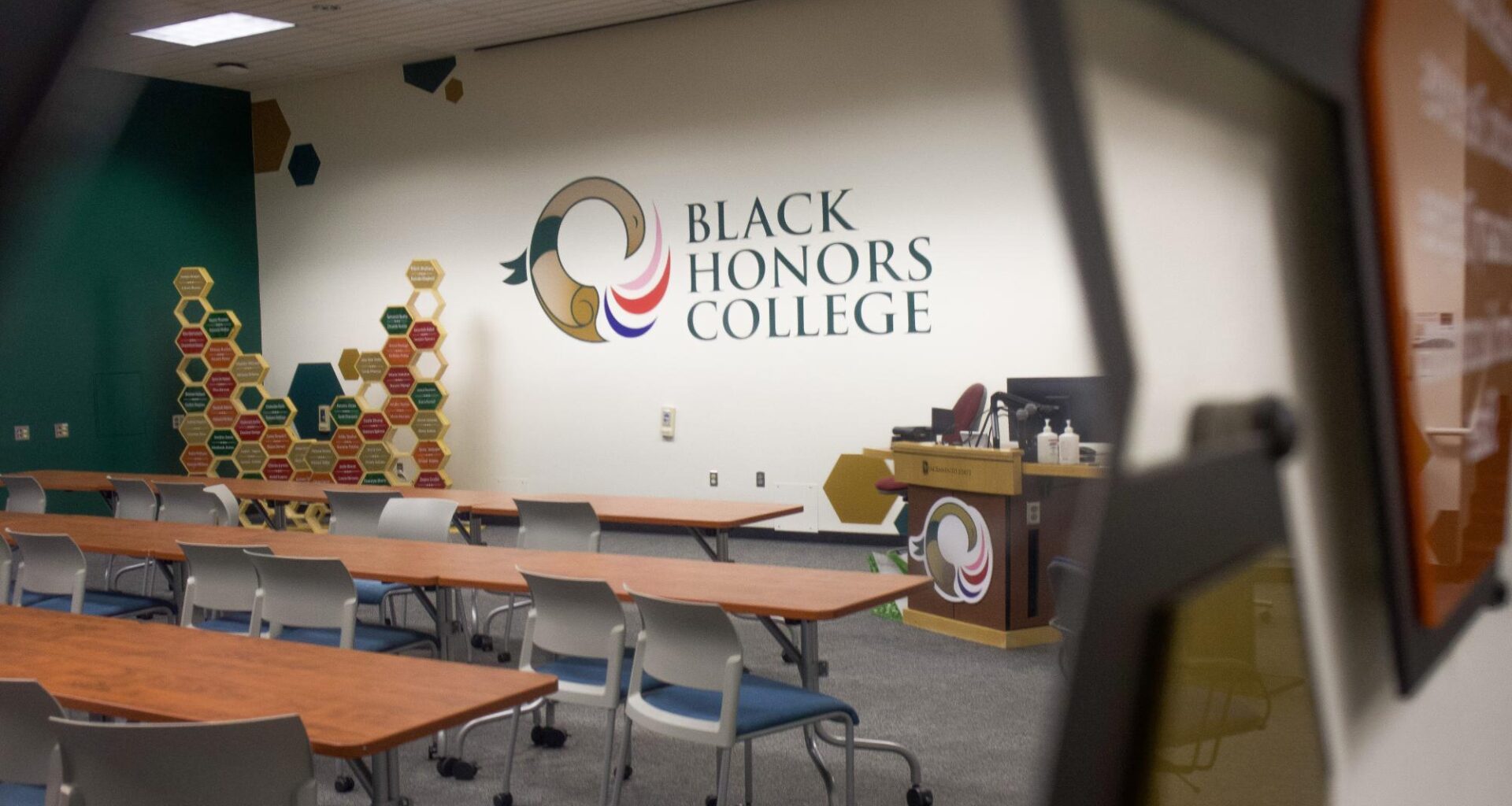
The Black Honors College states on its website that it was created to promote equal opportunity in higher education. Boatamo Ati Mosupyoe helped to create the BHC in 2024 and now serves as its dean of students and chief academic officer.
“The Black Honors College [is] a co-curricular college that will make sure that the recruitment, the retention and the graduation of Black students is on par with everybody else,” Mosupyoe said.
Mosupyoe was an ethnic studies professor before becoming dean of the BHC and said she aimed to encourage all students from all groups. She said that when she was a professor at Sac State, students came to her and said they didn’t feel represented in the curriculum.
“In my class you will feel represented. You will see Latine, Native American and African people who contributed,” Mosupyoe said. “That does not compromise the subject matter. In my opinion, it enriches it.”
Mosupyoe said that she collaborates with professors to develop courses that the BHC can use. Clarence George III is an ethnics studies professor and the director of the Cooper Woodson College Enhancement Program.
”Diversity is always featured in the curriculum,” George said, “It goes back to cultural relevancy and making sure that the students are being provided resources and opportunities to reflect, remember and build on the legacies of the discipline.”
George said that within the ethnic studies department the faculty work to update their courses as time goes on. He said that some of his fellow professors are developing new course materials and curriculum that reflect the ever-changing student experience.
Carolyn Gibbs is a design professor and the chair of the Faculty Senate, which informs university curriculum. Gibbs said that this evolving curriculum stems from how faculty searches are advertised at Sac State.
“There has been a growing emphasis on hiring faculty who are committed to bringing students’ lived experiences into the classroom and to incorporating narratives beyond traditionally colonialist perspectives,” Gibbs said.
Michael Nguyen is the vice president and chief diversity officer of Inclusive Excellence, a division of the Office of the President. IE provides guidance on expanding inclusivity to several departments at Sac State, including the Wileety Native American College and the Office for Cultural Transformation.
“A big part of our operation is being a consultant for individuals and organizations across the entire campus,” he said.
Sac State is also designated as a Hispanic Serving, Black Serving and Asian American & Native American Pacific Islander Serving Institution. The campus was given these designations by the federal government, or state legislature in the case of the BSI designation. They demonstrate institutional servingness, or an approach on widespread inclusion and active fostering of these communities. The university has received funding through grants to support these students.
IE also hosts two chancellor-level operations that run on all 22 campuses, including the California State University AANHPI Student Achievement Program and the Central Office for the Advancement of Black Student Success. Both programs create safe spaces on campus, provide funding for underserved communities and develop culturally relevant curriculum.
“In whatever we do, whether it comes to programs, events or anything else, I make sure to have the cultural insights and knowledge from all the different groups that we’re trying to support,” Nguyen said.
This can be done through listening sessions, surveys and advisory councils. Nguyen said that student input is important to uphold past knowledge and share commonalities.
“When history is left unattended,” Nguyen said, “It can quietly get edited. Black History Month is a deliberate refusal to forget.”
RELATED: Black History Month 2026
Programs like the BHC and Inclusive Excellence are important by how they carry on and highlight past contributions.
“Black history is not frozen in one moment – it’s living, it’s breathing, and it’s still shaping today,” Nguyen said. “This month offers us a space to examine ongoing disparities in education, health, wealth, and beyond.”
This Black History Month, keeping the university a welcoming place was important. Budget cuts have not deterred Sac State faculty members from working to ensure that students can see themselves in the curriculum.
“Opportunity is for everybody,” George said. “That’s what the CSU is really built on.”
The State Hornet reached out to Sac State for comment but did not receive a response by press time.