
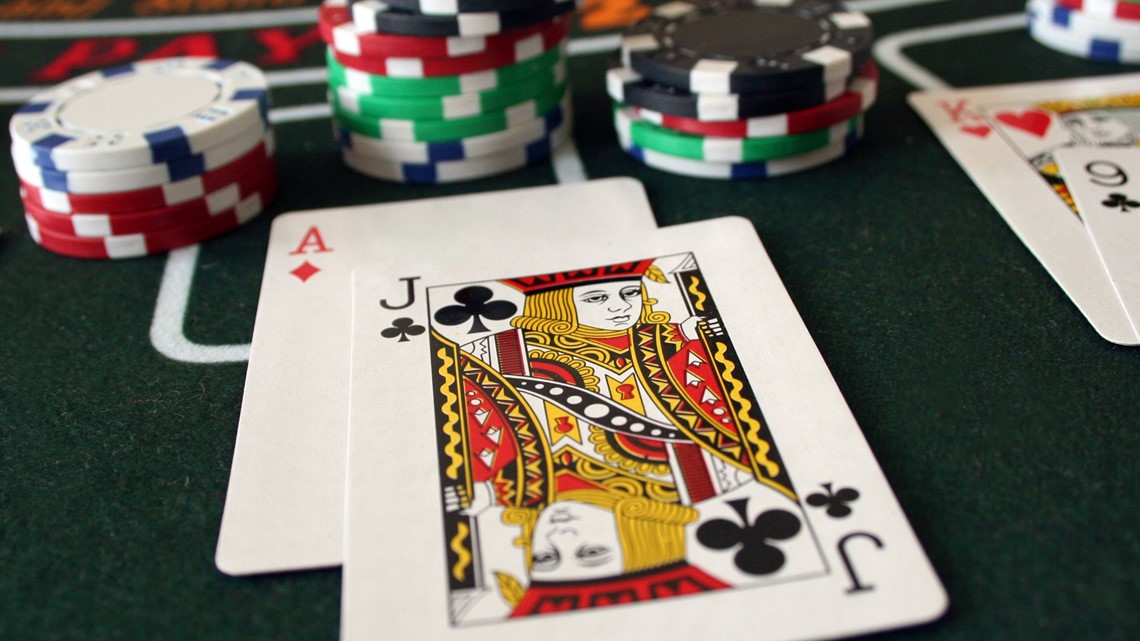
Cardrooms face financial uncertainty from new regulations banning Blackjack and restricting player-dealer roles, intensifying conflict with tribal casinos.
SACRAMENTO, Calif — New regulations have once again pitted cardrooms against California’s tribal casinos.
Blackjack, one of the most popular casino table games, can no longer be offered at California cardrooms. This month, the California Department of Justice approved new regulations that eliminate the game and tighten restrictions on cardrooms’ player-dealer positions.
“It’s really going to take a good portion of our daily revenue. And it’s, if it’s even something that we can keep our doors open once this does hit, right?” said Lo Saechao, floor manager for Stones Gambling Hall. “You’re talking about up to 50% of revenue.”
Cardrooms would be allowed to offer a form of Blackjack; however, it would only be allowed if players cannot bust by exceeding a point score, and hands cannot play to a target score of 21, according to the DOJ.
Along with the elimination of the popular form of Blackjack, the new regulations also crack down on cardrooms’ ability to use third-party services to act as the player-dealer in wagered games.
The DOJ enacted a rule requiring the player-dealer to rotate at least two other players, excluding the third-party player-dealer, every 40 minutes; if no player accepts the role, the game must shut down, and the table must be cleared.
The new rules were supported by California tribes like the Shingle Springs Band of Miwok Indians, which operates the Red Hawk Casino, who believe the new rules bring cardrooms into better compliance with state gaming laws.
The dispute between cardrooms and tribal casinos has been ongoing for decades, as California voters approved a proposition that granted the California tribes exclusive rights to offer slot machines and banked games.
“Cardrooms have been operating in what we consider to be a loophole, where they use an outside third-party provider to come in and play in their place as the house, and the card players go and play against this third-party player,” said Nick Bryson, general counsel for the Shingle Springs Band of Miwok Indians.
While the cardroom operator says this will disrupt the flow of the game and upset players who don’t typically like being in the role of player-dealer, tribal casinos say this helps eliminate a workaround by which rooms offer a banked game with a house.
“A rule is only as good as its enforcement. So, I don’t think previous attorneys general were enforcing the rules exactly. And so the cardrooms, they operated and they felt like they were operating appropriately, because no one was enforcing it against them. I’m pleased that Attorney General Bonta has made clear his rules, and I hope he’ll enforce them now,” Bryson said.
Saechao, who emigrated to California from Thailand with his parents in the mid-1980s, has spent his entire professional life in gaming and says there hasn’t been as big a shift in rules for the cardroom industry.
“These few changes could basically take everything that I’ve worked for. And then just threw it out the door, I mean, I’ve been in gaming since I was 22 years old. That’s all I know,” Saechao said.
The DOJ said it met with stakeholders during the rule-making process, held two public hearings on May 28 and 29 of last year, and reviewed over 1,600 public comments before adopting the regulations as proposed.
“Not a comma was changed. So, it’s disappointing both that they moved forward with them, and also that they didn’t make any changes when a lot of really thoughtful comments were provided,” said Heather Geruena, general counsel for Stones Gambling operating company Elevation Entertainment.
Guerena says the cardroom industry is exploring legal actions over the new regulations that take effect on April 1, but cardrooms across the state have until May 31 to submit plans to come into compliance.
WATCH MORE: Bill introduced to let California cities use eminent domain against PG&E