
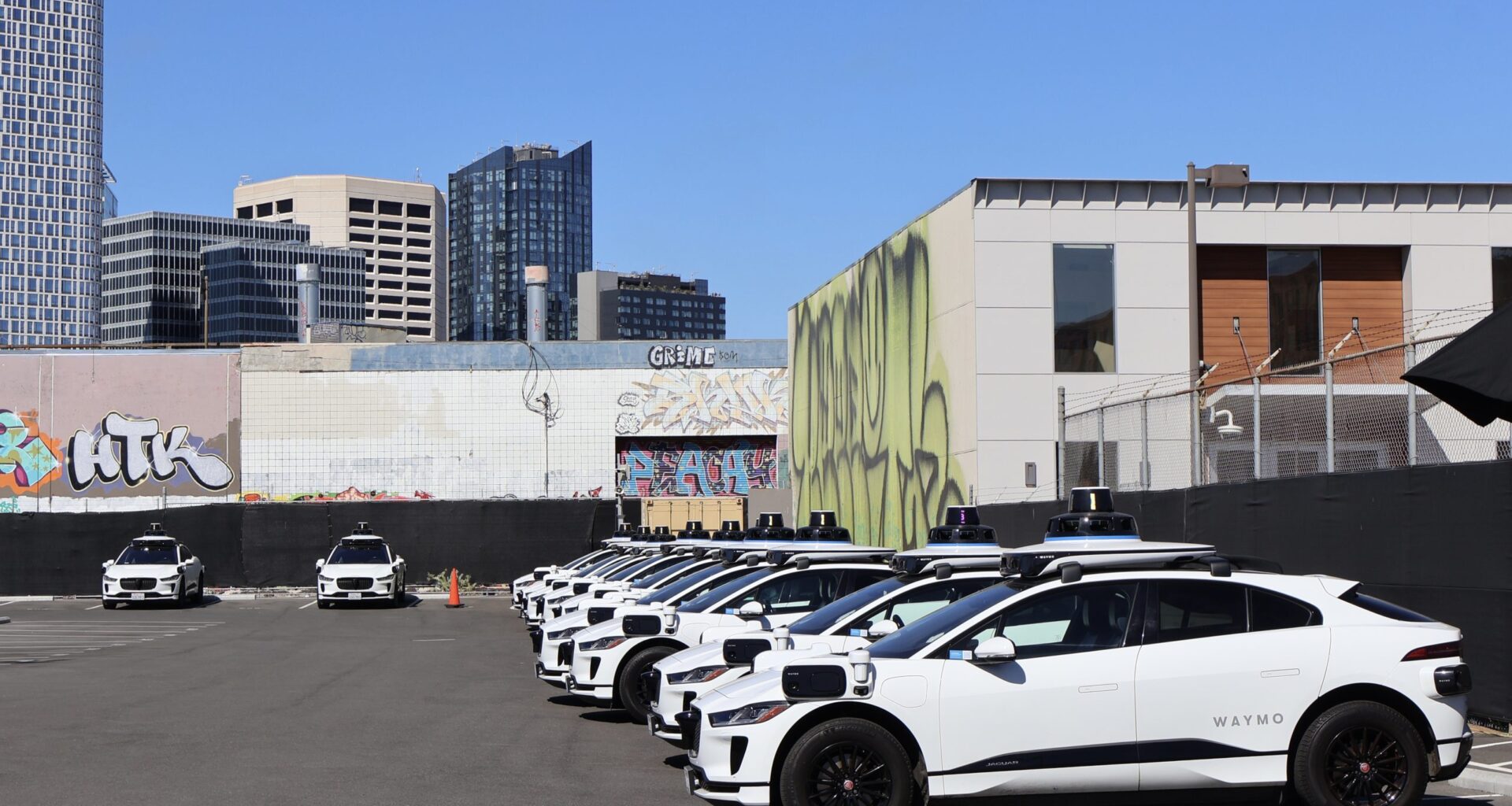
Waymo, the autonomous vehicle company, has significantly ramped up its lobbying efforts in San Francisco over the last few years: It registered over six times more lobbying contacts in 2025 compared to four years earlier, and is now responsible for about 1/6 of all such contacts with city officials.
In 2025, Waymo registered more lobbyist contacts than any other firm — 678 total, a 79 percent increase from the previous year. It seems to have paid off: Waymo recently won approval to shuttle passengers to the San Francisco International Airport, and last year was welcomed onto car-free Market Street by Mayor Daniel Lurie.
Registered lobbyists in San Francisco are required to disclose any “contact” — communications like emails or calls, or meetings — they have with public officials on policy. They’re required to file reports detailing those activities and how much they are paid.
While Waymo’s earlier lobbying focused on general mapping permits and operations, the company’s efforts in 2025 were almost wholly focused on SFO.
Out of 678 contacts in 2025, over 70 percent were either with airport officials, or with officials from other departments regarding the company’s mapping permit request for SFO. Over 410 contacts were reported with Mike Nakornkhet, the airport director. Dozens of contacts were also reported with San Francisco Municipal Transportation Agency Director Julie Kirschbaum, City Attorney David Chiu and Mayor Daniel Lurie.
Those efforts proved successful: In January, the city let the company start operating paid passenger service at the airport. So far, only select customers can get a ride to the airport but the company said it will expand service to all riders in the coming months.
Waymo also recorded 43 contacts regarding “Market Street operations.” Last year, the company’s vehicles were let onto the downtown corridor, part of which has been closed to cars — except taxis — since 2020.
A spokesperson for Waymo declined to provide a comment on its increased lobbying activity.
While Waymo recorded much more lobbying activity in 2025, the company actually spent less on lobbying in San Francisco: $90,605 in 2025 compared to $129,659 in 2024. Records show the company now relies more on in-house advisors rather than outside lobbyists, who typically charge more.
Waymo also spent less on lobbying in San Francisco than other entities, like the Teamsters Joint Council 7, one of the Bay Area’s largest unions; Recology, the waste management company; Prologis, a real estate investment company; and Uber, the ride-hailing app.
The Union Square Alliance was the No. 2 biggest lobbyist last year, when the commercial plaza suffered a continuing exodus of businesses. The group, which represents merchants, sought to improve the area and nearby streets.
The Teamsters were No. 3 and also increased their lobbying in the last couple of years, more than doubling their registered contacts between 2024 and 2025. The Teamsters, which represents thousands of workers including drivers, have focused their efforts on a range of policy issues, including the city’s autonomous vehicle policy.
“When Chevron starts lobbying to build a refinery in your neighborhood, it’s safe to assume the Sierra Club’s lobbying contacts are also going to increase,” said Mark Gleason, the Teamsters’ spokesperson.
In 2025, the union successfully lobbied against a DoorDash delivery drone testing site and against a Tesla automated vehicle charging station in Jackson Square.
Generally, over the years most lobbying activity in San Francisco was done on behalf of real estate and financial companies. Tech companies like Waymo make up a small portion of the total.