
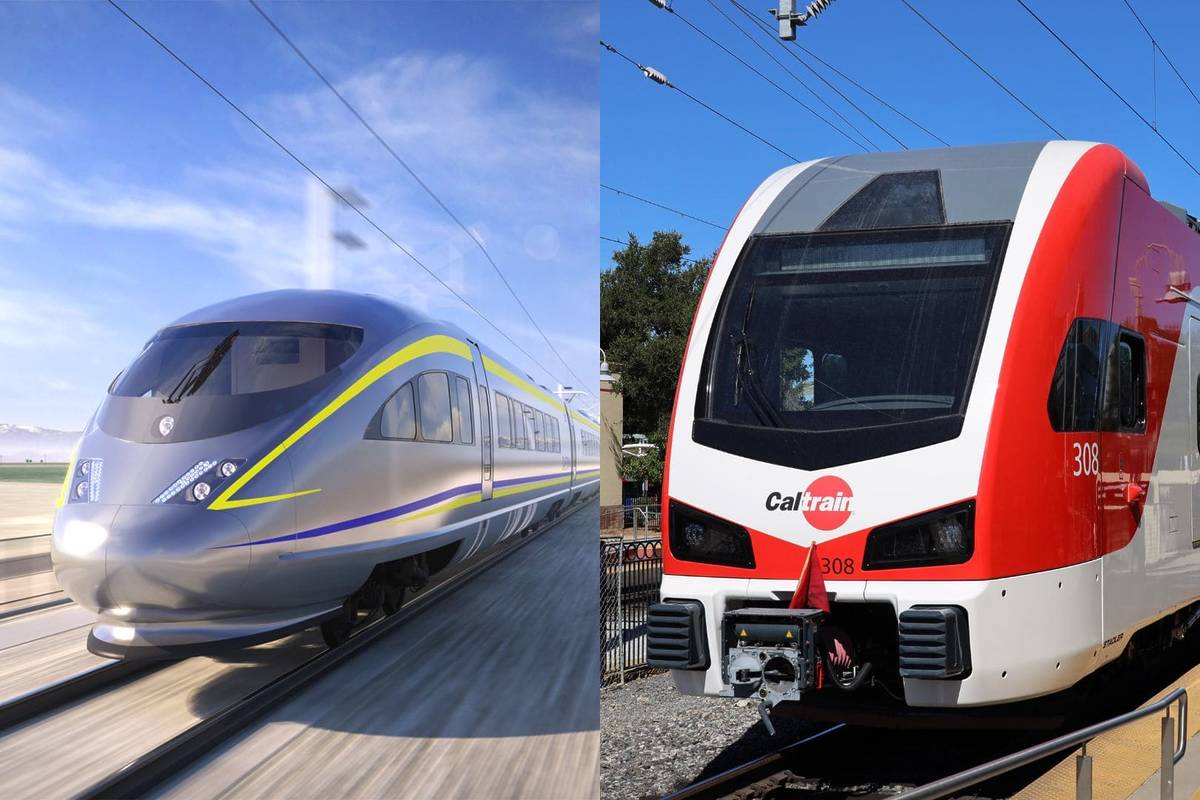
Courtesy of California High Speed Rail Authority / Caltrain

–
Senior Staff Writer
·
February 25, 2026
California High-Speed Rail (CAHSR) is finally laying track in the ground in 2026, marking an exciting turning point for the state’s long-planned 220-mph train network, which boasts a sub-3-hour journey between San Francisco and Los Angeles. While most heavy construction is happening along a 171-mile segment in the Central Valley, critical groundwork has been underway across California for over a decade.
One of the most significant milestones happened here in the Bay Area in 2024, when Caltrain completed the electrification of its corridor between San Francisco and San Jose. While this update was pivotal for improving commuter service, it’s also laid the foundation for a future “blended system” with California High-Speed Rail.
Here’s a closer look at how it will work…
A “blended system” for Caltrain and CAHSR
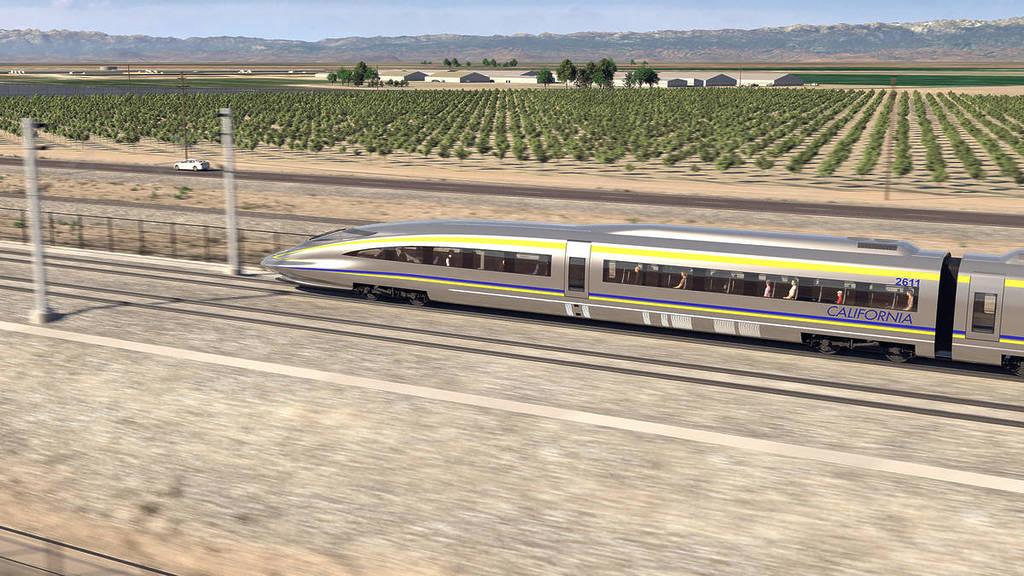 Courtesy of California High Speed Rail Authority.
The “blended system” is a strategic compromise involving Caltrain and California High-Speed Rail, which will allow high-speed trains to enter San Francisco without building a massive new transit corridor.
Through this system, CAHSR will share the existing Caltrain tracks already laid between San Jose and San Francisco, significantly reducing construction and environmental costs.
In 2024, Caltrain finished electrifying its tracks with a 25kV overhead wire system. The electrified cars are still reaching their previous top speed of 79mph; however, with more efficient systems to speed up and slow down, the journey from SF to San Jose is now 33% faster.
Eventually, both Caltrain and CAHSR trains will reach speeds of 110mph on this segment, trimming down that travel time even more. The project is considering the use of passing tracks at strategic points, so CAHSR doesn’t get “stuck” behind Caltrain as it makes more frequent stops.
Save the date for… 2035?
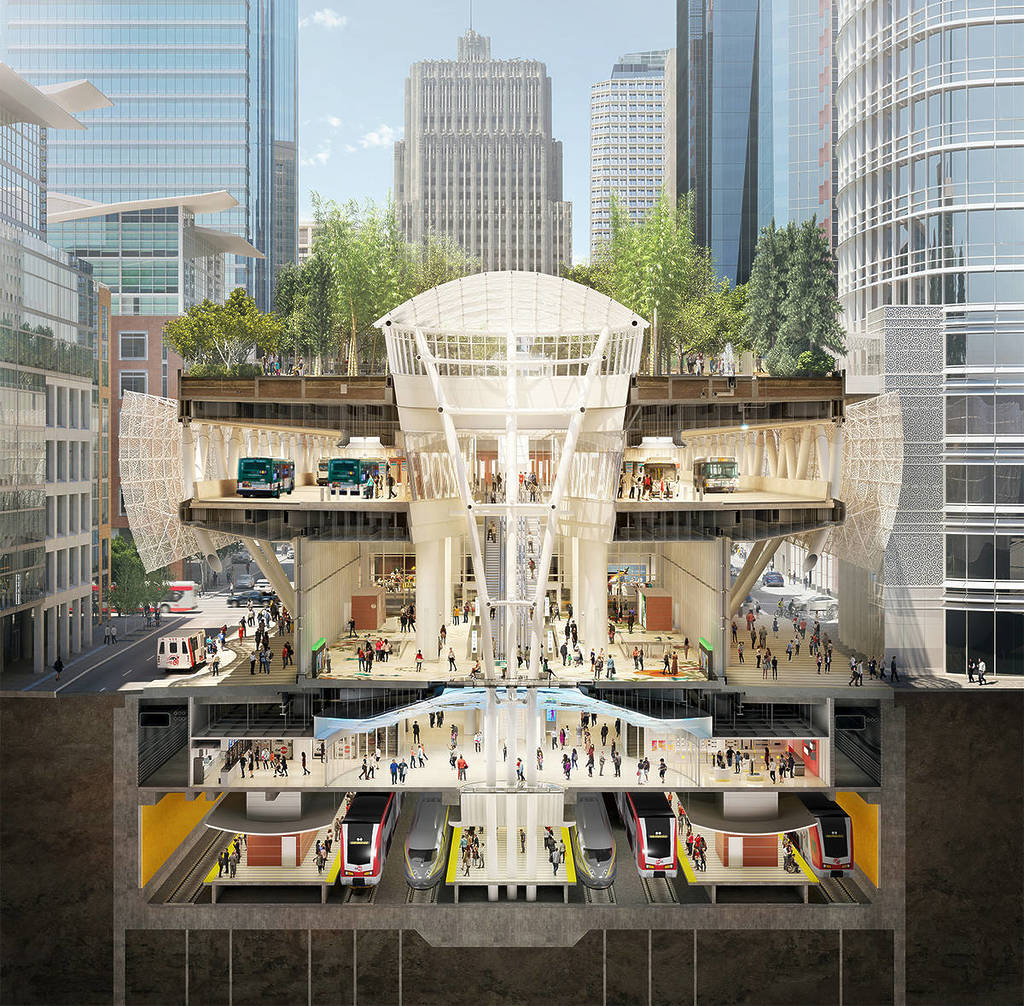 Transbay Joint Powers Authority
Both Caltrain and CAHSR are designed to terminate in the futuristic Salesforce Transit Center. This plan depends on a 1.3-mile tunneling project under San Francisco called The Portal, which will connect the existing Caltrain tracks at 4th & King to Salesforce Transit Center. It’s targeting a 2035 completion date.
In the meantime, the Central Valley’s Initial Operating Segment between Merced and Bakersfield is eyeing completion in 2032.
However, while environmental clearance has been approved for the full Phase 1 route from San Francisco to Los Angeles/Anaheim, there is still no official projected project completion date for the full SF-to-LA stretch.