
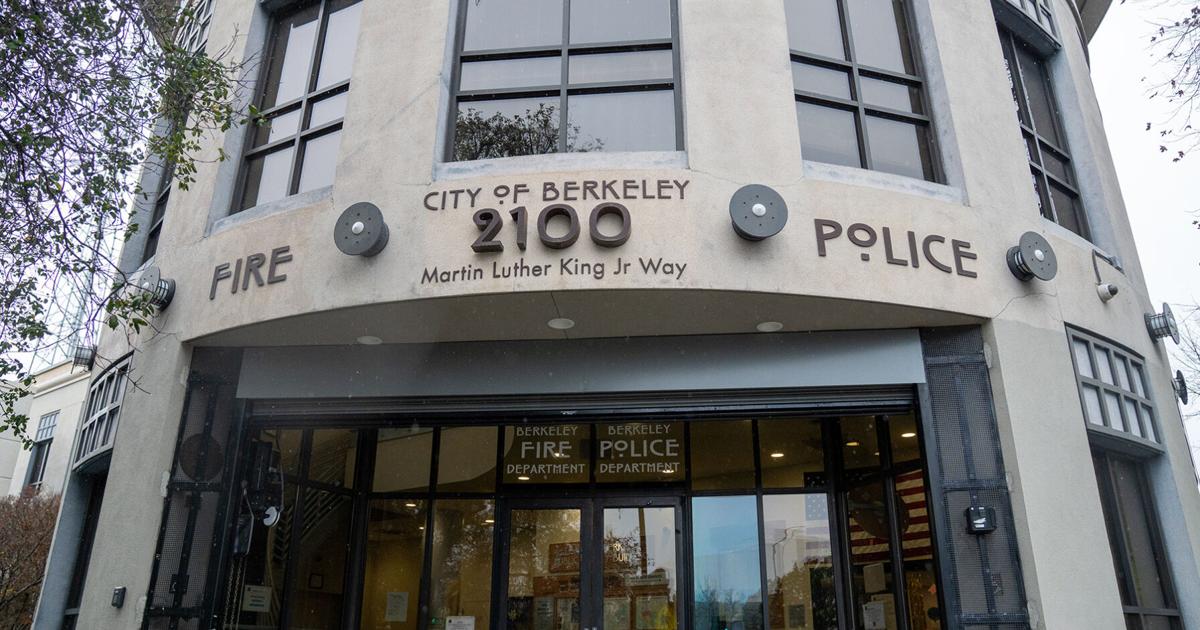
Berkeley’s Police Accountability Board was created in 2021 to foster transparency and civilian oversight over the Berkeley Police Department.
However, over the past 30 days, four years of work seem to have fallen apart. On Jan. 30, Kitty Calavita and Julie Leftwich, two of the organization’s longest-serving members, resigned, attributing their resignation to the belief that their “continued efforts to fulfill the mission of the PAB will be in vain.” Shortly afterwards, on Feb. 9, the Berkeley City Council fired the head of the organization, Hansel Aguilar.
The PAB has lost three key members during a time in which we have witnessed an increased impunity of the Berkeley Police Department under the City Council, with many council members expressing support for easing restrictions around the use of pepper spray and canine units during policing.
This shows us that the city of Berkeley’s philosophy of safety does not prioritize community protection but instead is preoccupied with instituting hierarchical systems of control.
But the City Council’s actions cannot be understood in a vacuum. It is reflective of a trend of national conservative action that exacerbates wealth and racial inequality. The harmful aims and methods thereof explain the immunity sought and attained by government employees. Under this framework, oversight will always deteriorate into a performance to temporarily appease a discontented public while maintaining the same abusive power structures that it is supposed to hold accountable.
And BPD must be held accountable.
A report released by the PAB in 2024 found that between 2021 and 2023, Black people were 10.3 times as likely and Latinos twice as likely to be arrested as white people. The California Police Records Access Project, built by UC Berkeley and Stanford University, published a database last year with thousands of cases of police misconduct in California. These entail excessive use of force and violence by police officers, including in Berkeley and the Bay Area.
These studies reveal the utter misalignment between the functioning of our policing and its supposed purpose of civilian protection. However, despite these findings, reform has been increasingly rejected.
Instead, policing is serving the ideological purposes of U.S. conservatism. This is compounded by organizations such as U.S. Immigration and Customs Enforcement, or ICE, and daily statements released from the Oval Office.
This is the result of national government workers, including Berkeley police, being permitted to ignore reformative recommendations.
In their resignation letter, Calavita and Leftwich described various cases in which the PAB was ignored, and police immunity was strengthened. For instance, in December 2025, the PAB received a last-minute draft from the BPD for a new use-of-force policy, which removed language regarding the sanctity of life and promise of transparency. The letter also described how city policy members ignored PAB recommendations against measures for heightened surveillance and the release of private data to ICE.
This bureaucratic aggression and disregard for regulation are the ultimate threat to the protection of public safety and civil rights, and have been heightened in Berkeley through a ripple effect of national shifts in policy and culture. From Trump v. United States, granting presidential immunity to unqualified ICE agents enacting illegal, unsolicited violence without repercussions, undemocratic measures are being taken to reinforce state power.
The decay of the PAB, combined with the excessive power of the BPD and the City Council’s facilitation thereof, is a glaring indicator that the national deterioration of public safety has infiltrated locally. In fact, BPD’s continued refusal to grant the PAB access to critical documents directly parallels ICE’s behavior in Minneapolis, as top investigative agencies exploring the fatal shooting of Renée Good by an ICE agent were also blocked from accessing essential materials.
Police and government organizations often deny transparency on the grounds that their positions require a privileged level of confidentiality and protection. However, a University of Maryland study shows that citizen oversight, when given political support and authority, leads to a reduction in racial disparities and violent crime in policing. This strain of governmental confidentiality is simply an attempt to streamline power abuse without pushback, while claiming to be motivated by public protection — a pretense to stifle change.
This facade has defined civilian oversight and policing on a national and local level: Public pressure is alleviated with hollow promises of accountability, which allows local police, ICE and the president to continue carrying out actions harming the communities they are meant to serve. Institutional policy is the driving force behind such ineffective governance. Berkeley City Council permits the city’s police department to withhold documents from the public, weaken their use of force policy and pardon misconduct, creating a structure that amplifies violence, much like the national government has increasingly done.
When organizations such as PAB are clearly ineffectual, it is a clear sign that we need institutional change. Policymakers need to redefine the structure and authority of the police department to dismantle its violent foundations. While a nationally rooted issue, police power must first be changed locally by voting in reform-minded politicians, pressuring the City Council through attendance at meetings, contacting officials and consistent protest.
Minor concessions push government-backed violence under the rug, silencing the public through empty excuses for authority. Instead of protecting the public, government employees prioritize self-serving aims. Civilian oversight, which has provided countless records of police misconduct through organisations such as the PAB and UC Berkeley’s Investigative Reporting Program, must be a jumping-off point for our persistent demand for policy change and long-term maintenance of transparency, accountability and genuine public safety. Policy and policing should be in the service and authority of the people, not ideology and inequity.