
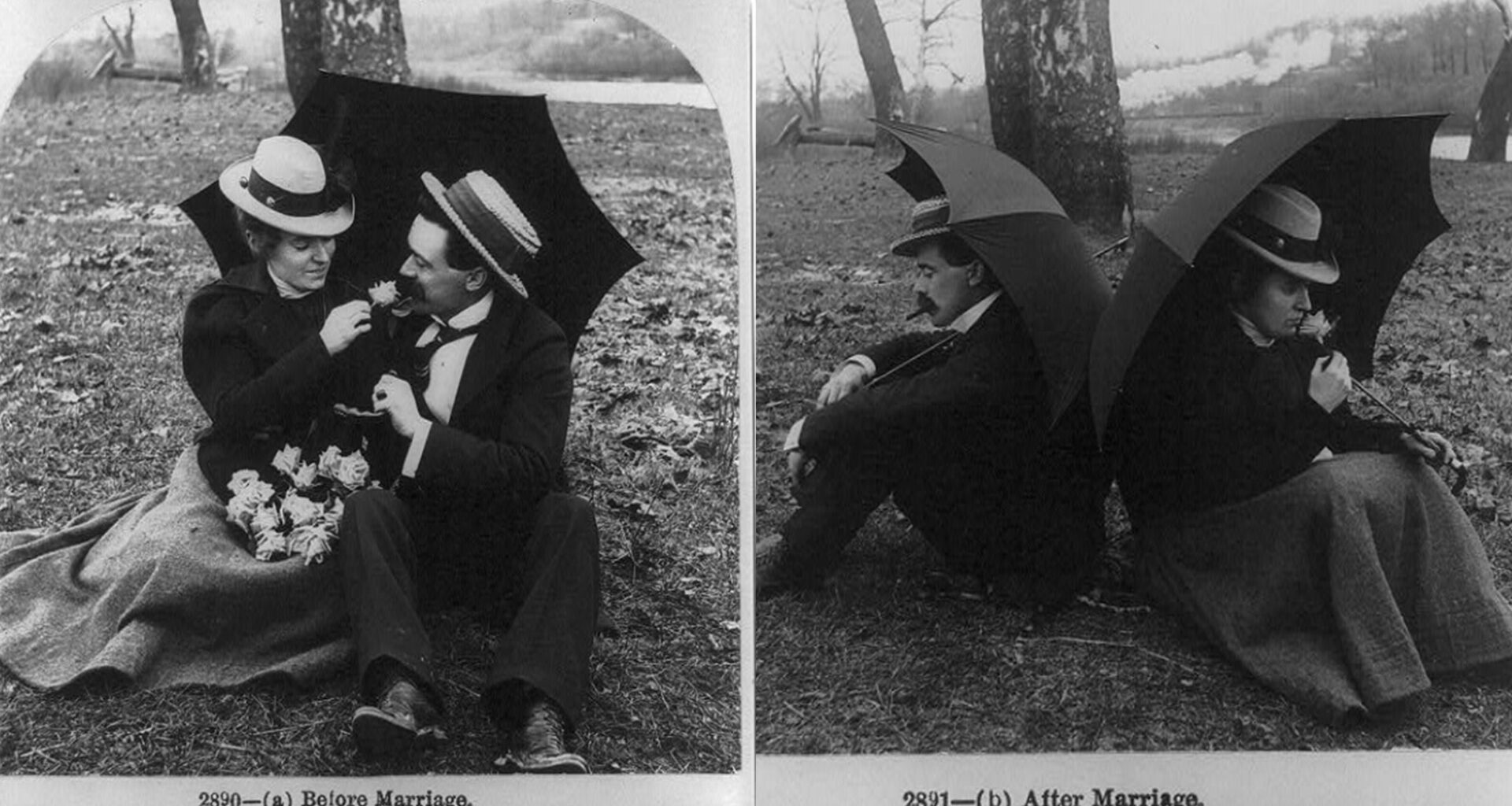
On the first day of his seminar on the history of love, sex and marriage in the United States, David Henkin introduces UC Berkeley students to a Frank Sinatra song: “Love and marriage / Go together like a horse and carriage / This I tell you, brother / You can’t have one without the other,” Sinatra croons.
Then Henkin asks his students to compare the 1955 tune with a very different text: Chief Justice Anthony Kennedy’s opinion in Obergefell v. Hodges, the 2015 Supreme Court case that legalized same-sex marriage. Even as Kennedy fundamentally changed what marriage in the U.S. could look like, he voiced a sentiment that might seem to echo the 70-year-old Sinatra song: “No union is more profound than marriage, for it embodies the highest ideals of love, fidelity, devotion, sacrifice, and family.”
For the rest of the semester, students dive into the questions that comparison invites: In an age of dating apps, increasing Gen Z loneliness, same-sex nuptials and Instagram-optimized weddings, how much do love and marriage today resemble past ideas about relationships?
The answer, of course, is complicated.