
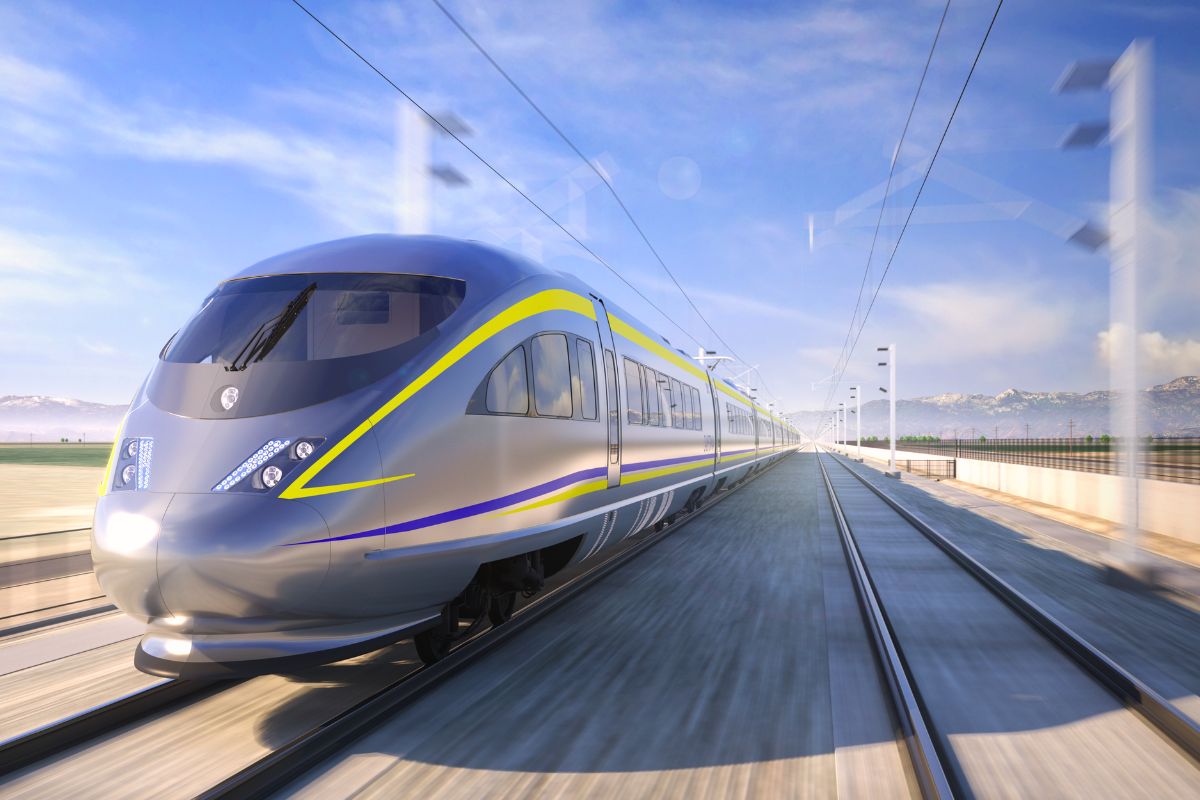
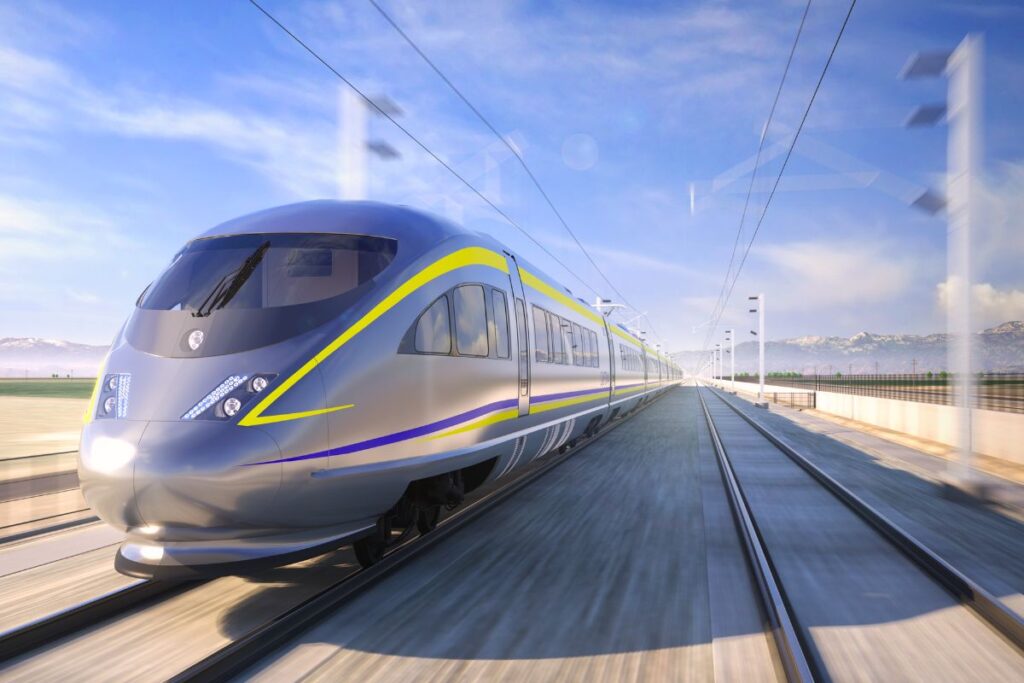
Courtesy of the California High-Speed Rail Authority.

–
Staff Writer
·
February 26, 2026
After years of waiting, California High Speed Rail (the state’s most ambitious transportation and infrastructure project) is finally moving forward. In fact, 2026 could be the year crews begin laying track. The first operational segment is expected to launch around 2032, according to Associated Press.
California High-Speed Rail progress
Phase 1 of California’s high-speed rail system will span about 520 miles and connect San Francisco to Anaheim through the Central Valley.
The first section to become operational will be the Initial Operating Segment (IOS), linking these five main stations: Merced, Madera, Fresno, Kings/Tulare, and Bakersfield. That portion is projected to open between 2032 and 2033, although all timelines remain estimates so far.
Phase 2 will extend the line north to Sacramento and south through the Inland Empire to San Diego, completing an approximately 800-mile network. No completion date has been set for Phase 2.
California’s bullet train route map
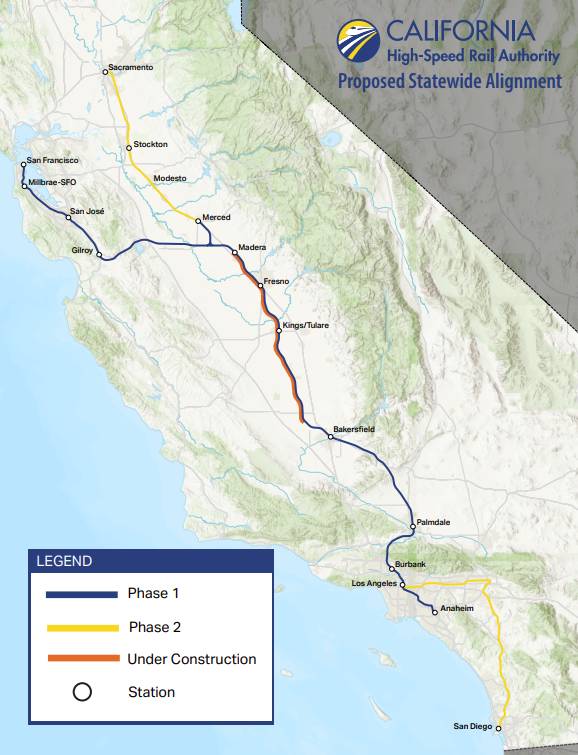 CAHSR Route Map | Courtesy of California High Speed Rail Authority.
The system is planned to begin in San Francisco, travel down the Peninsula, and then enter the Central Valley. Once the entire project is completed, trains will stop at these major hubs, according to the CHSR official website.
Northern California
San Francisco
Millbrae (with SFO access)
San José (Diridon Station)
Gilroy
Central Valley
Merced
Madera
Fresno
Kings/Tulare (near Hanford)
Bakersfield
Southern California
Palmdale
Burbank Hollywood Airport
Los Angeles (Union Station)
Anaheim (ARTIC)
The future of public transportation in California
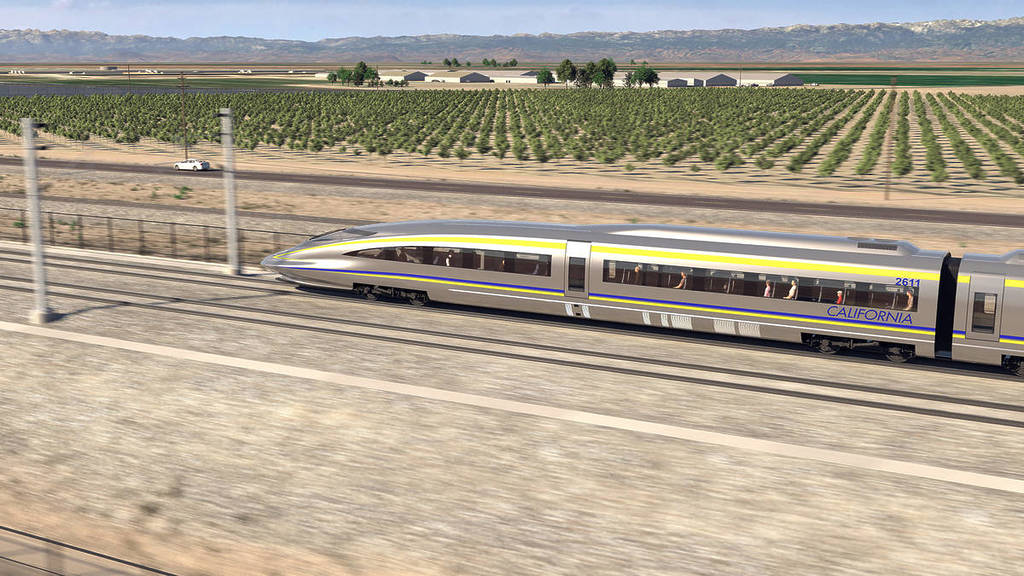 Courtesy of California High Speed Rail Authority
California’s long-term high-speed rail plan centers on building a fully electrified system linking Northern and Southern California, with trains capable of exceeding 200 mph. The project aims to reduce travel time between San Francisco and the Los Angeles metro area to roughly 2 hours and 40 minutes.
That would make rail competitive with flying, especially when factoring in airport security lines, boarding times, and traffic. Trains are expected to run on renewable electric power and connect with existing commuter rail and metro systems, creating a more unified, statewide transportation backbone.