
Courtesy Photo
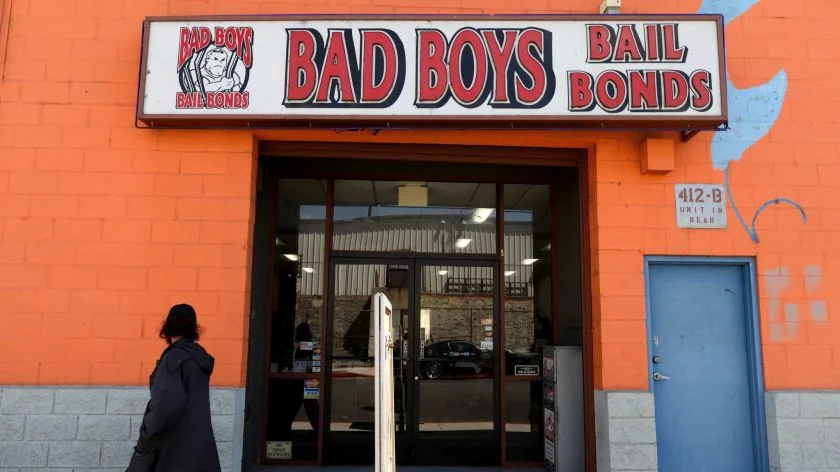
ALAMEDA, Calif. – The Supreme Court of California has finalized approval of a class-action settlement and entered judgment barring Bad Boys Bail Bonds from coercing low-income families to cosign bail agreements for their imprisoned loved ones, formally closing litigation that spanned from 2019 to 2022.
According to the Jan. 21, 2026, judgment entered in Alameda County Superior Court, the court approved the class-action settlement pursuant to California Rules of Court 3.769(h) and 3.771(a), entering judgment between BBBB Bonding Corp., doing business as Bad Boys Bail Bonds, and class representatives Kiara Caldwell and Donzahniya Pitre on behalf of the settling class.
The court retained jurisdiction “to enforce the terms of the judgment, which are set forth in the Final Approval Order.”
Initially, the settlement was effectuated by two autonomous cosigners represented by Lawyers’ Committee for Civil Rights of the San Francisco Bay Area and Keker, Van Nest & Peters LLP. Accordingly, the preliminary injunction was first issued in April 2021 and affirmed by the California Court of Appeal in December 2021.
The judgment defines the settling class as “all Cosigners who signed a Cosigner Contract during the Release Period, who made a payment on a Cosigner Contract during the Release Period, or from whom payment was sought or allegedly owed during the Release Period” .
The court specified that the “Release Period” spans from Oct. 30, 2015, through April 1, 2022 .
Under the judgment, a “Cosigner” is defined as “an individual other than the arrestee, who signs a Cosigner Contract during the Release Period,” provided the arrestee also signs the same or substantially similar contract and the cosigner is not married to the arrestee .
The judgment further defines a “Cosigner Contract” as an agreement in which an individual other than the arrestee “assumes responsibility or becomes obligated, in whole or in part, for payment of the arrestee’s bail bond premium (including, for example, any BBBB ‘Unpaid Premium Agreement’)” .
Excluded from the settling class are six individuals who submitted requests for exclusion, as provided in the Final Approval Order .
The court also ordered that the Settlement Administrator provide notice of the judgment to the class “in the same manner as notice of preliminary approval” , and set a compliance hearing for June 24, 2026, at 1:30 p.m. .
Since 2017, Bad Boys has violated consumer protection laws through the illicit collection of 18,000 signed consumer credit contracts, capitalizing on $38 million based solely on false promises of releasing their loved ones for a “small fee.”
The Supreme Court of California found that two statutory schemes underpin the initial appeal: consumer credit protections under the Civil Code, designed to “inform unsuspecting consumers of the consequences of cosigning consumer credit contracts for friends and family.”
The Bail Bond Regulatory Act is formed of two different contracts entirely: the first is a contract between a criminal defendant and a surety — the surety must post the bail bond in exchange for the defendant’s payment of a premium, or a promise to pay the full amount in the case of a nonappearance. In the second, the surety works as the defendant’s guarantor in court under risk of forfeiture of the bond.
The company held co-signers “under the bus,” as Bad Boys failed to legally require notice, leaving families liable for the full bail amount, causing psychological trauma to ensue as co-signers were harassed, threatened and sued for thousands of dollars.
Plaintiff Kiara Caldwell became a victim of this turmoil; Caldwell conducted an interview with Bad Boys and signed a $500 bail bond payment for her friend, who was being arrested and held at San Leandro Jail.
However, this consultation consisted only of a 15-minute, fast-paced and highly misleading intimidation of money, charging her for a “Upaid Premium Agreement” for $5,000. Bad Boys later sued the plaintiff and threatened her job and her family.
Bad Boys Bail Bonds has been permanently banned from collecting the illegally coerced money from the victims of the contracts signed before April 1, 2022.
A court-appointed monitor will review all payments made to the company and require that mandatory cosigner notices be provided to all participants, alongside heightened training regimens on the importance of following consumer protection laws.
“This settlement is a victory for low-income families and communities of color who have been exploited by the bail bond industry. For years, Bad Boys preyed on people at their most vulnerable, burying them in debt they never knowingly agreed to,” said Nisha Kashyap, program director for the Lawyers’ Committee for Civil Rights of the San Francisco Bay Area, in a statement.
The result of this lawsuit became a breather for the thousands of Californians who were lied to and harassed by the bail bond industry — acting as if they were above the law, finding loopholes to oppress the marginalized and low-income.
This class-action lawsuit against Bad Boys Bail Bonds was the first of its kind in California to challenge a commercial bail bond company for violating consumer protection laws — and surely not the last — “until the day comes that the industry is finally eliminated for good,” Niall Frizelli, attorney at Keker, Van Nest & Peters LLP, notes.
Follow the Vanguard on Social Media – X, Instagram and Facebook. Subscribe the Vanguard News letters. To make a tax-deductible donation, please visit davisvanguard.org/donate or give directly through ActBlue. Your support will ensure that the vital work of the Vanguard continues.
Categories: Breaking News Everyday Injustice Tags: Alameda County Superior Court bail bond industry Bail Reform California Supreme Court class-action lawsuit Consumer Protection