
The recipes that define the Bay Area’s food scene are often handed down through generations of immigrant families, across borders and over seas.
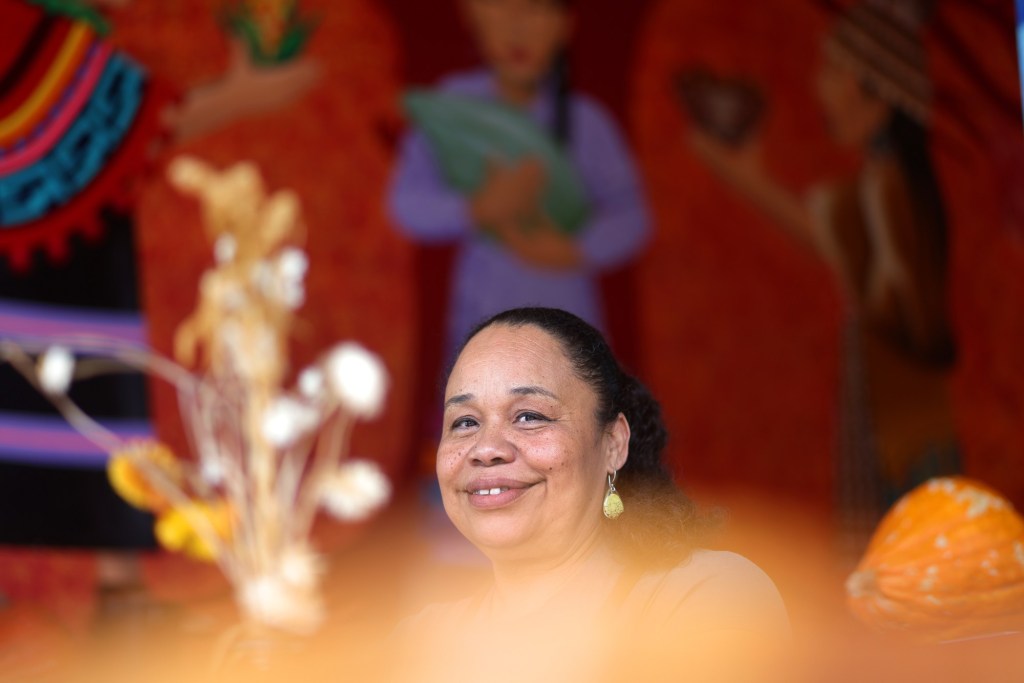
But Oakland Indigenous chef Crystal Wahpepah, owner of Wahpepah’s Kitchen, is finding her way back to the recipes that were lost as the North American continent was carved up by European colonizers. Her new book, “A Feather and a Fork: 125 Intertribal Recipes From an Indigenous Food Warrior,” which releases in March, weaves together Indigenous stories about Native American food, perspectives on today’s monocultural farming versus the Indigenous “Three Sisters” crops, and how prioritizing seasonal crops re-establishes a connection with the land.
With a foreword by fellow Oaklander and Native American author Tommy Orange, Wahpepah’s book invites readers to a pre-colonial cuisine of bison roast with chokeberry rub, acorn muffins and wild rice fritters stuffed with apples, cranberries, pepita crema and much more.
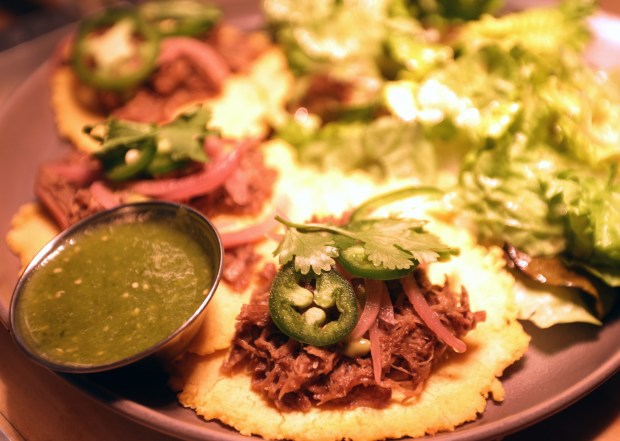 Bison tacos at Wahpepah’s Kitchen on Wednesday, February. 11, 2026, in Oakland, Calif. (Aric Crabb/Bay Area News Group)
Q: For those who are unfamiliar with Native American cuisine, what are its signature tastes?
A: When it comes to the flavors, we come from a game meat background — a lot of buffalo, a lot of deer, turkey, quail. And we come from a veggie background, veggies and grains. We eat in season, meaning what is available in the seasons. We’re in winter time, so of course we have a lot of soups and stews. When it comes to harvesting of the meat, that’s where you’re filling yourself up with a lot of meats. But then, as you go into spring and summer, you have a lot of the veggies, and the land has more to offer.
Q: You’ve said before that you learned how to cook with your grandmother in Oklahoma, but you’re also formally trained at Le Cordon Bleu. How were those learning environments different?
A: The teaching is totally different. A lot of just pretty much living on the land when it comes to my grandmother. Of course, my grandfather was a hunter, so he would bring home a lot when it comes to deer and how my family hunts to this day. It’s a lot of utilizing all parts of the animal and then also foraging — we called it “hunting berries.” Just seeing what’s available on the land. You’re pretty much exploring the landscape, and you’re out there picking berries or wild onions. With Cordon Bleu, everything is hand-chopped, diced, how you’re going to make your reductions, all those kinds of things. (My food) is pretty much having the two meet together.
Q: Considering your Kickapoo heritage, I’m curious how these recipes and traditions were passed down in your family.
A: I think a lot of it is just a habit that was passed along, something that we do to this day. We have the green corn, for instance. That’s where we harvest and dry it out and save it for the winter. We do a lot of harvesting. We do a lot of planting and harvesting. It’s something that has always taken place for thousands of years. It still does. But some of it got away, especially if you’ve relocated on a different land. Since my tribe comes from the Illinois area – we got federally recognized in Oklahoma – you can think about the seeds that were lost along the way, and the different squashes and beans.
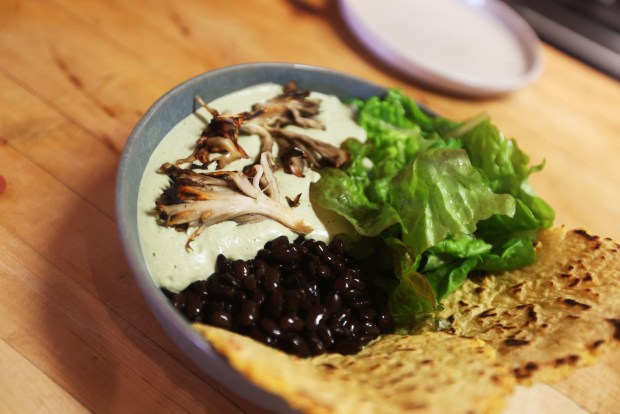 Wild native mushroom pumpkin seed mole at Wahpepah’s Kitchen on Wednesday, February. 11, 2026, in Oakland, Calif. (Aric Crabb/Bay Area News Group)
Q: Many families have a special dish; for instance, my mother makes a special green chile chicken casserole on Christmas and Easter. What do you make for your family when you get together on those special occasions?
A: Definitely the deer and dried corn. That’s something we have for birthdays or for holidays. And that’s why I really look forward to going to Oklahoma, because I know I’m gonna have that! It’s a delicacy to me. It’s not every day you get to have corn – you see all the gentrified corn in stores and all that, but nothing like that really fresh, fresh corn.
Q: How do you balance the traditional elements of Native American cuisine with the desire to innovate within a culinary sphere?
A: I think that’s fun. That’s what keeps me going, is creating Indigenous dishes where I really try to highlight each ingredient on each dish, but then also doing what people are really familiar with. So that’s why I talk about this as what’s going on in Native cuisine today. We’re pretty much putting our own spin, our own touch. Like, we have a canyon oak acorn crêpe, right? Well, traditionally, acorn is almost a mush or a porridge, I guess you would say, but I transform it into a crêpe.
Q: Do you believe that cooking Native American in 2026 is connected to cultural and political movements like Land Back?
A: It definitely is, when it comes to food sovereignty and food justice. It flows into that, but with Native foods, it’s really about reclaiming and keeping what is ours. A lot has been just gentrified out. We’ll talk about the corn, for instance. Just our foods alone have become really commodified. But then I talk about it more as having a human right to have our own traditional foods. I really want people, when they come to Wahpepah’s Kitchen, to know that these foods are sourced from Native farmers, Native food producers, that have been keeping this traditional for thousands of years.
Q: Lately, I’ve seen people use the phrase “we’re losing recipes” to describe the replacement of home-cooked meals with DoorDash, and, more broadly, the loss of passed-down culinary traditions. In the context of Native American cuisine, what does that phrase mean to you?
A: When it comes to recipes, they’ve been lost because a lot of relocation has happened. But then also, we’re finding them again. It’s similar to Tommy’s book (Wandering Stars), where you can get lost when it comes to identity and culture. But when you start back at home, you’ll find your way back.
Profile
Name: Crystal Wahepah
Position: Owner/Chef of Wahpepah’s Kitchen and author
Education: Le Cordon Bleu (waiting on HS)
Residence: Oakland
Education: Dewey High School, Le Cordon Bleu’s San Francisco Campus
Family: 3 daughters
Five facts
Crystal Wahpepah is an enrolled member of the Kickapoo of Oklahoma. The Kickapoo’s original lands are located in present-day Illinois. The tribe now exists in federally recognized bands in Oklahoma, Kansas, Texas and the Mexican state of Coahuila.
In 2016, Wahpepah was the first Native American chef to compete in the Food Network show “Chopped.” She later appeared on “Beat Bobby Flay.”
In 2022, she was a finalist for the prestigious James Beard Award in the Emerging Chef category.
Wahpepah is an inductee of the Native American Almanac for being one of the first Native American women to own a catering business.
All of the ingredients for Wahpepah’s Kitchen are sourced from Native American farms across the western United States.