
Authoritarian systems fear inspectors.
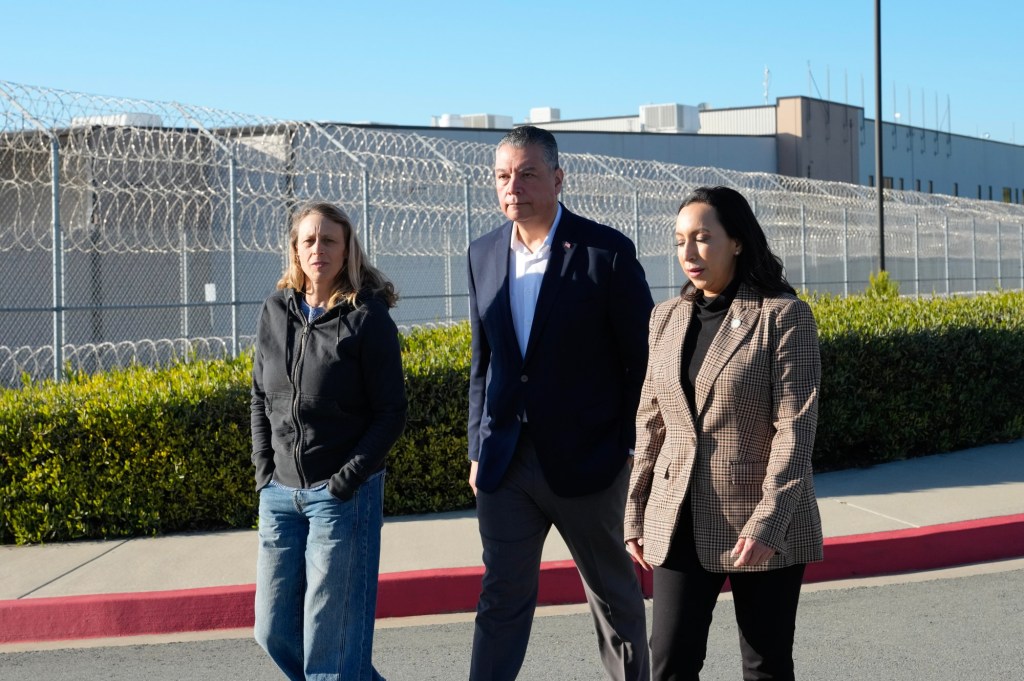
In the United States, Congress wrote the opposite principle into federal law. Members of Congress are explicitly authorized to conduct unannounced inspections of immigration detention facilities. Not guided tours. Not scheduled walkthroughs. Real-time oversight. Without prior notice.
That authority exists for one reason: Sunlight prevents abuse.
Yet members of Congress are being denied entry, delayed at gates or subjected to manufactured procedural barriers when attempting to inspect ICE detention centers. Courts have already rejected agency efforts to impose artificial notice requirements. Still, obstruction continues. When the branch of government constitutionally charged with oversight is blocked from entering a federal jail, it is not a scheduling issue. It is a constitutional alarm.
In California, the law is even clearer.
State law mandates local health inspections of privately operated immigration detention facilities. Not optional. Not discretionary. A mandate. Counties are required to inspect for health and safety compliance. The purpose is simple: No detention center operating inside California escapes public health scrutiny.
Yet we see resistance, delay and federal posture suggesting that oversight is negotiable. It is not. Federal obstruction of unannounced congressional inspections combined with resistance to mandatory California health inspections reveals something deeper than bureaucratic friction. It reveals a philosophy: enforcement insulated from accountability.
This pattern sits atop a larger reality under DHS and ICE leadership during the Trump era.
Deaths in ICE custody continue. Each one should trigger immediate transparency: full medical timelines, staffing ratios, video preservation, independent review. Instead, families fight for records. Reports arrive redacted. Internal investigations substitute for independent scrutiny.
Shooting incidents involving federal agents follow a predictable arc. Sparse initial statements. Delayed body camera disclosures. Internal review rather than outside examination. Narrative control before factual clarity.
Secrecy is not incidental. It is becoming structural. Due process is not a courtesy extended to those in America. It is a restraint placed on the government. It requires transparency, independent review, access to counsel and meaningful oversight.
When members of Congress are blocked from walking into a detention facility, due process is strained. When California’s legally mandated health inspections are resisted or undermined, public safety is compromised.
Communities understand what this signals. Witnesses retreat. Victims hesitate. Families withdraw from civic life. Public trust erodes when enforcement appears shielded from routine scrutiny.
Here is the stark prediction: If unannounced federal inspections continue to be obstructed and California’s mandated health oversight continues to be resisted, immigration detention will become the testing ground for normalized opacity in American governance. What is tolerated at the margins will migrate inward.
First it is noncitizens. Then asylum seekers. Then protesters labeled threats. Then anyone categorized as inconvenient.
Once the public accepts detention facilities that elected representatives cannot freely inspect and that health authorities struggle to access, constitutional guardrails weaken.
Oversight delayed becomes oversight denied. Transparency restricted becomes secrecy normalized. Internal review replaces independent accountability.
A government confident in its conduct does not block inspectors at the gate. It does not resist mandated health reviews. It does not fear unannounced entry.
When the government hides its jails from Congress and treats state health mandates as obstacles, the issue is no longer immigration policy. It is whether constitutional restraint still functions.
If secrecy continues to expand and oversight continues to contract, the long-term consequence will not be limited to immigration enforcement. It will be a cultural shift toward accepting detention, force, and death in custody without routine democratic scrutiny.
That is how erosion happens. Quietly. Administratively. Gate by gate.
Myers is a former commander and a 33-year veteran of the San Diego County Sheriff’s Department.