
At the end of every week Santa Ana vendors set up for Friday Night Munchies, an outdoor community night market on South Bristol Street. There are blankets and light-up toys for sale alongside food trucks serving carnitas tacos and crepes filled with fresh fruit.
The scent in the air is reminiscent of a county fair, with sweet and savory fragrances mingling together in way that makes the mouth water.
While there are plenty of delicious food offerings to choose from, customer Monica Satcher Sierra has come for one food vendor in particular: Hot Grease.
“I have been following [the vendor] on Instagram,” Satcher Sierra said.
Hot Grease is a Southern food pop-up that was born in Santa Ana, and is deeply rooted in Black culinary tradition. Founder and Orange County native Asha Starks created the food concept almost a year ago, inspired by the fish fry she grew up savoring while visiting family in the South, where she relocated to for a time following her high school graduation.
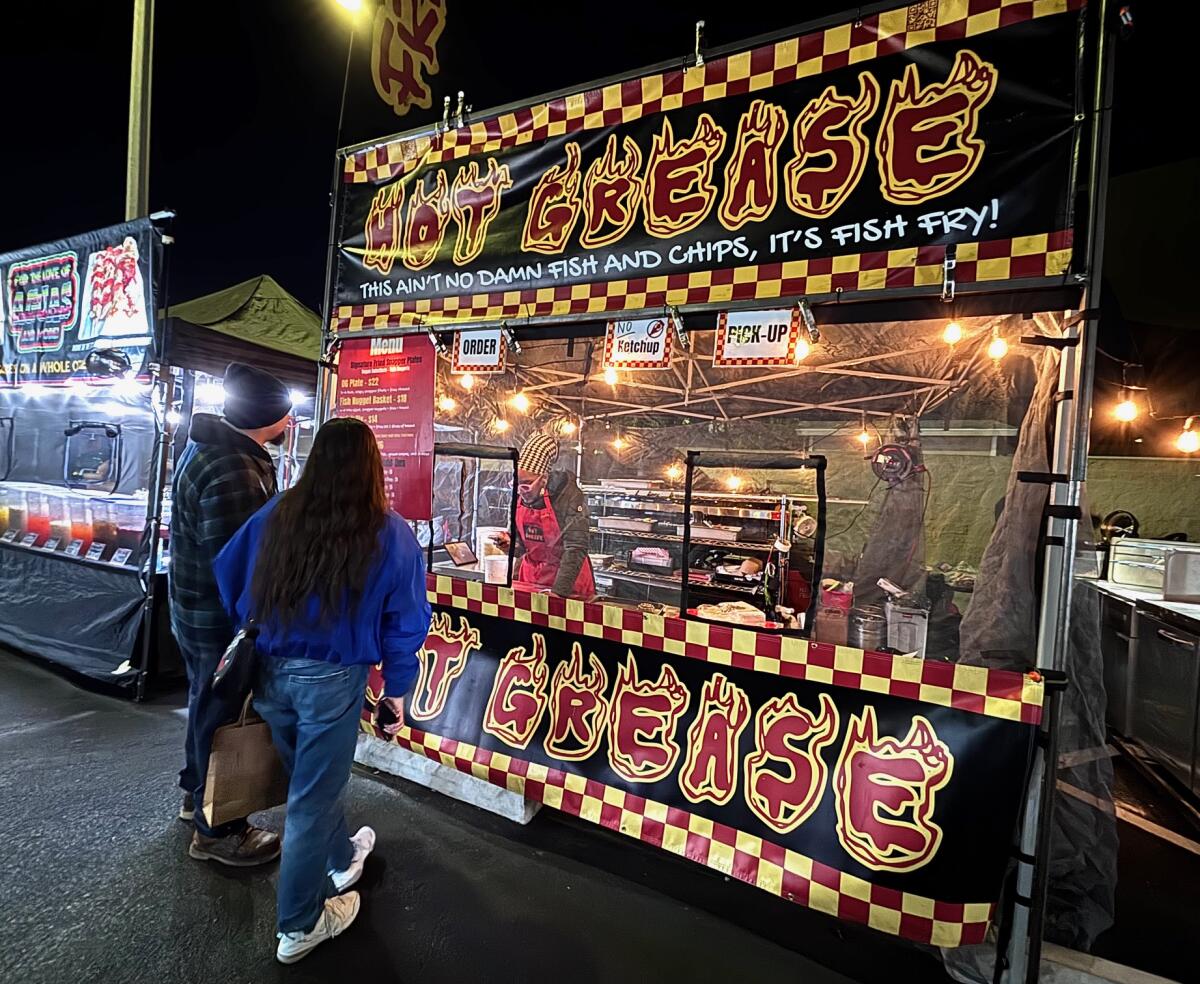
Southern food pop-up Hot Grease serves fish fry at Friday Night Munchies in Santa Ana.
(Sarah Mosqueda)
“I moved back to Orange County and I was missing Southern food and fish fry,” Starks said.
While attending a Juneteenth festival in Long Beach, Starks and her family had the chance to eat fish fry again. Her brother, father and partner all encouraged her to try selling fish.
Hot Grease pops up at local events, like the Orange County Black History Parade & Unity Festival and Smorgasburg LA on Sundays and also does private catering events.
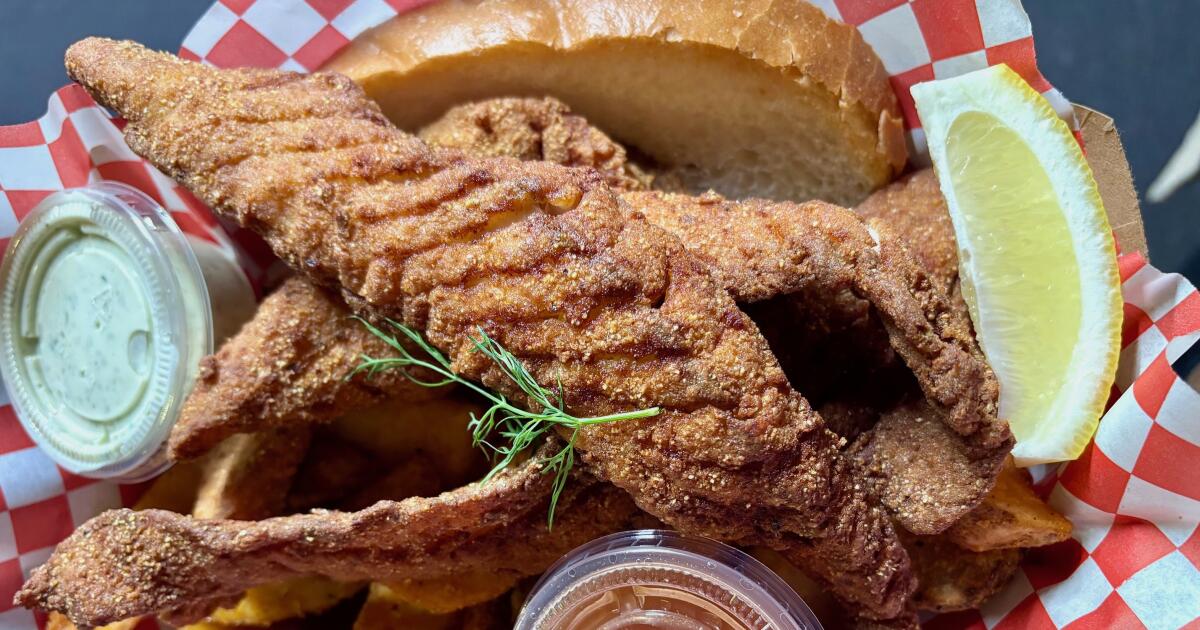
The menu features an “OG Plate” with crispy snapper fillets that have been dredged in cornmeal and spices, served with potato wedges atop a slice of white bread. There are fresh lemon wedges, sides of hot sauce and house-made tartar sauce, flavored with dill, horseradish and capers. But as the sign above her booth reads, “This ain’t no damn fish and chips.”
“It’s not beer battered, it’s not cod, you don’t eat it with malt vinegar,” Starks said. “It’s flavored.”
Frying fish dredged in a starch is a cooking technique historically found across many cultures, particularly groups who make their home near water. In the South, during the slavery era, enslaved workers would catch catfish or other freshwater fish to fry it up for themselves and their families. It was a free way to sustain their community, independently of what slave owners provided, and a reason to gather.
The association of an old-fashioned fish fry with community grew out of a need for survival, and it continued long after Emancipation. The Great Migration saw African-Americans introducing these food traditions to cities across the nation, some even turning the practice into a business. Fish fry gatherings were eventually adopted by Catholics who abstained from eating meat on Fridays during Lent. Today, they bring family, friends and neighbors together for milestone celebrations, birthdays or a regular Friday night.
In keeping with the community support aspect of the fish fry tradition, Hot Grease is dedicated to social justice and collective care.
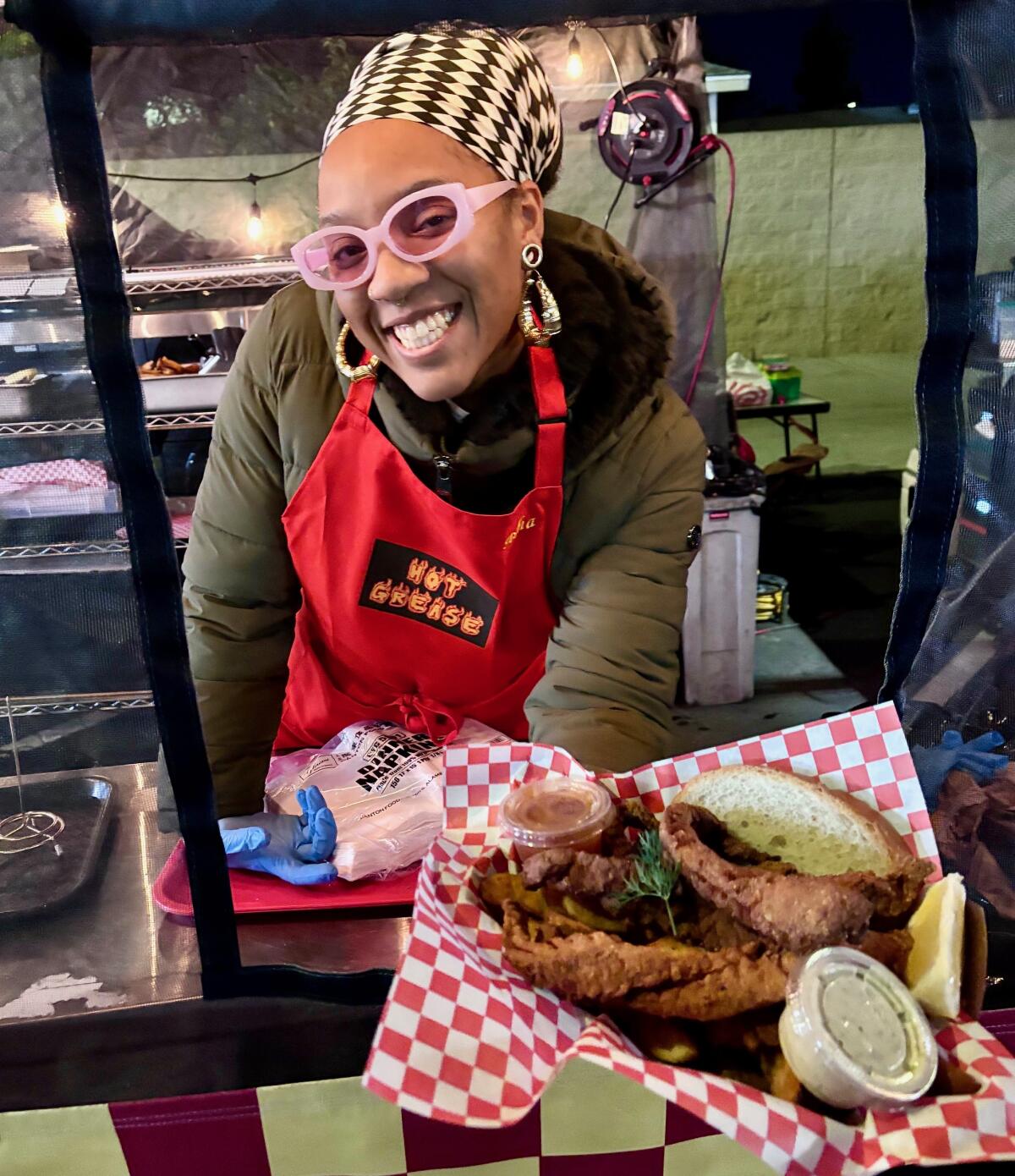
Asha Starks hands a customer an OG plate, with crispy snapper fillets, fries and bread.
(Sarah Mosqueda)
“The history of fish fry, it is a very communal activity and folks use fish fry as a way for mutual aid,” said Starks. “So Hot Grease has a mutual aid fund, the ‘Potlikker Line,’ where 3% of all our sales build a reproductive justice mutual aid fund.”
Stark is a mother and a full-spectrum doula with a background in public health and community organizing. The choice of the cause she’s supporting came naturally.
“I feel like reproductive justice is literally an umbrella issue. It’s the right to have kids, the right to not have kids and the right to be able to parent the kids you already have,” Starks said.
She has turned cooking and entrepreneurship into activism, using her food vending platform to support justice and joy.
“It definitely makes it feel like I am going back to the roots of fish fry, which is communal and supportive and also still honoring my organizing background and celebrating Black culture,” she said. “We need that in O.C.”
Starks also shares stories through zines she writes. The self-published booklets or DIY photocopied pamphlets have long been used as a feminist medium for sharing political ideas and personal stories. “Hot Grease Volume: 004,” for example, discusses the history behind Black History Month and offers information on alternative methods of participating in social justice when marching isn’t an option.
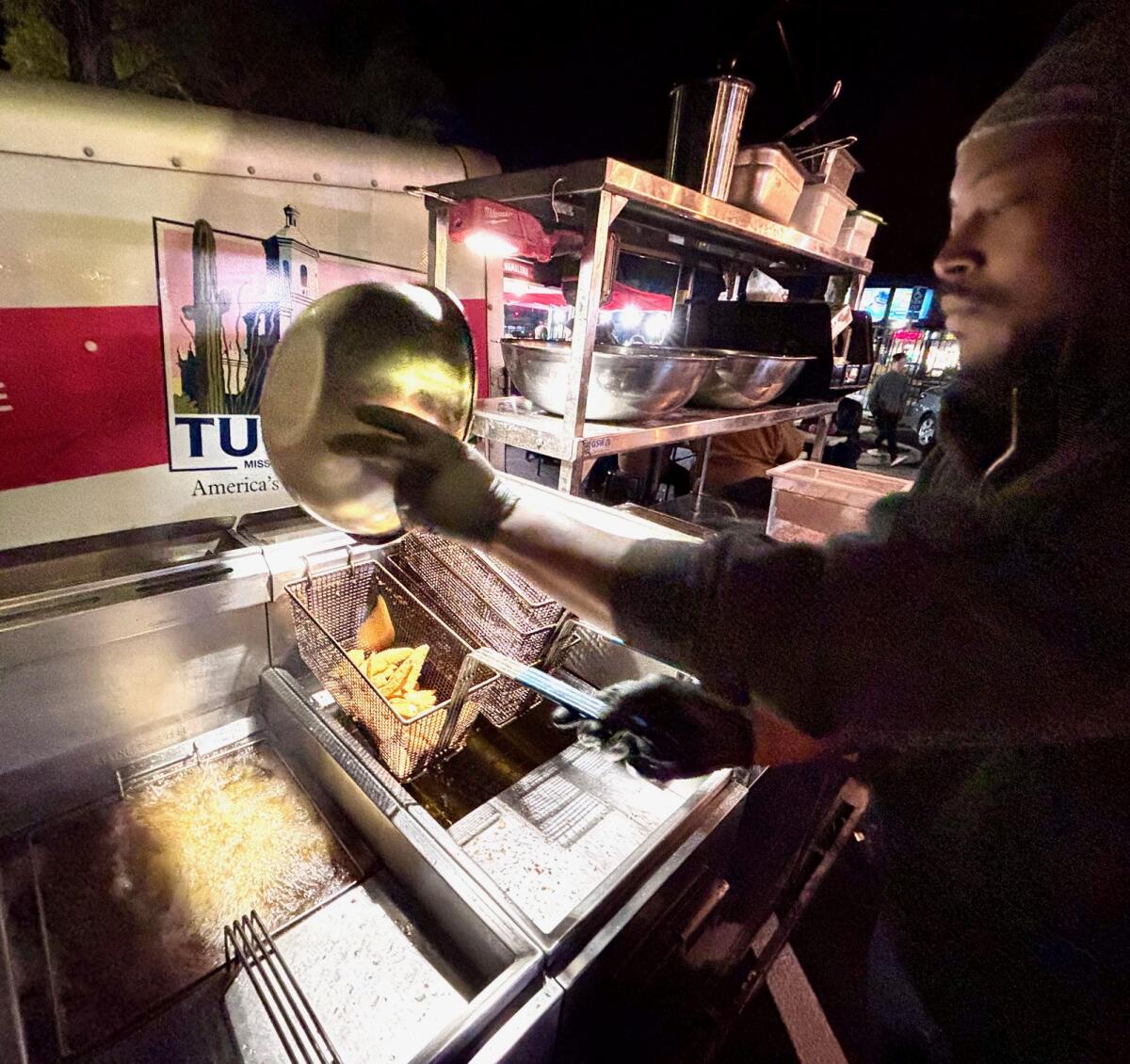
Fish goes into the deep fryer at Hot Grease, a Southern food pop-up in Santa Ana.
(Sarah Mosqueda)
Back at Friday Night Munchies, it’s the first Friday of Lent and the deep fryer bubbles with hot oil. A basket of thin snapper fillets are plunged in, sending oil popping, before reemerging hot and brown. Starks prefers snapper to catfish.
“I am not a catfish girl,” she said. “It is easier to come by, but folks choose it because it’s cheap, not because it’s good.”
The menu also features other Southern favorites — hush puppies and a fish and grits plate that pairs fried snapper with savory corn porridge. Boiled peanuts are also a popular add on, cooked in a broth, Starks flavors with smoked paprika and garlic, similar to the way she seasons her collard greens.
“Some call them potlikker boiled peanuts, because potlikker is the juice from the greens,” Starks said.
The resulting nuts are soft but firm, like pinto beans bursting with flavor.
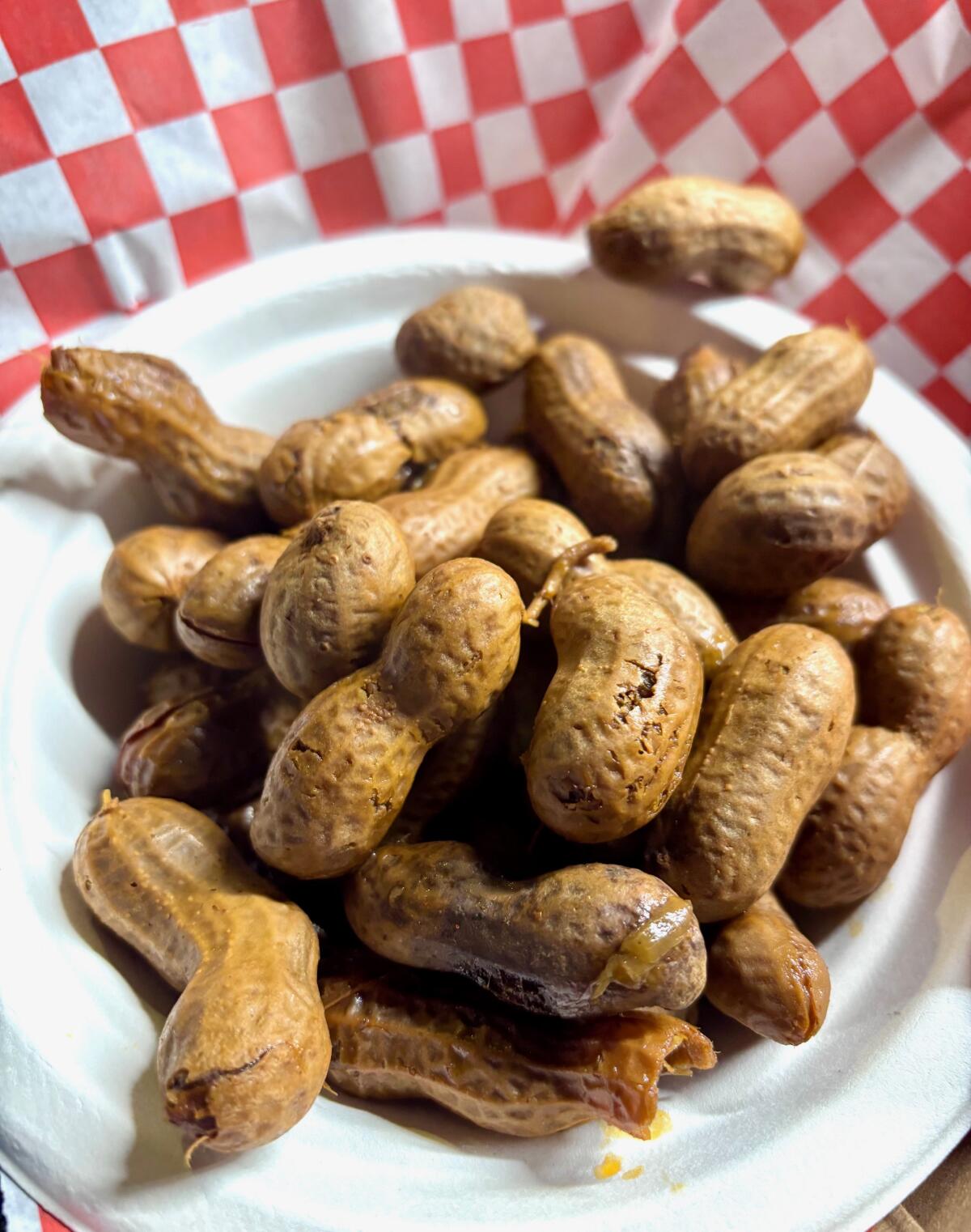
Boiled peanuts from Hot Grease, a tradition Starks recalls from time spent with family in the South.
(Sarah Mosqueda)
Starks arranges fish in a paper boat lined with red-and-white checked paper and hands it to Satcher Sierra, who has been waiting patiently.
Satcher Sierra first sampled Hot Grease at a local Juneteenth festival. While she admits she isn’t familiar with the culture surrounding fish fry, she enjoys the food at Hot Grease.
“It’s just good food,” Satcher Sierra said. “It’s fresh, it’s crunchy, it’s different. You know, I am expanding my horizons a little bit.”
Stark said setting up and breaking down her booth is actually the most challenging part of her job, but she sees the work as more than just feeding people.
“Food is political because access to food has always been controlled,” Starks writes in her zine “Who grows it. Who owns the land. Who gets fed first. Who goes hungry. Food reveals power.”
By running a food business that advocates for justice, Starks is reclaiming some of that power.
Hot Grease is at Friday Night Munchies at 1301 S. Bristol St. in Santa Ana on Fridays from 6 to10 p.m. For the full pop-up schedule and more information on “The Potlikker Line,” visit hotgreaseco.com