
San Diego appears to be on the verge of long-sought water sales that officials hope will at least reduce future cost increases to local customers.
Whether that lowers the political temperature between the city of San Diego and the San Diego County Water Authority over rates remains to be seen.
Dan Denham, general manager of the water authority, said in the coming months the agency expects to close deals to send water to a handful of fellow members of the Los Angeles-based Metropolitan Water District of Southern California.
According to its agenda this week, the water authority board held a closed session to discuss the terms and price of sales to the city of Burbank, the Eastern Municipal Water District, Three Valleys Municipal Water District and the Western Municipal Water District of Riverside County.
On a separate track, the water authority is entering into a memorandum of understanding with the U.S. Bureau of Reclamation and various water agencies to explore interstate transfers that would send water to Arizona and Nevada.
San Diego officials say this is groundbreaking stuff in the water world, creating new mechanisms and legal frameworks to transfer water from where there are surpluses to where there’s need.
San Diego is in a position to do this because of a well-known predicament that might be described as a blessing and a curse.
More than two decades ago, the water authority sought to obtain a secure supply after the San Diego region was threatened with drastic cuts during a drought in the 1990s. The centerpieces of that effort were an agreement to buy Colorado River water from the Imperial Irrigation District and, later, a desalination plant built in Carlsbad.
The foresight was lauded locally and, more recently, nationally as droughts increasingly diminished water supplies throughout the West.
But it came at a big cost, including building extensive infrastructure such as new reservoirs and the expansion of existing ones. The system was overbuilt, as it turned out, in large part because population projections were too high and water conservation expectations were too low.
That resulted in an oversupply and built-in costs that sent water rates skyrocketing — and a lot of finger-pointing. That “too much of a good thing” hasn’t ended. Wastewater recycling projects are expected to come online in the next handful of years in the city of San Diego, Oceanside and East County, adding even more costly water to the region.
Unloading the surplus was restricted by layers of Western water rules developed over the past century and litigation. It was the recent settlement of a yearslong legal battle between the water authority and Metropolitan that allowed such sales to move forward, according to the water authority.
If the sales to Metropolitan members happen, it’s not exactly clear what relief they may provide for San Diego ratepayers.
“So what does this do?” Denham said. “It helps us from a supply perspective. . . and should materially change rates.”
He suggested coming rate increases likely would be lowered, but those are board decisions down the line, along with others, such as whether or how much of the new revenue should go to paying down debt.
Denham said current nondisclosure agreements prohibit the water authority from providing details on how much the receiving agencies will be charged and how much water they will get.
But he noted that not long ago, the water authority sent a letter to the 26 Metropolitan member agencies offering to sell up to 50,000 acre-feet. (An acre-foot of water equals 325,851 gallons, or enough for 2.5 typical households annually.) Denham said these pending deals would take up about half that, with more sales hoped for in the future.
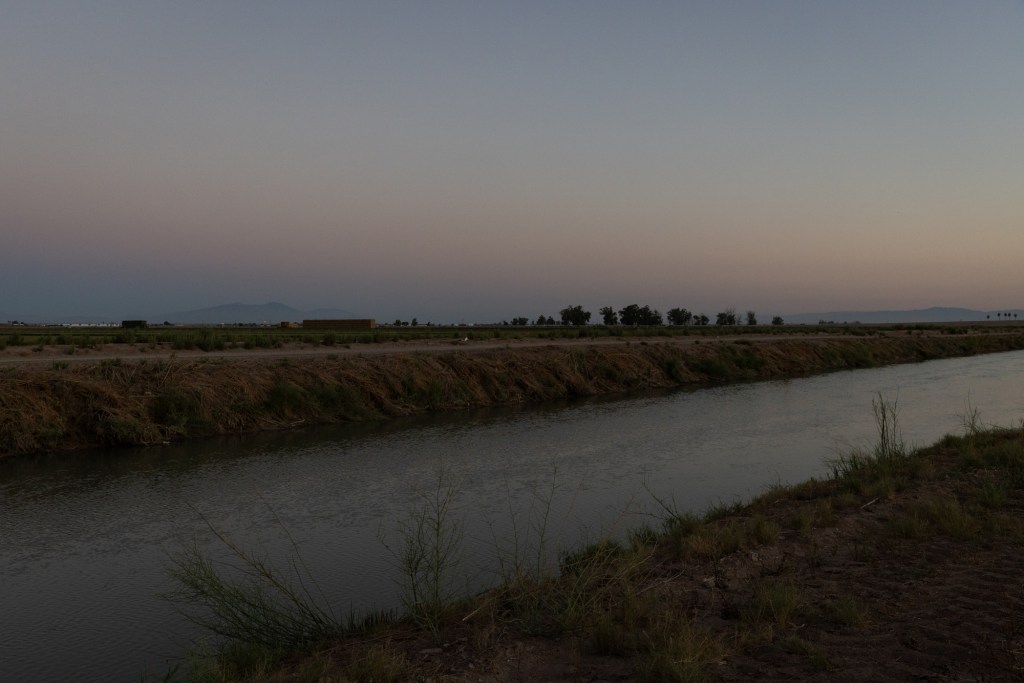
The water would come from the Colorado River flow San Diego receives from the Imperial district. Should agreements be reached with Arizona and Nevada down the line, the water involved would be from the Carlsbad desalination plant through “paper” transfers involving Metropolitan. That could mean those states get California river water that would be backfilled by the desalination plant.
Among other things, part of the goal of the more immediate sales is to offset the increase in supply when the water recycling projects start producing, Denham said.
Additional sales could depend on the timing of those projects and, specifically, whether there’s a scaling back of the second phase of the city of San Diego’s Pure Water recycling program. That’s something under discussion at City Hall as Pure Water costs have grown far beyond earlier estimates and the need is less than once thought.
The water authority is heading in the direction of moving water in ways it has talked about for some time. Nothing seems to happen quickly when it comes to water dynamics in the West.
But if, in the optimistic view of the authority, markets really open up, there may be other considerations in how much to sell beyond the 50,000 acre-feet. Eventually, there could be questions of water reliability versus lowering costs.
“That would be a paradigm shift,” Denham said. “How reliable (should it be)? 100 percent? 80 percent? 75 percent?”
San Diego’s pending transactions come at a time when multi-state negotiations are seemingly stalled over a long-term agreement on how to divvy up the shrinking Colorado River supply.
Jim Madaffer, a water authority board member and vice chair of the Colorado River Board of California, recently noted that the Imperial Irrigation District has among the most senior water rights. He said that means IID’s supply should be largely protected from Colorado River cuts — and that includes the water to San Diego. Still, uncertainty abounds.
Cuts are likely coming to Metropolitan and others, and the federal government is pushing hard for an agreement. Access to more water can only help the various agencies.
“What it gives the Met members,” Denham said of the potential sales, “is a new slice of a portfolio at a price that’s much less than developing new supply through desal, recycling.”
Here’s a small irony in all this. The Fallbrook Public Utility District and Rainbow Municipal Water District not long ago went through a messy divorce from the San Diego water authority to seek better prices elsewhere.
They joined Riverside County’s Eastern Municipal Water District, which soon could be getting water from San Diego.