
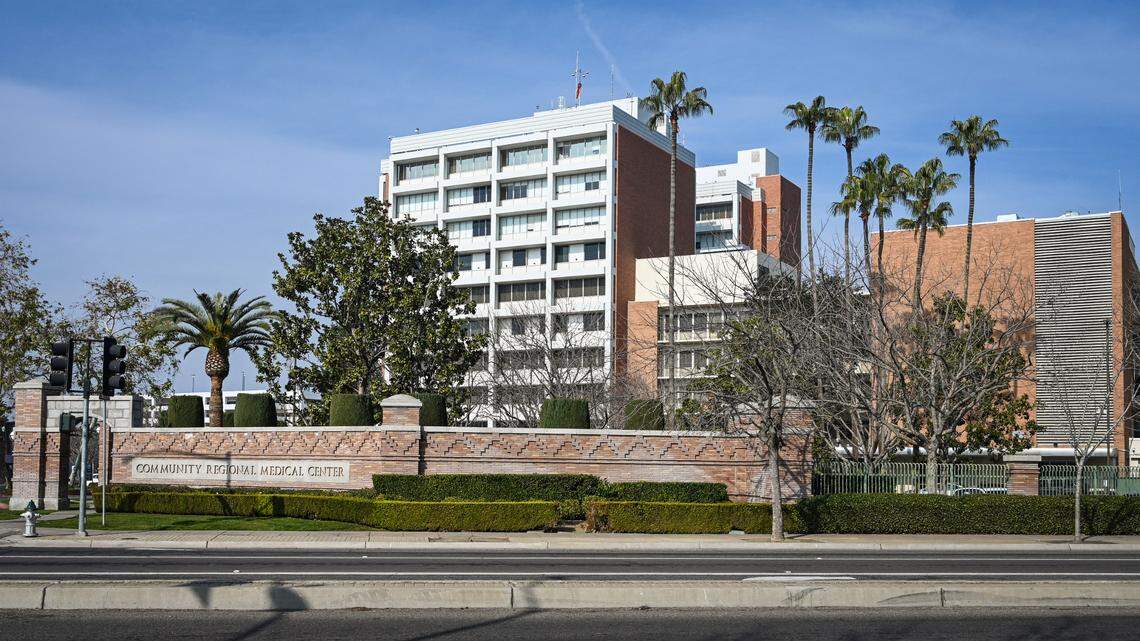
Community Regional Medical Center is the largest healthcare provider in Fresno.
CRAIG KOHLRUSS
Fresno Bee file
AI-generated summary reviewed by our newsroom.
Soria proposes $300M to refill Distressed Hospital Loan Program and prevent closures.Bill expands eligibility and ties loan forgiveness to hospitals maintaining essential services.Proposal responds to 2025 federal cuts that depleted funds and threatened rural access.
A Central Valley lawmaker has introduced legislation that would appropriate $300 million in state funds to California’s Distressed Hospital Loan Program to prevent financially struggling hospitals in rural areas from closing.
Assembly Bill 1923 by state Assemblywoman Esmeralda Soria would replenish and expand the state program first created in 2023 to stabilize hospitals in severe financial distress. That initial $300 million allocation helped save about a dozen hospitals statewide, including the reopened Madera Community Hospital, which received $57 million — the largest award under the program.
“The risk of losing access to critical healthcare services for Californians has never been greater than right now. That’s something I hoped I would never say AGAIN,” Soria said in a statement, citing significant federal healthcare cuts under the new administration in 2025.
Soria, a former Fresno City councilmember, told The Bee that recent federal actions — including “H.R.1,” a 2025 federal budget and healthcare bill that slashed funding for health programs — have made additional state support urgent.
“You know what really pushed me over the edge was the more recent actions by H.R.1, which we have seen, that it’s proven to be catastrophic for not just hospitals across the state, but more pointedly, for distressed and rural hospitals in California,” she said. “And so I don’t think that we could afford to wait.”
When lawmakers first established the program in 2023, Soria said it was designed as an emergency stopgap for hospitals on the brink of closure.
“We understood that we needed it as an urgent matter to be a stop gap for institutions like Madera that had to close so that they could reopen their doors, given that they were the only hospital that service the general population in the county of Madera,” she said.
But the program’s funds have since been depleted, and Soria said it “was not built to withstand additional, unprecedented federal cuts.” Without new funding, she warned, more hospitals could shutter or reduce services.
AB 1923 would also broaden eligibility to allow hospitals that were previously excluded — including some outside the nonprofit and small public categories — to apply for assistance.
“This is an issue that we will debate over the coming weeks and months,” Soria said. “But we’ve heard from hospitals, from other hospitals, that were ineligible for the funding or to apply, and so we want to give them the opportunity again, because we don’t want to see any hospital, regardless if it’s public, private or held by a nonprofit, closed.”
Under the program, state health agencies review applications and identify hospitals with the greatest financial need and a viable plan to continue operating.
The bill also clarifies loan forgiveness provisions. Initially, loans were structured to be repaid once hospitals regained financial stability, but many recipients remain financially strained.
“When we look at the hospitals that were recipients in this first cycle, they are surviving,” Soria said. “And so for us to ask them to repay right now could create more financial instability for them.”
Under the updated proposal, forgiveness would be tied to a hospital’s ability to maintain essential services.
Ultimately, Soria said, the goal is straightforward: keep hospitals open and protect access to care.
“We want to make sure that our families have access to the critical services they need in their own local community without having to drive hours at a time to be able to receive that care,” she said.
The Fresno Bee
Marina Peña is the Latino communities reporter for The Bee. She earned a bachelor’s in Political Economy and another one in Journalism from the University of Southern California. She’s originally from Buenos Aires, Argentina, but grew up in Los Angeles.