
Published February 28, 2026 03:02AM
The pitch of the helicopter engine rises as the rotors accelerate, and the skids beneath my feet begin to tremble. The next thing I know, we’ve lifted high above the ground and are soaring toward breathtaking snowy mountains on the nearby horizon. These aren’t the Canadian Rockies in British Columbia or the Brooks Range in Alaska, but rather the Sweetwater Mountains, a string of peaks in the Northeastern corner of my home state, California.
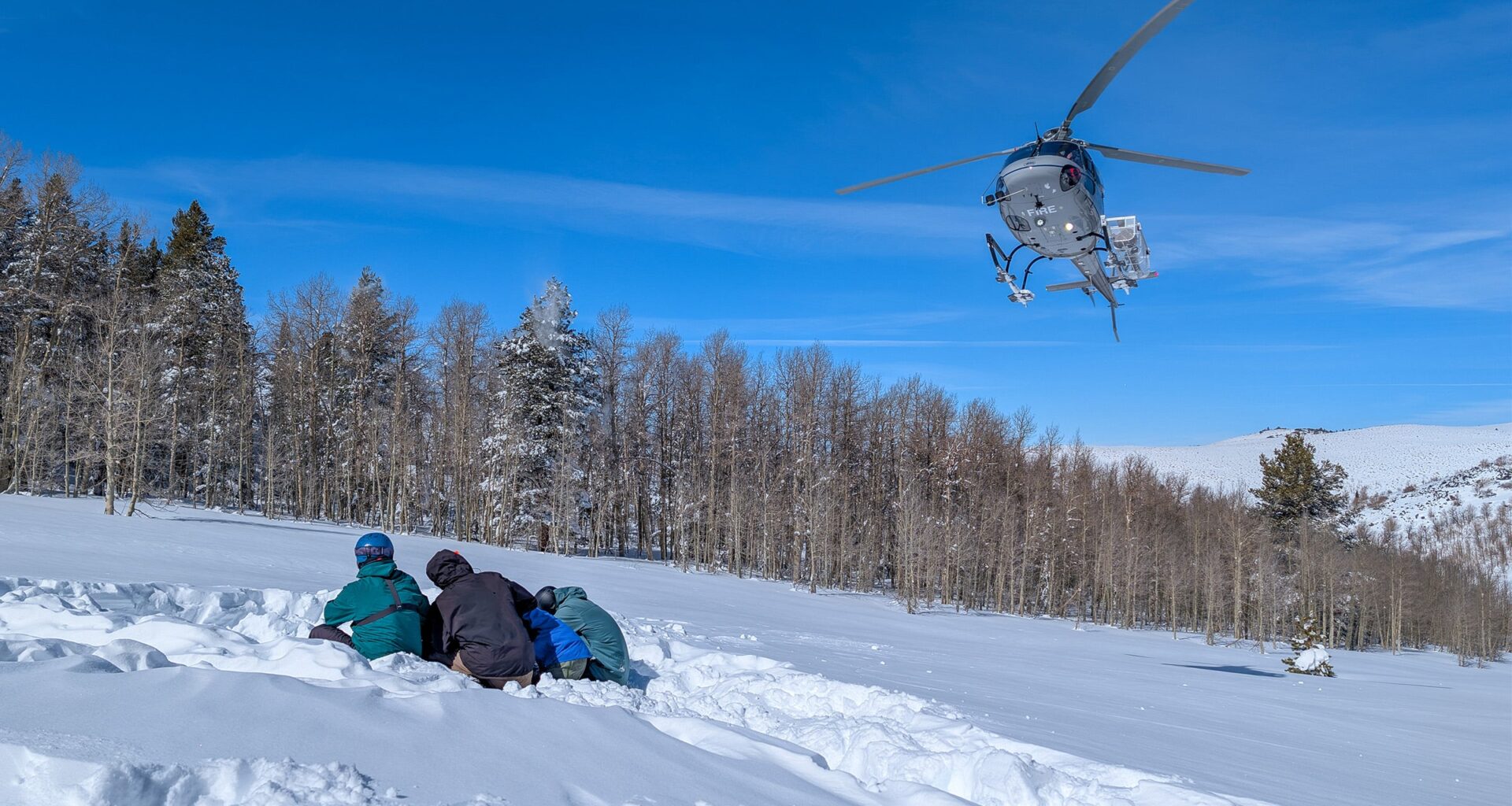
When we touch down at the landing zone we step out one at a time, crouching low to keep away from the spinning blades above us. The engine whine increases again, and the helicopter flies off, spraying us with fine powder. Suddenly we’re alone, standing atop a mountain in the middle of nowhere, staring at snowy bowls and glade-covered mountainsides. We strap into our skis and snowboards and gaze down at our first drop. A thought pops into my brain: I never thought I’d get to go heli skiing in California.
California is the nation’s most populous state with 39 million people. It’s also home to many of the lower 48’s tallest peaks and some of the country’s largest ski resorts. Yet there’s just one heli-skiing business, and it’s brand new. Called Sweetwater Heli, the business just opened its doors on January 31, 2026, and it has a license to take guests into a soaring stretch of 180,000 acres. I managed to get a seat on its seventh-ever commercial flight, as the first journalist to ride, just days after a storm brought several feet of snow to the area.
Somebody pitch me.
The business is the baby of an entrepreneurial ski-bum named Mark Johnson and a fifth-generation potato farmer named Brian Kirschenmann. Somehow, the duo managed to secure one of the few coveted business permits that are granted in the U.S. to heli-skiing businesses. In the contiguous United States, there were just seven businesses operating at the beginning of 2026. Sweetwater is number eight.
I recently asked Johnson how he came up with the idea to start the operation. He laughed. “I’ve never heli-skied before,” he told me.
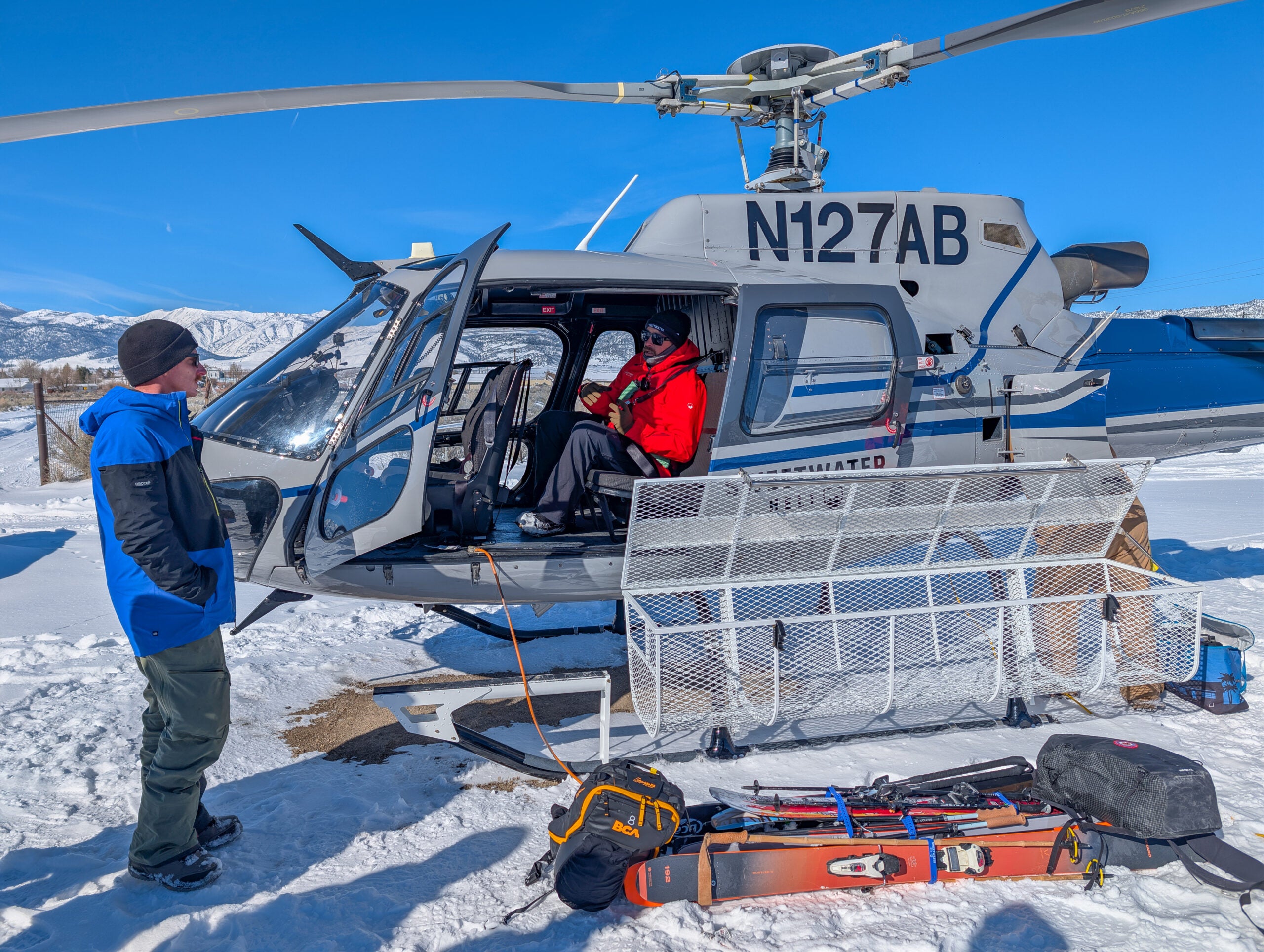 Sweetwater Heli began taking guests on guided tours of the Sweetwater Mountains in February, 2026 (Photo: Brent Rose)
Johnson, 63, stands well above six feet tall, and his chin is ringed by a grey goatee. When I met him he walked with limp—the lingering effects of a recent knee surgery. Johnson grew up in Texas, but he’s a lifelong skier. And after a stint in the U.S. Air Force, where he was a member of its unofficial ski team, he managed a NASCAR team in Bodega Bay, just north of San Francisco.
“That was kind of my first taste of entrepreneurship, and it went well,” he told me. His racing team placed second at the Indy 500 in 1999—British-American driver Jeff Ward piloted the car. In the ensuing years, Johnson took turns running vineyards and a solar company. But his first love was skiing, and he always pursued projects in the U.S. ski industry.
Johnson moved to Lake Tahoe in the early aughts and worked as a ski instructor at the Sierra-at-Tahoe resort, where he also coached the alpine racing team. After taking a job as a representative for Solomon skis, he helped manage the brand’s young, up-and-coming team of freeriders. That job required him to frequently drive the 140 miles between Lake Tahoe and Mammoth Mountain Ski Area.
The most direct route between Tahoe and Mammoth is U.S. Highway 395, which skirts the eastern edge of the Sierra Nevada, bypassing the Yosemite and the Stanislaus National Forests. It’s a stunning drive that I’ve done a handful of times myself. Along the route you can also spot a spectacular cluster of peaks to the east, on the opposite side of the Sierra. This range is chock full of towering peaks, bowls, and forest, heavy with snow. Those are the Sweetwaters.
“I kept looking at those amazing mountains, with what looked like great ski runs,” Johnson told me. “That was the spark.”
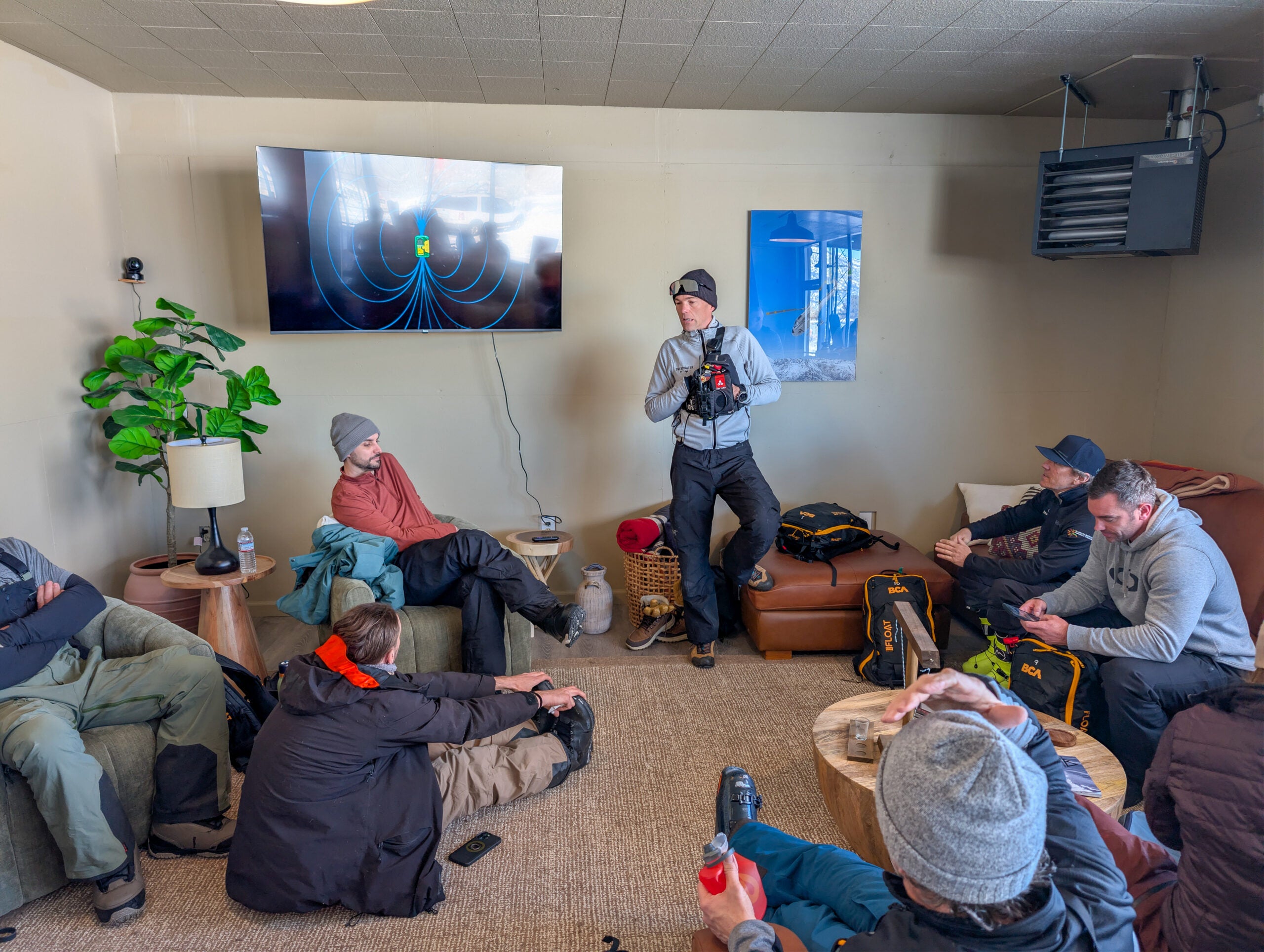 Sweetwater Heli’s operational base is in Bridgeport, California (Photo: Brent Rose)
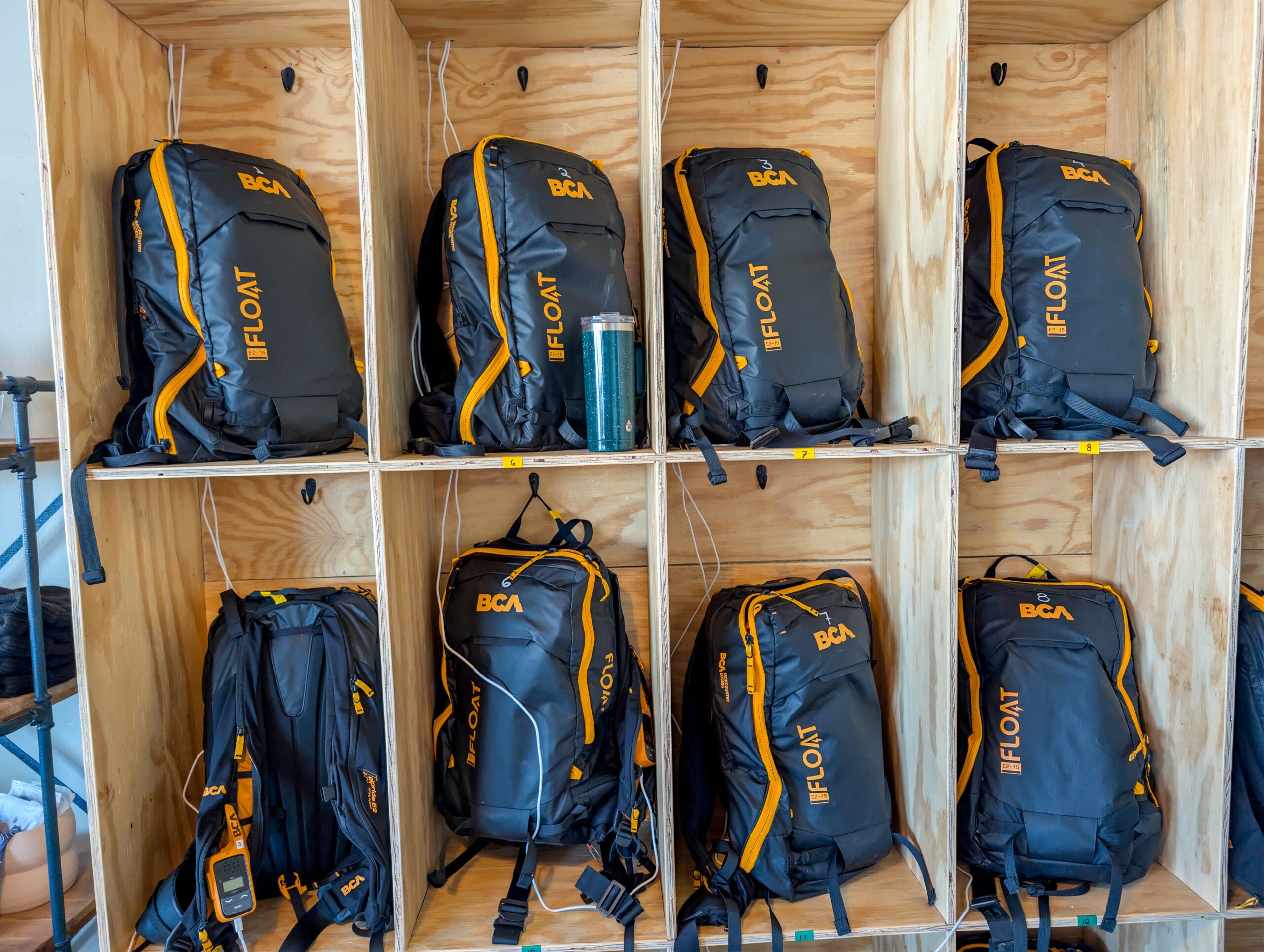 The author and the 11 other guests were assigned avalanche packs before the journey (Photo: Brent Rose)
I showed up to Sweetwater Heli’s base in Bridgeport, California promptly at 7:30 A.M. on February 20. The 11 other guests were also arriving, and some were sipping coffee, checking their gear, and stretching on the floor. I noticed a stack of numbered and brand-new BCA Float E2-15 avalanche backpacks, which cost $1,300 a piece. The packs feature an electric-fan-deployed airbag, as well as a walkie-talkie setup. These bags were for us to wear during our descents.
The sight of these avalanche safety packs calmed my nerves.
Just three days before the trip, and not so many miles away, nine people had died in an avalanche near Lake Tahoe. The disaster made me question whether a company that was just two weeks old was prepared to take guests into the backcountry. After a long, hot, dry spell followed by several feet of snow in just a few days, avalanche danger in California was extremely high. I promised myself and my family that I would bail if anything felt off.
Sweetwater’s guides described the current avalanche risk as “three-three-two,” meaning “considerable” in the alpine and at middle elevations near treeline, and “moderate” at lower elevations and at terrain below treeline. Guides told us that, due to the heightened risk, we would not push our luck by skiing high-alpine terrain. Instead, we’d stick to low-elevation lines on gentle slopes of less than 30 degrees. I prefer steep and deep, but given the hazards, I was relieved to know that we weren’t taking chances.
Guides assigned us to a numbered airbag backpack and avalanche beacon. We then spent about an hour drilling what to do in different scenarios, practicing with the beacons, shovels, probes, and radios, and hearing best practices. Johnson told me that of the company’s current roster of ten guides (eight men, two women, with three more entering training soon) all have extensive experience guiding in Alaska or Canada, as well as the other heli-ski ops in the lower 48.
After the safety briefing, we were split into groups of four and then shuttled across the four-minute drive to the Bridgeport Airport in a Sprinter van. That’s where we boarded the helicopter and began flying north, over to the Sweetwaters.
Seemingly endless peaks stretched out before us with everything from mellow trees to steep alpine bowls, leaving us salivating over those lines. As I stared at this wonderland I kept thinking, how are these guys the only ones doing this in California?
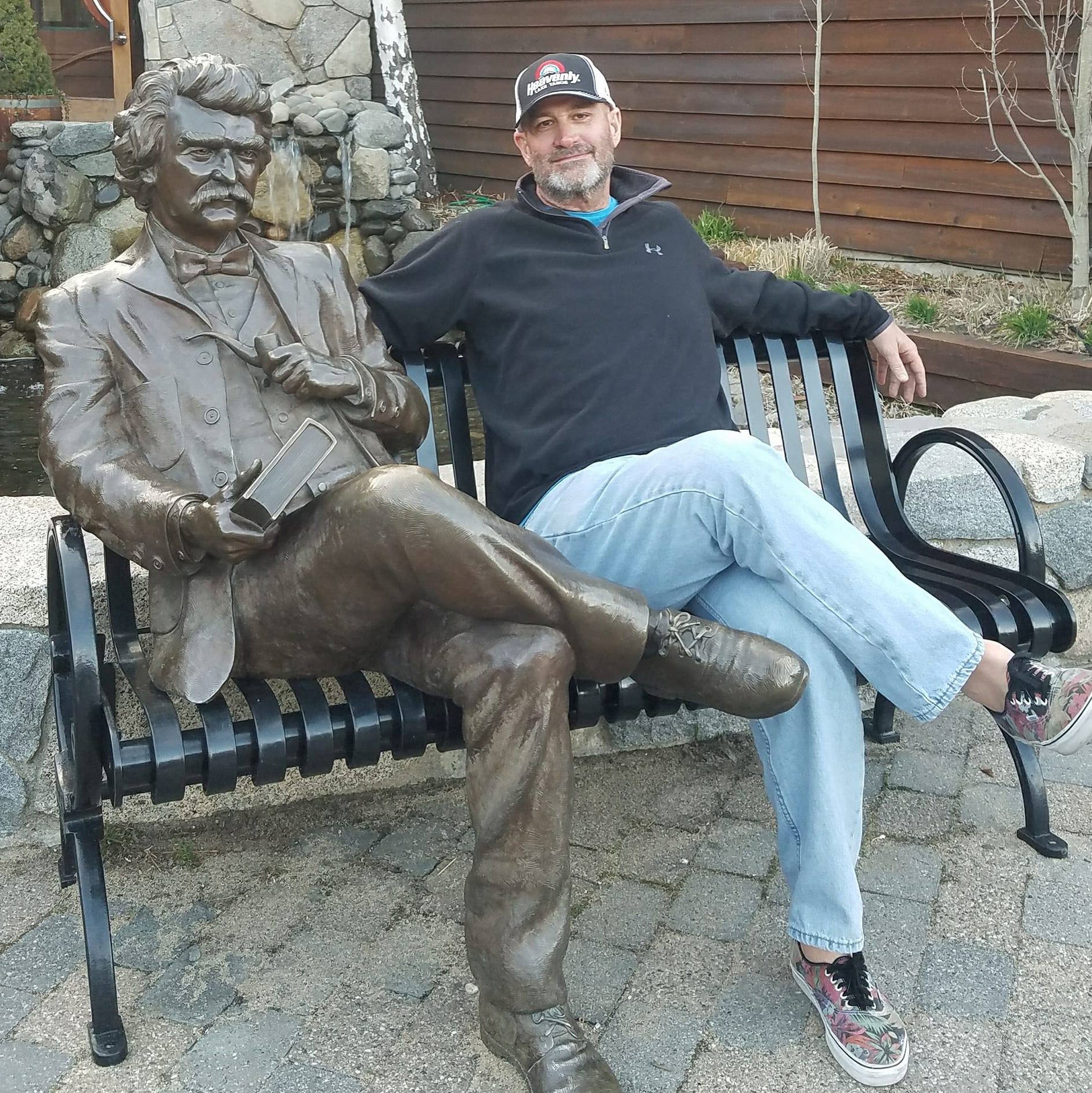 Johnson has worked in and out of the ski industry for several decades (Photo: Mark Johnson)
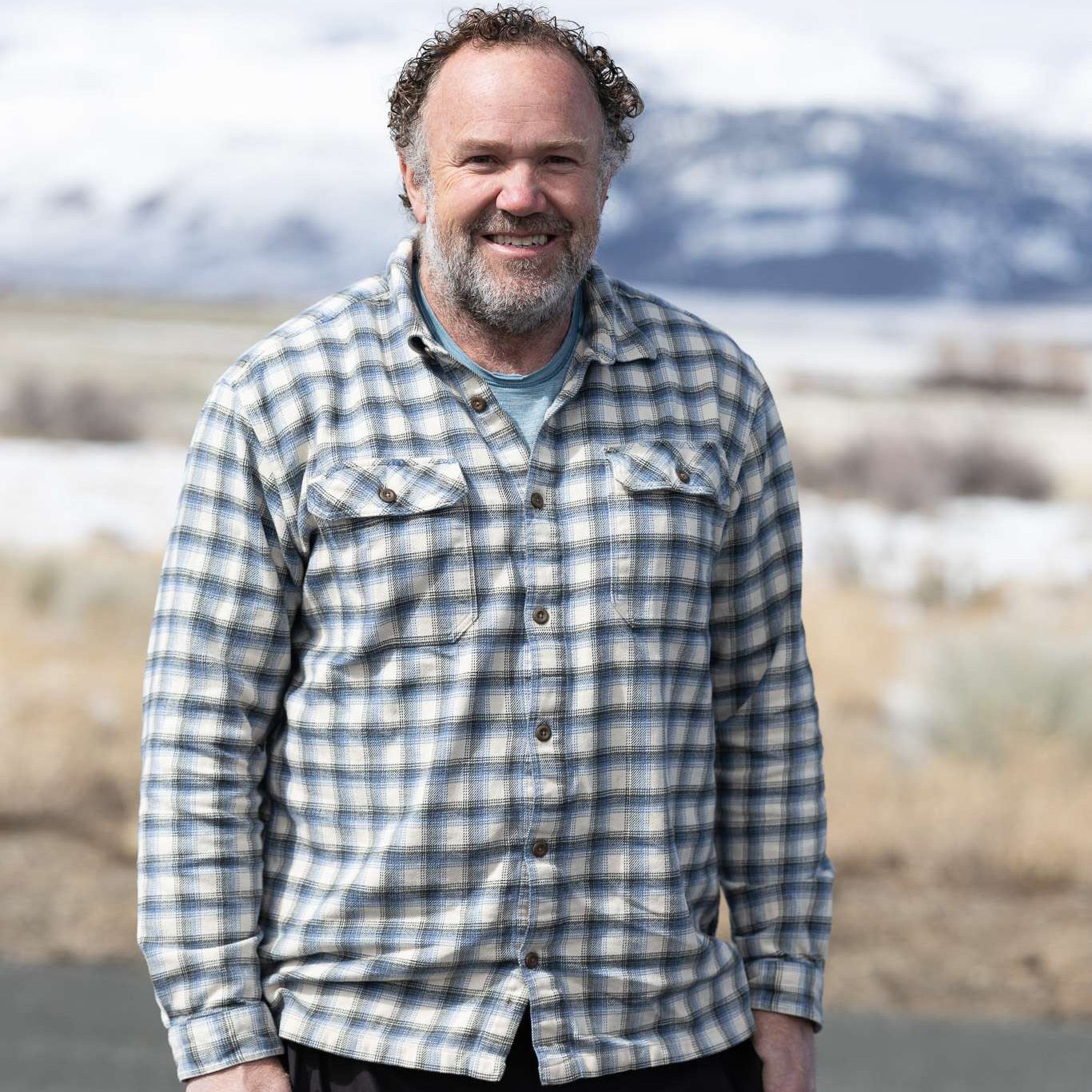 Kirschenmann is a full-time potato farmer in Bakersfield, CA (Photo: Brian Kirschenmann)
Multiple entrepreneurs have attempted to launch heli-skiing businesses in California over the years. Locals in Tahoe told me stories of small heli operations running around the region as early as the sixties and seventies, but documentation of these businesses from the pre-Internet era proved difficult to find.
My sources attributed the lack of California heli-ski operators to tricky business dynamics and shifting weather patterns, but primarily to the red tape created by the state’s environmental protections. In 1984, Congress passed the California Wilderness Act, which earmarked 3 million acres of National Forest land within the state as Designated Wilderness.
The designation prevents motorized transportation, and it also forbids aircraft from landing. Included in this area were huge swaths of high-alpine terrain in the Sierra Nevada. The move protected forests from logging, but it also shut the door for heli-ski operators to fly guests into most of the Sierra Nevada.
In 2011, a veteran Alaskan heli-guide named Dave “Happy” Rintala came up with a creative workaround. By networking with land owners, timber companies, and existing gold mining claims in the Sierras near Lake Tahoe, he obtained permission to land on privately owned peaks. These agreements allowed Rinalta to build a patchwork of skiable territory over the mountains by avoiding Designated Wilderness. He called his company Pacific Crest Heli-Guides.
But the business only lasted a few years. Rintala told me via a text exchange that inconsistent snowpack, unpredictable weather, and the logistics of running a heli-ski company made it more trouble than it was worth. He was already operating a snowcat skiing business, called Pacific Crest Snowcats (now in its 26th year). He told me that the tank-like vehicles can operate in much worse weather than helicopters can. And snowcats require far less overhead costs, so Rintala shuttered the helicopter business in 2014. There hasn’t been another heli-ski operation in California since then.
When I asked Johnson why he believes his business will succeed while others failed, he mentioned his secret weapon: the Sweetwater Mountains. Specifically, the Sweetwaters don’t have the same finicky snowpack and checkerboard of Designated Wilderness as the Sierra Nevada.
“It’s the fact that I have such a large amount of territory to pick from, with such a variety and diversity of terrain,” he said. “That allows us to move off riskier areas and gives us flexibility, while keeping safety at the forefront.”
While the foothills of the Sweetwaters are only about 15 miles east of the Sierra Nevada, the Sweetwaters sit within the Humboldt-Toiyabe National Forest, mostly in California, with the northernmost segment stretching into Nevada.
Only a small portion of the area is located within Designated Wilderness, so more of the mountains are open to mechanized transport, including the coveted high-elevation zones that receive deep snowfall. In order to operate a ski business on National Forest territory, Johnson and Kirschenmann simply needed to obtain the correct permits from federal and state governments.
Johnson spent 2012 to 2020 living in Texas taking, care of his father. In 2020, he decided he was ready to move back to California. Turned off by the crowds in Tahoe, he ended up buying property out near Topaz, Nevada. He started a lavender farm, and continued his sales rep job for Salomon skis. That job kept him driving back and forth to Mammoth Mountain, and out the window he once again looked at the Sweetwater Mountains.
The Sweetwaters have virtually no roads through them. What if he could launch a helicopter ski business in the mountains? Johnson’s friends told him it was a pipe dream.
But in 2021 he reached out to Megan Mahoney, who at the time was the managing district ranger. To his surprise, the Forest Service offered enthusiastic support and encouraged him to start the application process. Outside reached out to the Forest Service for comment but did not hear back by the time this story was published.
It probably didn’t hurt that on the far eastern side of the Humboldt-Toiyabe National Forest, well into Nevada, a company called Ruby Mountain Heli-Ski has been operating within the forest for nearly 50 years.
“When I went and asked if we could do it, and they said yes, I think probably some of that yes came from the fact that they already had one there,” Johnson told me. “So there was a precedent.”
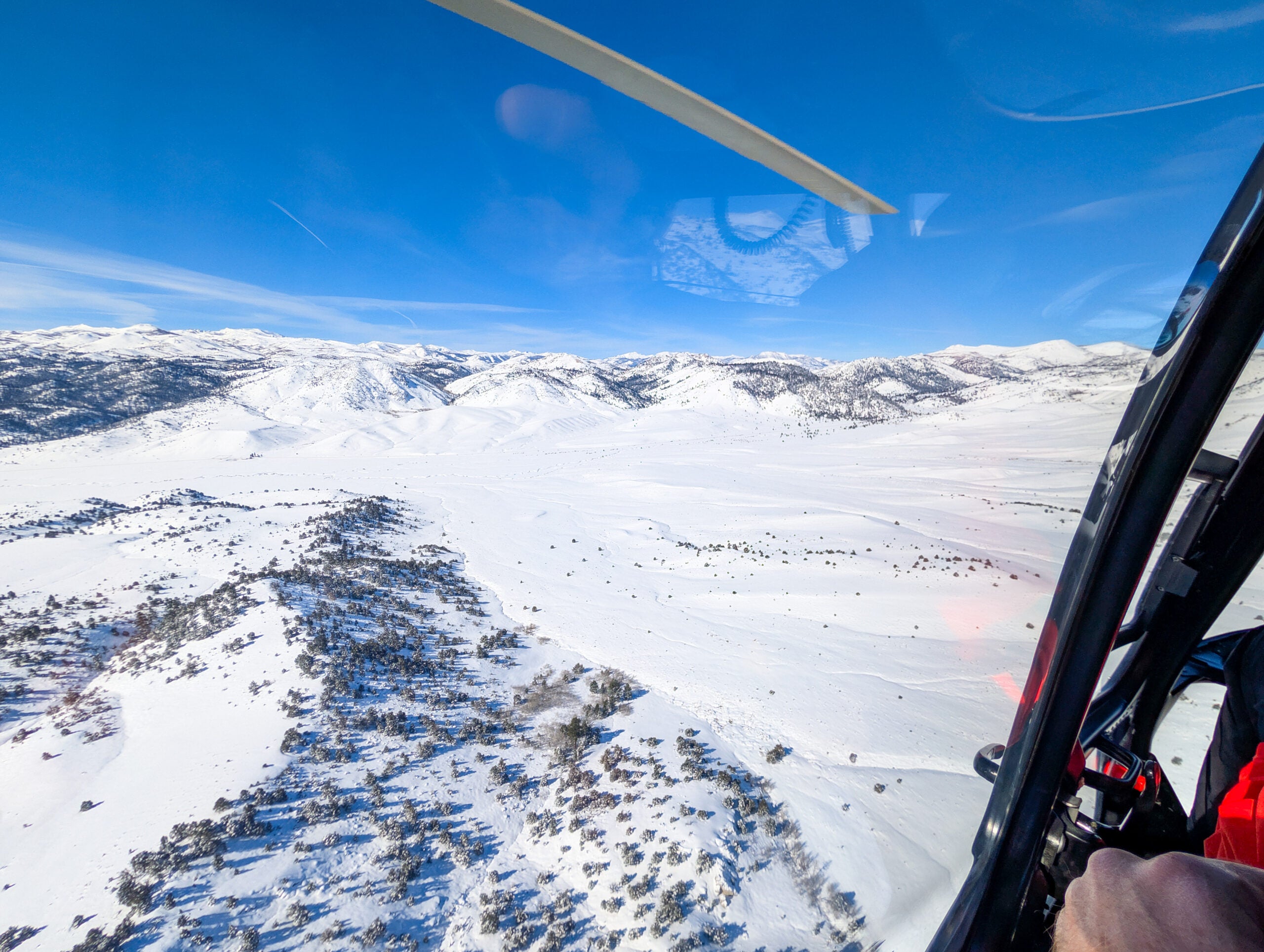 While not as high as the Sierra Nevada, the Sweetwater Mountains are mostly roadless and remote (Photo: Brent Rose)
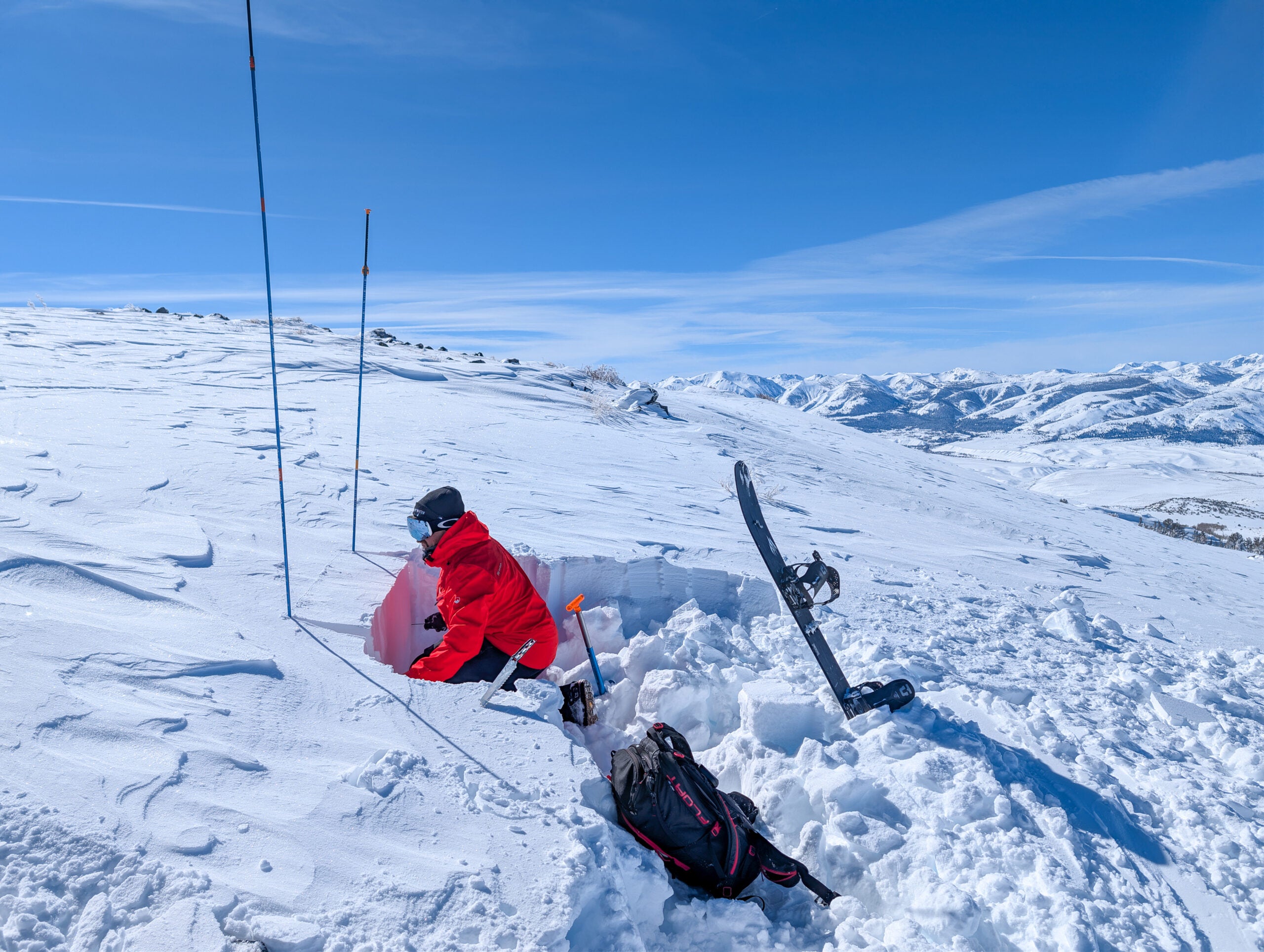 Prior to the descent, guides tested the snowpack (Photo: Brent Rose)
We stand in our three groups, skis and snowboards in the snow, and peer down a short hill with a low-grade slope. It looks like a long, rolling green run you might find at a typical ski resort. The surface reminds me of a groomer that received a healthy blanket of new snow after its most recent plow.
A handful of trees dot the descent before the terrain flattens out into a white expanse. This will be our “breakfast lap,” a sort of warm-up run. The guides will also assess our respective skills during our descent.
My group’s guide, Max Wittenberg, points out a spot halfway down the run where we will reconnoiter. He tells us to keep a certain distance from each other, and to stay to the right of his tracks.
Despite the low-angle, I speed down the run, my board floating over the canvas of soft snow. It’s just a wide-open slide on powder the whole way down, and the lines we draw in it remain well-defined as we speed off. The second run features a little more pitch and a lot more snow. It is knee-deep in places and light enough that you can easily put yourself in the white room if you slash a big turn at speed, which all of us do, whooping as we go. Our whole group is giddy.
The runs are sublime. We aren’t even very deep into the Sweetwaters, but the terrain feels like an alien world, eerily quiet, and covered in merengue. Every time we get a ride in the helicopter, our eyes are glued to the horizon. Gorgeous peaks dot the landscape, each one with a seemingly endless number of ski runs.
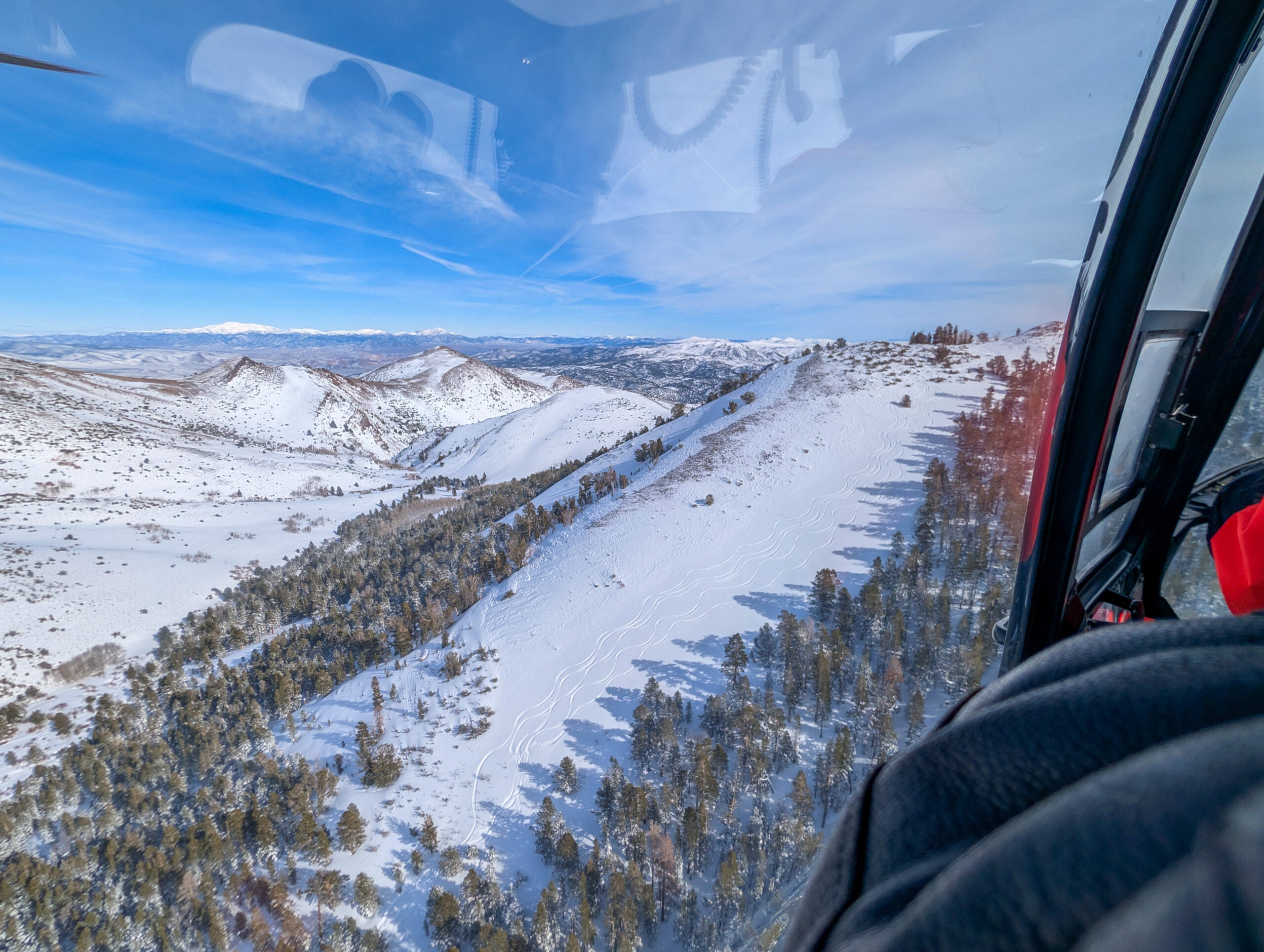 The slopes that Sweetwater Heli services are mellow compared to some of the sheer terrain found in Alaska. But the Sweetwater Mountains still have plenty of snow. (Photo: Brent Rose)
Johnson received his initial positive response from the Forest Service in the fall of 2021. He was able to put together the preliminary eight-page application pretty quickly, and then it was the Forest Service and the Department of Fish and Wildlife that was responsible for completing environmental impact surveys, which was projected to take a handful of months, but ended up stretching on much longer.
Meanwhile, Johnson knew he needed a financial partner to help cover the enormous costs of the operation, as well as someone who could spearhead a lot of the logistics of running the business, so he started asking around if anybody in his network knew anyone with that particular skill. In March or April of 2022, a friend of Johnson’s, who was a former Alaskan guide, introduced him to Brian Kirschenmann, the fifth-generation owner of Kirschenmann Farms in Bakersfield, California, and the two met for coffee.
You know, it’s that classic Potato-Farmer-to-Heli-Ski-Operator Pipeline.
When off the farm, though, Kirschenmann, 51, has a bit of an adrenaline addiction. “I’m just a thrill-seeker,” he told me over the phone. Kirschenmann grew up skiing at Mammoth Mountain, and also mountain biked and surfed whenever he could. He first tried heli-skiing in 2000 and was instantly hooked.
Since then, he has done heli-skiing trips to Russia, Greenland, Canada, Alaska, and parts of Europe and South America. The trips, Kirschenmann told me, gave him a sense for industry standards for heli-ski businesses across the world.
Still, he told me he wasn’t enticed by Johnson’s initial pitch. “I didn’t like the idea at first,” Kirschenmann said. “I just didn’t see how this is going to work.”
As a farmer, Kirschenmann was all too familiar with California’s erratic weather patterns and long periods of drought. Still, the two men kept in contract, and gradually he started warming up to the idea. It wasn’t until January 2023 when Kirschenmann secured a helicopter for a day and hired two guides from Alaska’s Points North Heli-Ski to go on an exploratory mission over the Sweetwaters with Johnson and report back.
During that flight, Johnson and the guides identified about a dozen landing zones and mapped out skiable runs. It exceeded all of their expectations. “We saw a massive variety of lines that could cater to anyone,” Johnson said. “Big bowls, cruisers, trees. You can see stuff you’d ski and just have fun, and you can see stuff that scares the shit out of you. It was a place you could actually build a ski resort without chair lifts.”
The guides came back to Kirschenmann with a glowing report and tons of photos. After that, he was all in, and officially committed himself to the partnership.
Kirschenmann hired the guides and pilots for their new operation—almost all with Alaskan or Canadian heli-skiing pedigree. He insisted on securing an Airbus B3 (A-Star) helicopter.
With the helicopter secured, it was just a matter of waiting for the environmental and wildlife studies to be completed, which took about a year longer than expected. The Forest Service came back to the men with stipulations: they could not fly below 7,500 feet elevation to protect sage grouse, which nest between 6,500 and 7,000 feet. To avoid Sierra Nevada Red Fox habitat, California’s Department of Fish and Wildlife created a handful of no-fly zones in the area.
In February 2025, Johnson and Kirschenmann were granted a one-year special-use permit by the Forest Service. If things run smoothly and they can be “good stewards” of the land and successfully comply with all ecological restrictions in that year, they hope the Forest Service will grant them a ten-year permit for the future.
“Once we get the ten-year, we have a lot of ideas on how to expand the experience,” Kirschenmann told me. “It’s a fun project to be a part of.”
By the time the permit came through last season it was too late to fully spin up operation and host clients, so they used the rest of the winter to scout runs, additional landing zones, and to train their guides on the terrain. Even in a year with below-average snowpack, they were surprised by how many quality runs still worked and how good the snow was.
“That was a big eye-opener for us,” Kirschenmann said.
They used the intervening summer and fall to fine-tune their business strategy, too. Rather than going after clients who chase Alaska’s gnarliest lines, Sweetwater is aimed more toward people who have an Ikon Pass and want to add something special to their Mammoth or Tahoe trip (going as far as picking up from those airports, or from the rooftop helipad of Caesar’s Tahoe, for a fee).
They’re targeting people who might be trying heli-skiing for the first time, but want to make sure it’s for them before they commit to a week-long trip up north, or people like me who are excited by the novelty of heli-skiing where they live.
They’ve also just partnered with the nearby Hawthorne Army Depot to gain access to the 11,300-foot Mount Grant in Nevada, which is normally closed to the public, and will begin heli-skiing there in March 2026. That brings their tenure to over 200,000 acres, and makes them the third largest heli-ski operation in the lower 48. Time will tell whether it will all add up to something that lasts where others didn’t.
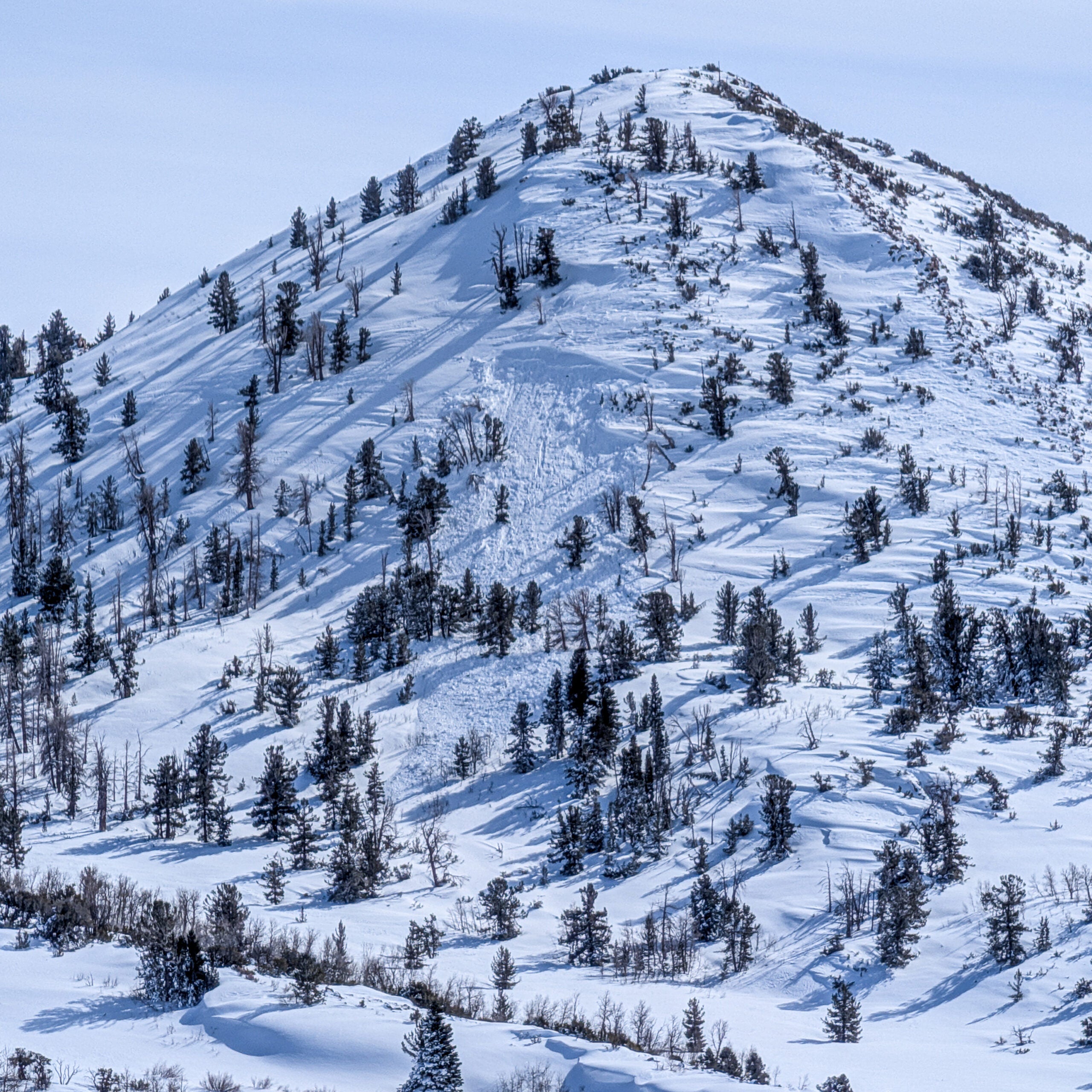 Avalanche danger was high on steep slopes during our tour (Photo: Brent Rose)
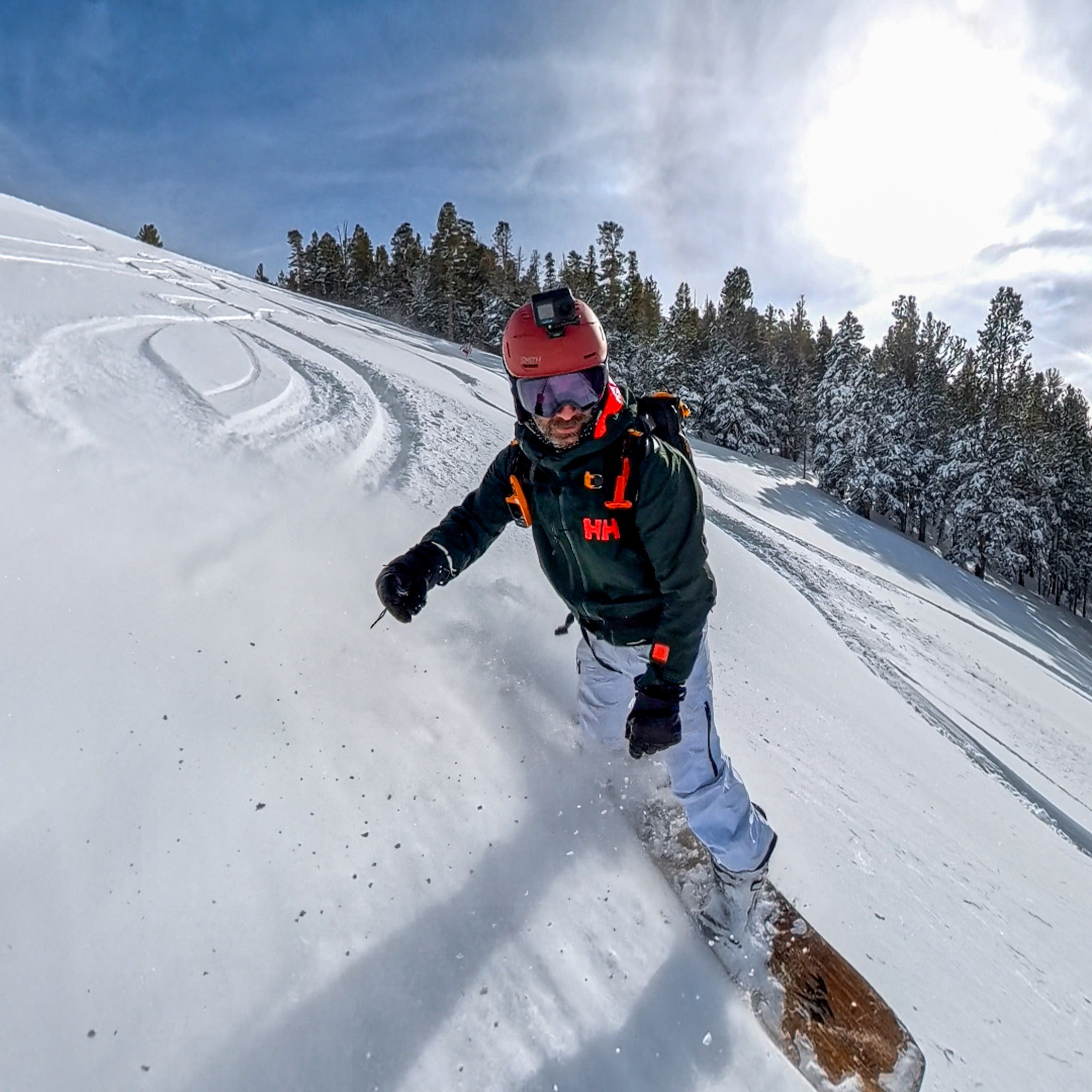 The author enjoyed more than a few turns during the tour (Photo: Brent Rose)
Around mid-day we stop for lunch at the bottom of a ski run, eating the prepared sandwiches and soup on a table that one of the guides has built from snow.
“Hey, look at that!” someone in our group says, pointing to a nearby hillside. We look across the valley and see the telltale debris field from a sizable avalanche on a steep chute.
The slopes we descend, however, are mellow. We slash big turns through trees, and the snow remains soft even in the glaring sunlight. But the experience includes a few bobbles—call them growing pains. One run ends rather unceremoniously on the banks of a deep creek. Our guide digs us a snow bridge and helps us climb out, all of us still grinning.
Toward the end of the day we get word that one of the other groups has had a close brush with an avalanche. We meet up with them, and they recount the ordeal.
After digging a snow pit to test the snowpack on a mellow slope, the group was about to descend, only to hear the telling whump of a slide. Everybody froze, and the guide told them to unclip their skis and boards. After waiting a few tense minutes and testing the snow again, they descended the hillside.
That’s when they realized that, when they stopped to strap into their boards and skis, they had triggered a small avalanche on a much steeper slope adjacent to the one they had descended. With this realization, the guides call it a day. I’m glad they have decided to listen to Mother Nature.
As we prepare to load back into the chopper one last time, our guide asks if I’d like to ride up front. I jump at the chance.
On our flight back, the pilot has some fun, swooping through valleys and banking sharply around crests. My gaze remains glued to the front window and the terrain below. I envision myself snowboarding down dozens of lines that have almost certainly never been touched. I think about Johnson, the company co-founder, who has still never skied these hillsides—he must wait a few months for his knee to heal. I wonder if I’ll ever snowboard like this in my home state again. And I feel thankful that I’ve gotten to experience it at all.