
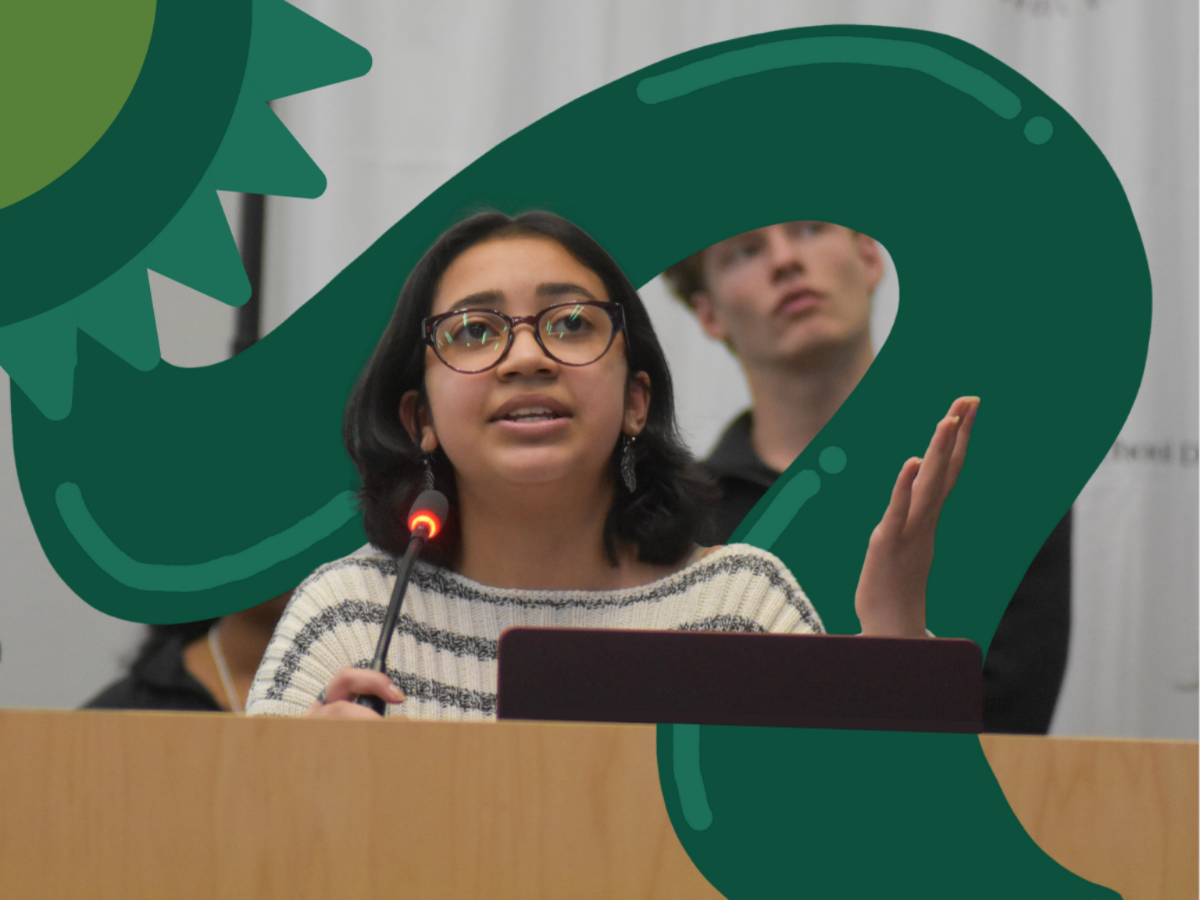
The California Department of Education recognizes FUHSD as a 2026 Green Ribbon Schools Gold-level honoree on Friday, Feb. 12, advancing from its Silver-level recognition in 2023. The award recognizes FUHSD among a select group of districts statewide for its efforts towards sustainability, student wellness and environmental education.
The California Green Ribbon Schools program evaluates districts on environmental initiatives and how deeply those efforts are integrated into daily operations, long-term planning and curriculum. According to CDE Program Lead George Garcia, Gold-level honorees demonstrate sustainability at scale, embedding it into governance, facilities management and instructional programs rather than limiting efforts to isolated projects.
“Gold-level districts show measurable results, strong policies and systemic implementation — not isolated projects across the program’s three pillars,” Garcia said in an email. “This includes reducing environmental impact and costs such as energy, water, waste, transportation and facilities planning; improving health and wellness through indoor air quality, nutrition, physical activity and social-emotional supports; and providing effective environmental and sustainability education through integrated curriculum, career pathways and student leadership.”
Garcia said the application process itself requires extensive proof such as utility data, curriculum framework, board policies and performance metrics aligned with the three pillars. He says the thorough process encourages schools to improve in practicing long-term sustainability.
“Beyond recognition, the application process itself is transformative,” Garcia said in an email. “It encourages districts to take a comprehensive look at their facilities, wellness practices and instructional programs, helping them see their campuses as assets for learning and student well-being.”
Climate Collective adviser and Science Curriculum Lead Kavita Gupta attributes much of FUHSD’s progress to the formation of the student-led Climate Collective three years ago. After surveying peers on their climate literacy, students found gaps and presented this data to the Board of Trustees, showing that many graduates received inadequate climate education during their time in high school. In addition, many students in the survey expressed interest in learning more about climate issues, but felt constrained by curriculum limitations and academic pressures.
“My primary role in Climate Collective is to elevate students’ voices,” Gupta said. “This initiative came from students. They wanted to learn more about their environment, the climate and its impact on them. Students feel a certain anxiety when climate issues and our changing planet are not addressed. So at the Climate Collective, we make sure that all of the decisions that we’re making as a group are student-led.”
Junior and MVHS Climate Collective site lead Suhani Nirwal says many students experience eco-anxiety, which is a sense of hopelessness about climate change, as well as lack of control over the situation. She says students frequently internalize climate responsibility as an individual burden rather than as a shared collective responsibility. Nirwal adds that recent shifts in the current political climate, including decreased federal government support for climate-related research, may contribute to rising uncertainty among youth.
“I’ve noticed that a lot of the climate-related events are getting responses from the government,” Nirwal said. “There are symposiums that Climate Collective members go to where they give opportunities for students to come and have workshops and increase climate education, but a lot of them have now been postponed because they aren’t receiving the right funding or support. I definitely think that it’s going to be an issue.”
The organization has expanded to all five campuses with students, teachers, administrators and district officials who meet monthly to discuss sustainability goals, shape policies and implement initiatives. These student-led initiatives include annual Earth Day celebrations with students presenting projects on local and global issues revolving around the environment and a standardized paper recycling program operating in more than 500 classrooms across the district. Students have monitored real-time energy consumption, identified energy inefficiencies and even flagged a faulty utility meter — a device used to record electricity and gas consumption — that had been inflating costs at MVHS, saving tens of thousands of dollars.
“We weren’t really tracking our carbon footprint,” Gupta said. “How do you go about reducing something that you don’t know about? So students took 10 years’ worth of reports, created a program and fed data to the program to find out where and how much our energy goes.”
Through the California Youth Climate Policy Leadership program, Nirwal conducted districtwide surveys, analyzed research and co-drafted a board policy mandating environmental education across the district, with an emphasis on addressing eco-anxiety. According to Nirwal, she and a fellow student compiled data, reviewed existing frameworks and presented the proposal to the Board of Trustees.
In response to student advocacy through Climate Collective, the district has expanded environmental education through a professional development workshop called the Environmental Learning Playground. During this session, teachers collaborate across subject areas to integrate sustainability topics into existing course material.
“Teachers come there, they create lessons and they learn about things,” Gupta said. “We even call the San Jose State University professors to talk about the best practices in designing some lesson data samples from other teachers who are doing the work. Maybe a science teacher is doing it a different way, or a history teacher is incorporating environmental work differently, so they learn about it during that day.”
Nirwal notes the recognition from the CDE validates the efforts students at Climate Collective have been working on for the past three years since its formation. With more than 100 volunteers across the district, the collective plans on increasing its outreach.
“We want to start including our parents,” Nirwal said. “We want to start including other community members, not just district stakeholders. Our main focus is definitely on increasing environmental education within the district, mostly targeted at our students, but we aim to increase that awareness, not just within the schools or on campus, but also in our communities.”
According to Garcia, California schools face unique environmental challenges such as wildfires, droughts, extreme heat and air quality concerns, which make sustainability efforts especially urgent. Garcia explains that the CDE hopes the award will encourage more schools to strengthen environmental literacy across grade levels, use cleaner energy sources and improve student health through healthier learning environments.
“I encourage districts to view the application process not as a competition, but as a reflective tool,” Garcia said in an email. “Many districts are already doing strong work — they simply need to document and align it within the CA-GRS framework. Participation demonstrates leadership and commitment to students’ futures.”
For Gupta, the Gold-level recognition reflects student momentum rather than an end goal. She says the award validates the years of student-driven progress and motivates students to enhance initiatives.
“We want to give a message of hope,” Gupta said. “We have challenges, but we need to adapt and deal with them, and I believe in all of you as our next generation of planetary stewards, you’ll keep it well and good for you and for us. I just don’t want to be the one to create all the problems and say, ‘Hey! Your problem. Deal with it,’ I want to give you tools and support your work.”
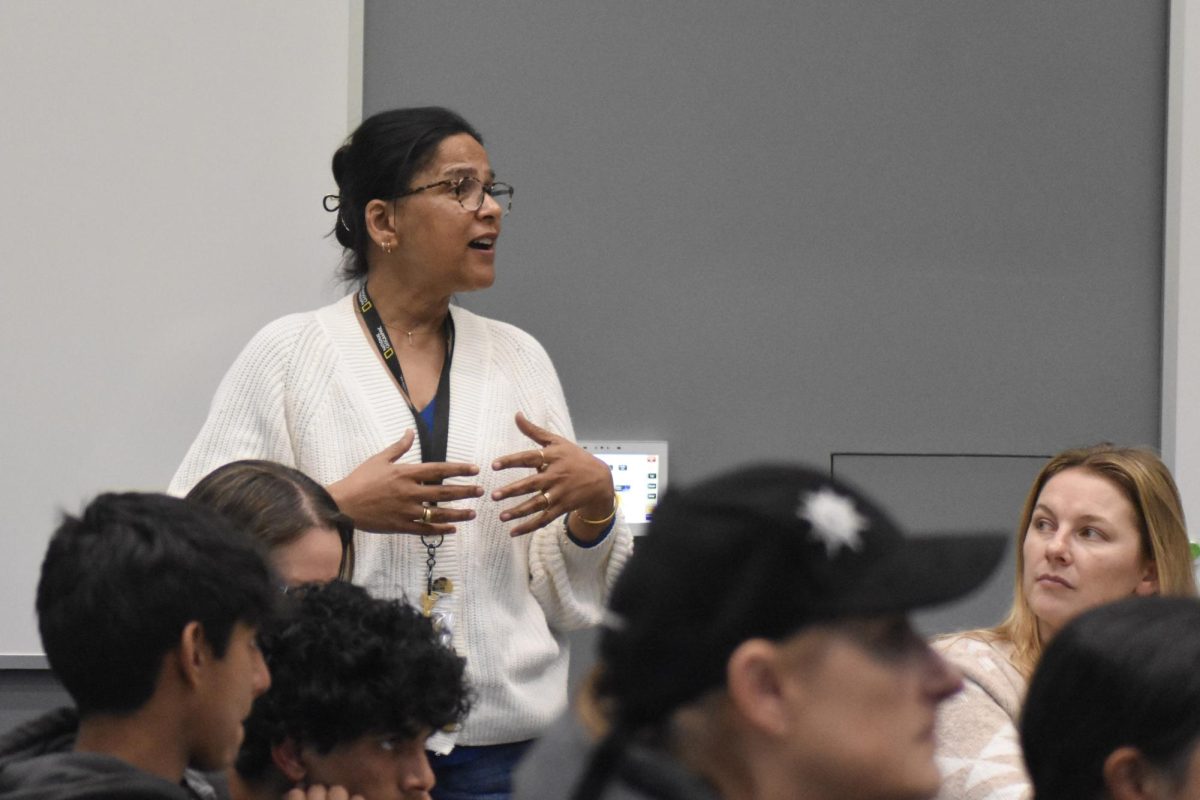
Science Curriculum Lead and Climate Collective co-adviseer Kavita Gupta introduces the next speaker during the Climate Collective meeting. Photo | Grishma Jain