
Chile relleno burritos served on pale-pink plates. A wall painted in a gold coin pattern. Gaudy, conical brass ceiling fixtures arranged in threes. This is not the interior of some recently excavated greasy spoon from the “Mad Men” era — it’s the interior at Goldenette (opens in new tab), a gleaming, week-old diner on Polk Street that radiates the color of sunshine.
Along with Chicken Fried Palace (opens in new tab) in the Mission and Hamburguesa Bar in SoMa, it’s part of a trio of retro-inspired food and beverage spots that have opened in San Francisco in the past three months, all of which sport decor that harkens back to the era of blue plate specials and endless cups of coffee in a vinyl booth. They join a handful of other nostalgia-inducing projects that have debuted in the past five years, including Midwestern-style Crocker-Amazon bar The Halfway Club and the whimsical, Michelin-starred North Beach restaurant Hilda and Jesse (opens in new tab). A wave of nosh-talgia is washing over San Francisco, and these new arrivals are feeding the city’s sudden appetite for the past.
 Chicken Fried Palace puts a Southern twist on diner classics. | Source: Courtesy Molly DeCoudreaux
 The decor includes wood-paneled walls and blush pink booths. | Source: Courtesy Molly DeCoudreaux
All offer approachable, broadly similar food. Hamburguesa Bar is a burger joint with a full liquor license, while Goldenette is largely Tex-Mex. Chicken Fried Palace’s culinary ambitions run to salt cod pancakes and smoked trout. As it happens, all serve milkshakes. But what really ties them together is the kitschy vibes — the feeling of stepping into the 20th century for a leisurely breakfast. Unlike many old-school diners, none is open 24 hours, but each is comfortable and spacious, with booth and counter seating. Above all, they reject the trend toward depersonalized, QR-code-driven service, favoring an atmosphere where patrons might want to linger a bit.
“It’s all face-to-face,” Goldenette co-owner Eddie Naser says. “You get to talk to the repeats. People love that about a diner.”
‘We had to adapt’
The recent arrivals mark a reversal of fortune for the city’s diner culture, which had fallen into the doldrums. Yes, HBO’s gay hockey show “Heated Rivalry” sent a new generation flocking to St. Francis Fountain to discover the tuna melt. But the Embarcadero’s Fog City and Bayshore Boulevard’s 24-hour Silver Crest have closed, while Louis’ Restaurant near Lands End never reopened after the pandemic. In Mission-Bernal, Al’s Good Food is struggling to make its existence known. And over in the Castro, Orphan Andy’s was put up for sale for a song, its hours drastically pared back.
Goldenette is a partnership between Naser and local burgermeister Wes Rowe. Together, they transformed a former outpost of the breakfast-centric mini-chain Toast, replacing its omelets and scrambles with bread-pudding French toast and a bang-up sausage, egg, and cheese sandwich. Naser started Toast in 2005, eventually expanding to four eateries citywide, of which only the location in West Portal, where he was born and raised, remains. He has no plans to change it, noting that business is brisk. “It’s more of a traditional neighborhood, and I have a lot of support,” he says.
Naser and Rowe made other changes to keep pace with evolving tastes. Toast closed after the lunch rush; Goldenette is open until 9 p.m., something Naser hopes will help rejuvenate Polk Street. And the limited offerings allow the kitchen to dodge a pitfall that plagues many diners: the multipage, Cheesecake Factory-like menu that’s meant to appeal to all tastes but serves none particularly well.
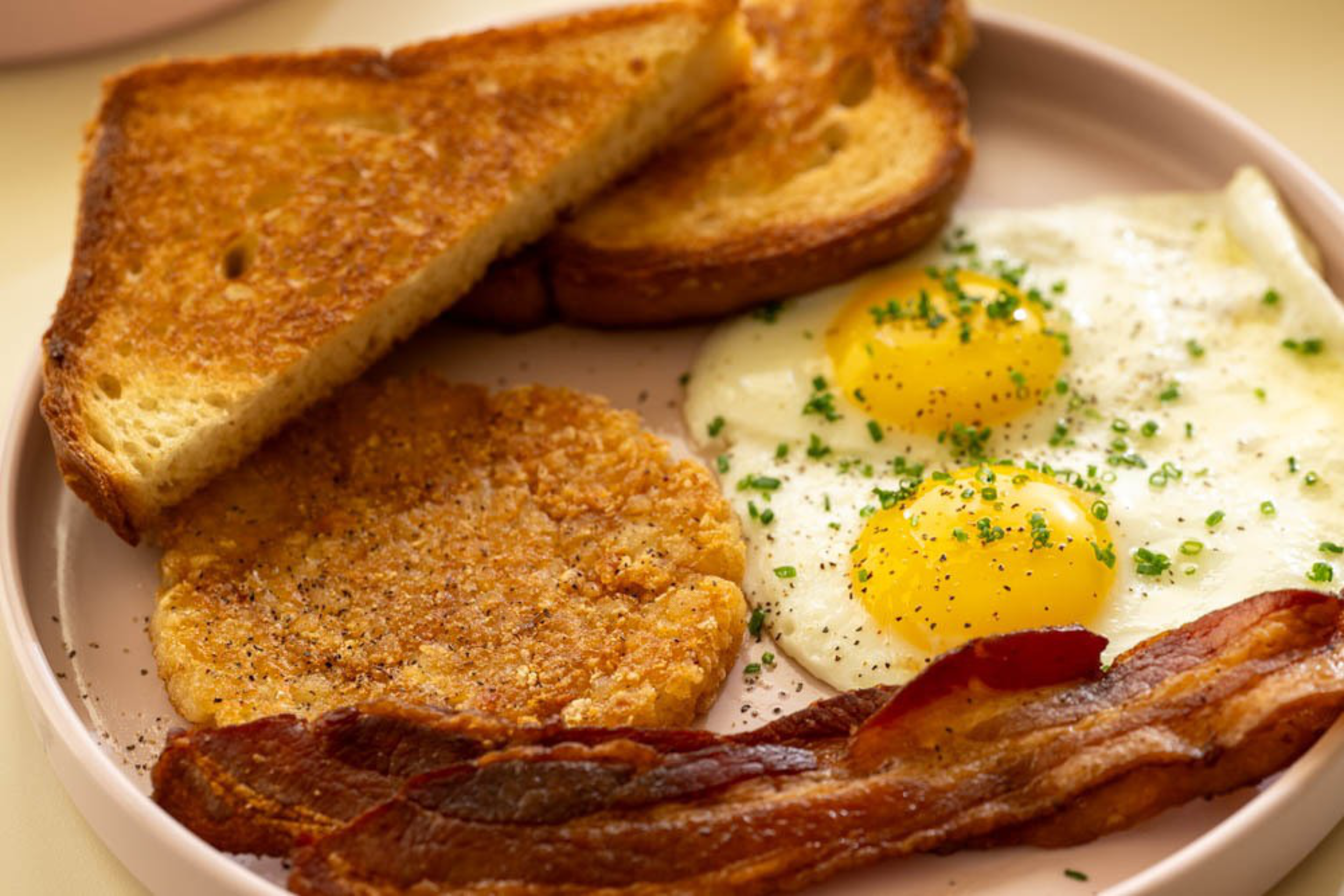 Goldenette serves breakfast from 9 a.m. to 9 p.m., six days a week. | Source: Courtesy Goldenette
Not everyone is happy with the transformation, however. Some loyal, omelet-loving customers — who have been regulars since the days when it was Bob’s Diner, run by the same Bob as nearby Bob’s Donuts — balked at the refresh. “They were asking, ‘Where’s the jelly on the table? Where’s the Sweet’N Low?’” Naser says. “But we had to adapt.”
Comfort food and an easygoing vibe
Just because a restaurant is retro doesn’t mean it’s a diner. Hamburguesa Bar co-owner Lane Ford notes that his establishment is first and foremost a bar, with a full liquor license and a service style based on a Middle America luncheonette. That means it’s open from noon to midnight (no breakfast items), as opposed to Goldenette’s 9 a.m. to 9 p.m.
But comfort foods dominate. The Hatch chile cheeseburger — which is not a smashburger but a thick, juicy patty Ford calls a “tavern burger” — is the best seller, along with fries cooked in duck fat and slices of rum cake. Prices are on the affordable-for-SF side: You can walk in and order a burger, fries, and a pint of draft beer served in a frosty glass for around $30 with tax and tip.
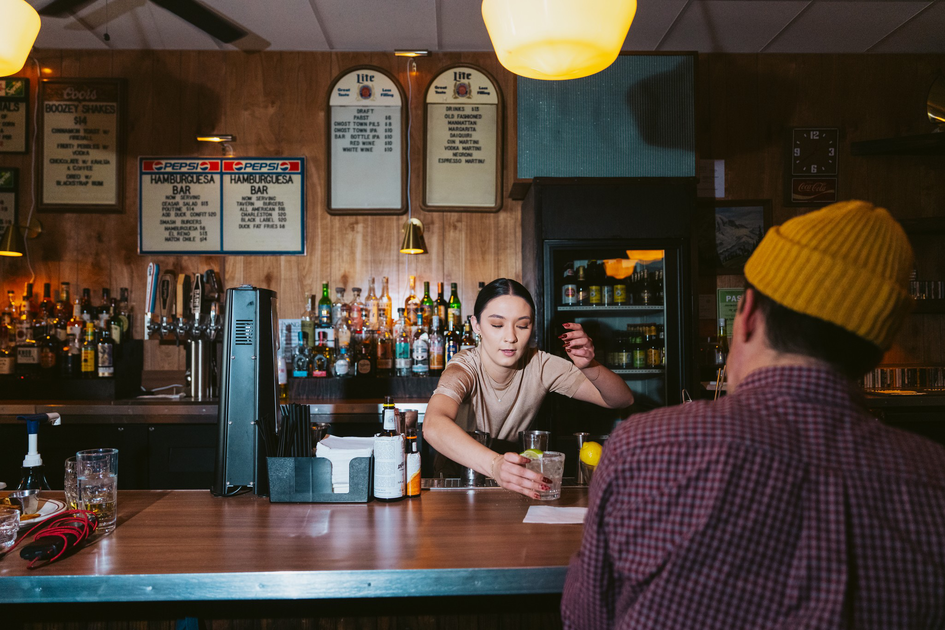
The interior matches. Hamburguesa Bar has a drop ceiling, with tacky velvet paintings and beer signs on the faux wood-panelled wall. It feels like a fully formed dive, right out of the gate — not in the sense of a grungy bathroom covered in years’ worth of stickers, but a place that’s always been there.
Ford, a New Orleans native who grew up in Oklahoma, has memories of going with his father to a local luncheonette where service was gruff. (He recalls an older patron who was taking too long during the lunch rush. The bartender gave her five minutes to finish her coffee and go.) Ford isn’t looking to give slow eaters the heave-ho, but in the era of slop-bowl chains — “kiosk places,” he sniffs — even tough love feels human. Ford wants to preserve a vanishing bit of Americana, casual full-service places where, “if you got a Coke, somebody would bring it to you,” he says.
 A window behind the bar allows a peek into the kitchen at Hamburguesa Bar. | Source: Michaela Vatcheva for The Standard
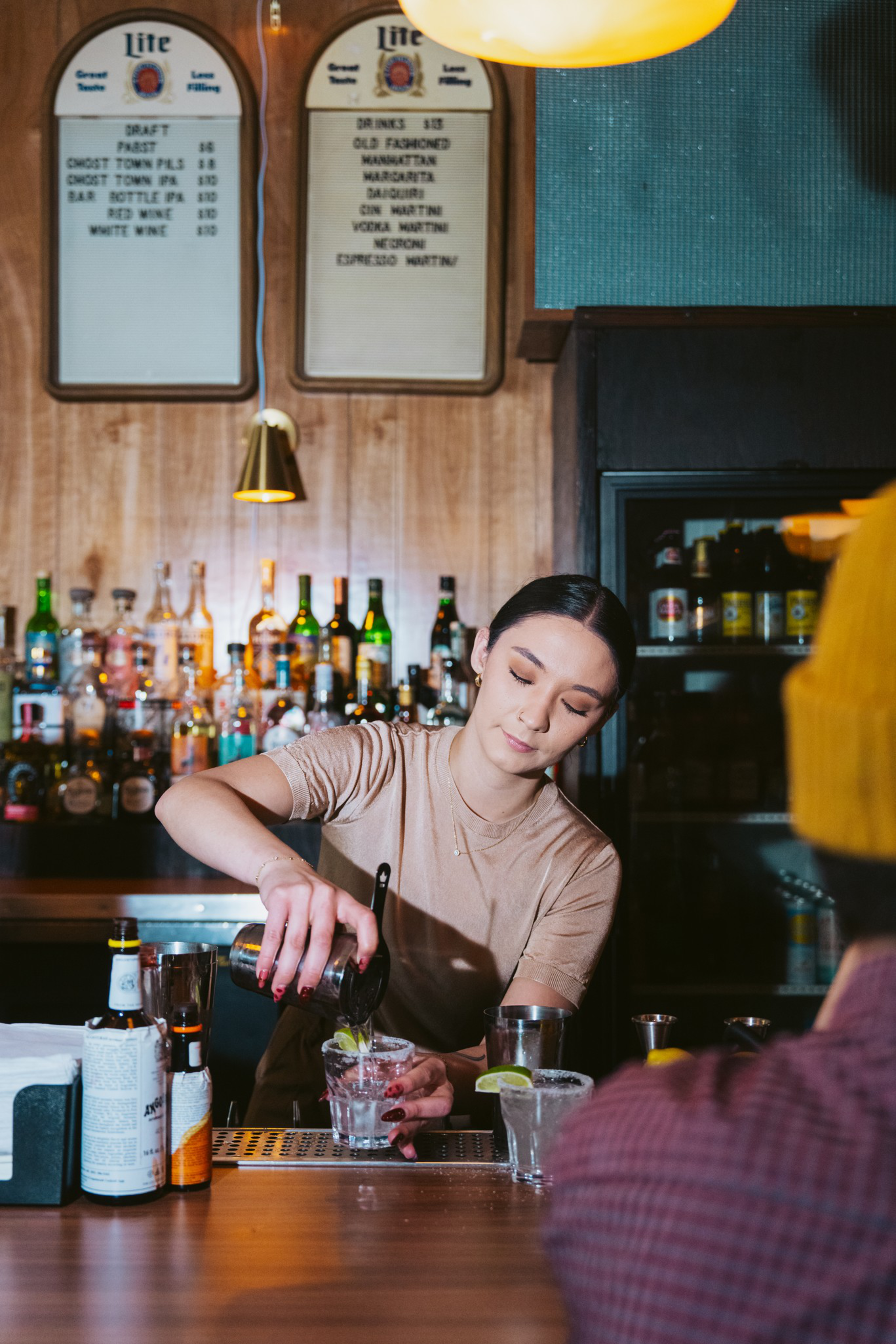 Hamburguesa Bar’s cocktail list includes classics and boozy milkshakes. | Source: Michaela Vatcheva for The Standard
The seemingly endless drumbeat of bad news is fueling the nostalgia boom, especially for people who grew up in the 1980s and ’90s. “Everything is so serious now,” Ford says. “A place like Hamburguesa Bar is kind of a reprieve, something from an easier time.”
Chicken Fried Palace is also focused on that easier time, hung with thrift-store-style portraits of fast-food titans such as Colonel Sanders. The Googie (opens in new tab)-style metal panels that chef-owner Seth Stowaway inherited from previous occupant Wes Burger ’N More — another Rowe project — are now painted in pastel pink, blue, and white. Four-person wood tables have been replaced with tan upholstered booths where patrons dive into bowls of grits and patty melts on Pullman toast.
Stowaway’s core concept of “chicken-fried X” — where X could be chicken, steak, mushrooms, or smoked trout, smothered in one of three Southern-style sauces — has been further diner-ized since its November debut. The mochi-style batter, with its distinct texture, has been discarded in favor of a traditional, flour-based dredge — the kind found at truck stops everywhere.
For Stowaway, who earned a Michelin star at his live-fire restaurant Osito, this doesn’t feel like dialing back his ambitions. Rather, it brings Chicken Fried Palace closer to his initial goal of feeding people good food in a lighthearted place. “It’s not about proving something is super cool,” he says. “It’s about giving people what they want.”