
Senator Scott Wiener isn’t giving up on California’s mask ban for ICE agents | California Politics 360
Joining us now is California State Senator Scott Weiner. Senator Weiner, welcome back to California Politics 360. Thanks for having me. So I wanna get just an update on these California laws that are meant to require ICE federal agents to carry ID and wear masks. From your perspective, just given the movement in the courts right now, where does, where do those stand? Yeah, so, um, uh, for the law that I authored, uh, Senate Bill 627, um, the, it’s on hold, uh, because the federal court, uh, told us that it is enforceable. We have the power to do this, but it has to include state police. When we passed the law, we included all local law enforcement, so all sheriffs, all police departments, and the federal government, but not the state level, which is *** very small portion of, of law enforcement. Uh, and we thought that that would be defensible because the vast majority of California law enforcement is included. Uh, the federal judge, uh, had decided otherwise and said we have to include the state level as well. And so I immediately introduced Senate Bill 1004. To put the state police into the bill and that it will be enforceable. It looks like an appellate court is going to consider the requirement for officers to carry IDs. The federal government is basically saying not just with that law, but also the masking law. Regardless of who it applies to, they’re claiming that it violates the supremacy clause. Just what’s your response to that? What happens if the court ends up siding with them on IDs? Well, we’ll see how the court rules and what they what they say. Yes, the Trump administration is taking the position. That states have no power to tell federal employees what to do and that’s contrary to long standing law. Federal employees, including agents, have to follow many state laws, whether it’s *** speed limit or different criminal laws or whatever the case may be. There are many situations where federal employees have to follow state law, and that is the case here as well. The head of ICE stated early last year that masking is not essential for ICE to do its job, that it’s not something that the agency tells them to do, that it just doesn’t stop them from wearing *** mask if they want to, and the reality is that we have *** Multi-century history of law enforcement in the United States of America where they overwhelmingly do not wear masks, federal, state, local, they are very limited. Exceptions like SWAT team for example, but the vast majority, particularly patrolling officers, do not wear scheme, do not wear these masks. And so we believe we have the power. Obviously we’ll see what the courts rule in terms of your proposal to try to do this, to apply right now the law that the court struck down, you noted. Does not apply to state police. You have this proposal now that would apply it to everyone. How do you see that? I mean, what have you, what have the conversations been like on that so far? Yeah, I mean, first of all, let’s look at the we have *** lot of common ground. The governor, leadership in both houses, myself, um, so many of my colleagues. We are all horrified by what ICE and Border Patrol and other federal agents are doing in communities where they’re coming into communities essentially wearing ski masks or something approaching *** ski mask. It is terrifying. I think it is designed to increase the fear factor with these roving patrols that are just like grabbing people and tearing families apart and throwing people into unmarked vehicles. It’s *** terror campaign. And it is designed. The reason why they wear the masks, they talk about doxing, they want no accountability because if you can’t tell who the person is who just shot someone or just did something very illegal and unconstitutional, then it’s hard to hold that person accountable. So it creates an air of impunity and fear, and that’s why we have to get rid of it. We are, I introduced this bill. I obviously have to get buy-in from both houses and from the governor, and I’ll do whatever I need to do legislatively to be able to pass *** strong bill and to make sure this is enforceable. The governor seemed pretty satisfied that there’s *** chance the requirement that they carry IDs moves forward. He was asked about applying this to state police to try again. On the masks, he didn’t really say one way or the other. Have you had any updated conversations? No, we’re, we’ve had some initial communications with the governor’s office and we’ll of course work with the governor as always. And for me, the bottom line is I just want to make sure that we pass an effective law. That will work and will crack down on this abuse and and you know under federal law, as the federal court ruled, it has to apply to everyone and frankly it should apply to everyone. We don’t see local law enforcement doing this now. I don’t want to see that in the future. So this is good policy even without Donald Trump. This should have always been the law and Trump showed us this. Sort of loophole in *** way that there was nothing stopping them from engaging in these kind of terror tactics. You have another proposal called the No Kings Act to make it easier to sue federal officers for their treatment of folks when their rights are essentially violated. How do you see that being impacted by however, The courts or just with this whole discussion already on the masks and ID, yes, we have *** strong argument that the masking law is valid and once we put the state police back in and the federal judge has already held that, so we’re not just making it up, we have *** federal judge who has agreed with us. The No Kings Act SB 747, I think we have an even stronger argument that we have the power to do this. And what that bill does, so the situation right now, which is really just unacceptable, that if *** local police officer violates your constitutional rights, uses excessive force against you, arrests you, and holds you for three days for no reason. Right, that’s *** violation of the Constitution. You can sue that officer under *** federal civil rights statute. It’s called Section 1983. It’s been around for, you know, since right after the Civil War. So you can sue them. Same with *** state officer, you can sue them. And that is the law right now. However, you can, it is almost impossible to sue *** federal agent if that agent does the same thing, uses excessive force against you, I don’t know, shoots your mom in the face, executes *** nurse in public. Alex Pretty, Renee Good, they’re going to have *** very hard time having any accountability for those agents because because that. The statute that allows you to sue *** local or state police officer for violating your rights does not apply to federal agents. There was *** way to do it to be able to sue federal agents for violating your rights, but *** few years ago the Supreme Court all but eliminated that ability, and you probably can’t even sue the federal government directly. Because under the Federal Tort Claims Act, which allows you to file *** claim against the federal government, it’s more designed for *** situation where *** federal employee rear-ends your car. It’s not designed so much for *** law enforcement setting, and so we want I talked before about the air of impunity and lack of accountability. They cover their faces so you can’t tell who they are, and it’s very hard to sue them. So what this bill does is it takes the existing federal civil rights statute that allows you to sue state and local officers, imports that into state law, and, and applies it to all levels in state, local, and federal, uh, and only for violations of the federal Constitution which these officers have all taken an oath to uphold. And we feel very good that we have the power to do this, and I think all states should do it. Ideally Congress would just change the law and allow it, but if not, then we should do it. The Peace Officers Research Association of California, essentially the largest law enforcement lobbying group, is worried that that law, the No Kings Act, could result in potentially creating them, giving them, could flood more. Litigation lawsuits against police in the state. Your response to that? Yes, I do not agree with that. And in fact, to its credit, the lobbyists for PA for this association in our Senate Judiciary Committee hearing acknowledged that. This bill does not in any way expand liability for state and local law enforcement and so *** local police officer right now can already be sued for excessive force, false arrest, other constitutional violations. This bill Replicates that existing liability. It doesn’t expand the liability. They’ll still have all the same defenses, all the same immunities. It doesn’t take anything away. So for state and local law enforcement, it’s really just *** duplication of their existing liability. So it really doesn’t change anything for them. And even if someone decided to sue them. In state court instead of federal court, which they can already do because you can sue under *** federal statute in state court, they will have the ability, as they do today to have it transferred to federal court. So this in practice on the ground has no impact on state and local law enforcement because they’re already subject to all of these litigation risks. Just broadly, I mean just given that these proposals, these laws have created some tension with state and local police, I mean what would you say to those who feel Like they’re being punished for the federal government’s actions. Yeah, I, I, I have worked with my local police department, the San Francisco Police Department. I have worked with SAPD for more years than I can even remember, uh, as ***, as *** community leader, as *** local elected official, now in the state Senate, and I go to all their, as many as I can to their police academy graduation. I I have *** close working relationship with them and I respect them and our state and local law enforcement, they have hard jobs and they go to work every day to uphold public safety and protect their communities. And when they make mistakes or they screw up, there’s accountability, and that’s good for the profession. And what is hurting state and local law enforcement right now is not this bill. It’s what Trump and his team are doing because when you have these masked. Like unidentified, unaccountable thugs from the federal government doing like sowing chaos, but they’re carrying out orders, but they are, but when they’re doing that, they are destroying trust in law enforcement because for people who are now living in fear. That they are they don’t want to talk to anyone. They can’t even tell is this person, are they *** federal agent? Are they are they *** local police officer who’s grabbing my grandkid or my grandmother and so it undermines trust in all law enforcement, and I’ve spoken to police officers who tell me that it makes their jobs so much harder to have the feds doing what they’re doing right now. So that is what is harming the state and local law enforcement, not *** bill. That ensures accountability for everyone, not just state and local, which is the case now. I’ll switch gears because you take on hard proposals. Another one that would could make it easier to break up PG&E in this state. Um, you rolled that out this week. What kind of feedback have you gotten? I understand it specifically. I know it’s different from *** proposal in 2020. Makes it easier for local governments to essentially take control of their equipment. Yeah, we’re getting *** lot of positive feedback on it. People are at the end of the rope with PG&E and have been for *** long time, not just in San Francisco. I mean, I, I remember when I did *** previous bill just to try to force them. To turn on the lights for new developments more quickly as opposed to taking like 6 or 12 months. I was getting support out of Kern County. Because it’s uh the whole territory that this is *** company that is failing in many ways. We know we’ve seen all the wildfires in San Bruno, but they are driving businesses out when they tell them it’s going to take us 2 years to give you electricity, and then they’re like, OK, I’m going to Texas if you can’t turn the lights on for me here. Uh, they are, we see it with new housing where it takes them forever to turn it on, so people can’t live in those homes. Uh, we see it with what happened in San Francisco in December right before the holidays where about *** third of the city had no lights for, for *** lot of my constituents, it was for days and days with poor communication. They have not maintained their infrastructure in the way that they should because they for decades were so focused on Wall Street, not on providing the best possible service, and PG&E rates are so much more expensive than like public power in Sacramento or Palo Alto. So people are at the end of their rope, and, and so I’ve long supported San Francisco breaking away and creating its own public utility like Sacramento and Palo Alto have. And last time I did *** bill to really just make them *** public utility, that did not work. So this time the approach is that San Francisco and other cities have been trying to use eminent domain to purchase PG&E’s assets to pay fair market value and create their own utility. PG&E over the last 30 years has inserted. Provisions in state law to put up extra barriers when *** city tries to use eminent domain for *** utility, and so we want to get rid of those requirements and just use traditional eminent domain law instead of giving PG&E the ability to gum up and obstruct the process, which they’ve done. San Francisco, it was 2019 that San Francisco first made the offer to PG&E, and it’s been 4.5 years since San Francisco filed *** petition. With the California Public Utilities Commission to value the assets, and they were supposed to complete that in 18 months, 4.5 years, because PG&E has filed 130 filings to try to obstruct it. So it’s *** bad process and we’re trying to fix it. This predates Mayor Daniel Lurry. Do you know where he stands on this? I do not know. I have not spoken to the mayor about the. The bill, I think there is very strong support of the board of supervisors, if not unanimous, and close to unanimous, and The president of the board of supervisors introduced *** resolution this week to support the bill, and I had, I think, 4 supervisors at the press conference announcing it. So I suspect I’m optimistic that the board of supervisors will vote to put San Francisco on record supporting the bill. And this bill, would it just be for San Francisco, or it’s any local government who’s interested in eminent domain. Yes, it fixes the process for any local government that wants to do it, OK. PG&E in response to your bill said that they have made investments um in San Francisco citing I think 3 billion over the last two decades, and they claim that uh making significant or that government takeovers of parts of our grid would not make customer energy bills less expensive. They said in San Francisco’s case specifically it would actually be more expensive. Your response to that? Uh, I, I don’t agree with that and, uh, the city of San Francisco. does not agree with that, um, and San Francisco um already has *** small public power entity that provides power to um *** lot of the city functions. It works quite well. Uh, we have an agency that knows how to do public power, uh, so we believe we can provide this, uh, at *** lower cost to, um, to San Francisco residents and. And focus more intensively on keeping the infrastructure up because what happened in December, it was *** fire at one of the substations, so an infrastructure problem at the same substation that had had this problem I think 20 years ago. And so why and they were supposed to upgrade these substations and they didn’t, uh, so, uh, San Francisco will be able to focus more intensively on keeping the infrastructure in good shape. OK, switching gears, um, just in the political space now, um, we’re *** week out it’s been *** week since the California Democratic Party convention. You were one of the only candidates in an open race this year to get the party’s endorsement. All the other open races statewide, there really, there really was no agreement just from, I mean, as someone who’s been *** part of it for so long, I mean. What is going on? I mean, especially in the race for governor, what is, what is happening in this party? Like what’s your assessment? Well, I mean, they were like, you know, so I was able to get the endorsement in an open congressional seat. Mike McGuire was as well, and Ayesha Wahab. So there were some of us who were able to do it. And I think if you are someone who has support in your community, and has done the work, you know, you have *** shot at being able to get the grassroots delegate support. Um, for, for governor, it is *** very splintered field and it’s not surprising, right? Like we, this is the first governor’s race in decades in California where it’s an open seat and there’s no clear front runner like in 2018. Gavin Newsom was able to very quickly, even though he had competition, he established himself as *** strong front runner early, and that has not happened here. We have *** number of candidates. I know all of them. These are *** number of really good, smart, committed people, but there’s no one has been able to get that critical mass to start blowing past everyone else. And we’re at *** moment in time in the Democratic Party where we are um having an internal conversation about what’s the best path in an era where we have an aspiring authoritarian, uh, an attack on democracy, uh, where we have economic challenges in terms of affordability and income. Inequality that played *** role in fueling Trump’s rise because when people are desperate and think their kids are going to have lower standard of living than they do, they may. Take *** risk and vote for *** psychopath grifter like Trump. And so because they think, well, maybe he’ll make things better and of course he’s making things worse. So and I think the Democrats were having an important conversation. How should we approach that? What should we be as *** party? What should we be focusing on the most? And so it’s healthy. With that said, we have so many candidates that it, it, it becomes even more fragmented, and I know that obviously we, we, the, the, the, the risk of having two Republicans in the top two is unacceptable. This is not *** Republican state and particularly Steve Hilton and Chad Bianco are extremists. They’re not, you know, even, even old school mainstream kind of Republicans. They are extremists and and we can’t allow that to happen and so we have to. As *** party, figure out who we’re going to really get behind and the party isn’t there yet and even I mean even though outside of the governor’s race, I mean superintendent of public instruction, insurance commissioner, I mean all these other offices that also, I mean in 2018 people were able to get endorsements where we’re just not seeing that. I mean, is the party divided I guess is my question. Yeah, I think, I think this all plays into you know what I was saying before that that we are. Having these conversations internally as *** party, uh, and you know, on the, on the one hand it is healthy that we have these very spirited races and, and on some of them there is no consensus because *** number of candidates have real support within the party and for the for the down ballot races. I’m not as concerned that that’ll all play out. Excuse me, Governor is where I am concerned that if it becomes so fragmented that we end up with two Republicans, and I know that’s unlikely, um, but you know we, we, we need to at some point start figuring out who are the truly viable Democrats and then get behind them. All right, Senator Scott Weiner, we really appreciate your time. Thank you. Thanks for.
Senator Scott Wiener isn’t giving up on California’s mask ban for ICE agents | California Politics 360

Updated: 8:25 AM PST Mar 1, 2026
After a federal court struck down California’s law that attempted to prohibit immigration agents and federal officers from wearing masks, State Sen. Scott Wiener said he’s not giving up. In an interview on California Politics 360, Wiener said the law is still on hold but is encouraged that a federal court in Los Angeles has said it needs to include state police. Wiener wrote the law last year which lawmakers and the governor approved to prohibit not just federal officers, but also local officers from covering their faces with some exceptions. State law enforcement including the California Highway Patrol were exempted. Immediately after the court made its decision last month, Wiener filed a bill that would include the state officers.In that same decision, the judge allowed a separate law requiring officers to carry and show identification at every level of law enforcement. The Trump administration appealed and a hearing is scheduled March 3. The Trump administration has argued both laws violate the federal supremacy clause, which prohibits states from passing state laws that could burden federal agents. The administration has also said the masks are for officer safety as some face threats, assaults and online doxxing. “We believe we have the power, obviously we’ll see how the courts rule,” Wiener said. “The head of ICE stated early last year that masking is not essential for ICE to do its job and it’s not something the agency tells them to do.” Gov. Gavin Newsom has not taken a position on Wiener’s legislation to try again by including state police. When asked if they’ve spoken since the court’s decision, Wiener said no. “We had some initial communications with the governor’s office and we’ll of course work with the governor as always. For me, I just want to make sure we pass an effective law that will work and will crack down on this abuse,” Wiener said. Wiener is also proposing a law this year that would make it easier for people to sue federal officers for violating their rights. Law enforcement groups in California have worried the way it’s written could open them up to more litigation and liability. Wiener is confident this bill will be effective and muster the courts. When asked about the likelihood state and local police feel they’re being punished for the actions of federal officers, Wiener said he respects law enforcement in California. “What is hurting state and local law enforcement is not this bill, it’s what Trump and his team are doing,” Wiener said.Watch the full interview with Senator Scott Wiener in the video above. KCRA 3 Political Director Ashley Zavala reports in-depth coverage of top California politics and policy issues. She is also the host of “California Politics 360.” Get informed each Sunday at 8:30 a.m. on KCRA 3.
After a federal court struck down California’s law that attempted to prohibit immigration agents and federal officers from wearing masks, State Sen. Scott Wiener said he’s not giving up.
In an interview on California Politics 360, Wiener said the law is still on hold but is encouraged that a federal court in Los Angeles has said it needs to include state police.
Wiener wrote the law last year which lawmakers and the governor approved to prohibit not just federal officers, but also local officers from covering their faces with some exceptions. State law enforcement including the California Highway Patrol were exempted.
Immediately after the court made its decision last month, Wiener filed a bill that would include the state officers.
In that same decision, the judge allowed a separate law requiring officers to carry and show identification at every level of law enforcement.
The Trump administration appealed and a hearing is scheduled March 3. The Trump administration has argued both laws violate the federal supremacy clause, which prohibits states from passing state laws that could burden federal agents. The administration has also said the masks are for officer safety as some face threats, assaults and online doxxing.
“We believe we have the power, obviously we’ll see how the courts rule,” Wiener said. “The head of ICE stated early last year that masking is not essential for ICE to do its job and it’s not something the agency tells them to do.”
Gov. Gavin Newsom has not taken a position on Wiener’s legislation to try again by including state police. When asked if they’ve spoken since the court’s decision, Wiener said no.
“We had some initial communications with the governor’s office and we’ll of course work with the governor as always. For me, I just want to make sure we pass an effective law that will work and will crack down on this abuse,” Wiener said.
Wiener is also proposing a law this year that would make it easier for people to sue federal officers for violating their rights. Law enforcement groups in California have worried the way it’s written could open them up to more litigation and liability. Wiener is confident this bill will be effective and muster the courts.
When asked about the likelihood state and local police feel they’re being punished for the actions of federal officers, Wiener said he respects law enforcement in California.
“What is hurting state and local law enforcement is not this bill, it’s what Trump and his team are doing,” Wiener said.
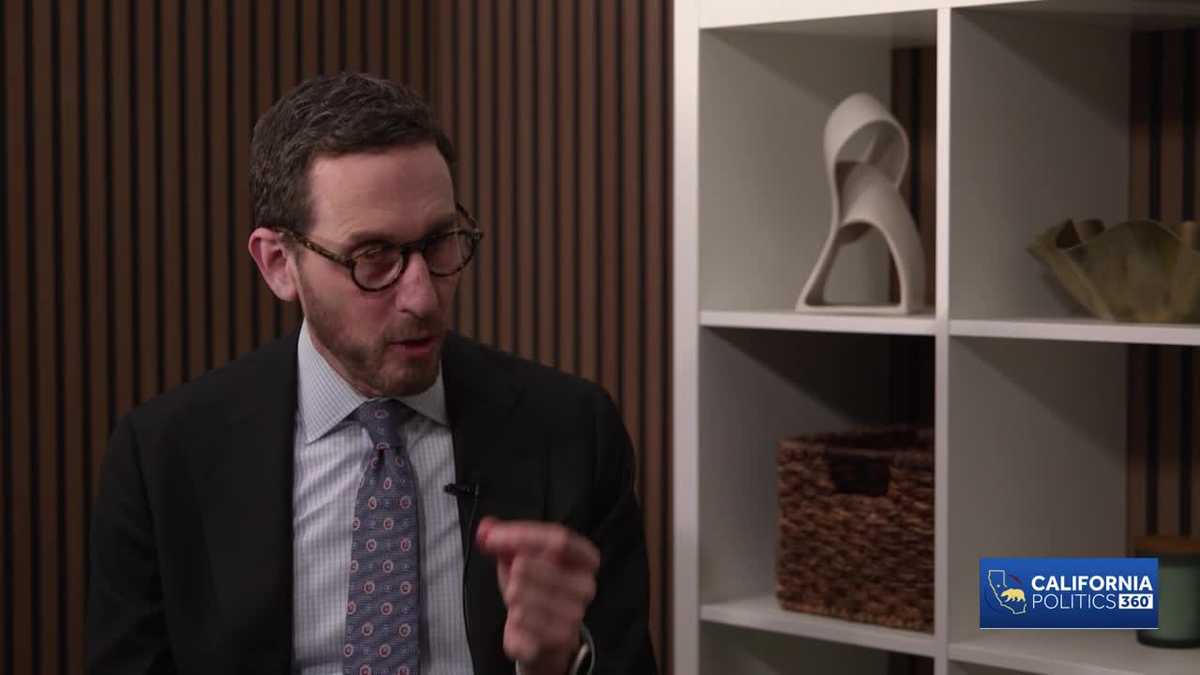
Watch the full interview with Senator Scott Wiener in the video above.
KCRA 3 Political Director Ashley Zavala reports in-depth coverage of top California politics and policy issues. She is also the host of “California Politics 360.” Get informed each Sunday at 8:30 a.m. on KCRA 3.