
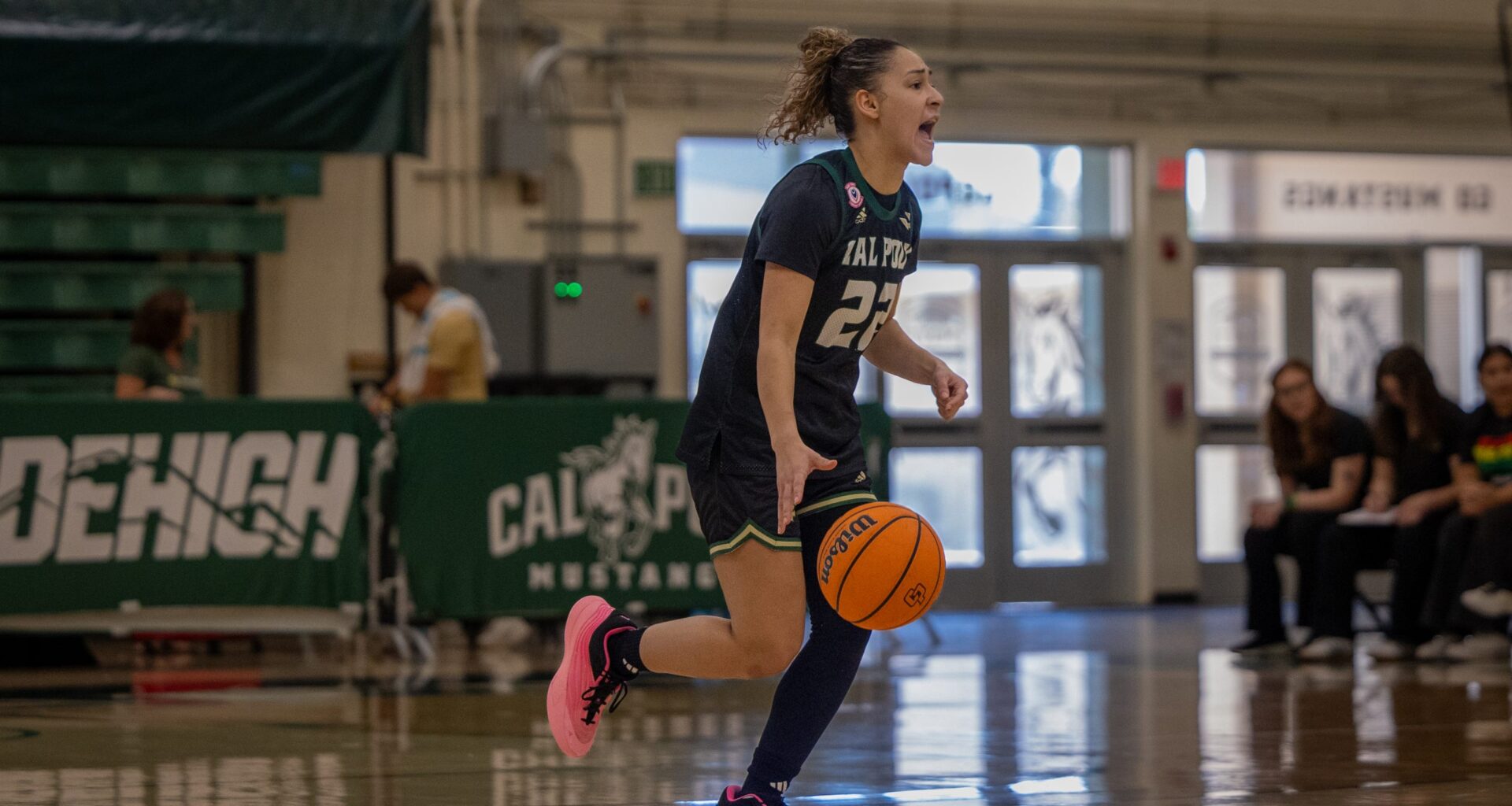
Cal Poly’s women’s basketball season has lived in the space between progress and results. Thursday night was another example.
Despite leading by double digits in the second half and controlling long stretches of the game, the Mustangs couldn’t sustain that momentum late, falling 67-57 to Long Beach State on the road. It marked another close loss in a season defined by learning curves, late-game swings and a young roster trying to translate growth into wins.
Vanessa McManus and Charish Thompson each scored 15 points to pace Cal Poly, while Alana Goosby returned to the lineup with nine points, six rebounds and six assists, giving the Mustangs a stabilizing presence on both ends.
For much of the night, Cal Poly looked like a team continuing to build on the incremental progress it has shown throughout conference play. After experiencing an early point deficit, the Mustangs brought it back and dictated tempo for most of the middle quarters, moving the ball well, defending without fouling and finding scoring balance across the lineup.
That stretch reflected something the coaching staff and players have emphasized all season, this group’s ceiling isn’t measured solely in wins, but in whether it can sustain competitiveness against teams with more experience and continuity. Thursday’s performance checked many of those boxes, until the closing minutes.
Cal Poly has shown repeatedly this winter that it can play with anyone in the Big West for stretches. The Mustangs have hung with conference opponents into the second half in multiple games, often building leads or keeping margins within reach. But turning those moments into results has remained elusive, as depth, experience and late-game execution continue to separate them from more established teams.
That dynamic is typical of rebuilding programs, especially ones relying heavily on underclassmen and players adjusting to expanded roles. For Cal Poly, this season has often felt less like a finished product and more like a foundation year, one where growth shows up in possessions, quarters and defensive stretches, even when it doesn’t show up in the standings.
Thursday’s loss fit that pattern.
For three quarters, Cal Poly looked like a team growing into its identity, with competitive, defensively engaged and increasingly comfortable generating offense through its primary scorers. The final stretch served as a reminder that development rarely follows a straight line.
With only a handful of games left in the regular season, the Mustangs’ focus shifts less toward the standings and more toward carrying these incremental improvements into March, and more importantly beyond.