
Everyone loves a comeback story — and you needn’t go very far in
our Capital Region to find one of the most crowd-pleasing,
soul-satisfying ones. It even comes with a musical soundtrack!
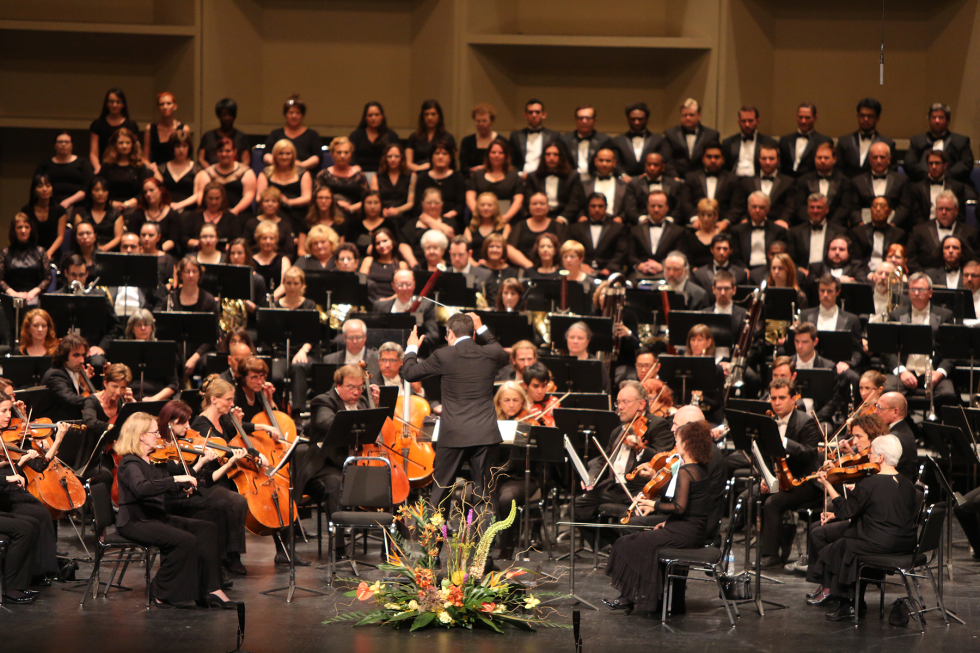
I refer, of course, to the Sacramento Philharmonic & Opera, our
own phoenix that rose from the ashes of financial frailty, two
recessions, one pandemic, occasional mismanagement and changing
audience tastes. How wonderful to feature some of its players in
this issue’s Women in Leadership photo spread, especially since I
wanted to produce this theme for the past three years. All it
took was a call to Giuliano Kornberg, the Philharmonic’s
executive director, to explain what I wanted to accomplish — the
many moving parts that would need to be considered — and voila!
We had our plan. I hope you enjoy the results of this idea on the
cover and starting on page 48 of this issue.
A little background on this amazing ensemble, which began in
1948, going from riches to rags and back in the span of seven
rollercoaster decades.
Many longtime area residents — as well as disappointed patrons
who, years ago, bought annual subscriptions only to have the
then-Sacramento Symphony Orchestra cancel the season — are at
least passingly familiar with the group’s multi-storied struggle
to stay alive. It went through a revolving door of executive and
artistic directors, staff members, boards of directors, full-time
and one-weekend-only maestros, name changes and, finally, the
merger that began to save two faltering professional companies at
once: the re-christened Sacramento Philharmonic and the venerable
but often financially challenged Sacramento Opera.
The on-again, off-again financial instability of the Sacramento
Symphony resulted in its declaring bankruptcy and closing up shop
entirely in 1997. Several years later, it returned under new
management and with a new name: the Sacramento Philharmonic.
Following some years of leadership we could kindly call
questionable, the newly minted Sacramento Philharmonic merged
with the Sacramento Opera 11 years ago. Then miracles began to
happen. Under the stabilizing leadership of Alice Sauro — who had
played first-chair violin for a major city orchestra until a
longtime shoulder injury saw her move from being a celebrated
musician to a highly respected administrator — the SP&O, as
it was now referred to, began to sell single tickets and
subscriptions again to a gratefully returning audience, as well
as a new, younger one.
Then, the aforementioned Kornberg, a young, charismatic executive
director (and one of our 2021 Young Professional honorees) who’d
previously worked in fundraising, jumped into the job with both
feet and unlimited energy. What Sauro had begun, Kornberg not
only solidified but also expanded, as the orchestra reclaimed its
prestige, along with its new solvency. It now conducts complete
seasons of classical music and opera at the SAFE Credit Union
Performing Arts Center and has broken attendance and donation
records in the process.
Related: On the
Rise: Giuliano Kornberg
In addition, Kornberg has led the successful effort to secure
multi-year contracts with musicians, itself a major feat in a
town often governed by the dictates of organized labor. Maybe
best of all, the SP&O musicians frequently appear at
community events and are a welcome presence at area schools whose
music education programs dissolved somewhere along the way.
You don’t have to be a music lover to recognize the value of
having a thriving arts scene in Sacramento, whether your tastes
run to professional performance groups such as the SP&O, the
Sacramento Ballet, B Street Theatre, the Sacramento Choral
Society & Orchestra and Capital Stage, or the many other music
and dance companies that make up the fabric of our region.
Speaking of the Sacramento Choral Society & Orchestra, I’d like
to acknowledge them too in this piece, not for a comeback but for
their amazing staying power. Led by longtime friend Don Kendrick,
the Choral Society is this year celebrating 30 years of
incredible performances in our region. I make it a point to
attend several of them, including their annual Home for the
Holidays each Christmas.
Related: The Show Must Go On:
Sacramento’s performing arts nonprofits find new ways to engage
the community
When you combine the accessible amenities of our burgeoning arts
and sports environments, as well as our flourishing educational
institutions, the net result is tremendous local and regional
pride.
You may know that cities throughout the country are rated on a
tier system to determine their suitability to host conferences,
conventions, concerts and the relocation of major employers.
Sacramento was always considered a “second-tier” city, which may
have meant we had a sizable but not enormous population, a decent
domestic airport but not an international one, a major league
sports team but only one, and an ample but not metropolitan
supply of hotels. Well, we’ve been upgraded, and we’re not
through. Today, Sacramento is generally considered a rapidly
evolving “1.5-tier” city, functioning as a major, fast-growing
hub, according to a recent online summary. We’ve matured into an
economically stable area, “offering a blend of capital city
stability, relative affordability compared to the Bay Area, and
growing luxury.” Sounds good to me.
All of this is music to my ears. What do you think?
Winnie Comstock-Carlson
President and Publisher

–
Stay up to date on business in the Capital Region:
Subscribe to the Comstock’s newsletter
today.