
Real estate professionals active in the L.A. market are bracing themselves for another wave of tariff-induced uncertainty following the U.S. Supreme Court’s ruling, which deemed the tariffs enacted under the International Emergency Economic Powers Act as illegal.
Despite the Feb. 20 ruling, President Donald Trump has been adamant that he will find other avenues to impose his tariffs, while also vowing in a Truth Social post to raise them higher.
Trump’s tariff policies have already caused upheaval for local businesses, and now the country’s heightened situationship with tariffs will further disrupt L.A.’s real estate market, according to experts across development, manufacturing and finance.
“This is a very shifting landscape for (many) American companies,” said Ken Calligar, chief executive and founder of manufacturing firm RSG 3•D. “And that creates a huge amount of uncertainty which creates a disincentive to invest and grow your business.”
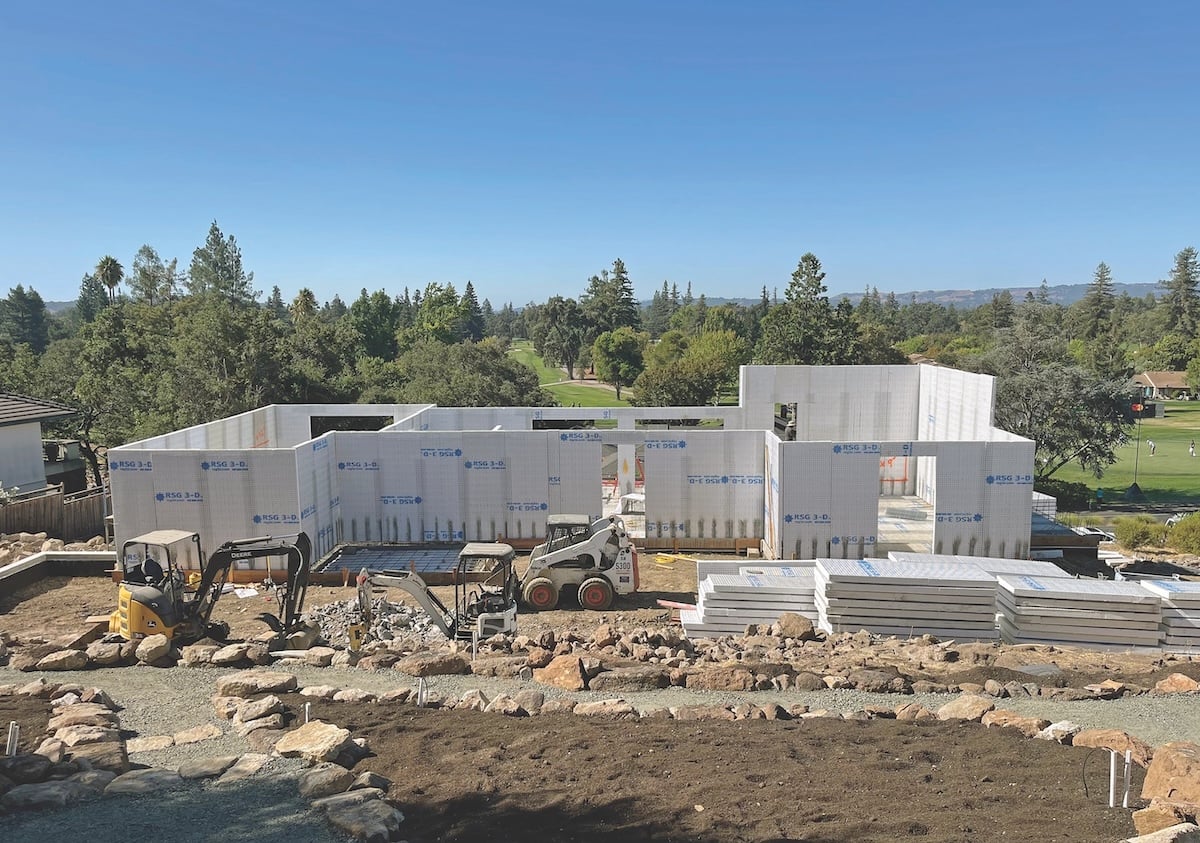
RSG 3•D manufactures structural concrete insulated panel building systems aimed at protecting structures from natural disaster events. The firm is headquartered in New York City but has an international presence having worked in 20 countries in its tenure. Following the 2017 Tubbs Fire in Northern California, RSG 3•D has been increasingly focused on the West Coast, Calligar said. Over the last year, that focus has narrowed in on Los Angeles given the rebuilding needs created by last year’s wildfires.
With its primary manufacturing plant located in Mexico, RSG 3•D has felt the weight of tariffs on products such as steel.
“We are 8 miles across the U.S. Southern California border and have been manufacturing there consistently since 1992,” Calligar said. “In the last year, those 8 miles have become very, very expensive.”
Firms’ abilities to embark on new developments may also take a hit given uncertainty around materials pricing as well as macro-economic factors, said Garret Weyand, partner at Cedar Street Partners, a La Cañada Flintridge-based development firm.
“If costs are too high because of these tariffs, then projects don’t get built,” Weyand said.
With the future of pricing up in the air for construction projects, Weyand said banks considering providing two-year construction loans will likely make borrowers increase the amount of equity they put into a deal so that the bank is covered in the event tariffs and inflation raise project costs over the course of the development.
“It really falls back to that end user or that builder at the end of the day to shoulder those costs if they can’t raise their prices to (mitigate) that,” he said.
For RSG 3•D, Calligar said the firm is absorbing the burden of the tariffs themselves rather than raising prices on consumers. While he was candid that the impact of taking on this financial burden “makes us a less profitable company,” Calligar hopes this administration’s tariff policies are temporary and things will “become more rational in the future.”
“For whatever reason it’s been deemed to be in the national interest that a company like ours is penalized while trying to provide sustainable, resilient housing and infrastructure to homeowners in California and throughout the United States,” Calligar said. “It’s unfortunate in our view and … it’s counterproductive.”
Along with material costs, Weyand also pointed to the relationship between the tariffs, interest rates and inflation.
“With tariffs basically causing inflation… that gives the central bank a cause to leave interest rates the same,” Weyand said, noting that the lowering of interest rates and the opening of banks are “the biggest things for builders, (which) can be directly related to tariffs.
“This Fed is more concerned with inflation than they are interest rates, so as a way to keep inflation down, they (will likely) need to keep interest rates high,” he added.
Both Weyand and Calligar emphasized the unfortunate timing of the tariffs as the steel industry had just been on the brink of recovery following volatility during and after the Covid-19 pandemic.
“In terms of these tariffs, it’s ironic that President Trump campaigned on and seems committed to reducing regulatory burdens, yet this is the biggest burden across the board on many of these companies by far,” Calligar said. “… Everybody suffers.”
Along with the poor timing with regard to the steel industry’s recovery, tariffs also complicate rebuilding following last year’s wildfires.
Tariffs aside, given the massive need to rebuild versus the availability of labor, Jeff Fishman, founder of Carthay-based JSF Financial, said that alone will cause higher pricing for those rebuilding. Then, when you throw tariffs into the equation, the overall construction costs surge even higher.
Additionally, the constant bait and switch of tariffs – both in terms of the legality and the exact percentages – makes planning arduous.
“The difficulty in estimating construction prices has made some people’s decision-making process even more challenging than anticipated,” Fishman said. “…Planning from a capital and budgetary perspective can be very frustrating and likely require a far greater buffer than typically needed historically.”
Fishman also noted that suppliers usually can’t hold prices or guarantee product availability for longer than a week.
The struggles faced by those looking to rebuild is part of the reason RSG 3•D is swallowing tariff costs. Currently, the firm has secured about a dozen rebuild permits in L.A. with 80 additional projects going through the approval process.
“Our clients are struggling in an always challenging economy,” Calligar said. “… I have yet to meet a client who feels that they are not under extreme budget pressure for their house and their rebuild and so, it’s the wrong time to pile on.”
Officials at import gateways such as the Port of Long Beach held an optimistic if tempered reaction to the Supreme Court’s decision.
“The Port of Long Beach customers and logistics partners depend on clear, predictable trade policy to plan investments, move cargo efficiently and keep goods flowing to American businesses and consumers. An orderly approach to tariffs helps businesses plan, and ports like Long Beach maximize their contribution to the U.S. economy,” Noel Hacegaba, the port’s chief executive, said in a statement. “As one of the nation’s largest gateways, the Port of Long Beach will continue working closely with our partners to enhance the efficiency, reliability and velocity of cargo movement. Doing so supports the broader supply chain, strengthens U.S. competitiveness, and sustains the 2.7 million jobs tied to the Port of Long Beach.”