
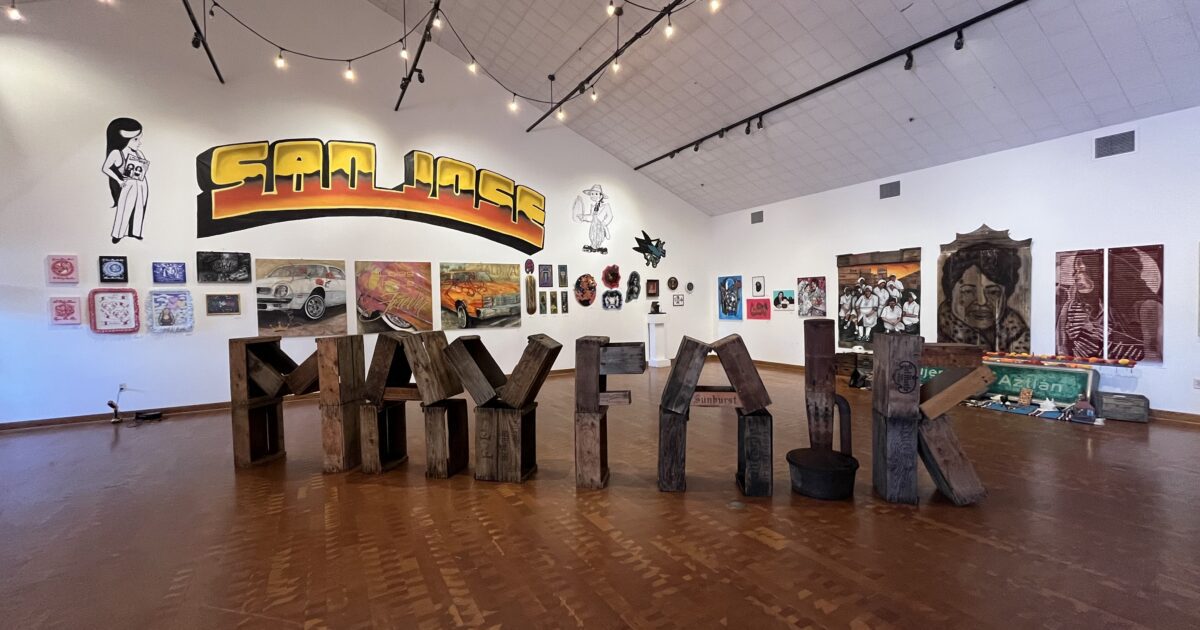
On Friday night in Mayfair, the Mexican Heritage Plaza was full — not just of art, but of memory.
Timeless Art Collective presented ¡La Cultura Vive! — a showcase rooted in San Jose’s Chicano art scene and grounded in the history of this neighborhood. What unfolded made visible something we too often overlook: Culture is civic infrastructure.
Inside the gallery, old canary boxes — once used in the fields — were stacked to spell out “Mayfair.” Nearby, a large map traced what was once called Sal Si Puedes — “Get Out If You Can” — the name given to this community when infrastructure was absent and opportunity scarce. A tribute to Mujeres de Aztlán honored the women who organized, led and sustained this place long before recognition followed.
Artists including Danny Sauce, Araceli Rodriguez, Elizabeth Jimenez Montelongo and Marcos Gaitan filled the walls with work that was intimate and unmistakably local — part of a broader lineup of Bay Area creatives telling stories of labor, migration, resilience and pride. They did not romanticize the past. They claimed it.
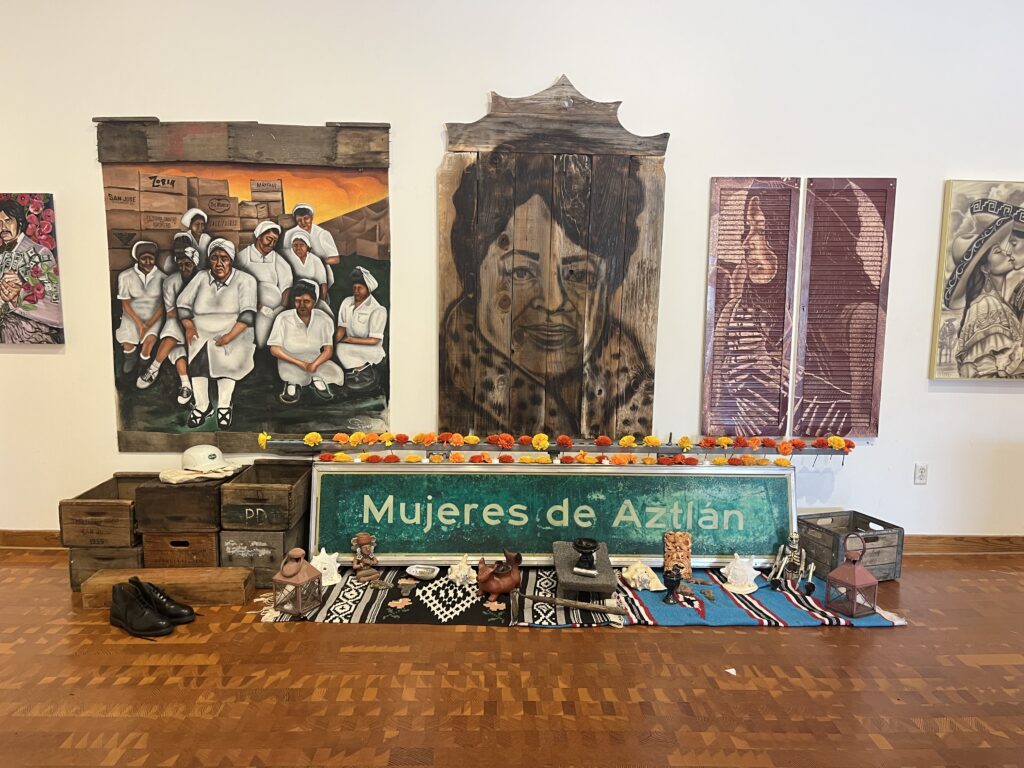 A tribute to the women who organized, led and sustained the region long before they were recognized. Photo courtesy of Jessica Paz-Cedillos.
Outside, the gravel lot filled with lowriders. Vendors lined the space. Families arrived together — grandparents, parents, children. Over bowls of pozole and shared laughter, neighbors lingered.
Nothing about the evening felt performative. It felt rooted.
We often separate community stability from culture. We talk about housing, public safety and economic mobility. Those are essential. But stability also depends on whether people feel anchored to place — whether their history is visible, whether spaces exist not just for transaction, but for belonging.
As someone who has spent more than a decade working in this neighborhood, I have learned that stability begins with belonging.
Culture stabilizes identity. It protects memory. It builds trust across generations. That trust — the quiet familiarity of seeing yourself reflected in a space — allows neighborhoods to withstand strain.
There is no shortage of strain right now — globally and here at home. Armed conflict and displacement abroad. Political volatility. Economic pressure. A thinning sense of shared ground.
Against forces that large, a neighborhood gathering can seem minor. It is not.
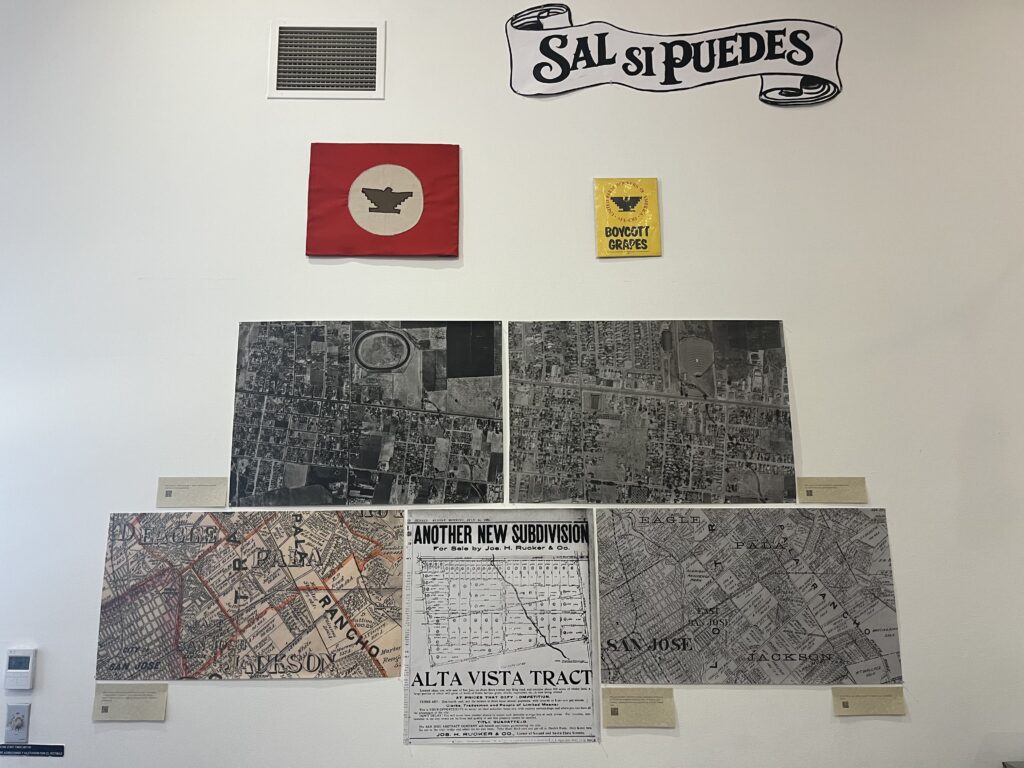 A large map traces what was once called Sal Si Puedes, the name given to this community when infrastructure was absent and opportunity
scarce. Photo courtesy of Jessica Paz-Cedillos.
Public life is sustained locally — in rooms and open lots where people choose to come together. When a community honors its history in plain view, when families gather across generations, when artists define their own narrative, something essential is strengthened.
The Mexican Heritage Plaza has long served as a cultural anchor in East San Jose. But anchors matter only when they are activated. When institutions open their doors in partnership with local creatives — not as gatekeepers, but as collaborators — something durable takes shape. Relationships deepen. Young people see possibility. Elders see continuity.
We cannot control every force shaping our cities. But we can decide what kind of civic life we cultivate.
In Mayfair, culture is not an accessory to development. It is the groundwork. And in moments like this, groundwork matters more than ever.
San José Spotlight columnist Jessica Paz-Cedillos is the chief executive officer at the Mexican Heritage Plaza. Her columns appear every first Monday of the month. Contact Jessica at [email protected] or follow her on LinkedIn.