

U.S. House Rep. Kevin Kiley, a Republican targeted by a Democrat-led effort to send more Democrats to Congress, announced Monday that he will run for office in the newly redrawn District 6 in the 2026 midterm elections. “I was born, raised, and went to local public schools in Placer and Sacramento Counties, which I’ve always called home,” Kiley said in a statement. “They’ve been the core of my district during my time in elected office. That’s as it should be. It’s what representation is about.”The Rocklin congressman is one of five California Republicans whose districts were redrawn through the voter-approved Proposition 50. Top Democrats, including Gov. Gavin Newsom, pushed for the redistricting effort as a response to Texas redrawing its lines to favor Republicans at the request of President Donald Trump.Both efforts faced legal challenges, but the U.S. Supreme Court upheld the use of redrawn districts in both cases. California and Texas are among multiple states pushing for control of Congress, which can often see power shifts during midterm elections.Kiley currently represents District 3, which includes parts of 10 counties and is geographically the largest in Northern California. However, Prop 50 redrew the boundaries to make the district significantly smaller and include parts of Sacramento County, which has more Democratic voters.Democratic U.S. House Rep. Ami Bera, who currently represents District 6, has since announced plans to run for the redrawn District 3.Since Prop 50’s passing, Kiley said he wants to find the best way to continue serving his constituents. The new District 6 includes Roseville, Rocklin and Orangevale. While Kiley admits District 6 is Democratic-leaning, he believes voters in the district are “open-minded.””While this will be a more challenging race, I believe we can build a winning coalition for common sense,” Kiley said.California has 52 congressional districts, with 43 Democrats and nine Republicans. Prop 50’s redrawn maps make it easier for Democrats to secure up to an additional five congressional seats.Some of the other candidates who’ve announced campaigns for District 6 include former State Sen. Dr. Richard Pan, Sacramento County District Attorney Thien Ho, West Sacramento Mayor Martha Guerrero and Republican Christine Bish.Kiley has also been vocal with his opposition to mid-census redistricting. California typically relies on a citizens-led independent redistricting commission, but Prop 50’s maps will be in effect for the 2026, 2028 and 2030 elections.Redrawing districts to favor a political party is known as gerrymandering, a once-taboo practice that is now being openly done by both parties.”The evil of gerrymandering is that it slices up and tears apart communities in a way that erodes the fabric of representative government,” Kiley’s statement also read. “That’s why I’ve opposed it everywhere – whether Texas or California, Indiana or Virginia. While we can’t now reverse the gerrymandering epidemic that has afflicted our country and scrambled our state’s map, I want to do what I can to make things better and not worse.”See more coverage of top California stories here | Download our app | Subscribe to our morning newsletter | Find us on YouTube here and subscribe to our channel
ROCKLIN, Calif. —
U.S. House Rep. Kevin Kiley, a Republican targeted by a Democrat-led effort to send more Democrats to Congress, announced Monday that he will run for office in the newly redrawn District 6 in the 2026 midterm elections.
“I was born, raised, and went to local public schools in Placer and Sacramento Counties, which I’ve always called home,” Kiley said in a statement. “They’ve been the core of my district during my time in elected office. That’s as it should be. It’s what representation is about.”
The Rocklin congressman is one of five California Republicans whose districts were redrawn through the voter-approved Proposition 50. Top Democrats, including Gov. Gavin Newsom, pushed for the redistricting effort as a response to Texas redrawing its lines to favor Republicans at the request of President Donald Trump.
Both efforts faced legal challenges, but the U.S. Supreme Court upheld the use of redrawn districts in both cases. California and Texas are among multiple states pushing for control of Congress, which can often see power shifts during midterm elections.
Kiley currently represents District 3, which includes parts of 10 counties and is geographically the largest in Northern California. However, Prop 50 redrew the boundaries to make the district significantly smaller and include parts of Sacramento County, which has more Democratic voters.
Democratic U.S. House Rep. Ami Bera, who currently represents District 6, has since announced plans to run for the redrawn District 3.
Since Prop 50’s passing, Kiley said he wants to find the best way to continue serving his constituents. The new District 6 includes Roseville, Rocklin and Orangevale.
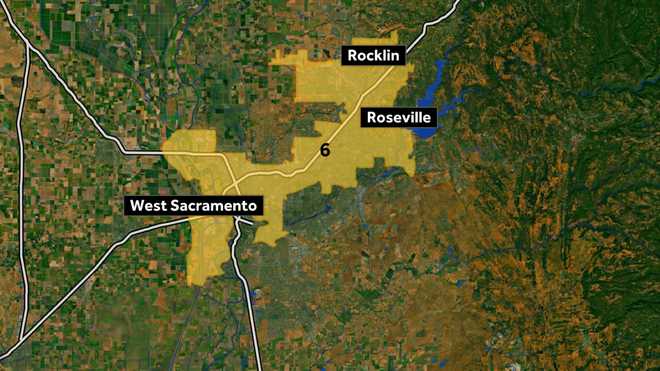
While Kiley admits District 6 is Democratic-leaning, he believes voters in the district are “open-minded.”
“While this will be a more challenging race, I believe we can build a winning coalition for common sense,” Kiley said.
California has 52 congressional districts, with 43 Democrats and nine Republicans. Prop 50’s redrawn maps make it easier for Democrats to secure up to an additional five congressional seats.
Some of the other candidates who’ve announced campaigns for District 6 include former State Sen. Dr. Richard Pan, Sacramento County District Attorney Thien Ho, West Sacramento Mayor Martha Guerrero and Republican Christine Bish.
Kiley has also been vocal with his opposition to mid-census redistricting. California typically relies on a citizens-led independent redistricting commission, but Prop 50’s maps will be in effect for the 2026, 2028 and 2030 elections.
Redrawing districts to favor a political party is known as gerrymandering, a once-taboo practice that is now being openly done by both parties.
“The evil of gerrymandering is that it slices up and tears apart communities in a way that erodes the fabric of representative government,” Kiley’s statement also read. “That’s why I’ve opposed it everywhere – whether Texas or California, Indiana or Virginia. While we can’t now reverse the gerrymandering epidemic that has afflicted our country and scrambled our state’s map, I want to do what I can to make things better and not worse.”
See more coverage of top California stories here | Download our app | Subscribe to our morning newsletter | Find us on YouTube here and subscribe to our channel