
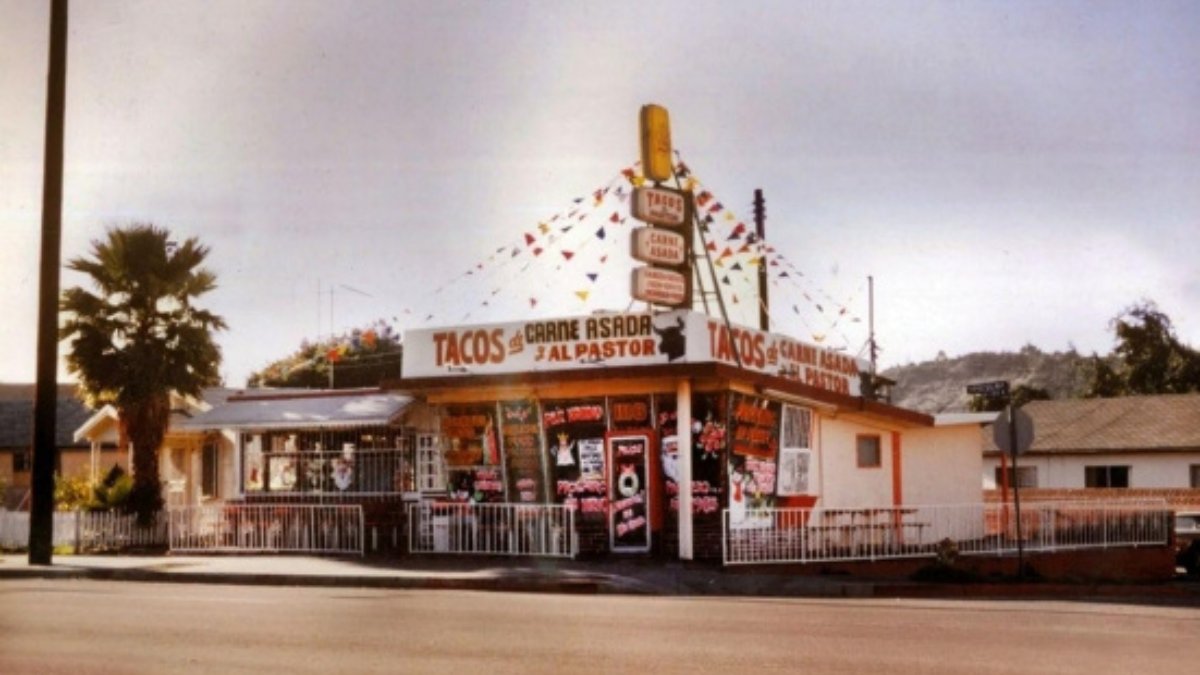
Southern California’s longtime Mexican food chain King Taco might just go down in history — the business is seeking historic designation for its original location in the Cypress Park community of Los Angeles.
The Cultural Heritage Commission filed a recommendation with the city of Los Angeles in fall 2025 to declare the restaurant, known as King Taco #1, a Historic-Cultural Monument (HCM).
At that time, District 1 LA City Councilmember Eunisses Hernandez submitted a letter to the Cultural Heritage Commission in support of the site’s pursuit of historic recognition, calling King Taco #1 “a cornerstone of immigrant entrepreneurship” and “a cultural anchor for the Cypress Park community.”
Raul O. MartinezRaul O. Martinez
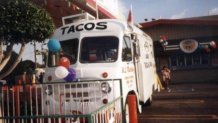
King Taco’s humble beginnings as a food truck in 1974.
On Feb. 5, the recommendation received full support from the Cultural Heritage Commission by unanimous vote.
The next step is for the Los Angeles City Council to review the recommendation, which could happen later this month. Councilmember Hernandez’s office told NBC Los Angeles that the City Council has 90 days from the commission’s Feb. 5 action to consider and vote on the designation.
NBCLA reached out to the Los Angeles Conservancy, which also supports the King Taco #1 HCM designation.
Andrew Salimian, Director of Advocacy for the LA Conservancy, said the site “really captures the entrepreneurial spirit of Los Angeles and the contributions of our immigrant communities.”
So, how did King Taco #1 become so important to Cypress Park and Los Angeles? Let’s look back.
Raul O. MartinezRaul O. Martinez
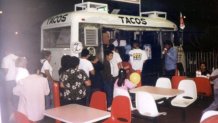
The Martinezes converted an old ice cream truck in 1974 by adding an oven and grill. Soon, they were selling soft-shell tacos to Angelenos from their buzzy new taco truck.
The legacy of King Taco in Los Angeles
King Taco #1 has been located at 1118 Cypress Ave. since 1975. The business was founded in 1974 by Mexican immigrants Raul O. and Maria G. Martinez.
At first, the Martinezes converted an old ice cream truck into a taco truck, adding a stove and grill to sell fresh, soft-shell tacos straight from the truck. Soon, they moved their business into the building at the corner of Cypress and Roseview avenues.
According to the LA Conservancy, the Martinez family is credited with popularizing soft-shell tacos in the region.
“The business’ ingenuity fueled its success,” Salimian said. “Despite their humble beginnings, the Martinez family was able to introduce authentic Mexican cuisine and helped popularize the soft-shell taco to Angelenos.”
Today, King Taco operates 22 locations across Los Angeles and San Bernardino counties.
Raul O. MartinezRaul O. Martinez
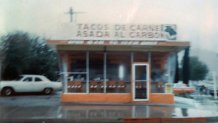
The original King Taco on Cypress Avenue in 1975, the year the Martinezes moved their business into the building.
The original King Taco building
According to the HCM recommendation, the building that houses the original and oldest King Taco location was built in 1948. It was originally located on North Lankershim Boulevard North Hollywood, where it served as an ice cream store and in 1954, a hot dog stand.
In 1955, the building was moved to North Tujunga Avenue. In 1960, the structure was relocated to its current corner lot location on North Cypress Avenue, where it became a Windy’s restaurant offering “home-cooked lunches” like sandwiches and burgers.
King Taco moved into the building in 1975, using it as the main kitchen for their growing food truck business.
The recommendation said the property has been altered several times over the decades to accommodate King Taco’s quick growth, including a couple of additions that added to its square footage, awning additions, and a new pole sign added in 1988.
Still, the recommendation notes that the building “retains most physical elements from the period of significance” and its historic character and aesthetic.
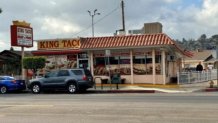
Jessamin AvalosJessamin Avalos
King Taco’s original location in Cypress Park in 2024.
The importance of King Taco’s historic recognition
Per the HCM nomination, the original King Taco meets this important Cultural Heritage Ordinance criteria: “[It] is identified with important events of national, state, or local history, or exemplifies significant contributions to the broad cultural, economic, or social history of the nation, state, or community.”
Senior Architectural Historian Alexandra Perlman works with the Historic Resources Group (HRG) in Pasadena. She authored the recommendation for King Taco #1 and credits the local staple for “galvanizing a new food scene in Los Angeles and forever changing the city’s cultural identity.”
Perlman told NBCLA the designation of King Taco #1 recognizes and honors Mexican immigrant entrepreneurship.
“Properties that commemorate Los Angeles’s Latino heritage are disproportionately underrepresented in the city’s list of designated historic-cultural monuments,” Perlman told NBCLA. “These sites are also increasingly threatened, making their recognition all the more important. The designation of King Taco is not only crucial for understanding and preserving Mexican culinary history in Los Angeles but also strives to achieve equity in this field.”
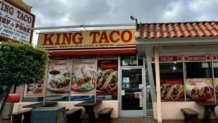
Jessamin AvalosJessamin Avalos
King Taco’s original location in 2024.
Last week, Councilmember Hernandez also told NBCLA the original King Taco defined a piece of LA food history and is a cornerstone of immigrant entrepreneurship in District 1.
“At a time when Latino families who were displaced by freeway construction began rebuilding community in Northeast LA, King Taco became a cultural anchor rooted in resilience and pride,” Hernandez said. “Raul and Maria Martinez helped redefine the Los Angeles taco and, in doing so, reshaped the city’s food culture.”
“In our current political climate where immigrants are actively being attacked, scapegoated, or erased, recognizing King Taco as a Historic-Cultural Monument sends a clear message: Immigrants built LA,” the councilmember added. “Preserving this site honors that truth and protects it for future generations.”
“It’s important that these beloved legacy businesses be recognized for their contributions, and designation helps document and celebrate L.A.’s rich history,” Salimian also told NBCLA.