
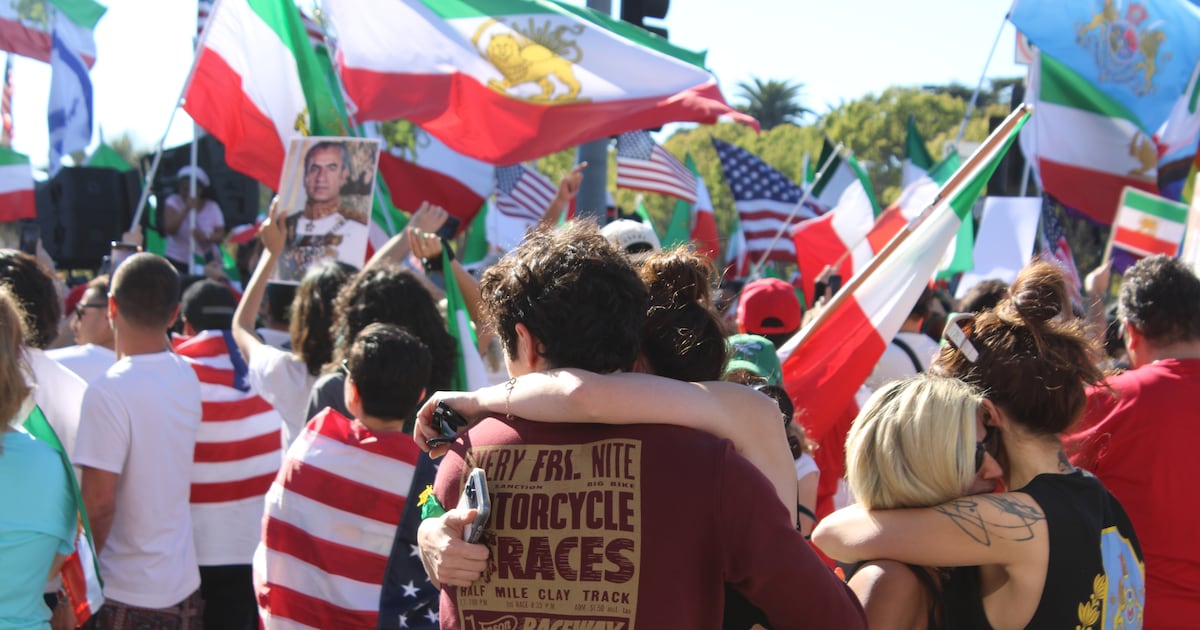
A most recent round of strikes on Iran by the United States and Israel began on Saturday, Feb. 28, during which a joint strike killed Iran’s Supreme Leader Ayatollah Ali Khamenei. The conflict has now escalated across the Middle East, as retaliatory strikes from Iran and Iranian-backed proxy forces — including Lebanese militia group Hezbollah — targeted U.S. facilities and interests in the United Arab Emirates, Qatar, Kuwait and Bahrain.
On the USC campus, students from countries affected by the expanded conflict are grappling with fear for their families while balancing academic responsibilities.
The students quoted in this article were granted partial anonymity with as many personal identifiers as possible, citing a fear of retaliation by armed groups against family members living in countries under attack.
“It can feel a bit lonely, sometimes, knowing that the people around you don’t really know the stress you’re experiencing,” said S., an international relations major who grew up in Lebanon before moving to Dubai, in the United Arab Emirates, in 2020.
“And at the same time, there’s the guilt aspect, where I know that I’m having such a stable, nice experience here in the U.S., whereas, my friends and family that are in Lebanon — and even now Dubai — don’t really have that luxury.”
Zeina, a business administration major from Dubai who has ties to Egypt, said the strikes on Dubai came as a surprise, as she felt the country had always felt safe.
She added that while she did not initially react strongly to the strikes on Iran, she felt especially alarmed when reports emerged about Dubai.
“I was scared and I was shocked,” Zeina said. “It feels unprecedented.”
She said the escalating violence has made it difficult to focus on schoolwork.
“It’s been hard to concentrate, especially on the weekend, when things felt most escalated,” Zeina said. “It was hard to concentrate on my studies and things that almost felt meaningless in comparison to all of this.”
H., an engineering graduate student who is Lebanese, said he became worried about his family as soon as he learned of the initial strikes in Iran, knowing Lebanon could be pulled into the conflict. Hezbollah, the Iran-backed militia that holds significant political and military influence in Lebanon, joined retaliatory attacks Monday following the killing of Khamenei.
“I wake up and I’m worrying about my family in Lebanon and worrying about my country,” H. said. “It’s a big emotional weight.”
S. said she has been able to stay in contact with her family, but the time difference can create difficulties, particularly when strikes occur overnight.
“When they strike at night, I get the messages through local news outlets in Lebanon,” S. said. “Sometimes I message them and ask, ‘Did you hear the strike?‘ or ‘Did you wake up from the noise?’ Sometimes they don’t answer because they’re still sleeping, or don’t want to interrupt their night. So that’s when I get a bit worried.”
The students said they had been closely following Lebanese coverage of the conflict to better understand how their families may be affected.
“I’m following the Lebanese news because that’s what I care about,” H. said.
Despite her fear, S. said she hopes the crisis could allow the Lebanese government to assert greater control over armed groups. S. said she moved to Dubai for security reasons after Lebanon experienced repeated bombardment in recent years amid fighting between Hezbollah and Israel. She said she expected Lebanon to be pulled into the recent strikes on Iran.
“I’m hoping that the government can achieve its goals, which is to reclaim the arms and reclaim full control over the military and national military activities [from Hezbollah],” S. said. “That’s what they have been working for ever since the new government has been re-elected.”
The USC Persian Student Organization (PSO) said reactions among students in the Iranian diaspora have been mixed as they process the unfolding events.
“Many of us are hopeful that the regime that oppressed so many of its own people will change, but there is also a sense of fear in not knowing what will come next for Iran,” the PSO wrote in an email statement to Annenberg Media.
The group said members are prioritizing information coming directly from sources in Iran and the broader Middle East rather than relying solely on U.S.-based coverage, and encouraged USC students to do the same.
“When I watch the coverage, I feel this heavy mix of fear for people in Iran and frustration at how simplified everything sounds on TV,” the PSO statement wrote.
The PSO said that staying informed helps their students diminish the feeling of being far from home and strengthens their connection to their Iranian identity.
“These developments just reiterate how strong the Iranian people are. Even though we are thousands of miles away from Iran, we feel an immense sense of responsibility to do our part and stay informed, and empathy for Iranians as a whole,” the statement said.