
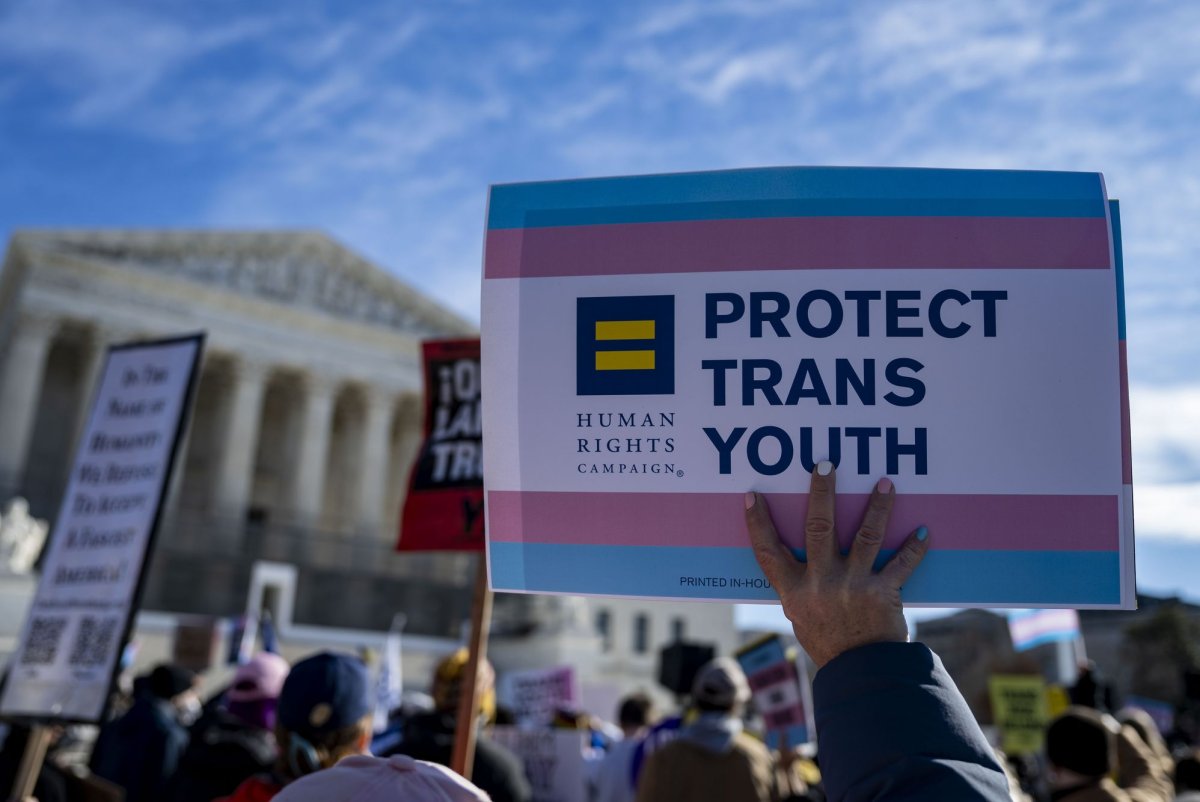
March 3 (UPI) — The U.S. Supreme Court issued an emergency ruling Monday temporarily blocking California’s policies that ban public schools from sharing a child’s transgender status with their parents.
The emergency ruling in Mirabelli vs. Bonta blocks the California policies only until the case can make it through the court system. The majority opinion is that the plaintiffs will likely win the case because “the parents who object to the California policies on free exercise grounds are likely to succeed on the merits.”
The case was brought by a group of Christian teachers and parents who disagreed with the state’s policies of protecting transgender students’ privacy if they transitioned at school against their parents’ wishes. The parents and teachers are represented by the Thomas More Society, a law firm that represents Catholic public interests.
“California is requiring public schools to hide children’s expressed transgender status at school from their own parents,” CNN reported the Thomas More Society told the Court. “California parents (including religious parents) are suffering grievously under the state’s regime.”
The emergency appeal came after District Judge Roger Benitez had ruled in favor of the parents, but the 9th Circuit Court of Appeals overturned his decision — calling it too broad — allowing the state to continue its policies.
But California Attorney General Rob Bonta argued that the plaintiffs misunderstood the state law and policy. He said in a filing that the policies do not prohibit disclosure to parents and in some cases required it if there was a risk of serious harm to the child.
But for many students, he said, “the consequences of compelling the disclosure of confidential information about their gender identity would be irreversible.”
The court made its ruling on the free exercise of religion.
“The parents who assert a free exercise claim have sincere religious beliefs about sex and gender, and they feel a religious obligation to raise their children in accordance with those beliefs,” the court wrote in its unsigned order. “California’s policies violate those beliefs.”
Another group of parents in the lawsuit objected to the policies not on religious grounds but because they believe they have the right to know about their own children’s mental health.
The court agreed that they have a right to “not be shut out of participation in decisions regarding their children’s mental health” and that they have the right to control the way they raise their own children.
The temporary ruling applies only to parents, not teachers, though it’s unclear how this plays out in the schools. And the Court has not announced if it will take up the case.
Justices Elena Kagan and Ketanji Brown Jackson dissented, arguing that the Court shouldn’t have issued an emergency ruling without hearing the merits of the case.
“Today’s decision shows, not for the first time, how our emergency docket can malfunction,” Kagan wrote in her dissent. She said the Court only received “scant and, frankly, inadequate briefing about the legal issues in dispute.”
“And then the Court grants relief by means of a terse, tonally dismissive ruling designed to conclusively resolve the dispute,” the dissent said. “The Court does all this even though the application of existing law to the case raises tricky questions, and so cries out for reflection and explanation. The Court is impatient: It already knows what it thinks, and insists on getting everything over quickly.”
The California attorney general’s office said the ruling is a disappointment.
“We remain committed to ensuring a safe, welcoming school environment for all students while respecting the crucial role parents play in students’ lives,” it said in a statement.
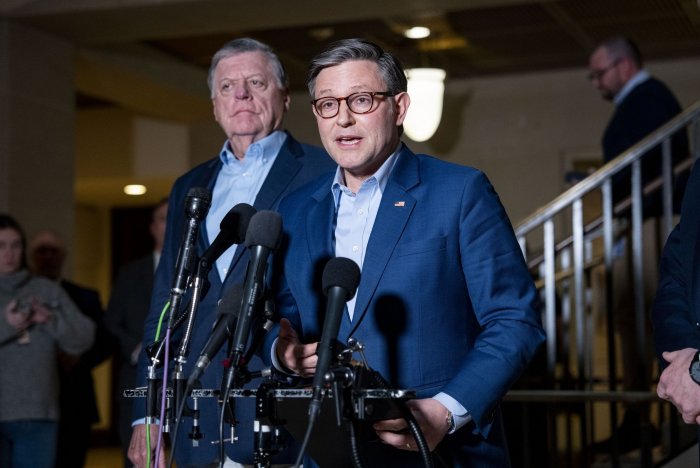
Speaker of the House Mike Johnson, R-La., speaks to the press after receiving a closed-door briefing on the war in Iran at the U.S. Capitol on Monday. Photo by Bonnie Cash/UPI | License Photo