
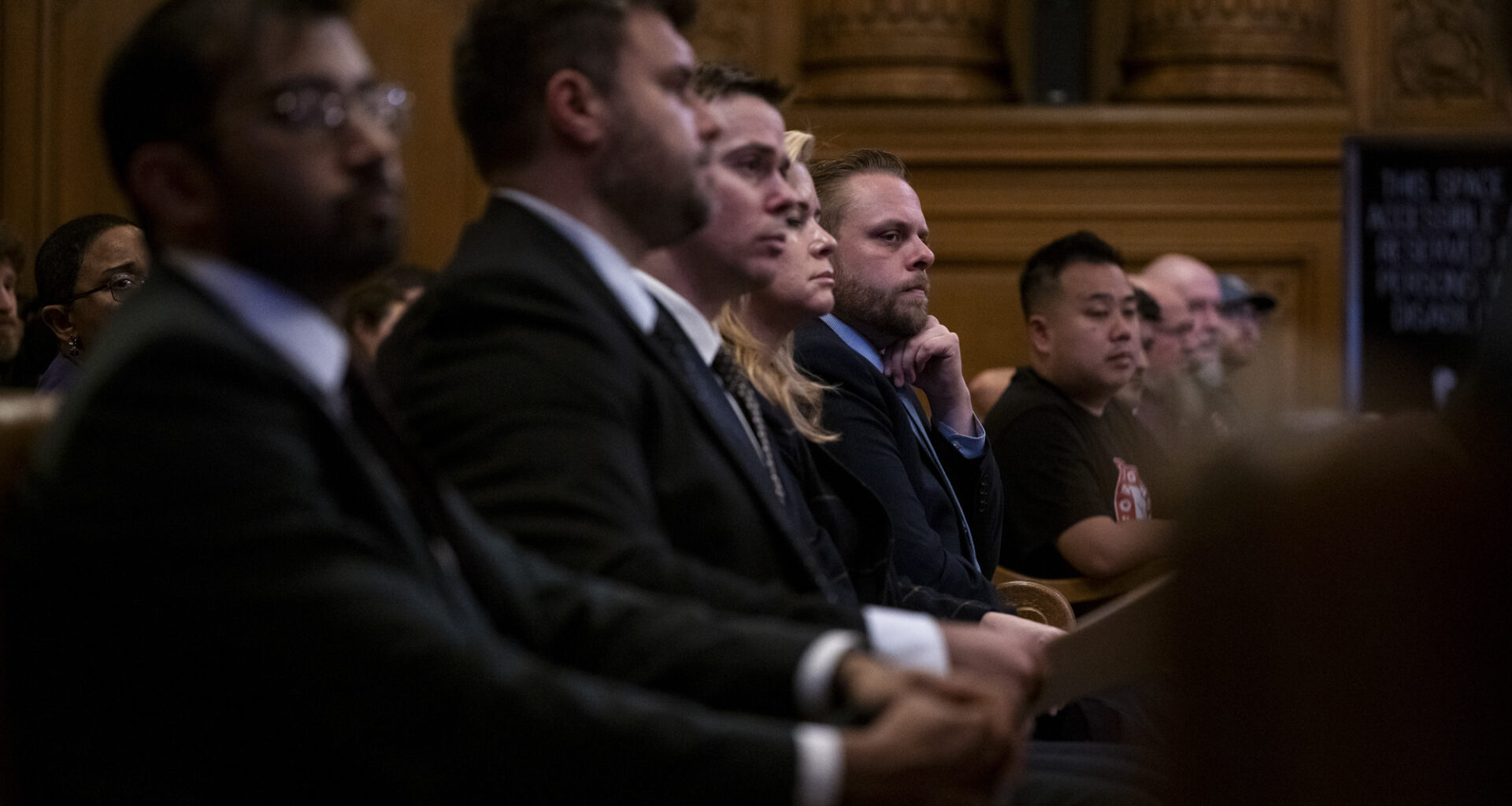
Waymo spokesperson Ethan Teicher told KQED Waymo is aware of 62 manual retrievals of its stalled vehicles during the blackout, which were done by Waymo’s own roadside assistance or tow trucks. In two instances, he said, first responders had to manually move a Waymo.
Carroll and other city leaders lamented that when that happens, it forces valuable first responders to become “default roadside assistance.”
“ Anything that brings a high volume of calls to 911 can delay our response time for people that have true life-and-death situations,” Caroll said.
The main reason for the service stoppage, according to Waymo, was a high number of remote assistance requests generated by the vehicles attempting to navigate intersections without functioning streetlights, although the company did note that its vehicles traversed 7,000 darkened intersections during the blackout without incident.
The cars idled as they waited for their remote assistance requests to be fulfilled.
Remote assistance requests are handled by operators located in countries as far away as the Philippines, who can provide guidance to the autonomous vehicles. The company said it currently employs 70 remote operators, who are responsible for handling requests from its fleet of about 3,000 vehicles across the country.
San Francisco Supervisor Bilal Mahmood was incredulous that Waymo representatives didn’t think the location or number of remote operators would be an issue in future emergencies.
“If we’re reliant in an emergency situation on operators in the Philippines to have to assess the condition here, how can you explain or justify that?” Mahmood asked.
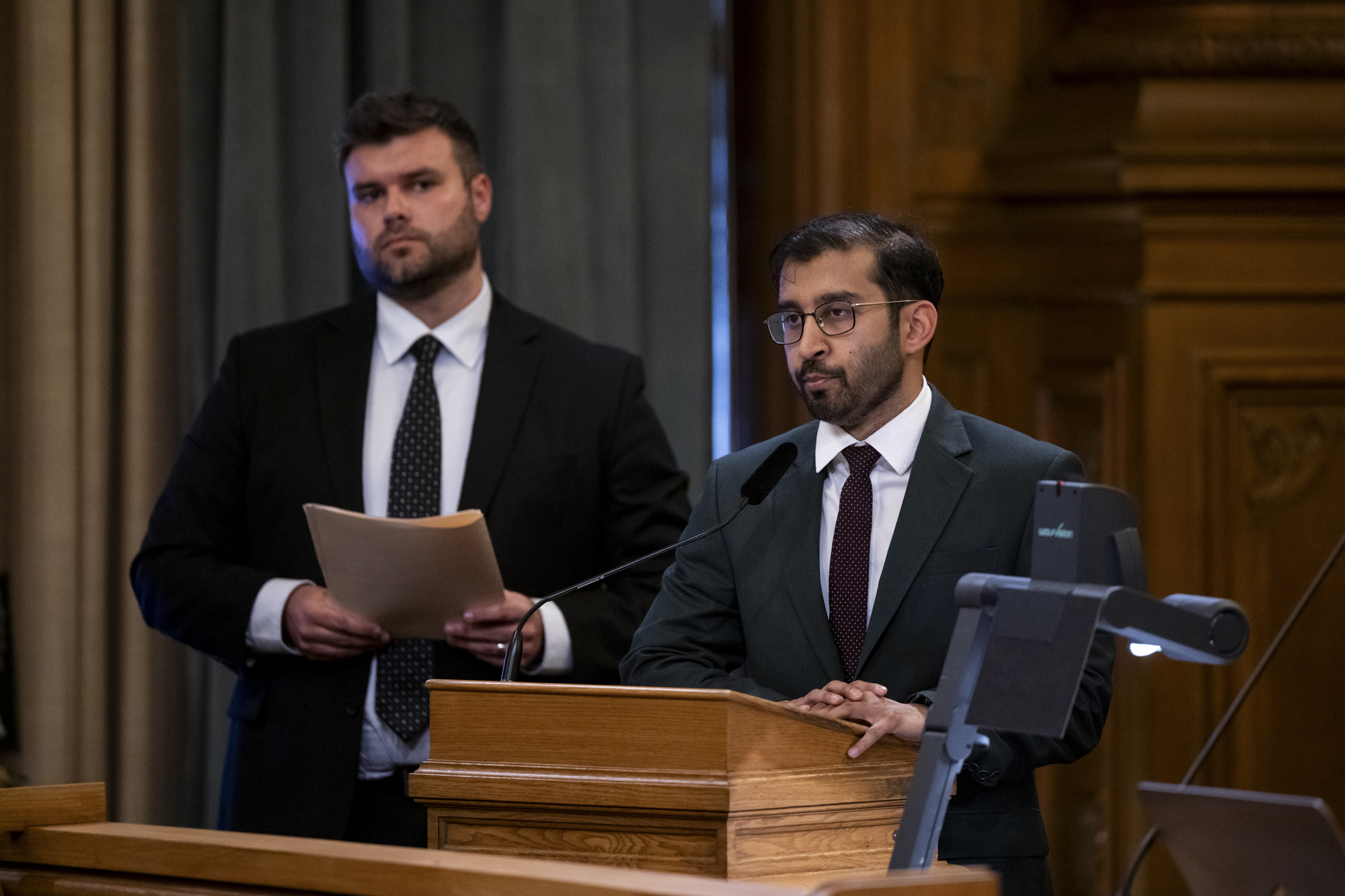 Chinmay Jain, director of product management at Waymo, speaks during a Board of Supervisors hearing on Waymo’s emergency operations at City Hall in San Francisco on March 2, 2026. (Beth LaBerge/KQED)
Chinmay Jain, Waymo’s director of product management, said the location of the remote assistants “had no implications” in the San Francisco power outage.
“ We do a very detailed analysis on the demand for such requests, and hence, have these dynamic systems where we can increase the supply of remote assistance accordingly,” Jain said.
But Cooper said the company did change its practices in response to the December outage in other ways. Waymo rolled out fleet-wide updates that allow its vehicles to better navigate intersections without working traffic signals, revised how its operations team responds to power outage events, and improved its staffing capabilities during significant incidents, he said.
But the representatives largely dodged questions from supervisors seeking explicit commitments. Cooper said he could not provide numbers at the time on the number of additional staff the company had hired to handle surges.
Both the San Francisco Department of Emergency Management and Fire Department recommended integrating their “avoid the area” notifications with Waymo software to prevent the driverless cars from entering emergency response zones, but Cooper said he couldn’t commit to that in the meeting.
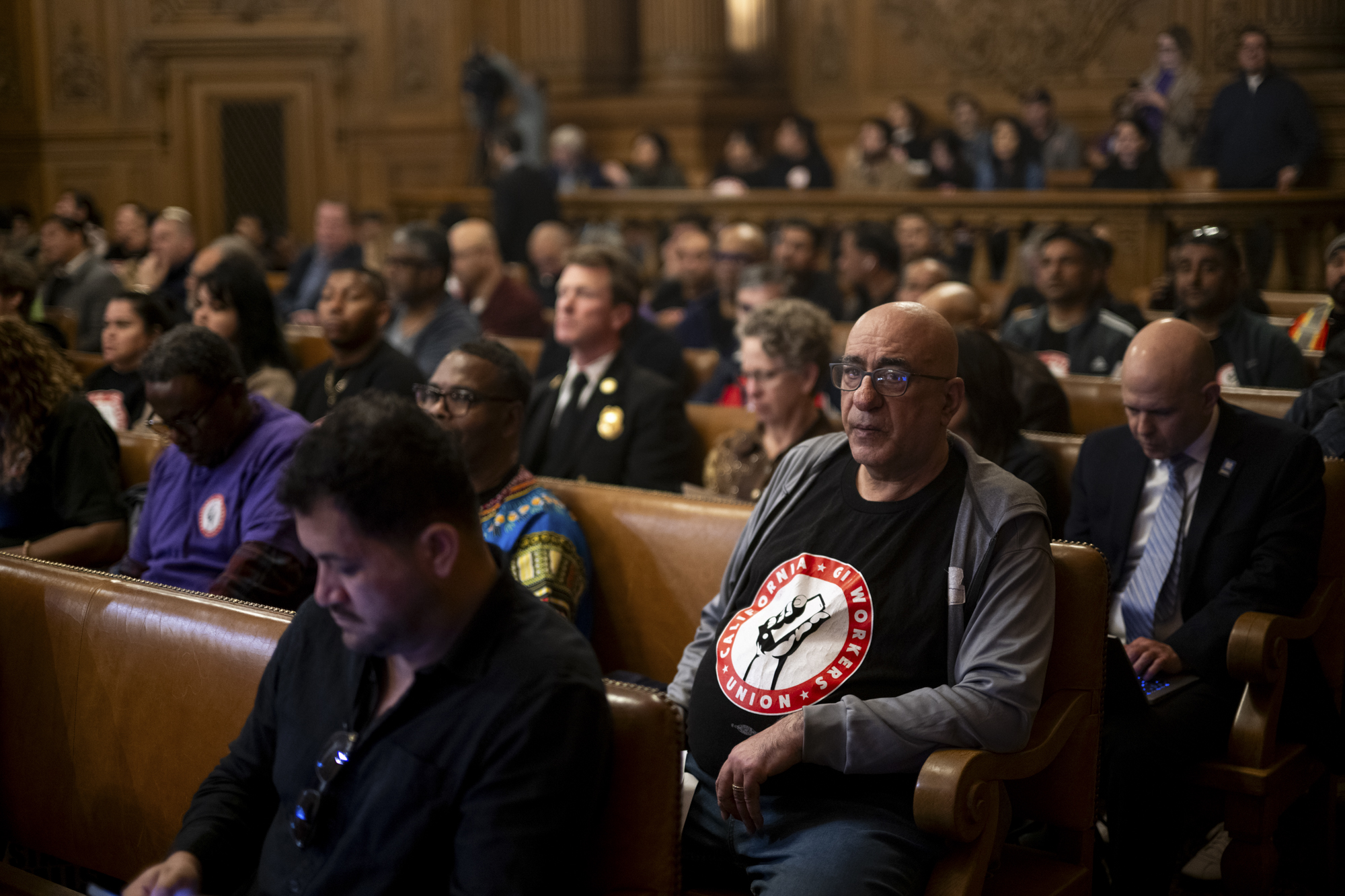 Gig workers, union members and labor advocates fill a Board of Supervisors meeting at City Hall in San Francisco on March 2, 2026, to discuss Waymo’s emergency operations following a December power outage that left the company’s autonomous vehicles stalled on city streets. (Beth LaBerge/KQED)
“ We’re absolutely willing to have the conversations at the conclusion of this hearing to make sure that we are hearing everyone on the table,” he said.
Local unions and gig workers for Uber and Lyft hosted a rally on the steps of City Hall before the meeting, calling for greater regulation of Waymo.
“ We just want to be part of the conversation and make sure that these vehicles operate safely in emergencies. We can’t have roads being blocked,” said Sam Gebler, the president of San Francisco Firefighters Local 798.
The meeting also featured lengthy public comment with many speakers largely expressing their opposition to Waymo over safety and other concerns.
Kristin Hardy, the regional vice president of SEIU 1021, read a statement written by her daughter, who said her dog, Leo, was hit and killed by a Waymo in the city’s Western Addition neighborhood.
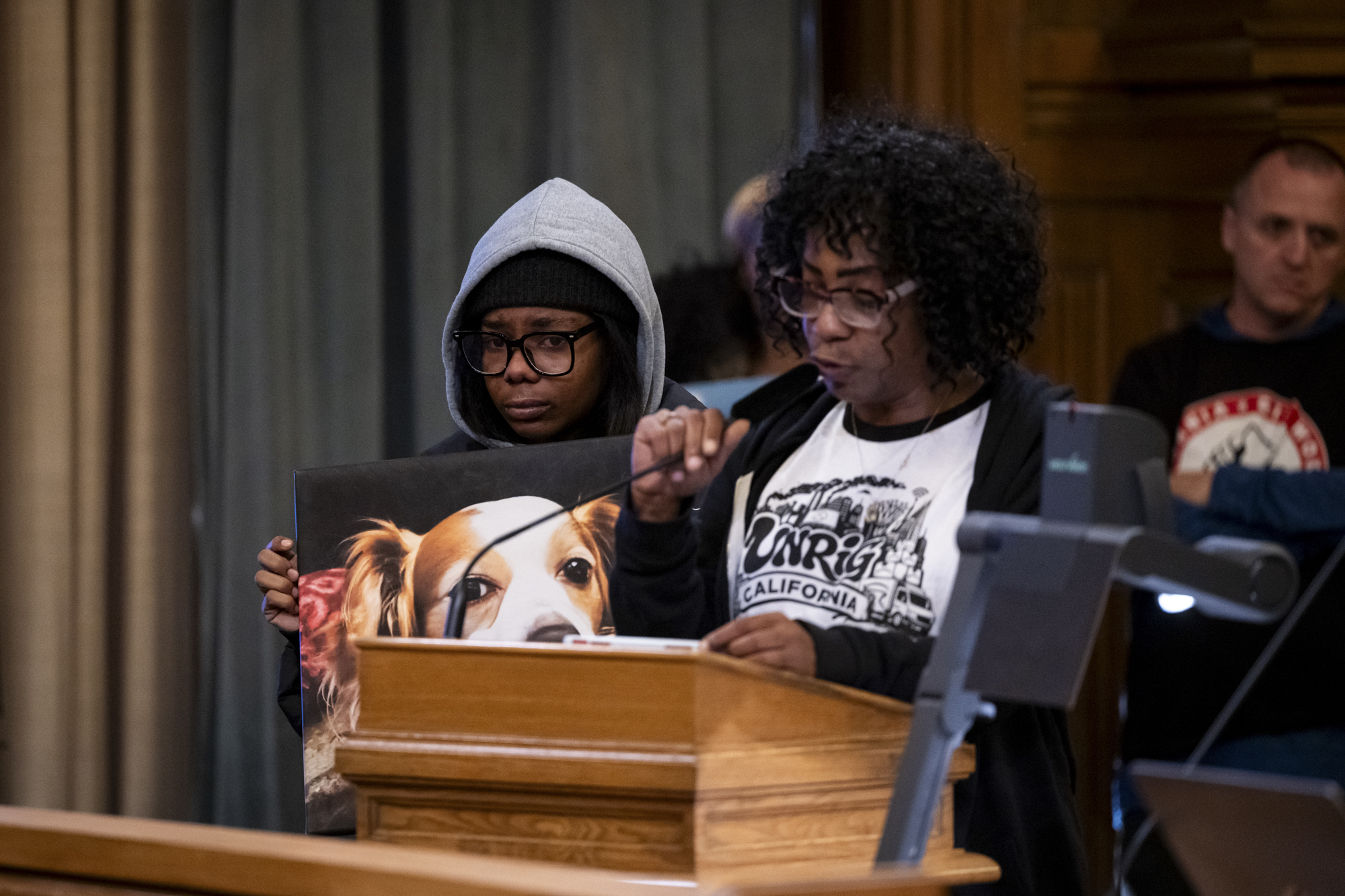 Kristin Hardy, region vice president for SEIU 1021, speaks on behalf of her daughter, Kayla Craig, whose dog, Leo, had to be put down after being hit by a Waymo, during a Board of Supervisors hearing on Waymo’s emergency operations at City Hall in San Francisco on March 2, 2026. (Beth LaBerge/KQED)
“When a self-driving car makes a mistake, who suffers? Not the company, not the executives, the community does. Safety should never come second. It should never be tested on real people in real time,” Hardy said.
Waymo said its vehicles have shown an 88% reduction in serious injury-or-worse crashes compared to human drivers in San Francisco.
That safety record, however, came into question last year when one of its vehicles ran over a beloved bodega cat in the city’s Mission District.