
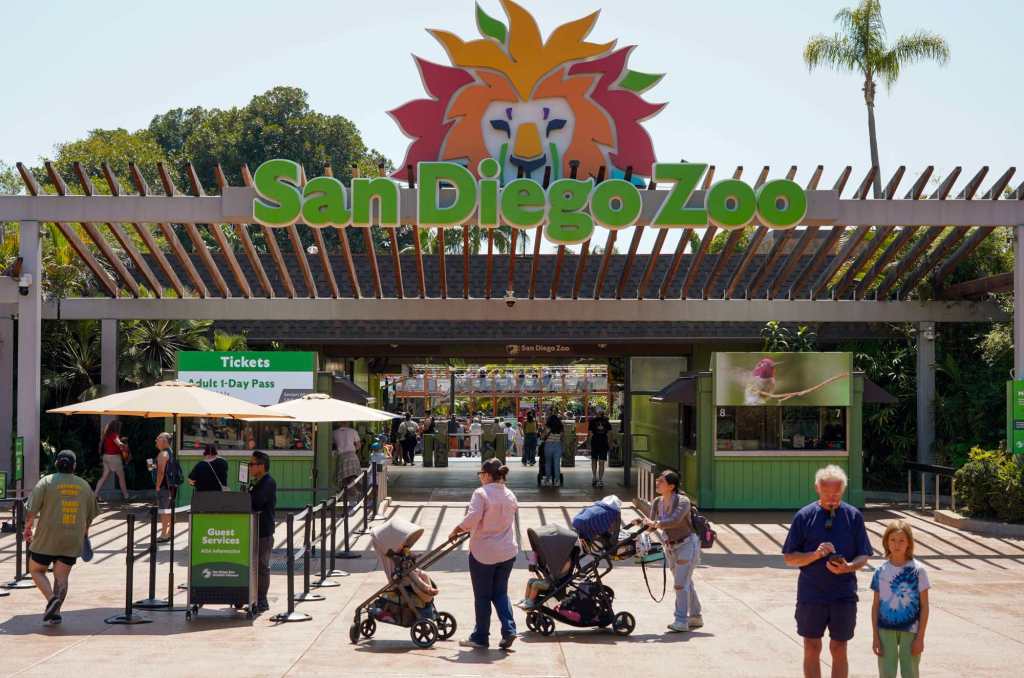
San Diego and its world-famous zoo have negotiated a 52-year extension of their lease that includes a new $3 million annual payment to the city and an equal split of parking revenue.
The proposed extension, which is scheduled for a City Council vote Monday, is being characterized by city and zoo officials as a major step forward for both.
The city would be projected to receive more than $330 million in combined annual payments and revenue-sharing between now and when the extended lease would expire in July 2078. That total includes an annual 3% escalator that would begin in 2030.
The zoo, whose current 55-year lease is set to expire in July 2034, would get certainty about the future that officials say is needed to keep investing in the zoo’s animals and employees.
The proposed extension is likely to face intense scrutiny by the council. Recent city audits have criticized the city’s handling of leases.
A city staff report summarizing the lease makes no reference to any outside appraisal of the property, which often happens during city lease negotiations.
It’s not clear whether the city’s independent budget analyst, who works for the council, will have time to analyze the proposal before Monday’s planned council vote.
The extension was unanimously approved by the board of the the San Diego Zoo Wildlife Alliance, the nonprofit that operates the zoo.
“This lease extension would provide long-term stability needed for the continued care of the zoo’s wildlife and plants, enabling the zoo to plan and commit to long-term capital improvements that will drive tourism and preserve the zoo’s ability to create jobs and economic benefits for the region well into the future,” the alliance said in a statement on Tuesday.
The proposed lease extension, which has been under negotiation since last summer, would require the zoo to start paying prevailing wages on large construction projects and to make climate-friendly any new or significantly renovated buildings.
No such policies were in place when the existing lease was signed in 1979.
The deal anticipates scenarios where the city eliminates or modifies controversial paid parking elsewhere in Balboa Park, following backlash since paid parking was launched in January.
If the City Council were to eliminate paid parking, the city would no longer receive the $3 million annual payment. If paid parking were scaled back by one day a week, the $3 million would shrink by one-seventh to just under $2.6 million.
Mayor Todd Gloria, whose staff negotiated the proposed extension, praised the deal Tuesday.
“This agreement protects a treasured part of our city’s identity while delivering real, tangible benefits for all of us who call San Diego home,” Gloria said. “San Diegans are the owners of this land, and this proposed 52-year lease extension makes sure it continues to work for them.”
The proposed lease extension would not grant the zoo major concessions such as permission to add new structures like parking garages. City and zoo officials did not say if any additional concessions came up during negotiations but were rejected.
The San Diego Zoo Safari Park, a separate park operated by the zoo in the San Pasqual Valley, has a separate city lease that is due for renegotiation.
The proposed zoo lease extension characterizes the annual $3 million payment not as rent but as a contingency related to paid parking in Balboa Park, which forced the zoo to begin charging for parking for the first time.
The zoo, which has paid no rent to the city since it opened in 1916, would continue to pay no rent. All of Balboa Park’s nonprofit tenants operate on zero-rent leases.
Last September, the council approved a targeted amendment to the zoo’s lease to allow the zoo to start charging for parking in its lots. The amendment lets the zoo give discounts to employees, volunteers, members, city residents and possibly others, concessions the zoo said were needed for it to start charging.
The new proposed extension deal would also adjust the boundary lines of the 124-acre parcel the zoo controls on the northwest corner of Balboa Park, including the addition of land around the Balboa Park Carousel to the zoo property.
Boundary lines would also be updated to reflect small changes in land use since the zoo took over the property. The proposed extension would include a land survey that would take roughly six months to complete.
In addition to the 3% escalator of the zoo’s initial $3 million annual payment, the proposed extension spells out how the revenue split would work: It would be an equal division of net revenue after deducting expenses to operate and maintain paid parking at the zoo.
Those expenses would be covered jointly by the zoo and city, but the city’s annual contribution would be capped at $700,000. So if those expenses surpassed $1.4 million in a particular year, the zoo would pay more.
The proposed extension stipulates that the zoo would be required to cover all infrastructure upgrades and capital improvements related to its three parking lots, which contain roughly 3,000 parking spaces.
It’s difficult to estimate how much the city would receive under the revenue-sharing deal. Zoo officials said Monday they couldn’t disclose how much revenue they’ve already collected from paid parking since it began Jan. 5.
“We are still in the preliminary stages of implementing paid parking for the first time in our organization’s history,” said zoo spokesperson Meghan Breen. “We are continuing to process vehicle registrations and assist our guests through the transition, which makes it difficult to provide an accurate revenue figure at this stage, and we don’t want to guesstimate.”
But the $330 million estimate provided by the city indicates that officials expect revenue-sharing to generate roughly $2 million a year for the city.
The zoo charges $16 a day for parking, with city residents paying only $8. The proposed extension requires the zoo to continue providing city residents a discount.
The zoo’s proposed Balboa Park lease extension would cover 52 years because that’s the maximum allowed under state law, which bars leases longer than 99 years.
Because the lease was signed in 1979, it can’t expire after 2078. In order to agree to a longer deal, the city and zoo would have had to create a new lease instead of agreeing to extend the existing lease.
City officials said zoo officials indicated last summer that they preferred to extend the existing lease.
A staff report authored by city Economic Development Department officials about the extension says the city’s partnership with the zoo is a smart investment.
The report says the zoo generated 3.9 million visits in 2024 with guests spending over $571 million in the region, for a total economic impact of $925 million. The zoo also supports nearly 6,500 jobs.
The proposed lease extension would require the zoo to give $250,000 per year in free tickets to nonprofits, schools and local children. It would also require the zoo to give the city 10 parking spaces at the north end of its lots to allow city operations at the park’s War Memorial Building.
The lease extension is slated for council consideration Monday at a meeting scheduled to begin at 2 p.m. at City Hall, 202 C St.