
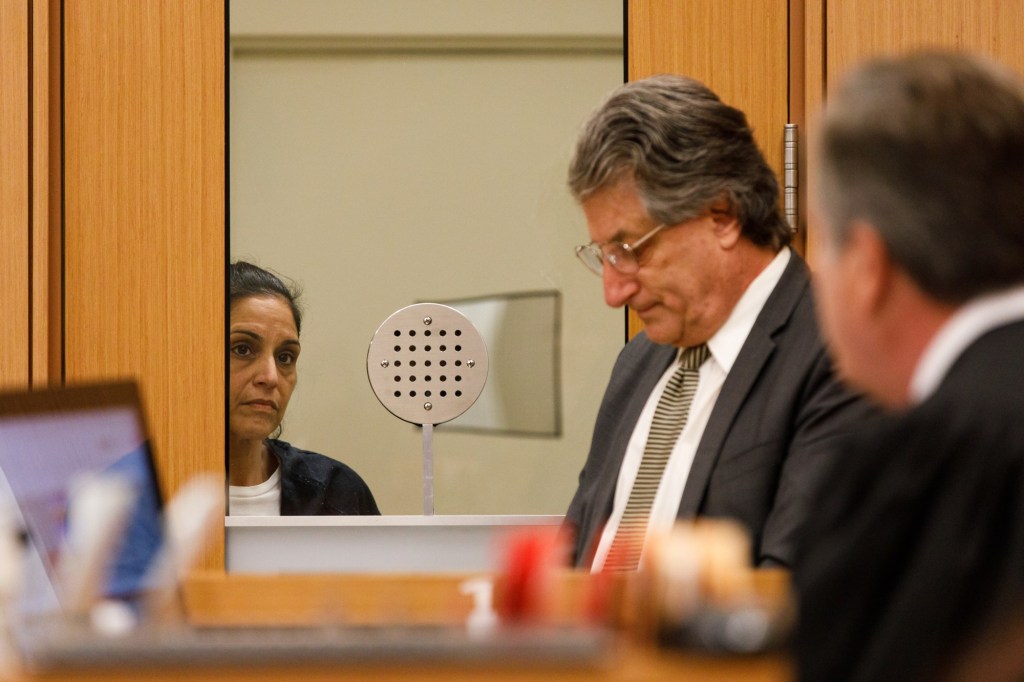
As the criminal investigation broadens into how the Harm Reduction Coalition of San Diego handled millions of taxpayer dollars, county officials have given conflicting information about how the alleged fraud was discovered and who alerted prosecutors.
A host of questions persist over how the nonprofit focused on preventing deadly drug overdoses was able to win government contracts worth more than $12 million, when even a cursory check of public records raises red flags for the fledgling organization.
San Diego County officials waited all of last week to respond to questions from The San Diego Union-Tribune before issuing a news release after 7 p.m. Friday saying the county did nothing wrong in overseeing Harm Reduction Coalition of San Diego contracts.
“There has been no information released to date that indicates any failure of the county’s internal control environment,” spokesperson Tammy Glenn wrote in the announcement.
“In fact, the county’s swift actions — including contract monitoring, corrective directives, audits, site visits, contract suspension, contract termination and referral to the Public Integrity Unit — demonstrate that the county’s systems function as intended,” Glenn added.
The Union-Tribune asked the county Feb. 23 how the nonprofit was able to collect public funds in 2022, even though it had not filed federal tax returns or registered with the state of California.
The newspaper also wanted to know how an organization with limited experience and a two-member board of directors came to be selected for a pair of contracts worth almost $12 million.
The county did not answer those questions or provide a history of its payments to the nonprofit.
Amy Knox — the nonprofit’s former chief operating officer who has been charged with embezzlement — had been previously convicted of embezzling hundreds of thousands of dollars from a former employer a decade ago.
District Attorney Summer Stephan said last week that Knox’s alleged embezzlement was first reported by the nonprofit’s founder, Tara Stamos-Buesig, last May.
“The county then ended the contracts in June of 2025,” Stephan said at a news conference. “Unfortunately, when the county terminated the contract, there was no referral for criminal investigation to the DA’s Public Integrity Unit.”
Knox, 45, was charged two weeks ago with three counts of misappropriating public money and three counts of embezzlement for stealing more than $130,000 from the Harm Reduction Coalition.
According to prosecutors, Knox used the money to pay for family vacations, utility bills, cosmetic surgery and other personal expenses. Last week, the District Attorney’s Office said the case had broadened to allege at least $210,000 in theft, and more people may be charged.
Stamos-Buesig has not been charged. She said in an interview late last week that she had been duped by Knox, and that the salary information Knox listed for her in tax returns was wildly incorrect.
“I remember thinking, ‘There’s no way. That’s not right,’” Stamos-Buesig said about the nearly $500,000 in pay that her organization’s tax filings said she collected in 2022 and 2023. “It didn’t match my bank account. And so that’s when I really started to be, like, ‘What is going on here?’”
The Harm Reduction Coalition did not file any public tax returns until May 2023, almost a year after it was awarded its initial San Diego County contract. It filed its 2020, 2021 and 2022 tax returns on May 10, 2023.
Records show Stamos-Buesig and Knox collected no salary in 2020 or 2021. The organization closed the 2021 tax year with $437 in net assets. It reported $120,000 in expenses against revenue of $97,000.
By 2022, however, with cash pouring in from San Diego County, the filing says that Stamos-Buesig was paid $158,000 and Knox just over $71,000. The next year, tax records show Stamos-Buesig being paid $316,000 and Knox $182,000.
The Harm Reduction Coalition of San Diego has not yet filed its 2024 tax return.
Stamos-Buesig said Knox was in charge of all of the bookkeeping — and prosecutors told her she was a victim of the fraud.
“The extent to which she has been crafty has been Lifetime movie-worthy,” she said.
Stamos-Buesig first sought tax-exempt status for her organization from the U.S. Internal Revenue Service in August 2020. She received approval for the project later that year, federal records show.
By 2021, with fentanyl killing more than 900 people a year in San Diego County, the Board of Supervisors approved a plan to distribute naloxone across the region. The drug, which reverses the effects of opioid overdose, has been credited with saving countless lives.
In 2022, county administrators, at the supervisors’ direction, awarded the Harm Reduction Coalition a contract worth up to $5.1 million. Stamos-Buesig signed the agreement on July 1, 2022 — four months before the nonprofit was registered with the state of California.
The county did not pay all $5 million at once; instead, portions of the money were paid out annually until the agreement was canceled last year.
By 2023, county officials became alarmed at the nonprofit’s handling of the contracts and of the naloxone itself, some of which was being stored outdoors in 100-degree heat at Stamos-Buesig’s home — a condition that can render the medication ineffective.
County officials placed the Harm Reduction Coalition on a correction plan, and the nonprofit subsequently was deemed compliant.
In August 2024, the county awarded the organization another contract worth more than $6.3 million, again to be paid incrementally and again without returning to the Board of Supervisors for approval.
The second agreement was for the nonprofit to deliver “drug checking” services through a variety of subcontractors.
The contract lists one of the subcontractors as Knox Consultants LLC, a company set up in December 2022 by Knox and her husband, Jeff Knox.
The Harm Reduction Coalition was suspended by the state Franchise Tax Board early last year, state records show. The records do not say why and the tax office does not comment publicly on such matters.
Under California law, companies that are suspended by state tax officials are legally barred from transacting any business. But the Harm Reduction Coalition continued collecting county funds until its two contracts were canceled on June 30. In August, the entity was awarded a different contract by federal officials.
Around the same time, three subcontractors performing work under the coalition’s contract with the county — A New PATH, SAY San Diego and Project AWARE — stopped getting paid by the nonprofit for services they had already provided.
Gretchen Burns Bergman, executive director of A New PATH, said the Harm Reduction Coalition never paid roughly $98,000 for work completed earlier this year, creating significant financial strain for her small nonprofit. Nor did the county reimburse those funds.
Since then, she said, the county has redirected funding that would have gone to the Harm Reduction Coalition to the subcontractors to ensure services continue without interruption.
“The county knows that we said we were going to continue all our operations, reimbursed or not, and we’ve been able to do that. But it was a struggle,” Burns Bergman said.
At a court hearing last week, where the judge increased Knox’s bail to $500,000, prosecutors said they are also investigating a more than $1 million contract the Harm Reduction Coalition was awarded by the state of New Mexico to distribute naloxone there.
“We don’t have any idea if that’s legit,” Deputy District Attorney Matthew Dix told the court.
Records also show the nonprofit, in a joint project with UC San Diego, received a contract worth more than $700,000 from the U.S. National Institutes of Health last August to help reduce opioid overdoses on tribal lands.
Federal officials declined to explain why they awarded public funds to an entity that had been suspended seven months earlier by state tax regulators and had also lost its contracts with San Diego County.
“NIH does not comment on internal grant deliberations related to specific institutions, awards or investigators,” the agency said in a statement.
Glenn, the San Diego County spokesperson, said county staff are fully cooperating with the District Attorney’s Office and will implement any appropriate safeguards as needed.
She said officials also plan their own investigation.
“The county, in coordination with an outside auditor, is conducting a thorough review of its processes,” she wrote in the Friday statement. “This review will help ensure continuous improvement and that county systems remain strong, resilient, and capable of protecting public resources from fraud, abuse, or misuse.”
Knox remains in custody at the Las Colinas women’s jail in Santee, sheriff’s records show. She was booked under the name Amy Joyce Hernandez. Further proceedings in the criminal case are scheduled for April 1.