
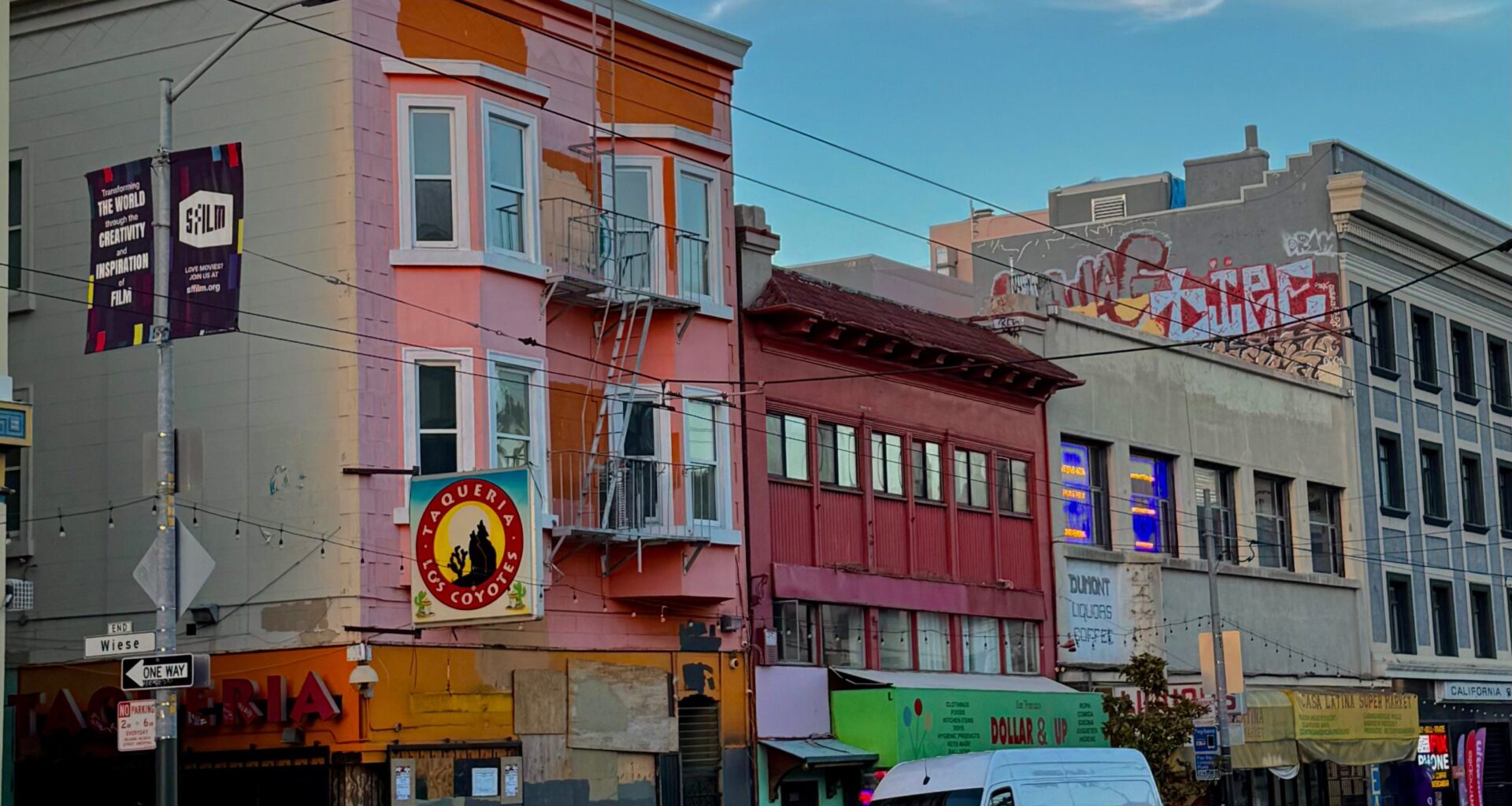
San Francisco’s housing market is on fire. One-bedroom apartments rent for well above $3,000 a month, the housing stock is scarce and submitting an application can feel like applying to college.
But as anyone might expect, for immigrants, especially those without legal status, it’s even harder. Most who arrive in the United States initially find a place to live with a friend or family member, or get temporary shelter through churches, city services or motels.
But when it comes time to find a permanent place to live, the doors are often closed.
“It’s really sad because people just accept very terrible living conditions because they’re desperate and don’t have other options,” said Amy Aguilera, an organizer at PODER, an environmental justice organization. “It’s unfortunate but it’s survival. It’s resilience.”
Housing applications on Zillow and other platforms require you to submit your paystubs, credit score, references, a drivers license and more — documentation that many immigrants simply do not have. They are often asked to pay hefty application fees, which can amount to a half-day’s work for those working in construction or cleaning.
Federal and city-supported housing is limited, with long waitlists and, in some cases, citizenship or other eligibility requirements.
“You have to have documents to apply. If not, we look another way or stay in a hotel day to day,” said Kennedy, 30, a Venezuelan immigrant who lives in Daly City with four roommates and makes money delivering Amazon packages.
So immigrants instead often turn to an informal market for apartments, found through a network of friends, distant relatives, churches, WhatsApp groups and sometimes handwritten flyers stapled to wooden poles in immigrant-heavy neighborhoods.
This can often mean they end up in substandard housing or renting from “slumlords,” said Shanti Singh, legislative director for Tenants Together, a statewide nonprofit organization that advocates for renters.
Many look to each other to find housing
Carmelo, 43, was looking for a place to live for almost six months after arriving in the United States three years ago, and finally found his current room through a friend of a friend of his nephew.
Carmelo works at a neighborhood grocery store on 16th Street. He was stacking cabbages on the shelf and pulling bad-looking mushrooms out of the bin as he spoke to Mission Local about finding housing and paying rent in San Francisco.
The undocumented immigrant who arrived three years ago from the Yucatan lives in an apartment with three others— his 25-year-old son and two of his nephews. They pay $2,950 total.
“Here we are, there isn’t another option,” said Carmelo in Spanish.
A community organizer who works with immigrant communities in the Mission said it is common for five people to be living in one room, after being turned away elsewhere. One immigrant family from El Salvador crammed 15 people into a two-bedroom unit in the Excelsior neighborhood during the pandemic, said Aguilera, who works at PODER.
Landlords often illegally cut up existing units, and the city has cracked down on scofflaw landlords who illicitly subdivide apartments for years.
In 2017, an auto repair shop on 24th Street was found to have 27 illegal residential sleeping rooms inside a building zoned for commercial use, according to city records from the time.
For the Salvadoran family in the two-bedroom unit , they had found the room through friends of friends after failing to find housing through city-funded programs.
Carmelo said he ended up in his apartment because, after months of searching, it was his only option. He is unsure who the owner even is. He pays rent to his nephew, who pays a friend, who pays the landlord.
Oftentimes, people renting to immigrants are themselves renting from a landlord and subleasing rooms in their apartment to help afford the total rent. That was the case for Carla from Guatemala.
She was helping her mother find a tenant to rent a large room in a Mission District home where her mother rents. She got over 15 calls in the first few weeks after stapling a flyer to a wooden pole advertising the opening.
“Many people were interested, I got so many calls,” she said in Spanish.
This kind of subleasing is common. It is one way around having to provide formal documentation, whether because immigrants don’t have those papers or fear sharing them. There is a law, AB291, which makes it against the law for landlords to ask immigrants about their citizenship status. But it is hard to enforce and most are unaware of its existence.
Stapling paper advertisements to street posts, with cut-out strips printed with phone numbers — reminiscent of a time when it was common for handymen, nannies, and dog breeders to advertise that way — is how many looking to rent to immigrants market their openings.
They also place notices in local laundromats around the Mission District, and in cafes and barber shops.
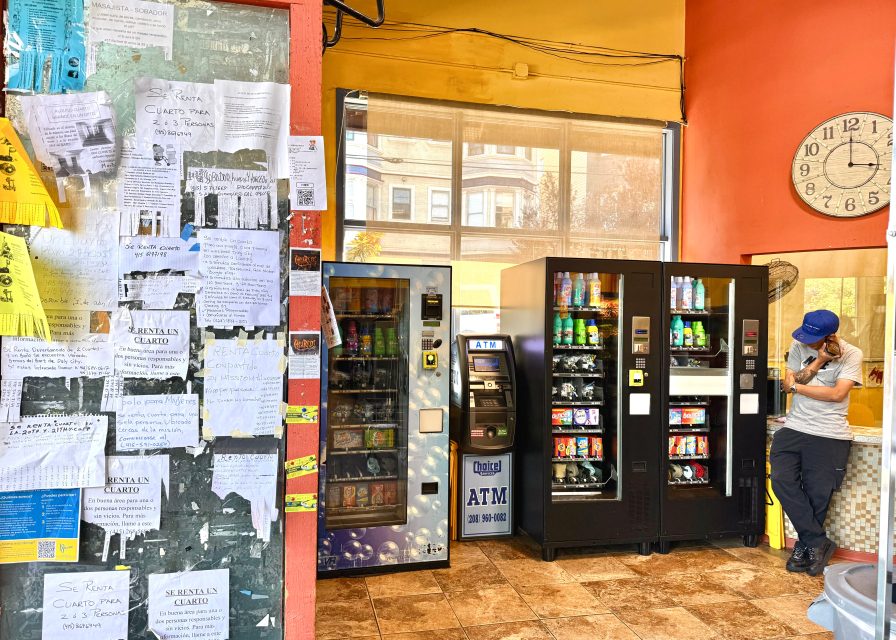 At Fiesta Laundromat on 20th Street and South Van Ness, people in the neighborhood not only do laundry, but also look at postings that advertise room and apartment openings in San Francisco. Credit: Clara-Sophia Daly
Not all ways of advertising housing to immigrants are analog. WhatsApp groups and other online chats have arisen to make these connections as well.
In one invitation-only WhatsApp group, immigrants will post about room openings — and sometimes sell home-cooked food like tamales to make extra money.
Kennedy, the 30-year-old Venezuelan who lives in Daly City said WhatsApp groups are much better because the facebook groups “are false and fictitious,” he said in Spanish.
Publicly funded housing options are sparse
San Francisco has a housing portal called DAHLIA that helps San Franciscans search for city-sponsored rental housing. But those applications are competitive. Section 8 housing vouchers have long waitlists, and require at least one member of the household to have legal status.
The same is true for programs like the “Housing Choice Voucher” through the San Francisco Housing Authority — at least one member of the household must be a citizen or have “eligible immigration status” to apply.
As for federal housing assistance programs, they are “basically impossible” for undocumented immigrants to access, said Matthias Mormino, the chief operating officer for the Chinatown Community Development Center.
Even when immigrants are technically eligible for public housing, many fear applying could put them on the government’s radar and at risk of deportation. Recently, the Department of Housing and Urban Development announced it will be giving local housing authorities across the country a list of names of tenants and asking housing authorities to find and identify those who are undocumented.
“It’s horrifying,” said Singh, who works at the statewide tenant advocacy group.
Many just leave San Francisco
Ana Landaverde, from El Salvador, works at a Dollar and Up store in San Francisco. She frequently overhears her clients talking about the hard housing search.
Landaverde is lucky and has been in her apartment for 15 years. But as she sat behind the counter of the dollar store, she said that almost every day she overhears other immigrants complain about rent prices and the challenge of finding a place to live.
“I thank God every day I don’t have this problem,” she said in Spanish.
Many leave San Francisco entirely in search of lower rent. One family from Mexico that works on Pier 39 and spoke to Mission Local moved to Richmond to save money on rent. A worker at Nieves Cinco de Mayo, a Mexican ice cream shop on 16th Street, chose to live in Oakland. A nail technician who works on Valencia Street said she also lives across the bridge in the East Bay because of the lower rents.
Joe, a 26-year-old Venezuelan barber, lives in a two-bedroom house with five people total in Daly City, commuting to the Mission District most days for work. One of the roommates has legal status and is on the lease, and Joe and the others pay rent to that friend. Even outside of San Francisco, the same challenges persist, albeit at a lower price point.
Guadalupe Benitas is a community organizer who works for PODER, a nonprofit that serves immigrants in San Francisco. Twice a week, she goes out to talk to people and help connect them with resources.
Benitas is just one arm of the many churches, organizations and government programs set up to help immigrants find a place to live. But what she and her colleagues have found is that sharing information about government programs and nonprofits is not always very helpful.
Many of these programs involve housing lotteries and require time to wait for spots to open up on waitlists – time most immigrants trying to find housing do not have, whether they have recently arrived or have been in the United States for years.
When the Chinatown Community Development Center had openings in a low-income building, Mormino said there were around 10,000 applicants for 120 units. The competition for affordable housing is that tight. Oftentimes housing designated as “affordable” is still out of financial reach for immigrants.
Benitas sees all this and has found thats the most effective way she can help is connecting immigrants to each other. She notes signs in laundromats and cafes that are advertising rooms, and tries to connect people through word of mouth.
“You can’t wait for the lottery,” she said in Spanish. “This is much faster.”