
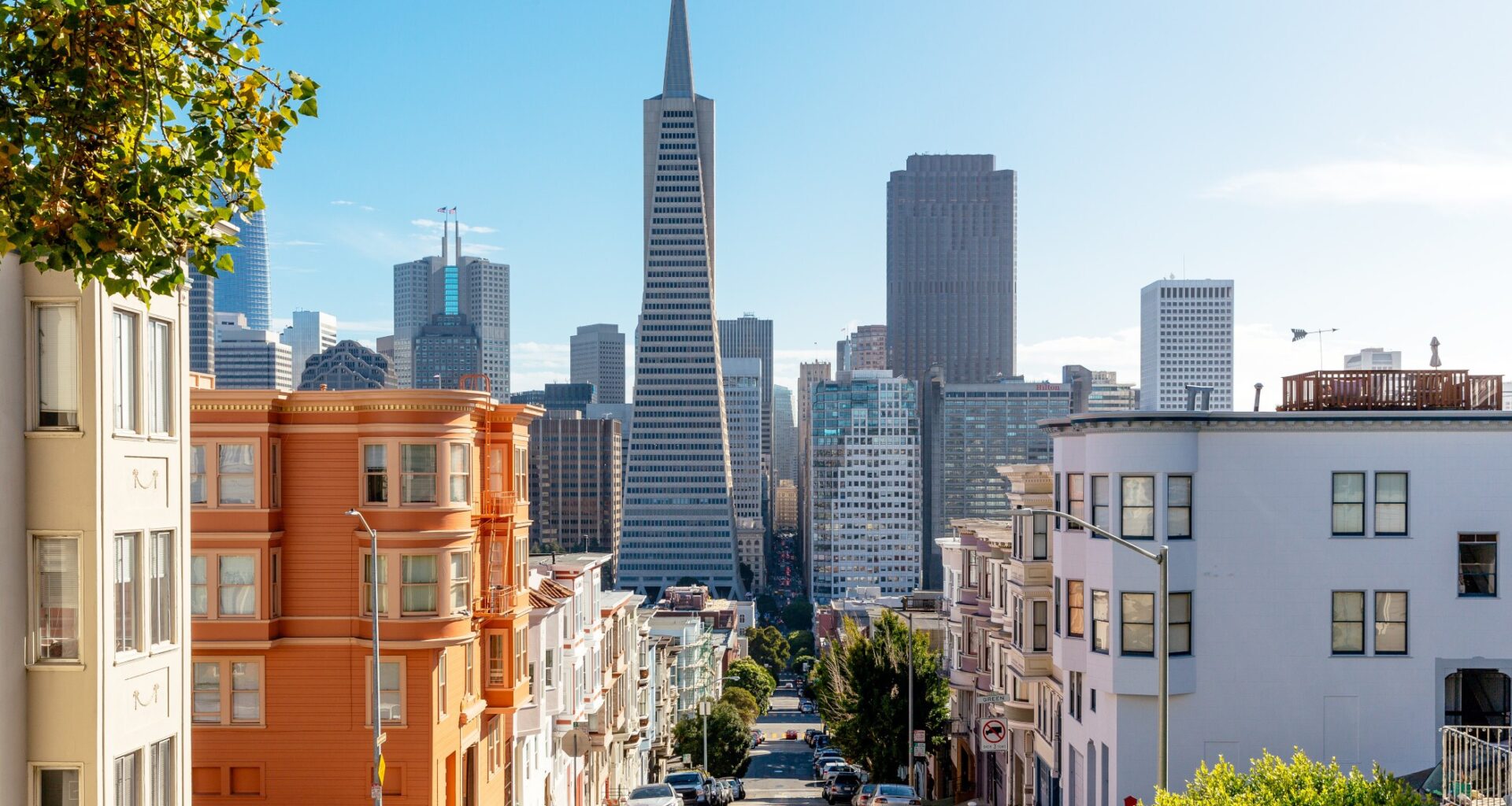
A European investor has scored what appears to be a deal on one of San Francisco’s most iconic skyscrapers in the aftermath of its largest renovation to date.
Yoda, a Cyprus-based investment firm, is expected to pay $700 million to acquire the downtown Transamerica Pyramid, according to people with knowledge of the pending deal. While it has yet to be finalized, that price tag would be less than what the current ownership group, led by German pension fund Bayerische Versorgungskammer, or BVK, put into the tower since buying it five years ago and paying for major capital improvements that boosted its total investment beyond $1 billion.
The pending agreement with Yoda would value the property at a little more than $933 per square foot, a figure earlier reported by Green Street News. It isn’t yet clear when the sale will close, and neither the buyer nor BVK and its partners, New York real estate investor Michael Shvo and Deutsche Finance Group, responded to CoStar News’ requests for comment.
“I believed the Transamerica Pyramid deserved more than restoration — it required reinvention at the highest level.”
Michael Shvo
The capital improvement plan helped put the tower at the forefront of San Francisco’s luxury office market, and it has commanded some of the highest rents in the nation, according to CoStar data.
While Yoda’s pending acquisition will result in a loss for Transamerica’s current owners, the sale is ultimately expected to mark one of the city’s highest-priced deals since the earlier years of the pandemic. Nine-figure purchases used to dominate San Francisco’s investment market before COVID-19 but have been few and far between since its 2020 outbreak.
San Francisco saw its office vacancy rate rise from the lowest in the nation in 2019 to the highest, as a perfect storm of pandemic lockdowns, remote work and layoffs among technology companies caused tenants to downsize at record levels.
A much-lauded recovery has taken hold over the past year, with high-profile local investors making discounted deals for offices in downtown San Francisco. The surge has been fueled largely by expansions from tech companies, especially in the artificial intelligence sector, driving an increase in demand for new office space.
Tenant, buyer demand rebounds
Transamerica Pyramid, built in the early 1970s, is second to only the Salesforce Tower as the city’s tallest structure. As of the end of last year, it had reached a leased rate of about 85%.
The renovation turned the property into a “world-class office destination,” Shvo said in a previous statement.
“I believed the Transamerica Pyramid deserved more than restoration — it required reinvention at the highest level,” the developer said. “The Transamerica Pyramid has long symbolized the city’s ambition and resilience.”
Tenant activity has accelerated significantly in San Francisco over the past year, pushing annual leasing volume to its highest level since 2019 and helping shift net absorption into positive territory. Major commitments from AI firms signal a clear revival in requirement sizes and confidence among high‑growth occupiers.
“Covid was tough on San Francisco, but the city’s recovery is well under way, and we are optimistic and eager to invest in this recovery.”
Greg Flynn
In January, AI giant Anthropic leased an entire 25-story office tower in downtown San Francisco along with a historic, century-old three-story building nearby that has long housed the Town Hall restaurant. The lease deal at 300 Howard St. in the city’s newly reinvigorated SoMa district was seen as a signal of the soaring ambitions of the fast-growing AI company and the industry in general.
Tenant interest has helped drive new investor demand.
Last year, a 25-story vacant building in San Francisco’s tech-heavy SoMa neighborhood, 300 Howard St., sold for around $111 million, marking the first nine-digit office sale in the city since the start of the pandemic. The two-tower complex at 555 and 575 Market St., once known as the Standard Oil Buildings, traded for $177 million some weeks later.
COVID-19 “was tough on San Francisco, but the city’s recovery is well under way, and we are optimistic and eager to invest in this recovery,” buyer Greg Flynn said in a statement given to CoStar News following that deal. “Our belief is never bet against San Francisco in the long run, as it has too much going for it.”
Momentum is also particularly strong in Mission Bay and Showplace Square, where proximity to transit, modern infrastructure and the clustering of AI and life‑science companies continue to drive activity.
The skyline-defining, 853-foot Transamerica Pyramid was the city’s tallest building from its construction in 1972 to 2018, when it was overtaken by the 1,070-foot-tall Salesforce Tower.
It overlooks one of the city’s fanciest micro-neighborhoods. The Gold Rush-era brick buildings and alleys of Jackson Square, just north of the Financial District, have in recent years become a magnet for wealthy creatives such as famed former iPhone designer Jony Ive, whose firm, LoveFrom, is headquartered there.
After Shvo and his partners bought the Transamerica building, they hired world-renowned architect Norman Foster to redesign the iconic tower’s interiors and expand its Redwood Park grounds.
The New York-based ultra-luxe private Core Club said in 2021 that it planned to open a San Francisco branch there, targeting a clientele of “world builders, change-makers, visionaries and agents of transformation.” The plans dissolved in 2024 as a result of a legal battle between the club’s owners and Shvo.