
What’s at stake:
Organizers say iftar at Fresno State is more than just a shared meal; it’s an opportunity for understanding, for dialogue, and for meaningful connections between communities that might otherwise remain divided by unfamiliarity or misconceptions.
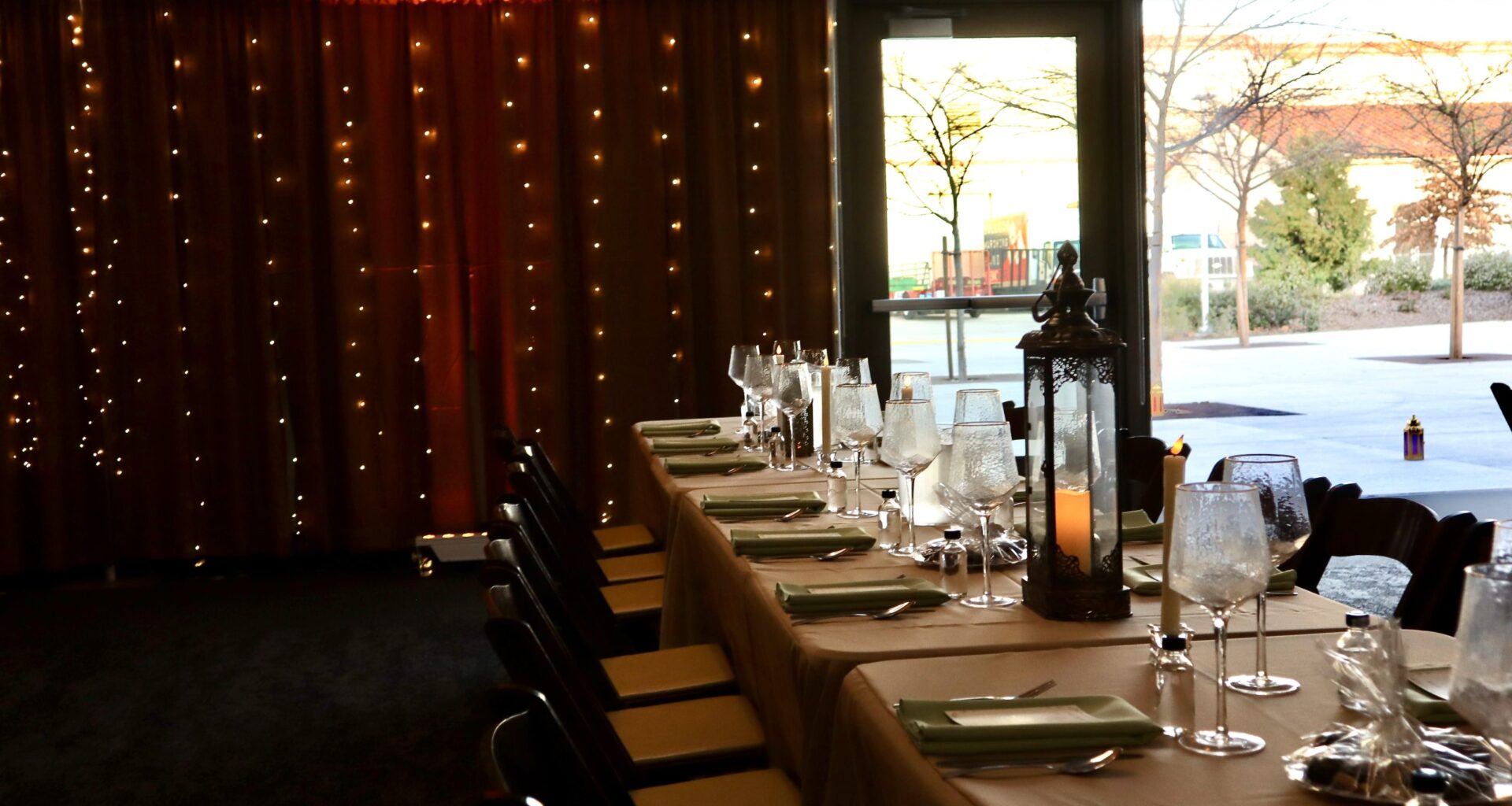
Twinkling strands of gold lights draped the make-shift walls of the Ruiz Ballroom on a recent Thursday, softening the high ceilings and transforming the wide, open space inside Fresno State’s Resnick Student Union into an intimate setting for an iftar dinner marking Ramadan, the holiest month in Islam.
Three years ago, Muslim students, including Rawan Kiran, walked into the office of the president carrying concerns.
They felt the university was not adequately addressing human rights abuses against Palestine and its people, or creating meaningful space for broader understanding about Islam on campus. In meetings with Fresno State President Saúl Jiménez-Sandoval, they spoke about visibility, about misunderstanding and about isolation.
Out of those conversations came a simple but ambitious idea: What if the campus held an annual iftar?
The first dinner was entirely student-organized. Muslim Student Association (MSA) members coordinated food, secured on-campus space and invited classmates, unsure how many would attend. The second year, the event expanded, with university support helping with logistics and sponsorship. This year, the iftar has grown into a campus-wide gathering still rooted in student leadership, but embraced by administrators, faculty and community partners.
Never miss the top stories in Fresno — sign up for our free, daily newsletter.
“Ramadan isn’t mainstream in the U.S.,” said Kiran, who is one of the MSA’s vice presidents. “It can feel disheartening to be in an environment where you can’t experience our culture and faith. So creating a space where people can experience it together — that’s been nice.”
The third annual gathering — hosted by the MSA and the International Business Association on Feb. 26 — brought together students, faculty and community members to break the daily fast at sunset and to learn about the holiest month in Islam.
On this night, the purpose was to welcome all members of the community, regardless of their ties to Islam or Ramadan. The dinner was explicitly designed to educate.
Ramadan, which began the evening of Feb. 17 this year and will end March 20, is observed by Muslims worldwide as a month of fasting, prayer and reflection. Because the Islamic calendar follows the lunar cycle, its dates shift annually.
From before dawn until sunset, Muslims abstain from food and water, using the fast to cultivate spiritual discipline, gratitude and closeness to Allah. Iftar is the evening meal that breaks that fast, traditionally beginning with dates and water.
Near the entrance of the ballroom this year, a table organized by Students for Palestinian Liberation offered pamphlets, whistles and know-your-rights guides, along with information about current humanitarian crises in Congo and mutual aid resources.
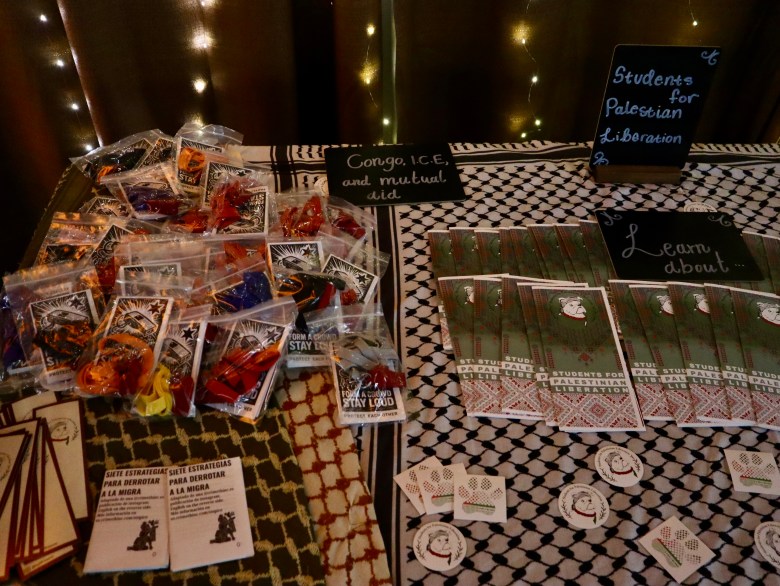 A table organized by Students for Palestinian Liberation offered pamphlets, whistles and know-your-rights guides, along with information about current humanitarian crises in Congo and mutual aid resources. Gisselle Medina | Fresnoland
As guests settled into their seats, MSA president Raheem Saeed welcomed the crowd. Student Kholoud Hashem followed with a recitation from the Qur’an. Her voice carried clearly across the room as she read verses from Surah Al-Baqarah, which define the obligation and purpose of fasting, to grow in righteousness and spiritual awareness.
Next came an explanation of how Ramadan is the holiest month of the Islamic year, from Lema Arya, vice president of external affairs of MSA. She said that this is a month that brings together nearly 2 billion people in a shared experience of fasting, devotion and reflection.
“Importantly, though, Ramadan invites us to reflect in our fast-paced, ever-changing world,” Arya said. “We can easily get consumed by the worldliness that surrounds us. As Muslims, as humans, we have responsibility to be stewards of our community and to uphold justice, and it is through the connections we build that we foster these duties.”
Ayra then read a poem called ‘Think of Others’ by Mahmoud Darwish, a Palestinian author and poet.
Jiménez-Sandoval told attendees he has fasted alongside students for the past two years. Going without water during the day, he said, revealed how often he reaches for comfort without thought. The discipline of fasting taught him perseverance, patience and appreciation.
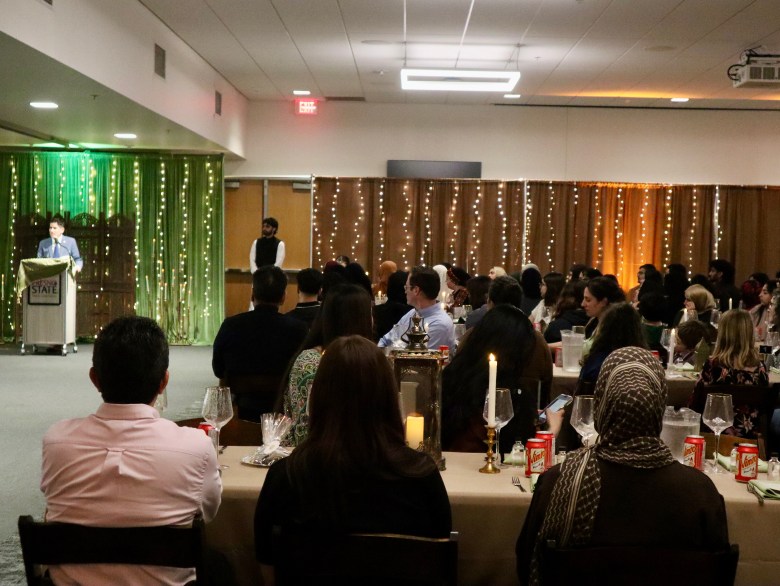 Dinner attendees listen to Fresno State president Saúl Jiménez-Sandoval talk about the origins of the campus Iftar. Gisselle Medina | Fresnoland
But the deeper lesson, Jiménez-Sandoval said, is what happens when a group of individuals come together to break fast — they walk the path as humans stronger with one another because of it.
“What would happen if we were to dialogue more together?” Jiménez-Sandoval asked. “What would happen if we were to understand each other and know more about each other?”
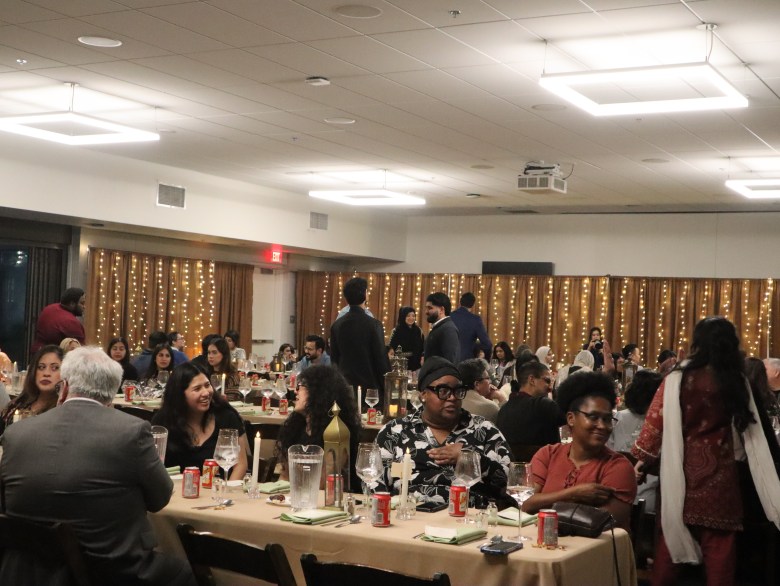 Iftar attendees engaging in conversation before dinner is served. Gisselle Medina | Fresnoland
At 5:55 p.m., the room grew still. Dates were passed and cups of Zamzam water, drawn from a sacred well in Makkah and deeply significant in Islamic tradition, were lifted. The fast was broken.
An optional prayer space opened in a separate room at 6 p.m., allowing guests to step away for evening salah.
Soon the ballroom filled again with motion. Plates were layered with chicken, rice pilaf, salad, hummus, garlic sauce, pita bread and falafel. Later came chai and gulab jamun — lightly fried alls of dough served warm — offered by the Chaiwala Shop.
For Samuel Aceves, a new Fresno State student raised in a Christian household, the dinner was educational.
He said he came in knowing very little about Islam. One of his friends who’s part of the MSA invited him, and he decided to attend out of curiosity. He hadn’t realized how long Muslims fast each day during Ramadan or that the fast includes abstaining from water.
Homeschooled for much of elementary and middle school by his aunts, Aceves said he was raised to treat everyone equally and with respect. Being in a room filled with people from different backgrounds, some observing Ramadan and others simply there to learn, felt meaningful to him.
For Miram Kiran, a 2021 alumna who now has two children, the night felt like a homecoming. She comes from a family of Fresno State graduates; now her siblings attend the university as well. Breaking fast with former professors and introducing her children to the campus felt deeply personal.
“It’s about congregation of community,” Kiran said. “Breaking fast, getting together, praying together, remembering God together. Fresno State feels like home, it’s so culturally diverse, and I feel like I belong here. And students encouraging other Muslim students to come to this event is beautiful and means alot.”
On another side of campus, the Fresno State library is hosting its second Eid-themed exhibit, “Beyond Ramadan: The Heart of Fasting.” Organized by the President’s Muslim Advisory Council and Fresno State librarians, the exhibit is designed to educate students and the broader community about the spiritual, cultural and communal significance of Ramadan.
The free exhibit, which debuted last year, highlights the core values of the holy month. Organizers say the goal is to foster inclusivity, encourage interfaith dialogue and deepen respect for religious traditions across campus.
Located on the library’s second-floor North Wing Concourse, the exhibit will conclude March 23 with a pop-up tasting featuring traditional foods typically enjoyed after breaking the fast during Ramadan.
Support our hyperlocal reporting with a donation today.
Every week we bring you deeply reported stories about the essential issues facing our region. Please help us continue our work by becoming a monthly member.
Related