
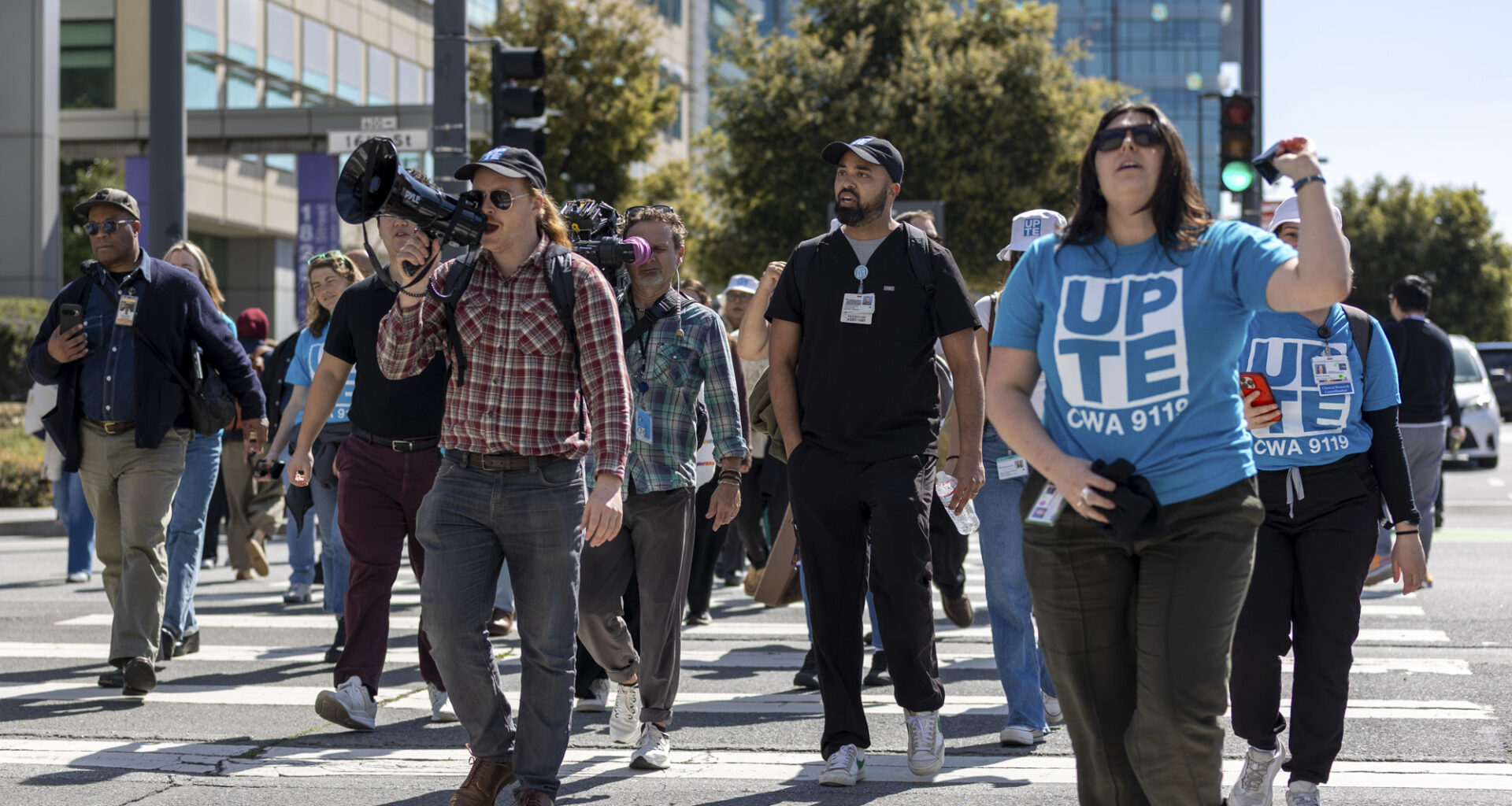
Findings from a recent survey conducted by the union representing UCSF social workers say that the vast majority of workers have directly experienced or witnessed violence.
Nearly 90% reported having experienced physical, sexual or verbal threats, assault or intimidation on the job, according to the survey. Around 20% of social workers said they have been violently assaulted on the job, and 50% of respondents said they have been sexually assaulted or harassed.
In response to the survey results, UCSF issued a statement saying, “We have not independently reviewed the underlying data or methodology. We are interested in learning more about the information generated.”
While a criminal investigation into the stabbing is still ongoing, UCSF and the Department of Public Health have implemented several changes on site at Ward 86, which opened in 1983 and today serves many low-income patients with dual diagnoses.
They’ve created a 24/7 threat management team to triage and respond to non-emergency safety concerns, added panic buttons at some sites, and updated their security training plans and developed new threat-escalation protocols for staff.
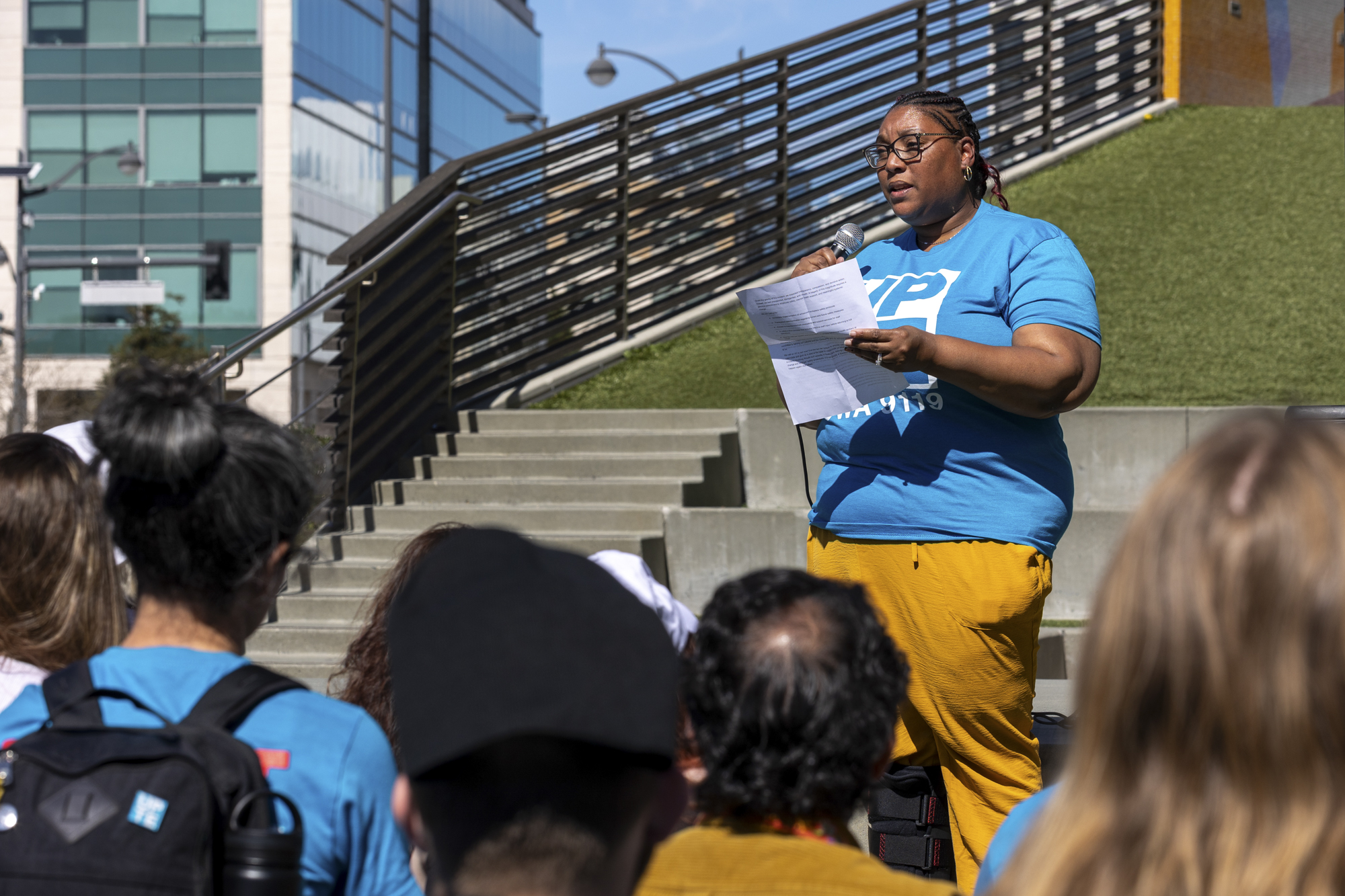 Tia Blackburn, a clinical social worker of four years, addresses workers and supporters during a rally outside UCSF Medical Center at Mission Bay in San Francisco on March 5, 2026, calling for stronger workplace safety protections following the fatal stabbing of social worker Alberto Rangel. (Gustavo Hernandez/KQED)
The city said it has also increased security staffing at Ward 86 and other sites, an issue many social workers said has been top of mind since before the December incident.
Prior to the stabbing, SF General had reduced staffing of sheriff’s deputies from 45 in 2022 to 28 at the end of 2025, according to Ken Lomba, president of the San Francisco Deputy Sheriffs’ Association. Multiple workers and a patient told KQED that Ward 86 did not have any metal detectors on-site either.
As additional safety measures have been added to Ward 86, social workers at other clinics said on Thursday that they’re still waiting for the same kind of response where they work.
“We just heard today that any changes needed to our clinic, be that like metal detectors or more panic buttons, could take over a year, so that’s frustrating to hear,” said Nicole Morris, a clinical social worker on the CityWide stabilization team.
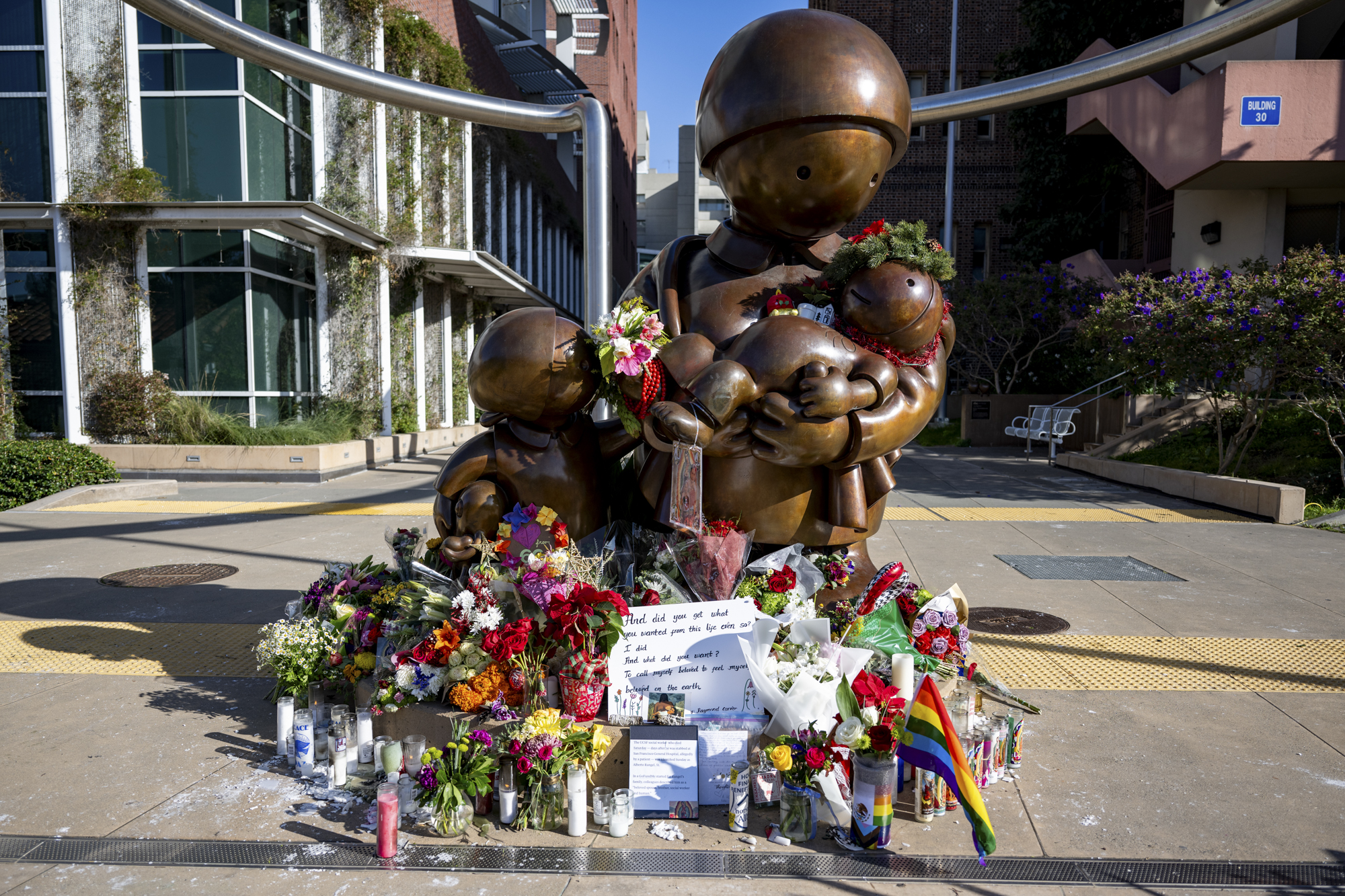 A memorial for social worker Alberto Rangel, who was fatally stabbed on Dec. 4 at Zuckerberg San Francisco General Hospital, outside the hospital on Dec. 9, 2025. (Beth LaBerge/KQED)
But part of the low security is by design. SF General and Ward 86 often care for patients that other hospitals and clinics may refuse, whether that’s due to lack of insurance or the complexity and challenge of the medical and behavioral needs they present.
So too much security or barriers to entry could cause vulnerable patients to avoid care altogether, patient advocates say. Adding too much police presence or security measures has become a point of friction, even in an industry that’s known for having the highest rate of non-fatal injuries, according to data from the Bureau of Labor Statistics.
“This is a very challenging industry to work in. You have risk factors, you are dealing with a public that’s sick, hurting, in pain, all of the above, trying to get access to care,” said Cammie Chaumont Menendez, a research epidemiologist with the U.S. Department of Health and Human Services.