
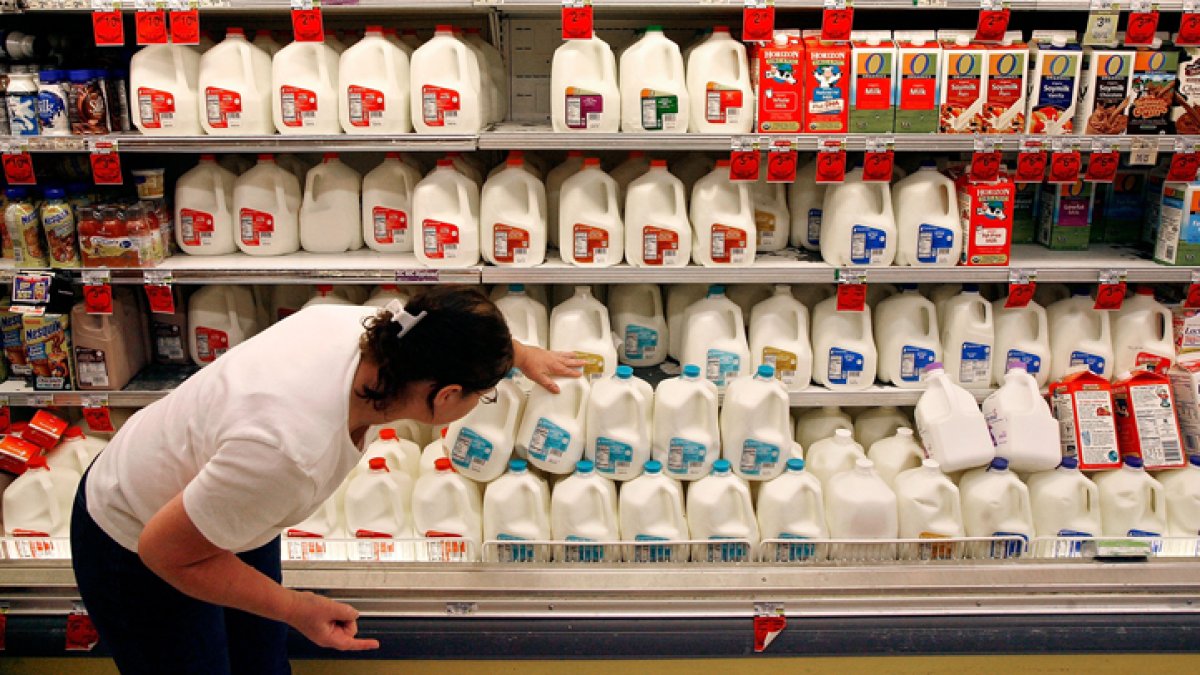
With grocery prices still straining family budgets, NBC4 teamed up with the Today Show and other NBC-owned stations nationwide to compare what shoppers pay for common items — and whether buying in-store, ordering for pickup, or using delivery changes the bottom line.
Shoppers in Los Angeles tell NBC4 they’re feeling the pinch. “I just spent like 40 bucks, maybe 50 bucks on a couple things,” said Veronica Lim.
To test price differences, NBC4 visited Whole Foods, Target and Walmart locations in Santa Clarita.
Reporters purchased the same 12 basic grocery items — including milk, eggs, butter, and both store-brand and select name-brand products — through three methods: in-store, online pickup and online delivery. Local fees, such as bag charges, were included, but no store memberships or discount programs were used.
Walmart had the lowest total, with the basket costing $43.78. Whole Foods totaled $51.18, while Target was slightly higher at $53.48.
The West Coast, on average, showed slightly higher food prices than other regions participating in the multi-city project.
Retailers told NBC4 that pricing can vary by location.
Walmart said most stores use the same prices but noted that some commodities can differ regionally “due to localized cost and distribution differences.” Target said store-to-store pricing may shift based on local promotions and competition. Whole Foods cited “region-specific promotions, regulatory compliance, [and] variances in transportation and operating costs” as factors.
Across Los Angeles and other participating cities, NBC stations found that the price per item remained the same whether shoppers bought in-store, ordered for pickup, or selected delivery. However, delivery came with additional charges and tips that added $14 to $19 per order in Santa Clarita.
Pickup orders showed no per-item price changes compared with in-store and delivery orders.
According to NIQ, which tracks retail data, items such as meat and orange juice remain among the more expensive staples in the Los Angeles area. Ground beef prices have risen 15% since last year, while orange juice prices are up 28%.
Shoppers we spoke to say they feel the pinch. “I don’t think they’re gonna go down,” said Adolfo Acnales. “But what can we do?” Another shopper, Siri Palm, said she’s tracking both rising prices and shrinking package sizes: “I do see it raise every time I go.”
Among West Coast cities NBC4 found Los Angeles had a lower overall grocery total than the Bay Area and San Diego.