
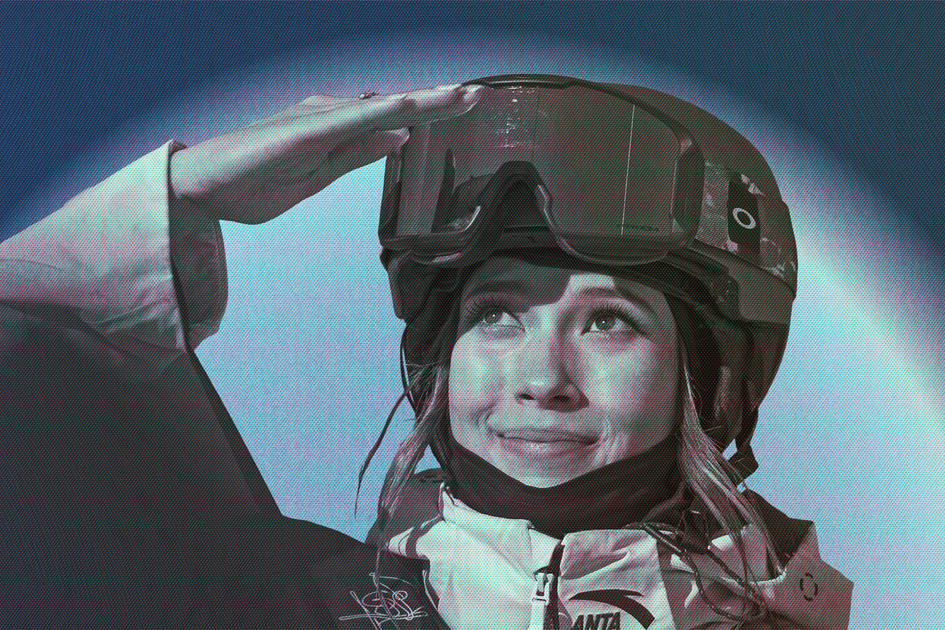
When six-time Olympic medalist Eileen Gu rides atop an open convertible Saturday as grand marshal of San Francisco’s Chinese New Year Parade, she’ll be representing her family, her community, and the city of her birth. But she’ll also be embodying what it means to be American at a time of warring narratives over nationalism, loyalty, and identity.
That’s a lot for one freestyle skier to bear.
Gu, 22, is one of San Francisco’s most decorated athletes. She is also one of its most hated, having rejected Team USA to compete for her mother’s native China for the past seven years. As Gu collected one medal (opens in new tab) after another (opens in new tab) after another (opens in new tab) at the Winter Olympics in February, she faced a cascade of criticism from everyone from Vice President JD Vance to members of Congress to former NBA player Enes Kanter Freedom.
The social media attacks on Gu were made more vicious by comparisons to fellow Bay Area gold medalist Alysa Liu, who competed for Team USA in figure skating and whose Chinese heritage carries its own symbolism.
Liu is the daughter of a single father who fled China as a dissident after the Tiananmen Square massacre in 1989. Gu, by contrast, was raised by a single mother who worked as a venture capitalist specializing in Chinese investments and brought her Mandarin-speaking daughter home to Beijing every summer. Memes, some shared by U.S. politicians (opens in new tab), juxtaposed photos of the two athletes next to the message, “Be an Alysa Liu,” casting them as moral opposites in a clash of civilizations.
But in Gu’s native San Francisco, that ire and contempt softens. Accusations that she is a traitor carry far less weight.
“It doesn’t bother us a bit,” said San Francisco Chinatown community organizer David Ho.
Ho, born in Macao and raised in the Sunset, said parade organizers approved Gu as grand marshal more than six months ago, before this Olympic cycle pushed her back into the spotlight as a political lightning rod.
“We wanted her in 2023, 2024, or 2025,” Ho said. “It just happened that this year the Lunar New Year fell after the Winter Olympics.”
While Gu’s choice to compete for China has made her a geopolitical Rorschach test, in San Francisco’s Chinese American community, her success is seen less as betrayal than as affirmation. The community has largely rallied to her cause and closed ranks around a woman most see as one of their own.
“There’s dozens of athletes who are American but represent other countries, and so what’s the big deal about her?” asked San Francisco State University sociologist Russell Jeung, a fifth-generation Chinese American and cofounder of Stop AAPI Hate. “It’s because she’s representing China and because she’s so good. I think what we need to do is go beyond this exclusive allegiance to America in this sort of xenophobic patriotism.”
Gu was raised in the Sea Cliff neighborhood and attended Katherine Delmar Burke School, San Francisco University High School, and Stanford University. She grew up attending the Lunar New Year parade, which draws as many as 200,000 spectators.
 “There’s dozens of athletes who are American but represent other countries,” said San Francisco State University sociologist Russell Jeung, ”and so what’s the big deal about her?” | Source: Hector Vivas
The parade was created by early Chinese immigrants to share their culture with the wider community. The city’s Chinatown, the oldest in North America, now hosts one of the largest Lunar New Year celebrations outside of Asia. Ho said organizers don’t ask if participants are U.S. citizens, nor do they care if anyone’s a Chinese citizen. Social media posts across Facebook and Nextdoor have called on people to boycott the celebration due to Gu’s presence, but that hasn’t deterred Ho.
“Obviously, we understand the uproar around Eileen Gu,” Ho said. “But she was born and raised here, and we want to celebrate her. We’re not going to make her a martyr over geopolitics.”
The outrage toward Gu cannot be disentangled from broader tensions between the U.S. and China. Tennessee Republican Rep. Andy Ogles wrote on X (opens in new tab) that Gu was “working for Communist China,” and there “must be consequences” for Americans who support adversaries.
The debate has taken on symbolic overtones with the rise of Liu as a newly minted, all-American hero, her frenulum piercing and striped hair standing as representations of her nonconformity and individuality.
“It creates this dynamic of the good immigrant/bad immigrant, or the good minority/bad minority,” Jeung said. “It creates an us-versus-them dynamic that has led to a lot of the polarization and demonization of other immigrants in the United States.
“It’s this sort of cancel-culture, political vitriol that’s actually sort of authoritarian and fascist.”
Gu was reportedly the highest-paid athlete at the Milan Cortina Games, earning $23.1 million annually, according to Forbes, though only about $100,000 came directly from skiing. Records from the Beijing Municipal Sports Bureau indicate that Gu and U.S.-born figure skater Zhu Yi were paid a combined $6.6 million in 2025 as part of a reported $14 million over three years to support training for the Milan Cortina Games.
“You don’t get to enjoy the freedoms of U.S. citizenship while acting as a global PR asset for the Chinese Communist Party,” Kanter Freedom wrote on X (opens in new tab).
 Spectators wave to politicians participating in the 2025 Chinese New Year Parade. | Source: Magali Gauthier for The Standard
For some Chinese Americans, the scrutiny aimed at Gu fits into a broader climate of suspicion and bias aimed at Asians. Anti-immigrant enforcement has heightened these concerns, especially in immigrant-dense neighborhoods like Chinatown. According to research from UCLA (opens in new tab), the number of Asian people arrested by Immigration and Customs Enforcement more than tripled since President Donald Trump took office, rising from 1,054 in February to July 2024 to 3,705 during the same months in 2025. Around 30% of Asian people arrested were from China.
When Vance recently said he roots for athletes who “identify as Americans,” the subtext was clear. But his comments rallied some members of the Chinese American community closer to Gu.
Today
2 days ago

6 days ago

“It’s like this idea of not being totally American, or where do Chinese Americans sit within American society and culture?” said Jenny Leung, executive director of the Chinese Culture Center of San Francisco. “How does American society in general view immigrants and diversity? I think we feel immigrants and our community in Chinatown and Chinese Americans really add to the beauty and diversity of America. I think Eileen as a public figure really just adds to that conversation.”
Gu has largely refused to engage in geopolitical debates, saying repeatedly, “When I’m in the U.S., I’m American, but when I’m in China, I’m Chinese.”
Yet Gu’s silence on matters ranging from China’s oppression of the Uyghur people to the imprisonment of Hong Kong free-speech advocate Jimmy Lai has been interpreted by some as complicity — a standard that community leaders say reflects broader suspicion toward China and, by extension, Chinese Americans.
“Sadly, she’s faced unfair hate online,” said Jonathan Wen of the San Francisco-based anti-hate group Dear Community. “Some haters seem obsessed with her precisely because she’s intelligent, talented, and beautiful. The intensity isn’t really about her choices; it’s tied to resentment toward China as a global power. Other American athletes who’ve competed for different countries haven’t faced anything close to this vitriol.”
Ho didn’t know if Gu’s team would have extra security Saturday, but noted that private security and SFPD officers are always on hand for the parade. The SFPD said in a statement, “We will have additional officers working in and around the parade route as we do every year to address any public safety issue to ensure the safety of all those participating and attending the event.”
Ho has received hate mail about Gu’s role but said it came primarily from “ghost accounts.”
Gu might not get the kind of hero’s welcome Liu received when she landed at SFO, nor will her face be scrawled across a mural in Oakland, even as it’s plastered on billboards around China. But for one day at least, Chinatown intends to celebrate Gu’s success.
“We are all in on her,” Ho said.