
It’s 1964. Imagine Bruce Lee, 23 years old, about to become a new father, broke.
His days as a child star in Hong Kong’s scrappy movie industry are far behind him, but his starring roles in “Fist of Fury” and “Enter the Dragon” are still a distant dream. He’s teaching dance classes in Oakland Chinatown and working out in his friend James Yimm Lee’s garage in Maxwell Park.
But Oakland is in some ways the beginning of everything, including the new style of gung fu he’ll soon develop — and the phone call from Hollywood that will change his life.
Bruce only lived in The Town for around a year, but it’s where he met some of the earliest mixed martial arts masters from Hawaii and where he and James opened up their gung fu school on Broadway, where they trained and developed the spectacular, brutally efficient fighting style that Bruce would go on to make famous on screen.
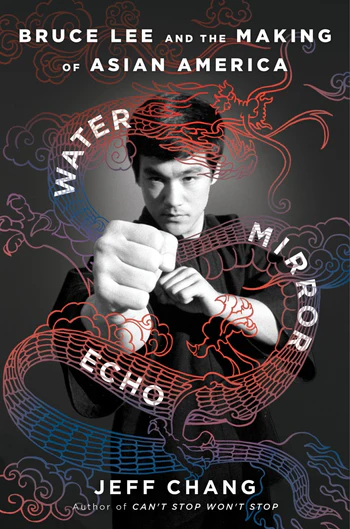 Jeff Chang’s new book, “Water Mirror Echo: Bruce Lee and the Making of Asian America,” from HarperCollins. Credit: HarperCollins
Bruce moved here from Seattle at an intense and volatile moment, when a protest movement was emerging at UC Berkeley; when young Japanese American, Chinese American, and Filipino American activists in the East Bay were about to forge an Asian American movement; when a pair of Merritt College students were thinking up the Black Panther Party. It was also a time when gung fu was beginning to make its way out of Chinatowns and toward becoming a cult obsession.
Jeff Chang, the East Bay cultural critic and hip-hop historian, has come out with an epic new biography of Lee, “Water Mirror Echo: Bruce Lee and the Making of Asian America,” which tells the story of the global martial arts hero through deep explorations of his places and times, from colonial Hong Kong to the racist straits of Hollywood, spanning Chinatowns from Seattle to San Francisco to Oakland and beyond.
Above all, Chang wanted to tell the story of Bruce as an Asian American. “The story has often been told of him as an Asian — a Chinese person — or as an American,” Chang told The Oaklandside. “But he’s not an assimilated American. He’s not a dyed-in-the-wool, true blue, 100%, rooted-in-Asia, Asian. He’s Asian American. The communities that he lived in were multiracial communities, but they were also, for him, Asian American communities, in that he was introduced to those spaces through Asian Americans. It was important to me to tell the stories of who he was — and of the communities around him.”
The reporting in the book is voracious. Chang started out by digging through archival martial arts magazines, writing cold letters to people who had known Bruce, and connecting with Bruce’s family. Soon, he said, “People were passing me one to the other, which I loved. And I kept thinking, ‘I’ve never read this person’s story before.’”
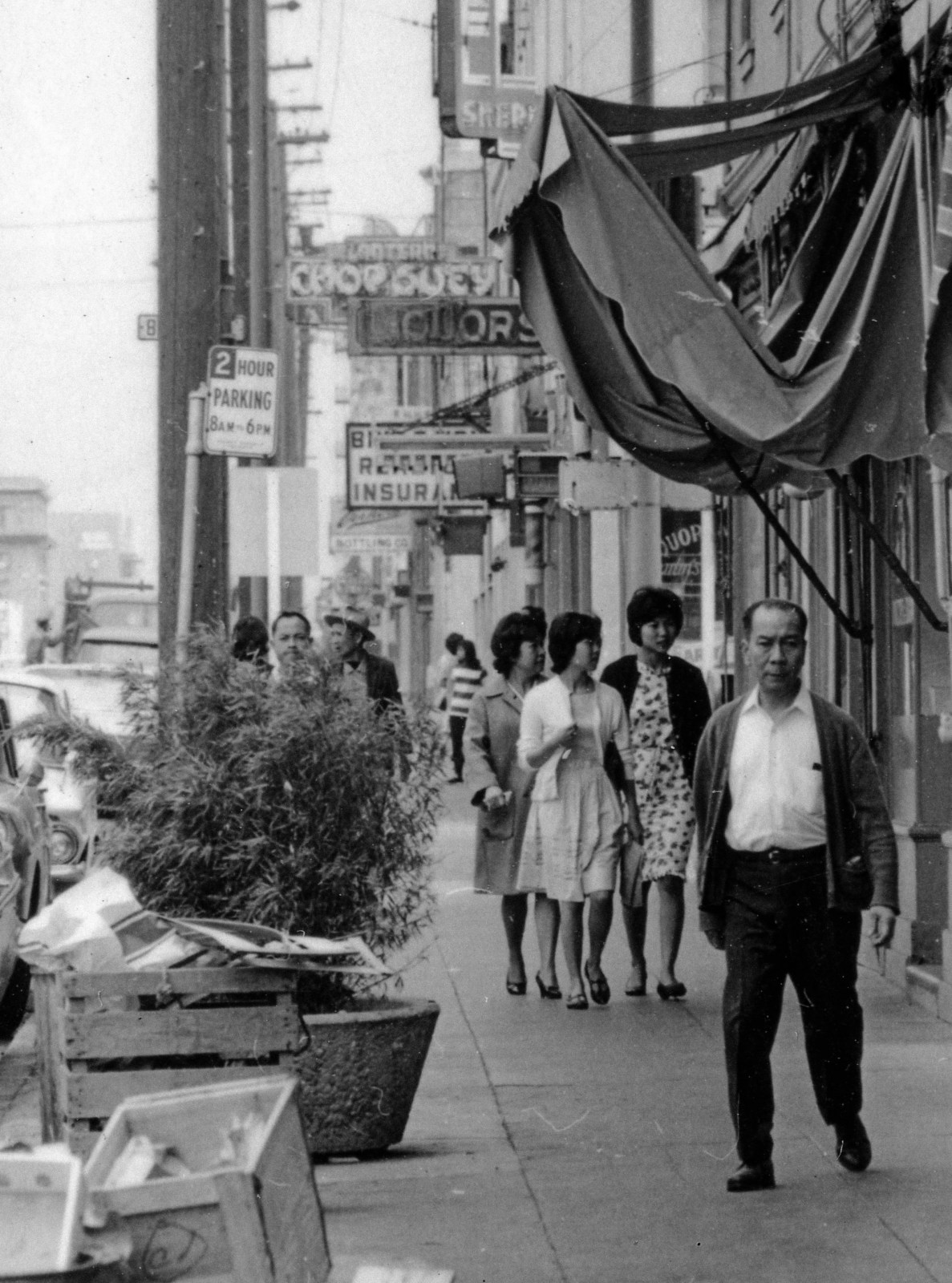 Scenes from Oakland Chinatown, 1965.
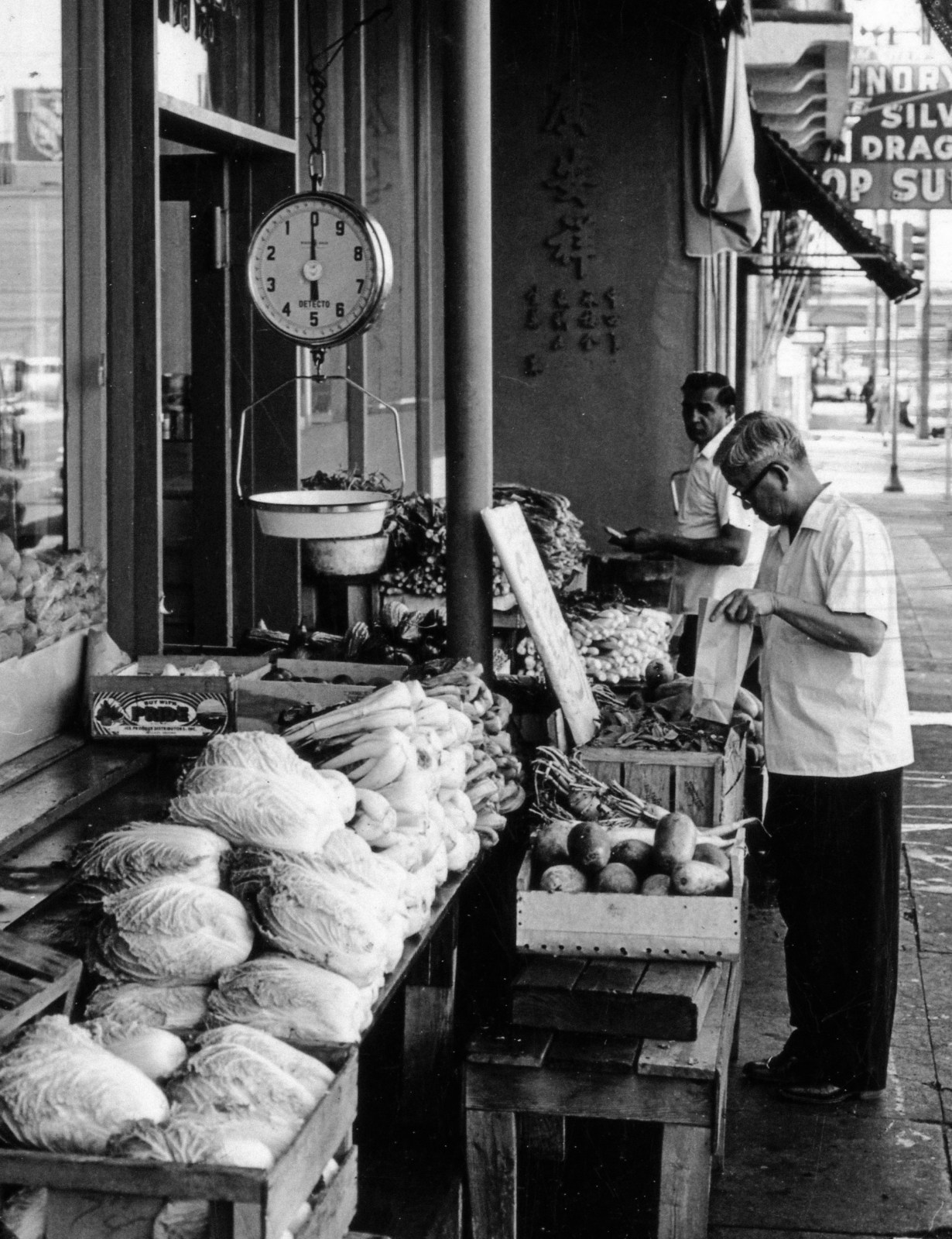 Credit: Oakland History Center, Oakland Public Library.
Linda Lee, Bruce’s widow, told Chang that the young couple’s days in Oakland were one of the best times in her life, because she and Bruce and their newborn son were together as a family. “It was a very quiet period for them,” he said. “The world is on fire, but they are beginning to really learn each other. And, of course, Brandon comes on the scene — he’s born in East Oakland. It’s an interregnum, before the storms of fame came along. Bruce is about to go to LA and become very, very, very famous, and their whole life is about to change.”
For Bruce, Chang said, Oakland was also a place where his ideas about martial arts came together, crystallizing into what he finally began to call Jeet Kune Do — when Bruce realized, Chang said, that “the old styles aren’t going to get me anywhere. I have to lean in and have a breakthrough.”
On a recent Sunday, I met up with Chang, who took me and photographer Estefany Gonzalez on a tour of Bruce Lee’s Oakland worlds. I asked Chang questions, and he started spinning tales; his remarks have been edited for length and clarity. We started in Chinatown.
Chinese American Citizens Alliance lodge
8th and Harrison streets, Chinatown
This activist hub, still in existence, was the first place in Oakland where Bruce Lee demonstrated his formidable gung fu technique.
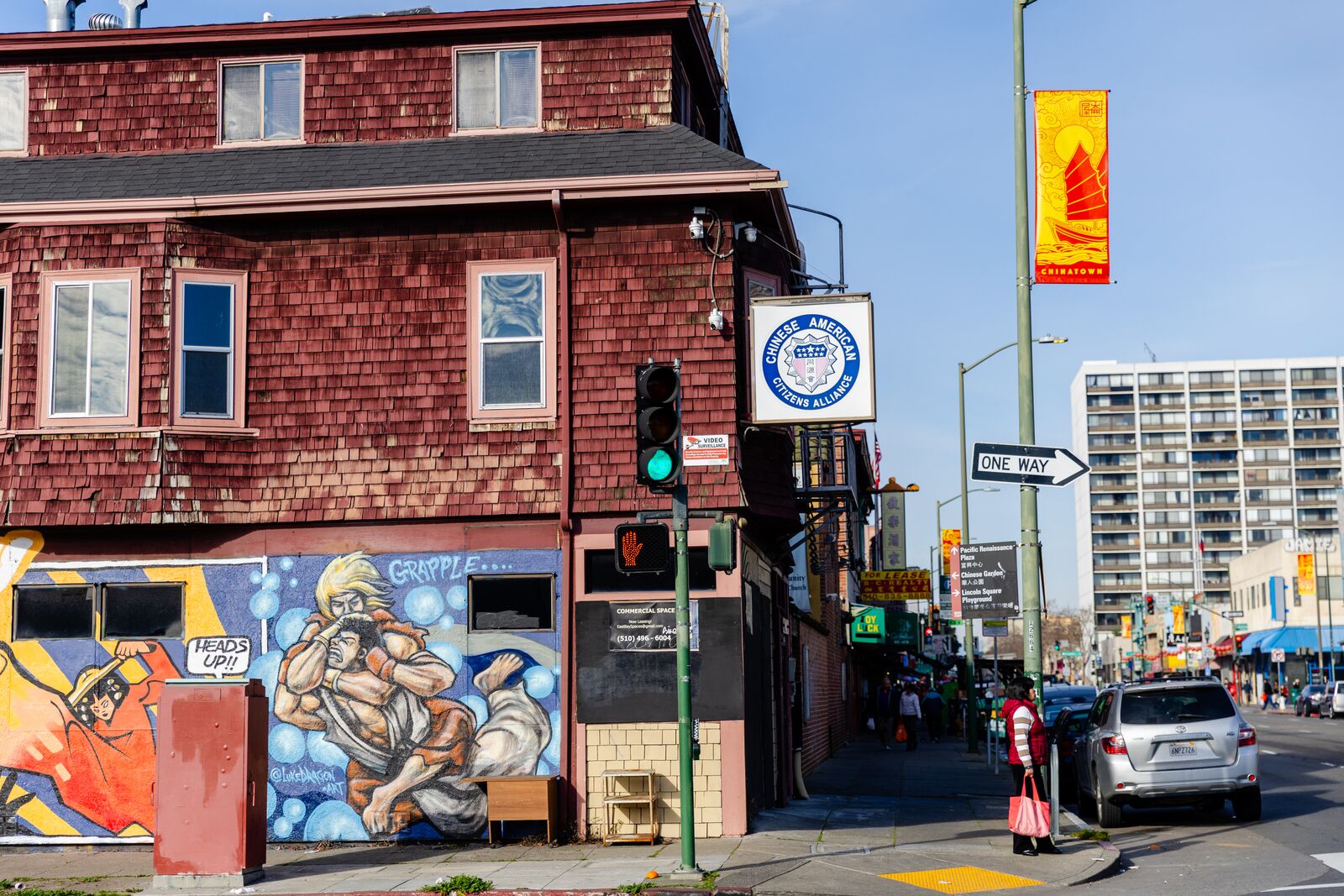 The Chinese American Citizens Alliance lodge. Credit: Estefany Gonzalez for The Oaklandside
Jeff Chang: Bruce Lee was famously a street fighter when he was a kid. But he also got into Cha Cha, a dance craze that scrubbed through Hong Kong in the mid-1950s, as it did through the rest of Southeast Asia. He had this dual personality as a teenager. He was, on the one hand, this movie star, this teen idol, but on the other hand he was getting into fights all the time. And he was very awkward with the ladies; he would try to start a conversation by asking them to feel his muscles. Inviting them to Cha Cha was a way he could begin to express himself and be cool.
When he moved back to the states, to Seattle Chinatown, he was staying with a friend of his parents, who got him a job at a restaurant, and because he hated discipline, he quit within the week. So his mentor said, “Okay, well, let’s get you a job teaching Cha Cha.” And that was how Bruce got to meet a lot of people in the Chinatown community, and earn an honest living, and go back to school. So, famously, he first came here to Oakland Chinatown to teach Cha Cha lessons. Oakland Chinatown, then as now, was seen as the less glamorous counterpart to San Francisco Chinatown. It was no less lively, but it was seen as a little backward. Oakland Chinatown folks always saw themselves as the underdogs.
Never miss a story. Sign up for The Oaklandside’s free daily newsletter.
This place, the Chinese American Citizens Alliance, got going in the early 1900s and was largely a place for folks to come together to file civil rights lawsuits against all of the anti-Chinese and anti-Asian laws that were being passed in California and across the U.S. The group filed hundreds of lawsuits over the decades, and they were successful a lot of the time. They were big supporters of the [1898] Wong Kim Ark case, the famous birthright citizenship case. They were also a hub for social activities in Chinatown. So during the daytime, they would be working on lawsuits and having meetings and launching campaigns, and at night, they’d move all the tables back, and this became a party space. They’d have banquets and dances, and they’d screen movies.
Bruce came at the request of a Cha Cha club that formed. He really impressed them with his dance moves, and with his teaching — he was a great teacher. And he began to show gung fu during the breaks. One night, after he’d shown some gung fu, some folks came up to him and it turned out they were the brother, sister, and close friend of this guy, James Yimm Lee, who became one of Bruce’s closest friends of all time. He was the person who later brought him to Oakland.
So San Francisco Chinatown claims Bruce Lee, rightfully. He was born there. But I think Oakland had a greater hold on his life and his imagination — how he saw himself.
The Silver Dragon Café
Formerly at 710 Webster St.
Bruce and Linda, as young parents, would slip out for a midnight snack at the Silver Dragon Café — and find respite from domestic duties.
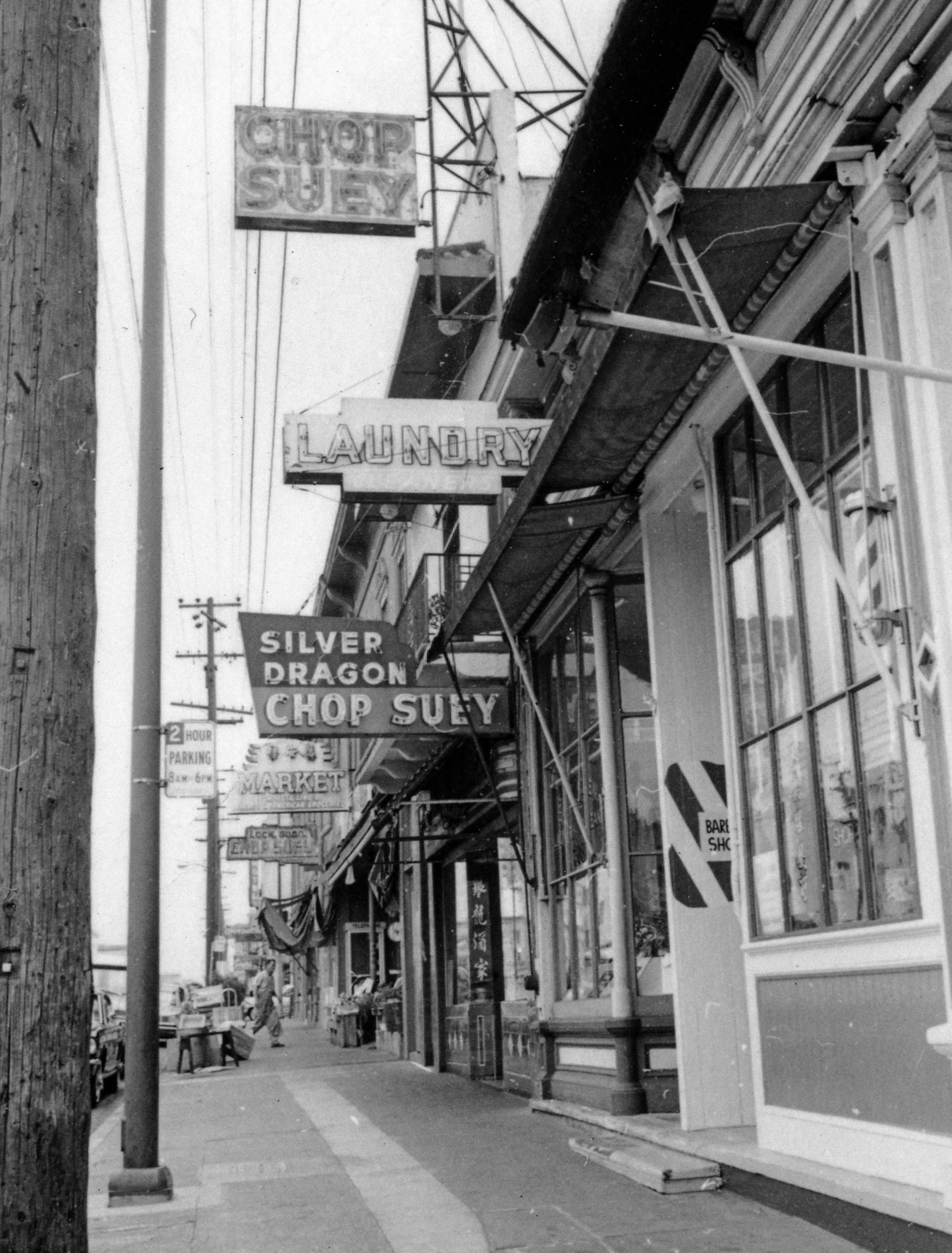
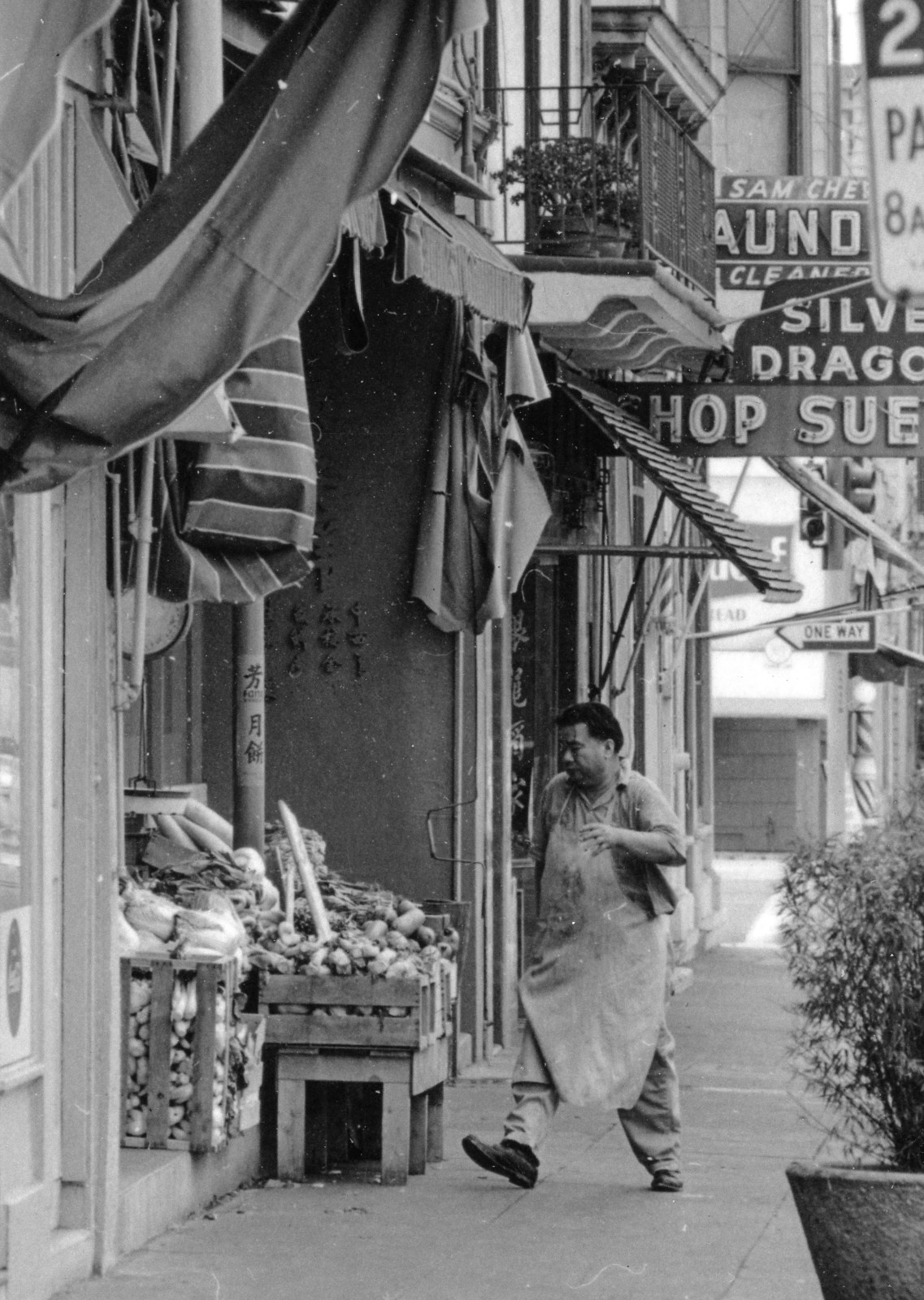
Two views of the Silver Dragon Cafe on Webster St. in Oakland Chinatown, 1965. Credit: Oakland History Center, Oakland Public Library.
JC: So Bruce arrives in Oakland, he’s in his mid-20s, he’s a brand new father. There’s a lot of stuff happening around the world and in their own backyard: The Free Speech Movement in Berkeley has jumped off in the fall of 1964 and the escalation of troops in Southeast Asia and Vietnam begins a couple of years later. Of course, in 1965 Malcolm X is assassinated; in 1966, you see Huey Newton and Bobby Seale forming the Black Panther Party for Self Defense. There’s a lot of activity around voting rights and civil rights. But to Bruce and Linda, it was an idyll, a California idyll, because they were quietly learning to live a family life and deepening their relationship.
Bruce is in this transition period. He’s hanging out with guys who are 10, 20 years older than him, and they all are super well known in Chinatown. James has been a famous bodybuilder. So when they go to Chinatown, Bruce is the kid who’s a little hyperactive, he’s kicking potted plants on the street, he’s punching trash cans, he’s jumpy, he’s bouncy — he’s James’ little sidekick.
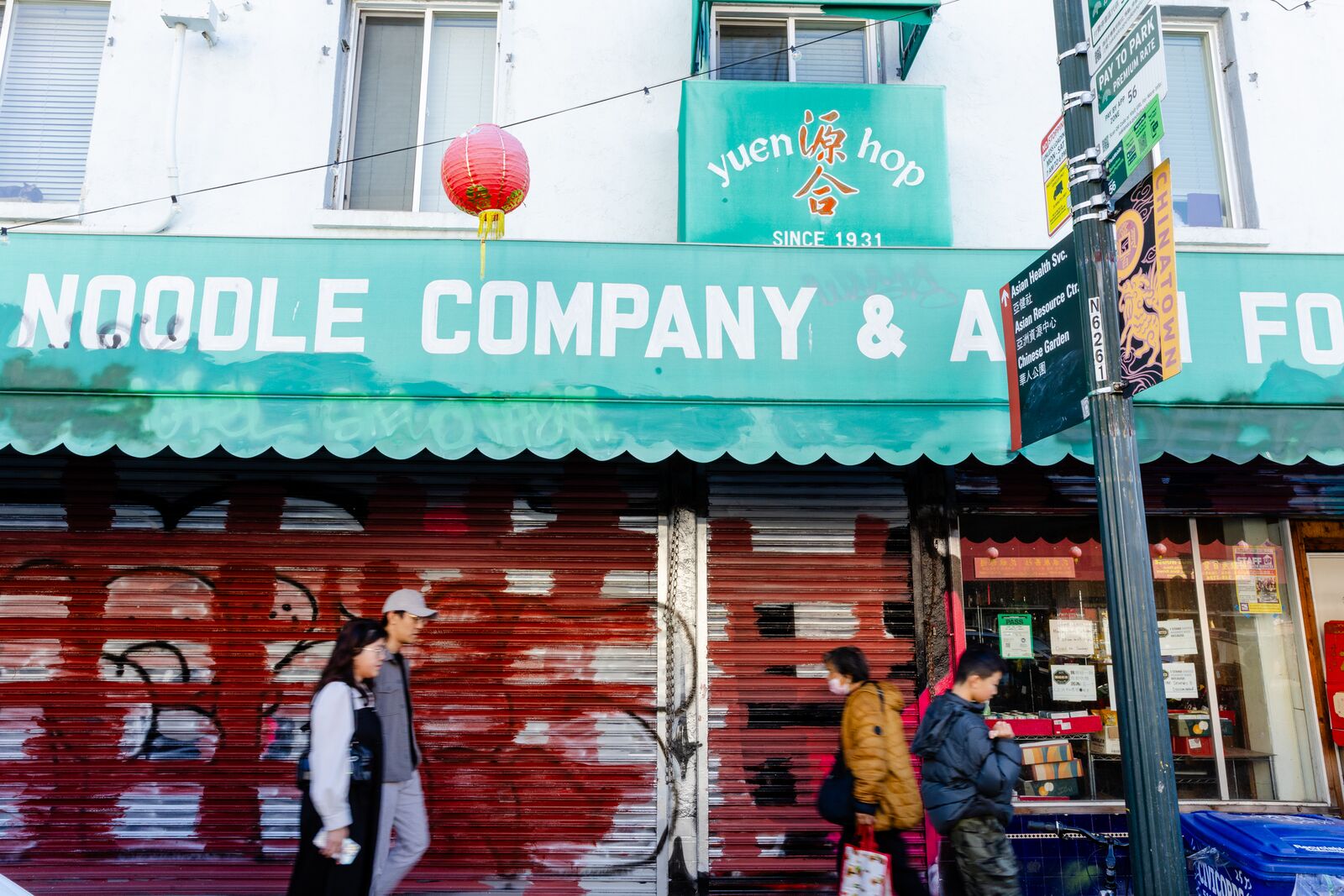 Yuen Hop Co, a noodle shop and grocery at 824 Webster St., is one of the few family-owned businesses in Oakland Chinatown that have been around since Bruce Lee’s day. Credit: Estefany for The Oaklandside
Bruce and Linda are dead broke. They’re making a little bit of money off the martial arts schools in Seattle and in Oakland, but they’re really only able to survive because James has given them food and shelter. In the house where they’re living, James’s wife Katherine is dying of cancer and so Bruce is under pressure to make money, but he doesn’t know how to, really, and Linda is pressed into the role of taking care of two tween or teenage kids.
So sometimes, at the end of the day, Bruce and Linda would steal away to Chinatown, to the Silver Dragon Café. Chinatown, at that point, was popping at all times of the day. On the same streets where the markets would open super early and you’d see everybody getting their vegetables, there were restaurants and bars and clubs where they could go to hang out at night. It was their little refuge, their escape.
Bruce Lee mural
830 Alice St.
Luke Dragon put up this mural in 2024, part of an eruption of Bruce Lee imagery across the country that began during the pandemic.
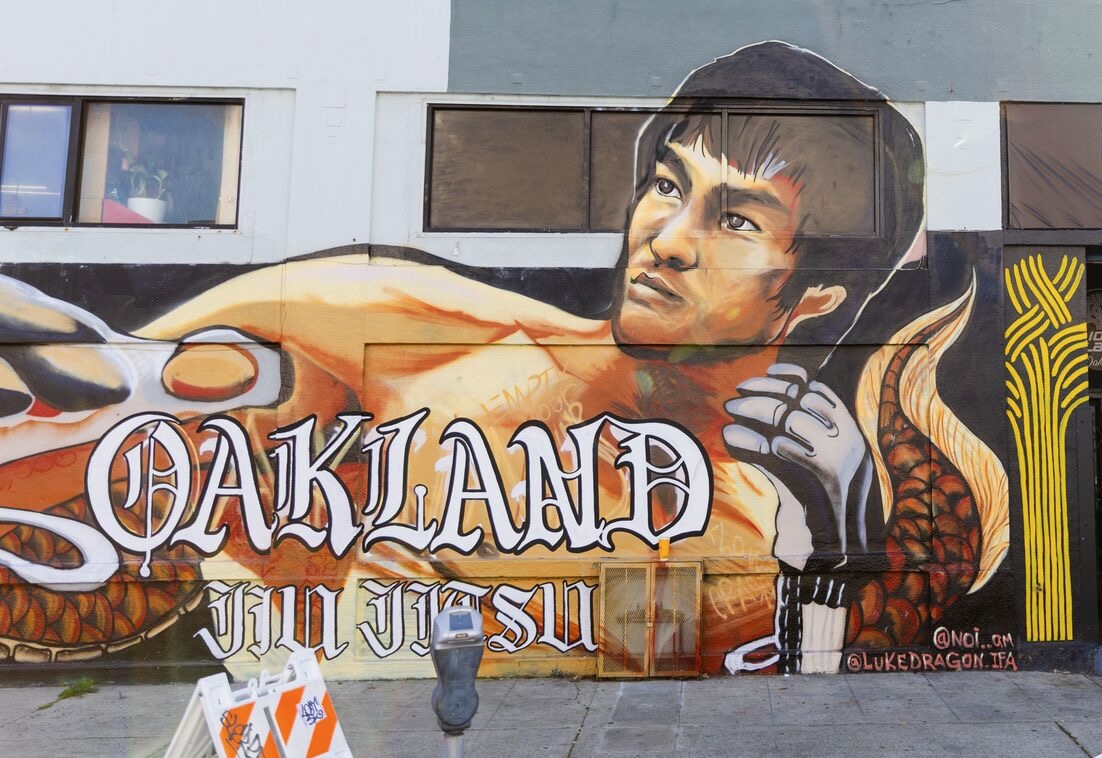 Luke Dragon’s Bruce Lee mural went up two years ago at 10th Planet Jiujitsu on Alice Street in Chinatown. Credit: Estefany Gonzalez for The Oaklandside
JC: I was in the throes of writing the book and was kind of hitting a dead end. And then the pandemic hit, and along with that came all the violence against folks who look like us, look like me. That period was a fearful one for many of us, and during that period, the image of Bruce in a fighting stance, with a proud defiant look, came back in a big way.
I remember seeing murals going up in the Bay Area, in Oakland, San Francisco, they were going up all around the country and appearing on our social media feeds. And it was as if people were bringing Bruce’s image back to say, “Hey, we got this.”
What Bruce represented to Asians and Pacific Islanders on the continent at that time was a sense of pride, a desire for safety and self-defense, which we saw happening in myriad ways from foot patrols to escorts for the elderly to mutual aid for small businesses and for folks who had been the victims of violence. There was an outpouring of that, but there was also a desire to express solidarity with one another, and to ask for support, and along with asking for support, to recognize what it means for us to practice solidarity with other folks who are feeling downtrodden. It was a really powerful thing. And it gave me the impetus to say, “Oh, I finally see what the biography needs to be. It needs to speak not just to Bruce, but what Bruce’s life and art have meant to so many millions of folks across the country.”
In the late 1960s, you see the rise of Third World activists, and for years, they thought Bruce was a sellout — “You’re fucking Kato” — the Green Hornet’s subservient sidekick.
Then “Fist of Fury” comes out in 1972 and now he’s fighting the Japanese imperialists. He kicks down the sign that says “No Chinese and dogs allowed” and they’re like, “I get it, you’re the man.” Because they’re seeing themselves in that struggle, and that’s when Bruce starts to be seen in the light of Third Worldist movements for resistance. That’s a peak moment in the culture, when he comes onto the scene. And when he dies, it secures his legend.
Jun Fan Gung Fu Institute
4157 Broadway
This block was once the location of Bruce Lee’s gung fu school — and the site of a legendary fight between Lee and a prominent San Francisco martial artist named Wong Jack Man.
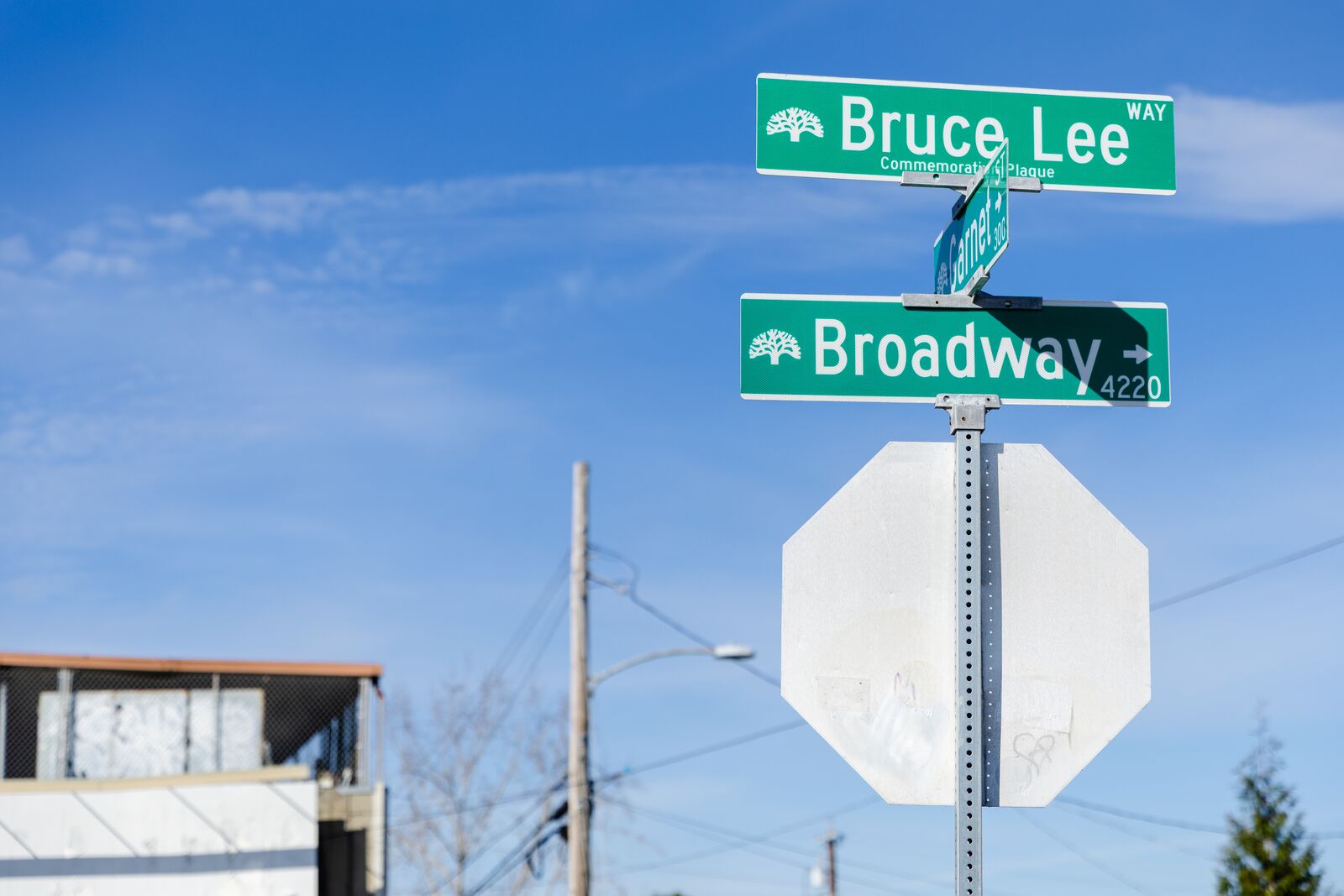 A street was named for Bruce Lee near the former site of his Jung Fan Gung Fu Institute. Credit: Estefany Gonzalez for The Oaklandside
JC: This is a car dealership now, but it was once a one story, low-slung storefront — a couple of windows, a doorway in the middle, wood floors — the kind of storefront you might see in Uptown that they’ve restored into a boutique. Bruce and James found it for really, really cheap, and they decided to open up a school, the first satellite of the school Bruce started in Seattle, the Jung Fan Gung Fu Institute. Bruce insisted on quality control. He’d make anyone who was interested come and interview with him and listen to cassettes; he would vet them to make sure they would be good for the group, because they were developing a new approach to the martial arts.
Traditionally, martial arts schools were very cloistered. Up through World War II, you have gung fu kwoons, martial arts schools, that are centered on teaching people to become security for businesses in Chinatown and security for Chinese when they leave Chinatown. The people running the kwoons are also the herbalists and the bone setters; if you can’t get into the hospital because of discrimination, they’re the folks getting called. They’re part of this culture and economy that are particular to Chinatown. And they would work off of a very traditional pedagogy. You moved at the stage your teacher, the sifu, decided you should move. It was very structured: You do this for six months, and then if you pass the test, you move on to that. But James and Bruce were really free form.
Many of the folks who joined them had been going through different martial arts schools. There were bouncers, police, security guards. Many had been through the military and had learned martial arts overseas. This is 1964, and even though this is still two years before the Black Panther Party for Self Defense, there’s a rising interest in self-defense among activists. So some of that is coming into the room as well.
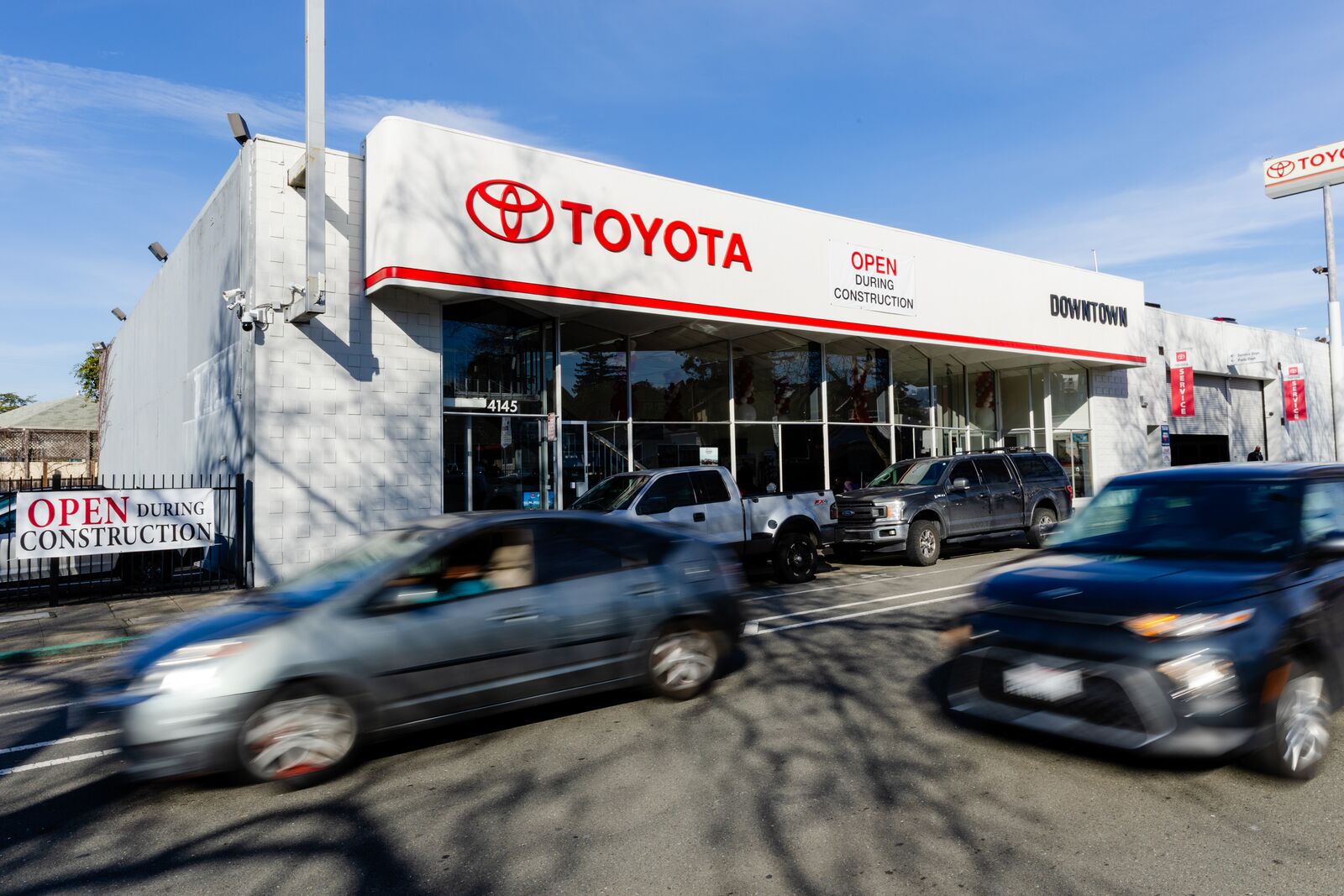 The storefront where Bruce Lee opened his Jung Fan Gung Fu Institute was razed and is now the site of a Toyota dealership. Credit: Estefany Gonzalez for The Oaklandside
Bruce and James had this in common: they wanted to test different schools and see what worked best. If you were going to get into a street fight, what were the techniques you could use that would help you prevail in the quickest time possible, and really lay the opponent out? That’s how they trained. They would do a little bit of warm up, do some drills, and then they would do experimentation. They might come in one week and try all the different ways you could execute a sequence of kicks and a sequence of blocks and see what was best. They were about efficiency. Can we reduce the number of steps? Does this slow us down? Does this make us open or vulnerable? So they call it a school, but it’s also a lab. This is what people refer to as the beginnings of mixed martial arts on the continent.
After World War II, you have increasing desegregation, by fits and starts. People begin to gain jobs in the mainstream economy; they’re able to move to some neighborhoods outside of Chinatown. You start seeing some Chinatown kwoons getting on TV and doing demonstrations outside of Chinatown and very, very slowly opening up. But gung fu is still a secret martial art, and it’s still shrouded in mysticism.
Oakland is a different kind of city, an extremely diverse city, and there’s a fair amount of mixing. James and Bruce are eager to make it not only in the world of Chinatown, but in the larger world.
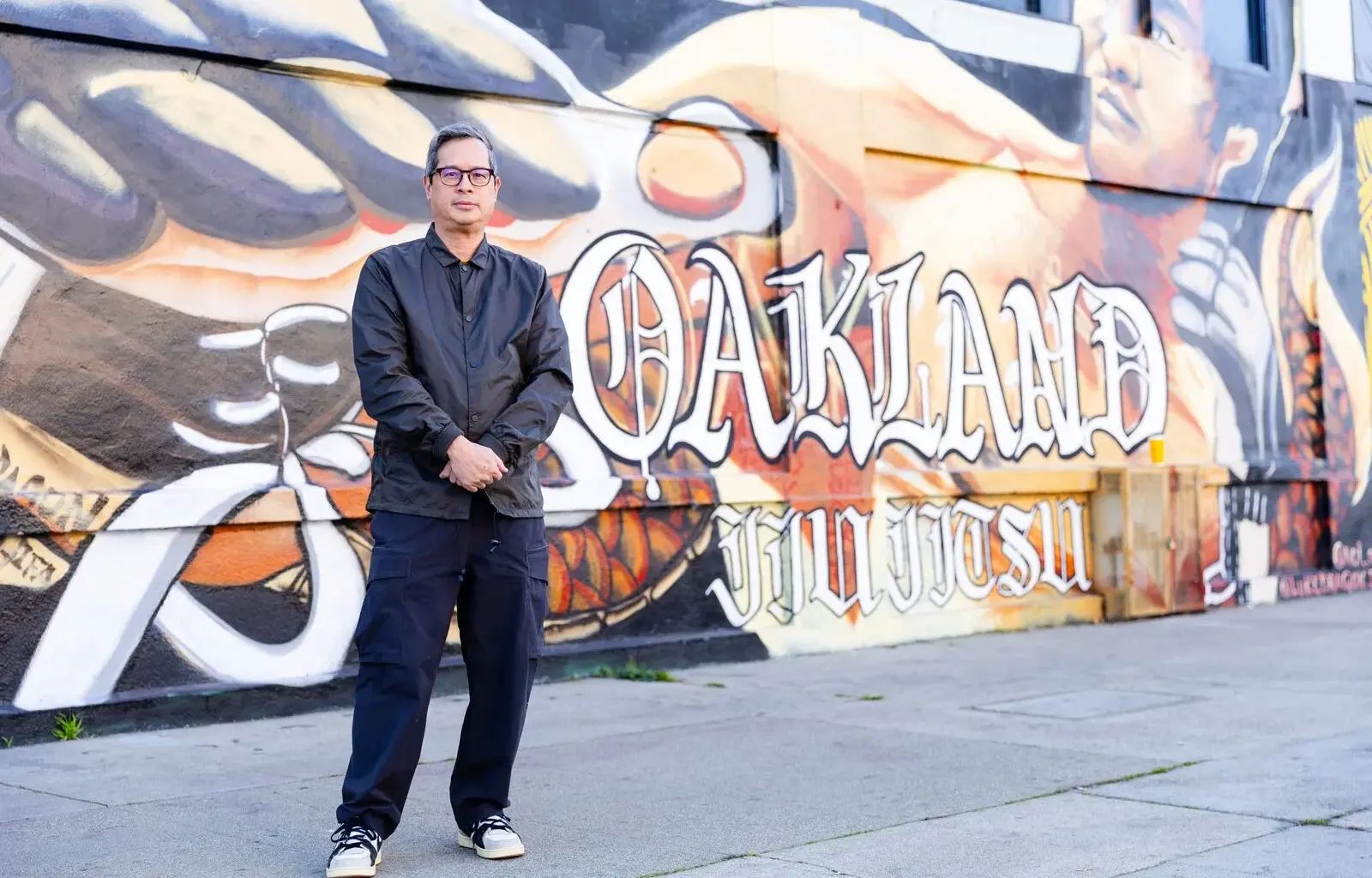
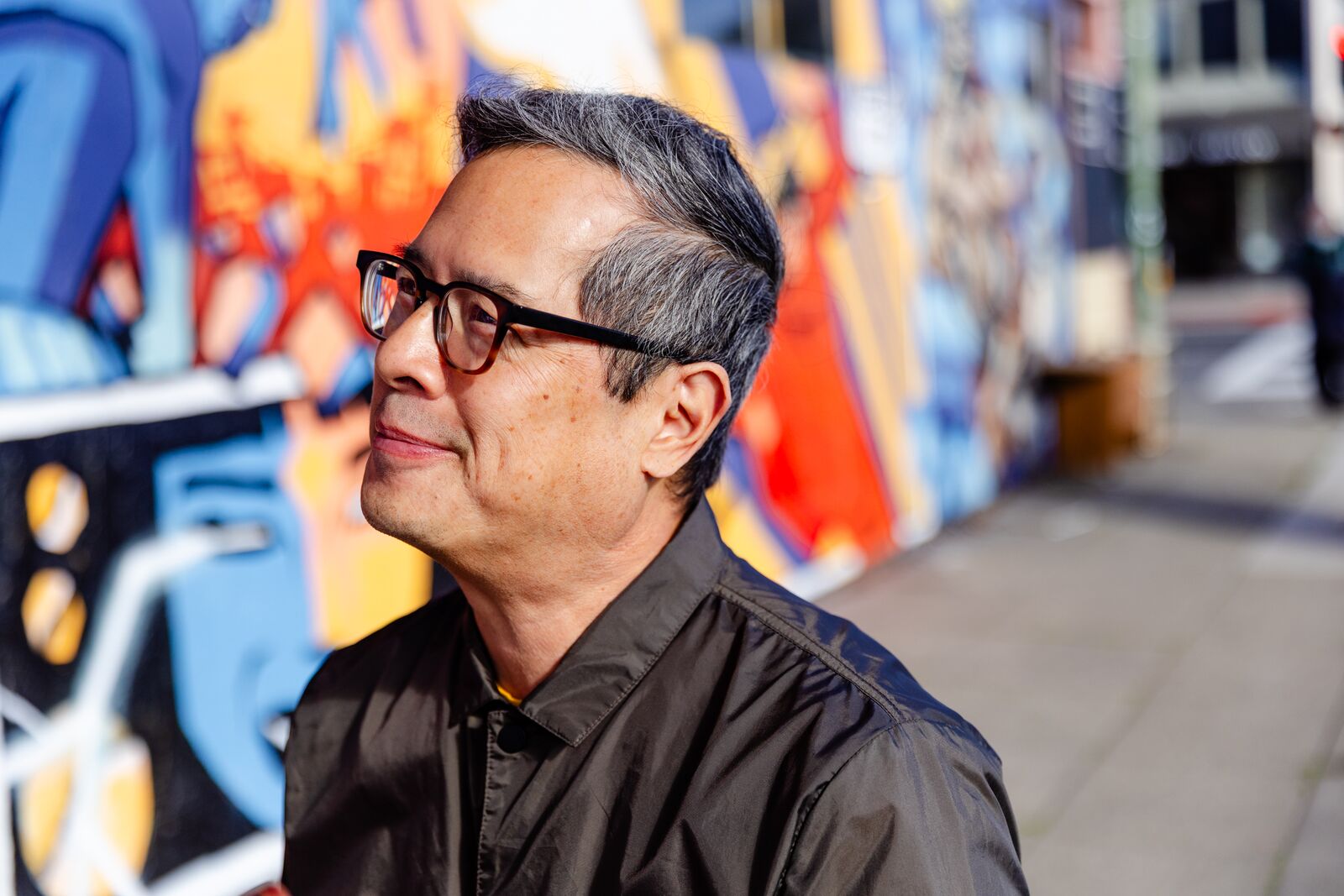 Chang in Oakland Chinatown. Credit: Estefany Gonzalez for The Oaklandside
So when Bruce has this big showdown with Wong Jack Man, it’s the old guard versus the new guard, and it becomes legendary. Wong Jack Man is an immigrant who has been validated by all the Chinese martial arts schools, who comes in very humbly, and San Francisco Chinatown has chosen him as their gung fu star. Bruce is seen by the folks who’ve been there for generations as this loud, arrogant immigrant, this FOB — fresh off the boat — who’s talking a lot of shit, who hasn’t earned his place in the community yet. Every fight has to have a narrative. So it becomes the Good Immigrant versus the Bad Immigrant.
This location is important because it’s the scene of the fight. This fight is closed door; very few people see it. Over the years, many, many people claim to have been there, but it’s in dispute. At the end, Bruce is on top of Wong Jack Man, that’s not in dispute. But Wong Jack Man says that he tripped over a loose floor board, and that was what allowed Bruce to jump on top of him and force him to submit, so there’s a dispute about whether they actually fought themselves to a draw.
Bruce himself is very unhappy with the fight. He’s been training all this time to beat this guy in two minutes, and in this fight he runs around so much he is out of breath. From this point on, he becomes obsessive about conditioning, and he becomes obsessive about creating the defining fighting art for himself, so he never has to fight to a draw in this kind of way again.
The Colombo Club
5321 Claremont Ave.
This social club, still in operation, is where Bruce Lee met an influential group of Hawaiian mixed martial artists who would champion, and influence, his fighting style.
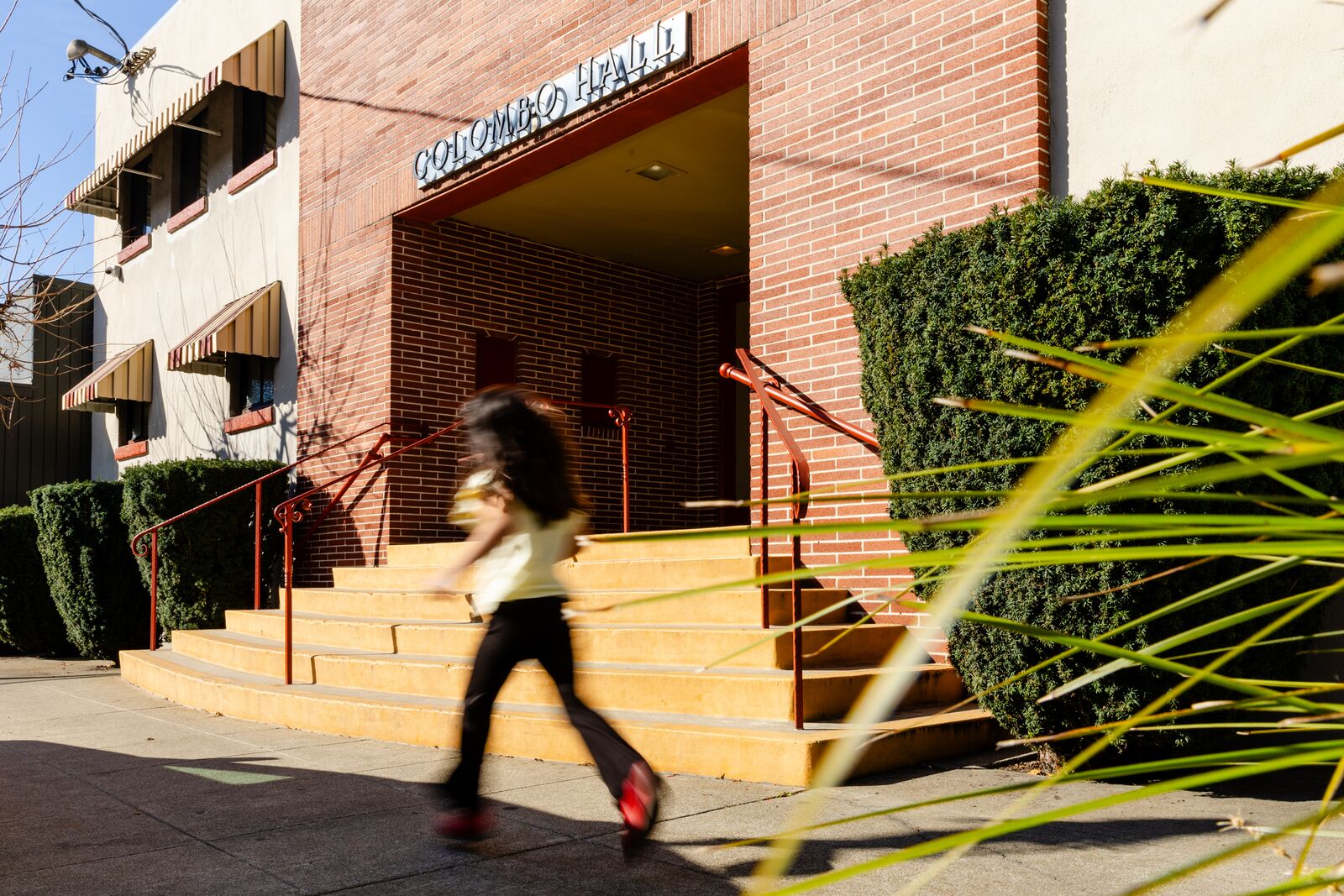 The Colombo Club in North Oakland. Credit: Estefany Gonzalez for The Oaklandside
JC: The story of how we get here to Colombo Hall runs through Hawaii, to a group of folks who migrated from Hawaii to California in the late 1950s and 1960s, including a guy named Wally Jay. He and his wife had learned from the first generation of martial arts practitioners who came from Japan and China in the late 19th century, the early 20th century, who had begun teaching these multiracial folks in Honolulu all these different art forms — judo, jiu-jitsu, karate. The folks who trained in Honolulu were the forefathers and foremothers of what we call mixed martial arts today, because Hawaii was the first place that all of these styles began to get blended into a coherent discipline. These schools are massive. They were teaching hundreds of folks at a time in Honolulu from the 1920s on. Wally studies with Henry Okazaki, who is part of the first generation who are mixing these arts up.
Wally comes to Alameda during an economic downturn, gets a job at the post office, begins teaching judo and jiu-jitsu, and comes into contact with James Yimm Lee and Ed Parker, who’s also from Hawaii. In the 1950s and the 1960s, a new competition circuit has formed between these different schools in the West. And when Wally first takes his kids to these competitions, the Japanese and the Japanese Americans who are running these contests laugh at him, because his kids are from all these different backgrounds — they’re Hawaiian, they’re white, they’re mixed Asian and other races, or hapa — and they’re not very good at first. So when they get beaten, they get disparaged. Fast forward five or 10 years, they’re beginning to make a name for themselves and he’s meeting all of these mavericks who are starting to proliferate the Asian martial arts outside of San Francisco Chinatown.
To raise money for the school, he takes up a thing they do in Hawaii, which is throwing luaus. They have their little kitchen in Alameda, and the entire family — they’re Chinese and Native Hawaiian — is making all the food. They dig an imu in the backyard and cook a big pig in the old style with the rocks and the whole nine. And they invite people to the luau, and charge them, and all these fighters from around the country get to hang out with each other. A luau has to have music, so he brings in the biggest recording artists from Honolulu. And there’s always a martial arts demonstration to cap the night off.
When Bruce comes down, he falls into the circle with Wally, and Wally says, “Would you be down to give a demonstration?” Of course, Bruce was always ready for the stage. He comes down from Seattle, even before he’s moved to Oakland, and does this whole presentation. At this point, he’s beginning to get into the philosophy of martial arts and the idea of mixing these fight styles up and creating a new style he can call his own. So all of the folks who are anybody on the West Coast have come here to the Columbo Hall to this luau, and they’re watching this kid Wally’s been hyping up — he’s even gone to the Oakland Tribune. He’s like, “Come see this kid, Bruce Lee. He’s doing this secret Chinese art called gung fu.”
Bruce is on his own script. He does some old gung fu forms at first. And people are like, “Wow, he’s fast and he’s precise and he’s really good.” And he’s all like, “Yeah, but would you actually fight this way?” And then he has a person come up on stage and he starts demonstrating: “Could I fight with this guy using that form? No, I couldn’t. I’d get my ass kicked. And so here’s how you would do it.” And so he has the guy come stand a few feet in front of him, and he’s like, “Okay, I’m gonna punch you. Try to block me.” Bruce has to close the distance and pull the punch off really fast. And he does it, stopping his fist just short of punching the guy in the face. The guy isn’t able to block it because he’s done it so fast.
He’s like, “This is what it’s about. It’s about being simple. It’s about being direct, and it’s about being free of received notions of how you’re supposed to fight.”
After he leaves the stage, some people are clapping, and some people are like, “Did he just insult our school and what I’ve been teaching?” So there’s a lot of talk about this guy, and half of the folks are like, “This kid’s an asshole,” and half of the folks are like, “Wow, that’s the best thing we’ve ever seen.”
He upsets the entire Chinatown establishment, but Wally Jay and James Yim Lee, they love this. They love that the kid is arrogant. They love that he has new ideas. And so Wally and James are able to validate Bruce and introduce him to this new generation.
James Yimm Lee’s home in Maxwell Park
3039 Monticello Ave.
The home where Bruce, Linda, and Brandon Lee lived.
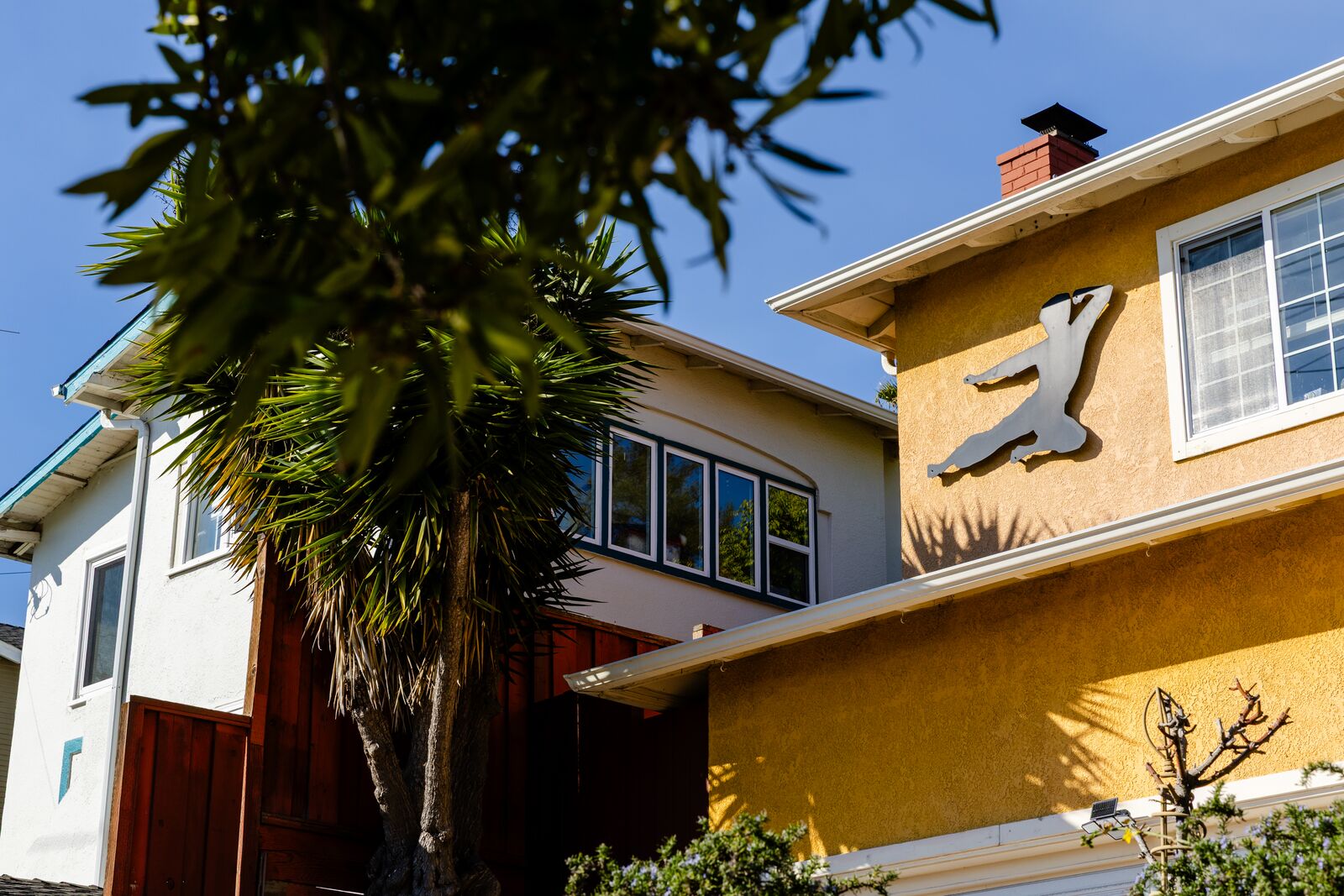 A plaque of Bruce Lee hangs outside of the house he once lived in on Monticello Avenue in Maxwell Park. Credit: Estefany Gonzalez for The Oaklandside
JC: James Yimm Lee was a bodybuilder, so he had a lot of weightlifting equipment, and he gathered a lot of his friends, and they all worked out here in this garage on a regular basis. He first began hearing about Bruce from his brother and sister and one of his best friends, George Lee, who had been in the Cha Cha class. And he said, “If you guys all say that he is this amazing, maybe I should meet the guy.” And so he went up to Seattle and Bruce came down to the Bay Area, and they just hit it off.
Very quickly, James says, “Why don’t you move down here? Or I’ll quit my job, and me and my family will move up there.” James is that impressed by Bruce. This is what finally causes Bruce to move here, and move in with James. Their plan is to open the kwoon, and for James, it’s a big deal. He gathers up all his students, including Bob Baker, who ends up appearing in “Fist of Fury” as the Russian guy, and they do a demonstration. Bob holds a phone book, Bruce does his one-inch punch, and Bob almost flies through this window right here.
Bruce and Linda are living here when Brandon’s born. There are pictures taken here where they’re looking very relaxed. Linda’s wearing one of these of-the-time flowery miniskirts and they just look like flower children. The Mamas and the Papas are gonna start playing in the background. The photos look like Polaroids, so the faded colors lend that gauzy, hazy vibe to it all. Those pictures are everything.
There’s another set of pictures of Bruce standing over here on the staircase, semi-flexing, and pictures of all the guys in front of the equipment with the garage door up. You get this vibe like all they were doing was sipping iced tea and working out and hanging out all day, every day. In those pictures, every day looks like a Sunday.
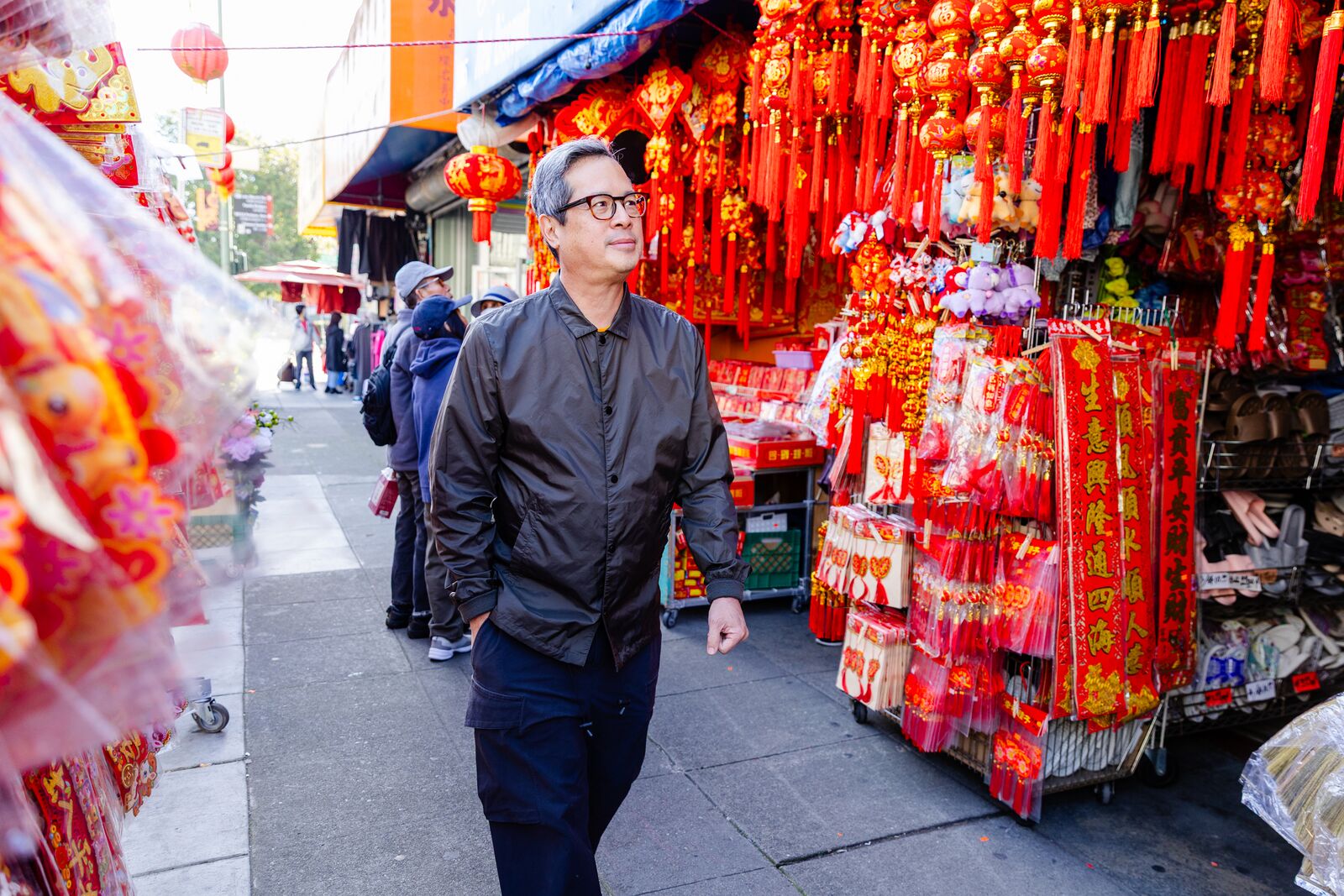 Jeff Chang in Oakland Chinatown. Credit: Estefany Gonzalez for The Oaklandside
Your gift fuels our journalism.
Everyone deserves to have someone looking out for them, including you. That’s why we made it our job. When you give to The Oaklandside, you’re defending facts, funding truth-seekers and keeping Oakland informed.
Help us keep our news free with a donation today.
“*” indicates required fields