
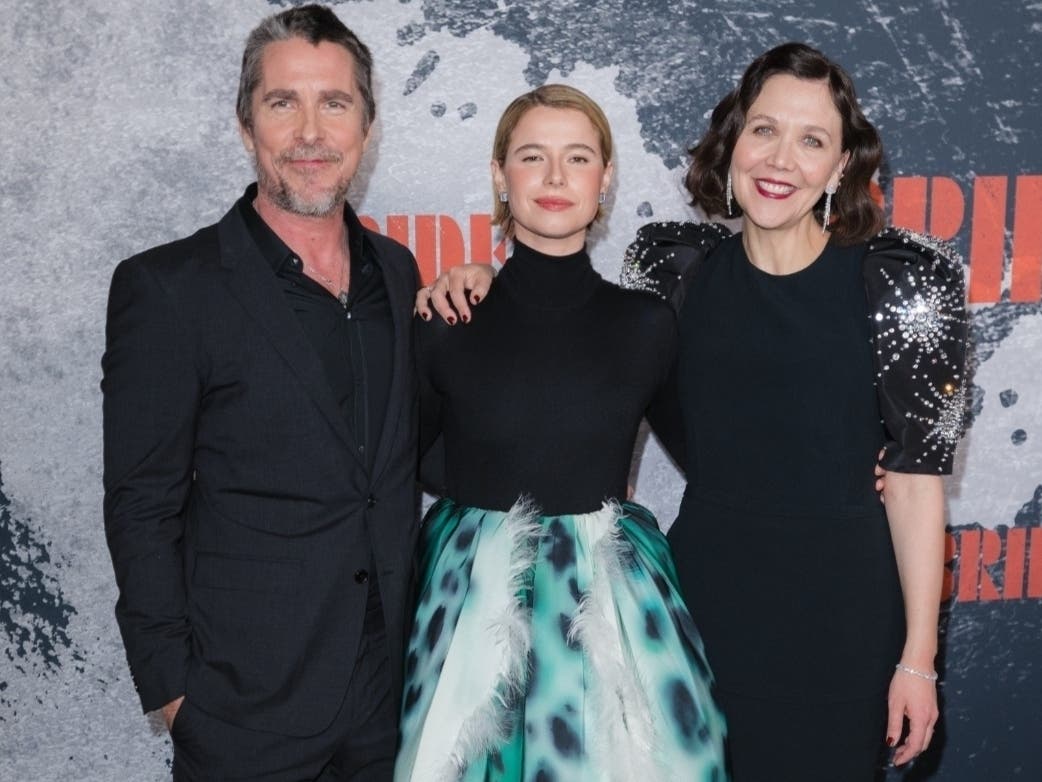
LOS ANGELES, CA — Maggie Gyllenhaal’s “The Bride!” sparks a Gothic fantasia — a world threaded from romance, rebellion and political fervor, humming with the uneasy thrill of a woman resurrected into a world eager to define her.
Gyllenhaal’s directing sits at an intriguing crossroads: early in her career, yet already unmistakable in its sensibility. Her debut, “The Lost Daughter,” announced her as a filmmaker drawn to interior storms — women wrestling with identity, desire and the pressures of a society intent on shaping them.
“The Bride!,” her first major studio film, expands that impulse onto a stranger, more operatic canvas, drawing loose inspiration from the 1935 “Bride of Frankenstein” and Mary Shelley’s original myth.
At the center is the Bride (Jesse Buckley), resurrected in 1930s Chicago after Frank — a lonely, wandering incarnation of Frankenstein’s monster played by Christian Bale — begs Dr. Euphronius (Annette Bening) to help him create a companion. Rather than revisiting the 1935 film’s briefly seen, voiceless figure, Gyllenhaal reimagines a woman whose full consciousness — and the world’s reaction to it — becomes the story’s driving force.
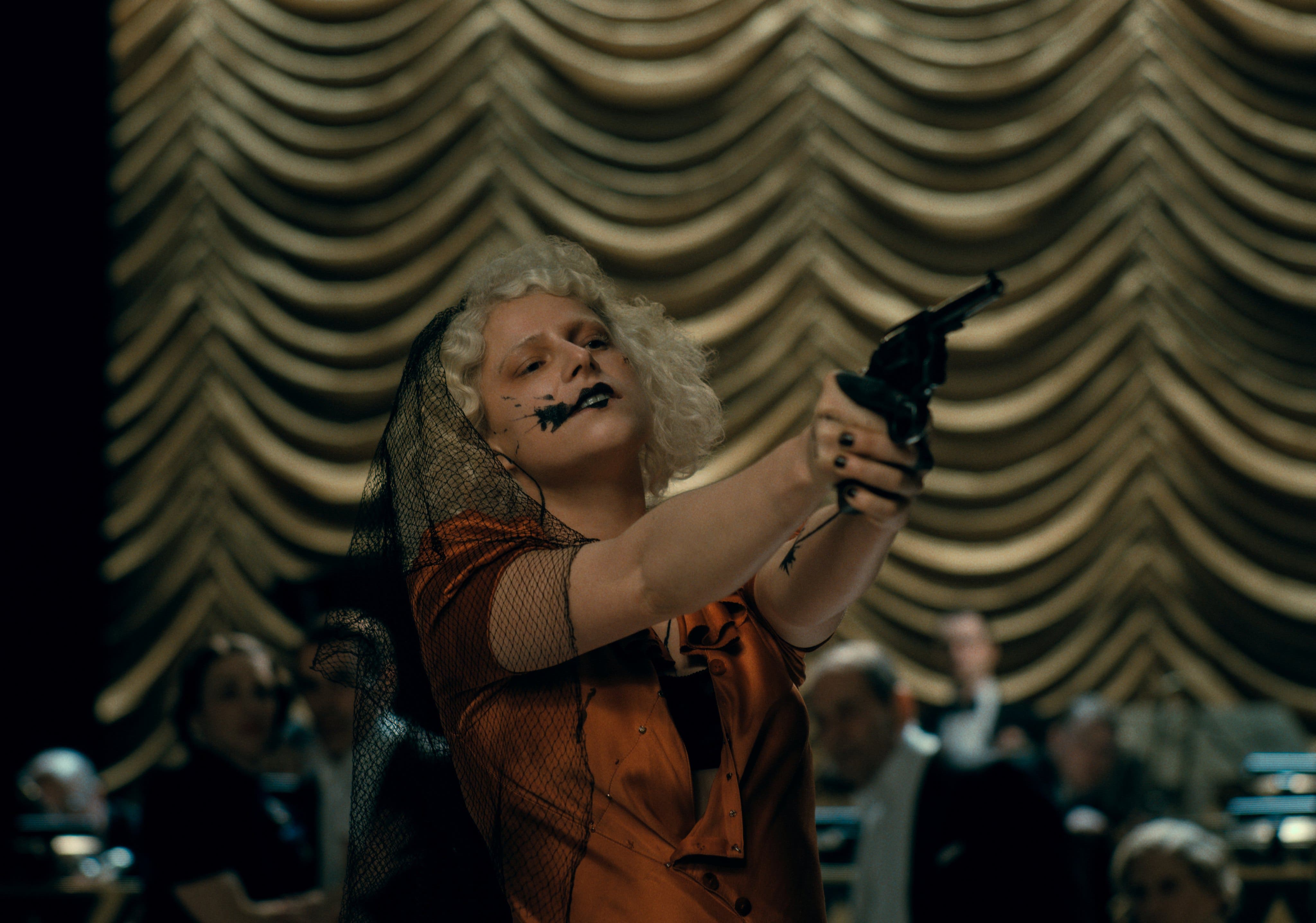 Jessie Buckley as The Bride in “The Bride!.” (Warner Bros.)
The moment the Bride opens her eyes, the film locks onto her: a woman reborn into a world that will fear her, worship her or destroy her as she ignites a cultural and social movement. And while the story moves on an operatic scale, what ultimately grounds the film are the performances.
Buckley plays the Bride with electric intensity — her movements sharp with instinct, her gaze lit by a longing that borders on desperation. Bale gives Frank a bruised yearning, tender one moment and volatile the next. Together, they form the film’s emotional core — a jagged, unstable bond strained by their own longing and by a world they’re only beginning to grasp.
Around them, Gyllenhaal builds a 1930s Chicago vibrating with tension — a city of political machinery, back‑alley power and crowds hungry for spectacle. The couple’s flight takes on a distinctly “Bonnie and Clyde” pulse, tinged with the doomed romantic drift of “Badlands.” Penélope Cruz and Peter Sarsgaard play detectives closing in on the murderous duo, their pursuit adding a noirish pressure that tightens as the couple’s presence unsettles the city. Jake Gyllenhaal charms as a 1930s Hollywood matinee idol, the object of Frank’s long‑held obsession.
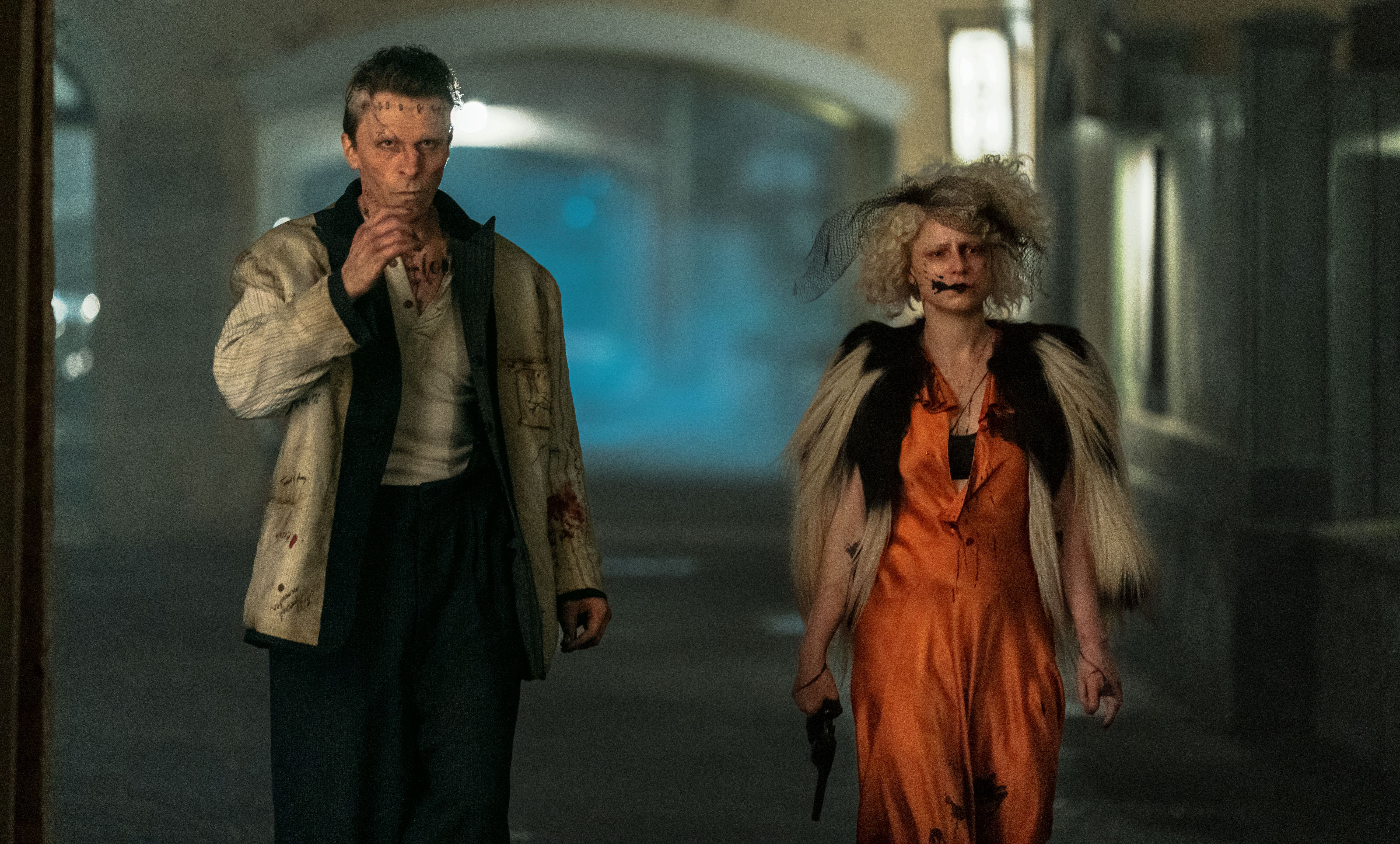 (L-R) Christian Bale as Frank and Jessie Buckley as The Bride in “The Bride!.” (Warner Bros.)
“The Bride!” is Gyllenhaal’s most maximalist work yet: part Gothic romance, part outlaw-couple crime saga, part political uprising. The film oscillates between these modes with a kind of manic curiosity, as if the director is testing how many genres a single emotional arc can hold before it bursts. She stages the story with unruly ambition — swooning one moment, bristling with punk-rock attitude the next — letting the Bride’s awakening dictate the film’s shifts in tone.
For all that genre-hopping ambition, “The Bride!” sometimes meanders tonally, and the film’s structure doesn’t always support its maximalist reach. It’s aiming for so much — mood, spectacle, radical social charge — that its dramatic throughline occasionally thins, leaving certain stretches feeling diffuse rather than driven.
Still, despite the unevenness of its wild ride, “The Bride!” remains undeniably alive, buoyed by magnificent performances and a director willing to take big swings. Gyllenhaal doesn’t always keep the film’s unruliest impulses in hand, but she’s emerging as a filmmaker with a daring, unmistakable voice.
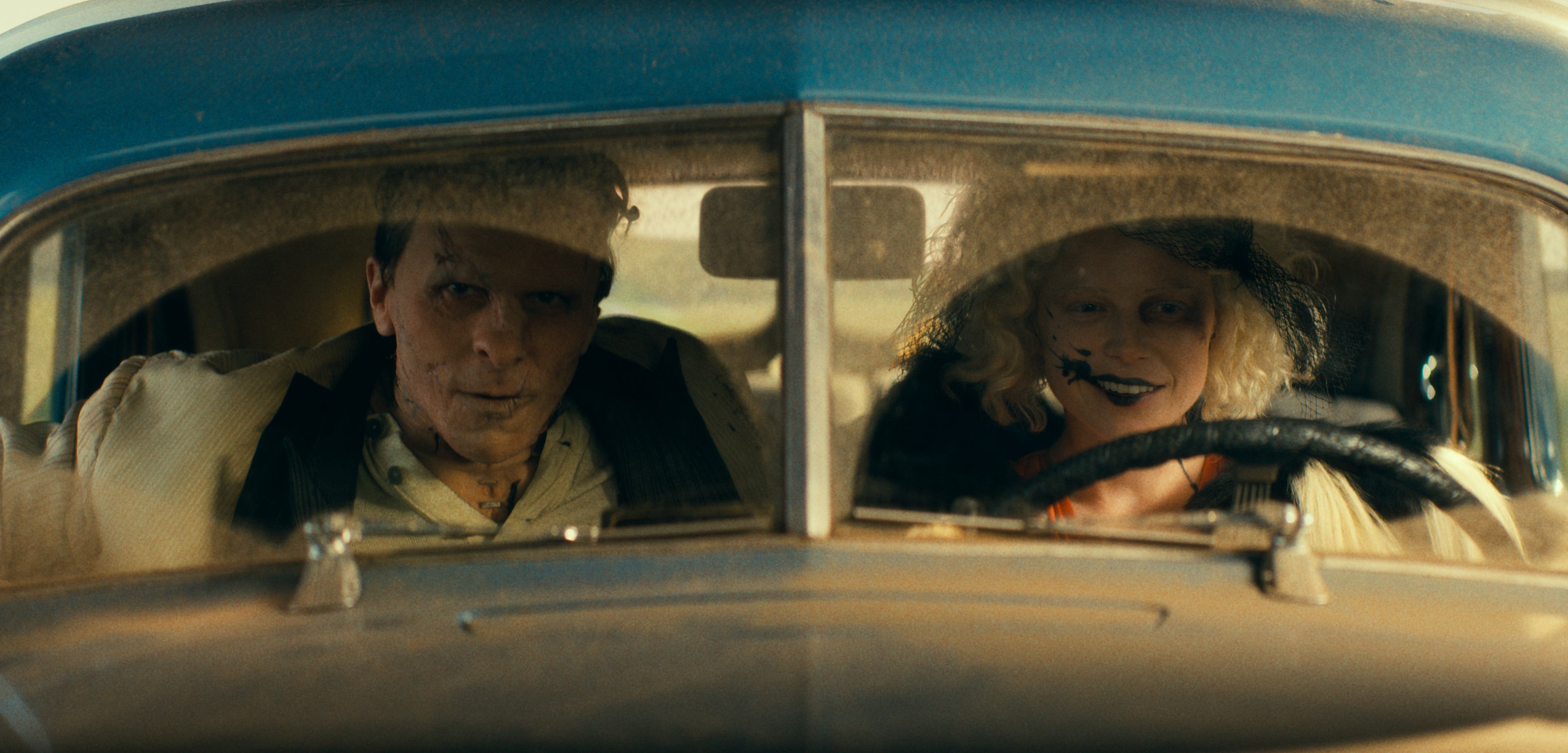 (L-R) Christian Bale as Frank and Jessie Buckley as The Bride in “The Bride!.” (Warner Bros.)