
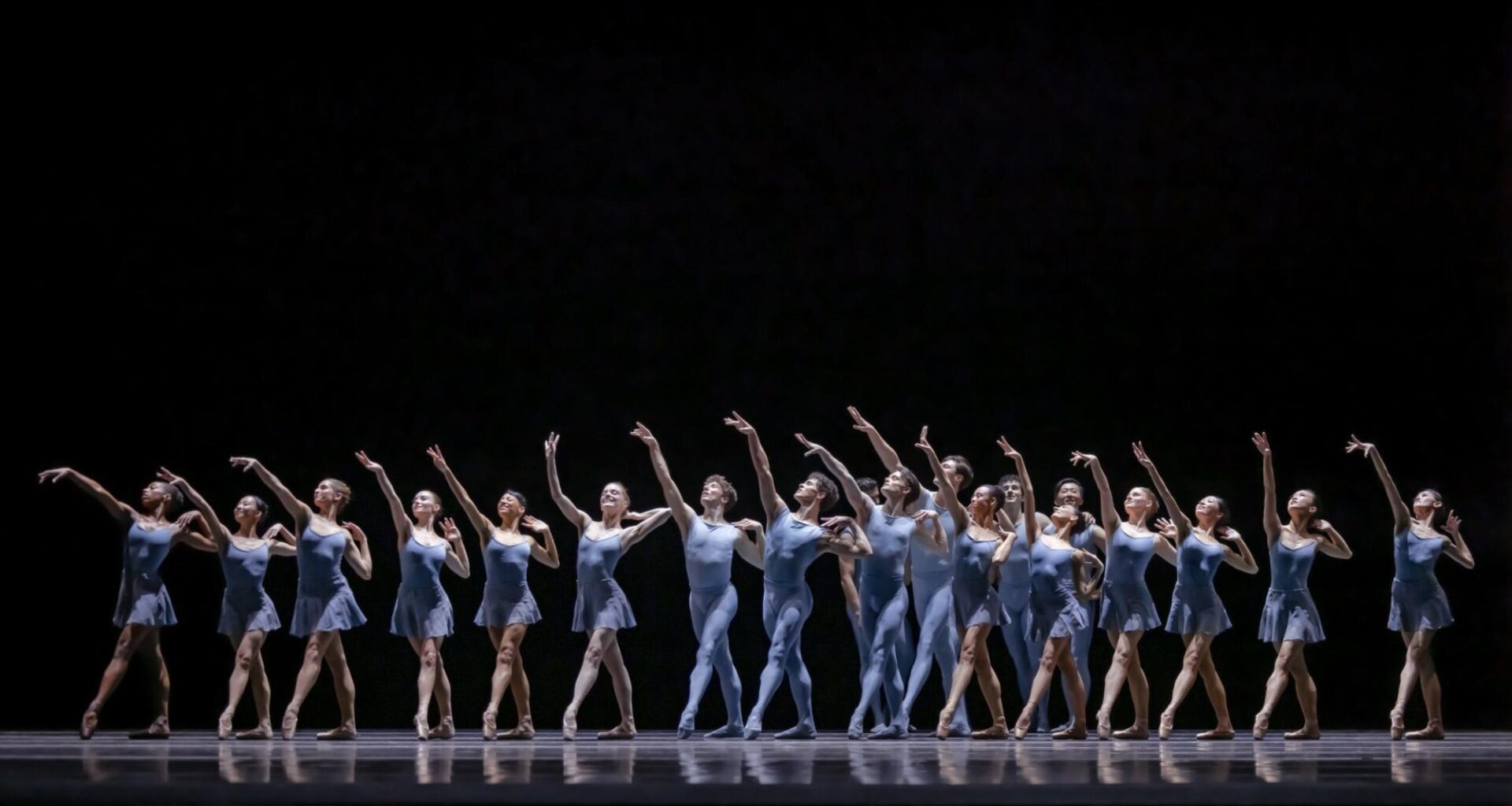
“The Blake Works” brings palpable tension and inescapable awe through style-bending choreography backed by a score of minimalistic experimental music.
Choreographed by renowned William Forsythe, the San Francisco Ballet’s production explores the language of ballet in a boundary defying performance of three of Forsythe’s works, with timing and rhythms more similar to jazz rather than the rigidity of traditional ballet. Experienced dancers would shudder at having to test themselves against James Blake’s unconventional compositions of music. As a spectator, it’s hard not to be impressed seeing all of the dancers keep meticulous time.
Made up of three parts, “The Blake Works” effortlessly moves through the prologue and the “Barre Project,” concluding with “Blake Works I.”
Out of the three works, “Blake Works I” is easily the most comprehensive and enjoyable. As dancers don pale blue costumes reminiscent of French ballet classwear, they perform an artful blend of classical and contemporary movements. Jaw-dropping pirouettes and grand jetés met thunderous applause from the audience. Since first adding Blake Works I to their repertoire in 2022, San Francisco Ballet has definitely refined the act.
Throughout all three numbers, dancers bring fluidity to the standard 4/4 time counts, sometimes only marked by uncountable breaks of silence or the industrial sound of Blake’s music. At times, over 10 dancers run through movements on stage at blistering paces and rapidly-changing directions. Other times, soloists leave the audience holding their breath as the tension of a strenuous pirouette begs to be released.
Despite its fast paced movements and transitions, the show is a far cry from the sweeping theatrics of well-known classics like Swan Lake and The Nutcracker, but you can feel the troupe’s energy and joy radiating beyond the stage.
“I just want, and I’m sure the rest of the company would [too], for the audience to experience pure joy,” said principal dancer Jasmine Jimison. “That’s something Bill [Forsythe] keeps telling us in rehearsals. He wants us to exude insurmountable joy through our lines, through our bodies, through everything.”
The performers’ dedication to bring Forsythe’s meticulous and defiant choreography to life is felt in every slight movement of the hip or ball of the foot. There are moments where each action from each dancer on stage feels so stunning and deliberate you find your eyes wanting to split apart to keep track of everything.
The blending of traditional and contemporary choreography along with fusions of jazz may leave enjoyers of traditional ballet simultaneously overwhelmed and underwhelmed, but this isn’t your grandma’s ballet. The San Francisco Ballet found weightlessness in breaking the rules of ballet, knowing exactly where the guardrails lie.
Anyone expecting to know how to describe this ballet before seeing it would surely fail to realize its raw complexity.
While the production has moments where dancers appear more like vessels for the music than humans following choreography, select moments have music more grating than beautiful, with random noises and incessantly contemporary autotune; you almost wish that you could be watching the ballet in silence. And, if drastically fluctuating autotuned singing and moaning isn’t your cup of tea, you might as well tune out of the whole prologue.
Despite its moments of auditory vexation, there is beauty to behold in the choreography and theatrical execution of “The Blake Works.” You feel the rush of glee and passion every time you see a dancer leap across the stage. It’s unique, raw and spectacular.
“The Blake Works” will run until March 8 at the San Francisco War Memorial Opera House.