
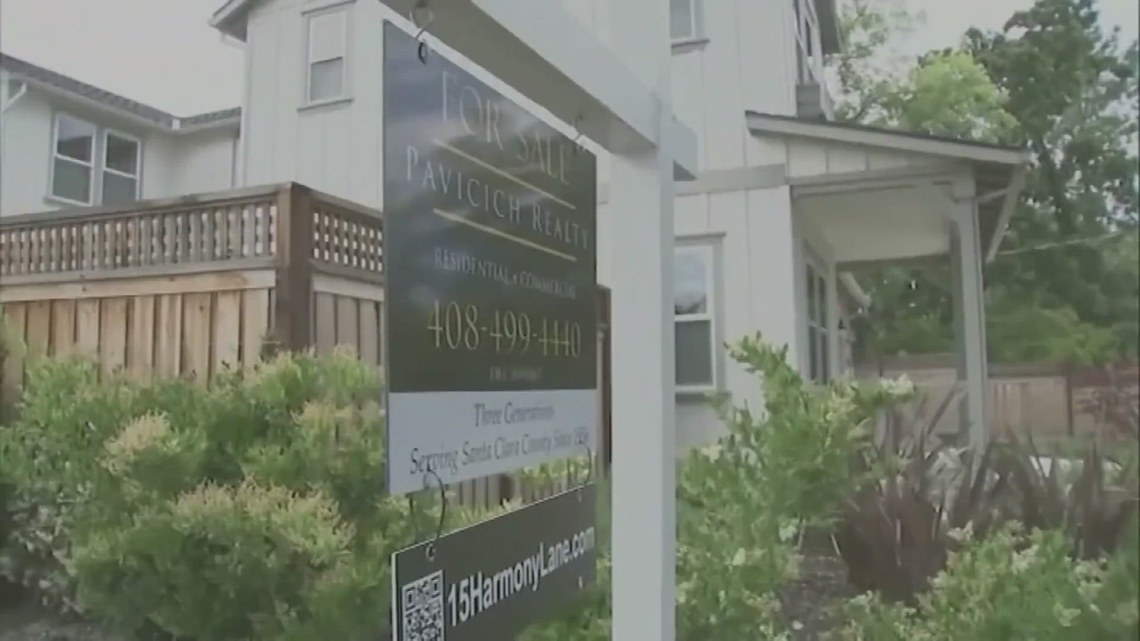
The bond seeks to do two things: build more middle-class homes and lower the down payment for middle-class Californians
SACRAMENTO, Calif. — A proposed $25 billion housing bond aimed specifically at helping middle-class Californians afford homeownership is likely to appear on the November 2026 ballot, supporters say.
Supporters have collected more than 900,000 signatures for the initiative. The measure needs just over 546,000 valid signatures to qualify for the November 2026 ballot.
The initiative, known as the California Middle-Class Homeownership and Family Home Construction Act of 2026, is being led by former state Assembly speaker and Senate majority leader Bob Hertzberg. It seeks to both increase housing supply and make it easier for middle-income residents to buy homes.
“New houses. Only [build] brand new houses — increase supply and affordability,” Hertzberg said, describing the measure’s two main goals.
The proposal would help middle-class Californians — not just first-time buyers — who have lived in the state for at least one year and plan to occupy the home they purchase. It would lower the required down payment while encouraging developers to build new homes targeted toward middle-income buyers.
Supporters say the program is designed to help what housing advocates often call the “missing middle” — people who earn too much to qualify for affordable housing programs but struggle to buy homes at market prices.
“The middle class, the working Californian who again can afford to maintain that home but cannot afford or is struggling to get that down payment,” said Sanjay Wagle of the California Association of Realtors, which is helping fund the initiative.
In California, the typical down payment for a home is about 20%. The bond proposal would instead allow buyers to put down about 3%, with the remaining 17% financed through a state-backed loan.
“Three percent down versus 20% down […] is going to be dramatically less,” Hertzberg said. “And [down payment is] the biggest barrier. How do you save that kind of money?”
Supporters say the program would be funded through revenue bonds rather than taxpayer dollars. The state would sell approximately $25 billion in bonds to investors to create a loan pool, which would then be repaid over time by participating homebuyers.
Wagle said the success of the program would depend in part on strong investor demand in the bond market.
“The revenue bond does depend on a robust bond market, and I think you’ll have that in California,” he said.
Because the initiative applies only to newly built housing, backers say it could also encourage more construction and help address the state’s chronic housing shortage.
Supporters estimate the program could help spur construction of as many as 150,000 homes, including condominiums, modular housing and projects that convert commercial buildings into residential units.
“Once you bring down the cost of housing construction or you can find an incentive — like a bond — that allows people to come up with a little bit less of a down payment, you can start moving people into home ownership,” said Roger Krulak, an executive with modular construction firm FullStack Modular.
Rich Ehisen, editor in chief of the Capitol Weekly, who’s worked with Hertzberg during his time as a legislator, noted the California Legislature often struggles with various barriers to construction, such as CEQA (environmental regulations), high supply costs and city/county level regulations.
Ehisen explained even with the Democratic supermajority exists intra-party disagreements.
“Affordability is a big umbrella,“ he said. “I’ve heard [Democrats] described as sixty shades of blue, which I think is pretty accurate.”
Hertzberg also reflected on his time in the Legislature and his inability to pass more affordable measures for the “missing middle,” despite years-long attempts. He noted it was like “making sausage” — so many people weighing in, including interest groups, as well as endless amendments that needed to be made.
“If you’re not in support of doing something about housing prices in California as a politician, you’re in the wrong business,” Ehisen said of the greater political implications of the state’s housing crisis.
There’s another housing bond being pushed — specifically for affordable housing and by Democratic legislators Assemblymember Buffy Wicks and Senator Christopher Cabaldon.
The Senate proposal mirrors a counterpart in the Assembly with the same name — the Affordable Housing Bond Act of 2026 — which has already passed with bipartisan support. The Senate is expected to take up that version in the coming weeks. Cabaldon’s bill passed the Senate and now awaits further action in the Assembly.
The bill would authorize $10 billion in bond funding for affordable housing projects across California. Supporters say the state has roughly 45,000 affordable housing projects in the pipeline, about 40,000 of which could be funded through the bond.
WATCH: Habitat for Humanity volunteers build 26 affordable homes in Citrus Heights
ABC10: Watch, Download, Read