
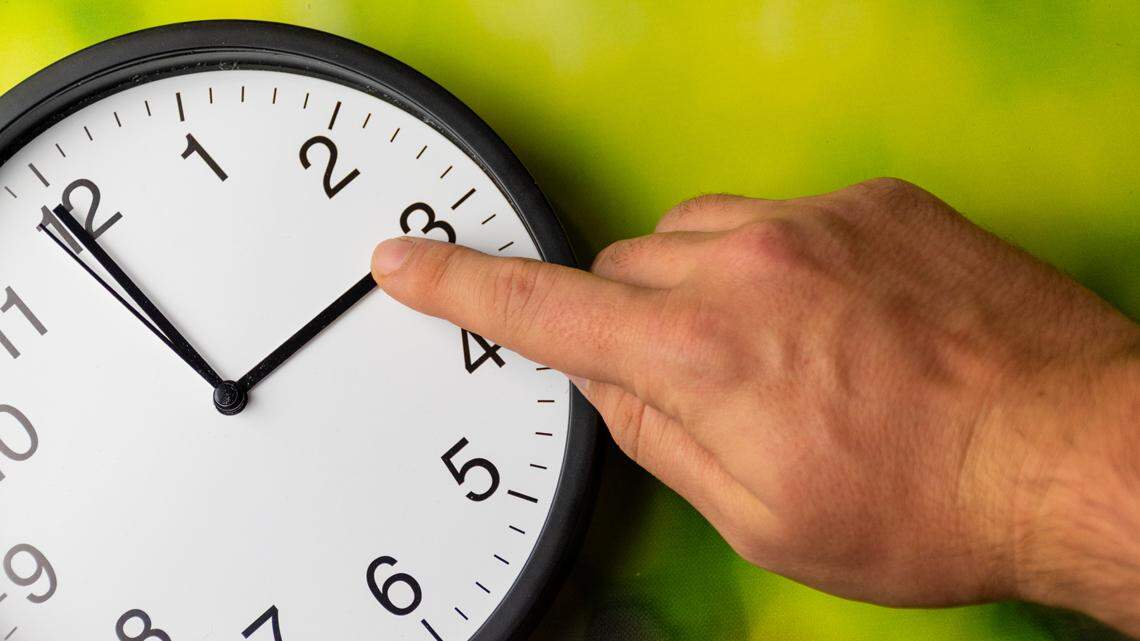
Ready for more sunshine in the evening?
Clocks will “spring forward” by an hour at 2 a.m. on Sunday, March 8. The change launches biannual arguments about the practice, wrecks havoc on sleep and has inspired voters to go to California polls.
But since the state still observes daylight saving time, here are five things you need to know.
When will the sun set after daylight saving time?
People will lose an hour of sleep overnight Sunday. But the tradeoff is that sunset will happen one hour later once the time shift takes place.
In Sacramento, the sun will set at 7:06 p.m. on Sunday, March 8, when daylight saving time begins, according to Time and Date.
Days will get steadily longer until the summer solstice — the longest day of the year — on Sunday, June 21.
On the solstice, the sun rises at 5:41 a.m. and sets at 8:33 p.m.
According to Time and Date, the summer solstice has an extra five hours and 24 minutes of daylight compared to the darkest day of the year — the winter solstice, which will take place on Monday, Dec. 21.
On that day, the sun will rise at 7:20 a.m. and set at 4:48 p.m.
 Research shows an increase in sleep loss and even heart attacks during transitions to and from daylight saving time. chinaface Getty Images How did daylight saving time begin?
Daylight saving time was created to make better use of daylight during the longer days of the year, according to National Geographic.
The modern concept is officially credited to New Zealand entomologist George Hudson, who proposed it in 1895, according to the Smithsonian National Museum of Natural History.
“Working as a mail clerk in New Zealand, Hudson’s day job cut into the daylight hours available to hunt and collect the wide ranges of insects that interested him since childhood,” the Smithsonian said.
The idea, however, dates back even further to nearly a century earlier when proposed by Founding Father Benjamin Franklin.
In 1784, Franklin suggested shifting schedules to rise earlier in a satirical letter to the Journal of Paris. He said that doing so would reduce candle use and save money.
“Yet it so happens, that when I speak of this discovery to others, I can easily perceive by their countenances, though they forbear expressing it in words, that they do not quite believe me,” Franklin wrote.
Daylight saving time was later implemented to save money and energy, The Sacramento Bee previously reported.
During World War I, countries briefly pushed clocks forward to reduce fuel use, according to the Johns Hopkins Bloomberg School of Public Health.
Germany adopted the practice in 1916, and the United States followed suit in 1918.
 Daylight saving time starts soon, bringing more hours of evening sunlight to California. Photo by Sonja Langford via Unsplash How does daylight saving time affect sleep?
Though the one-hour shift might not seem like much, losing an hour of sleep “can take a real toll on our bodies,” according to the Cleveland Clinic.
“Decades of research have shown that hour loss of sleep leads to an increased risk for health problems,” Alicia Roth, a sleep psychologist with the Cleveland Clinic, said in a Feb. 25 report. “In the week right after daylight saving time, the incidence of heart attacks and strokes significantly increases as well as motor vehicle accidents.”
Roth said that the adjustment can be especially tough because — even after the clocks move forward — most people still have to wake up for work or school at the same time, leaving the body scrambling to catch up.
Temitayo Oyegbile-Chidi, a neurologist and sleep specialist at UC Davis Health, said the human body naturally follows the sun.
“When we change the time on the clock to be an hour against the sun, it throws our bodies off,” she previously told The Sacramento Bee.
Even a single-hour shift can affect sleep schedules, brain activity, metabolism and the immune system, Oyegbile-Chidi said.
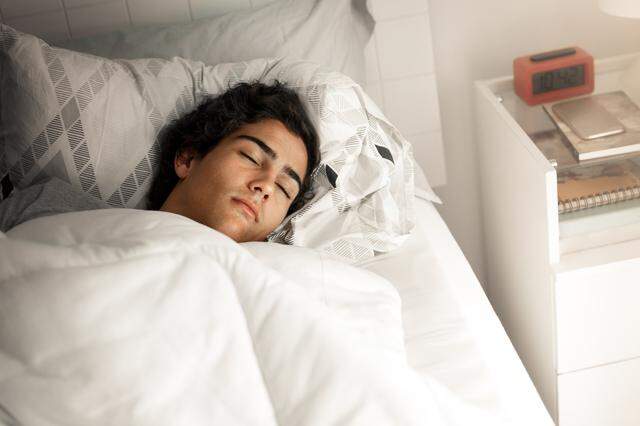 A recent study found that young people aged 16–24 who caught up on lost sleep during the weekend had a significantly lower risk of depressive symptoms. Capuski Getty Images/iStockphoto How long does it take to adjust to time difference?
How long does it take our bodies to adjust to the time difference?
“Some have argued two weeks, and others have argued it takes about a full month to reset,” Oyegbile-Chidi said.
The adjustment period varies from person to person, she said, but “the Monday after daylight saving time are when people are more likely to be thrown off or feeling” under the weather.
“People tend to feel this way because they’re not realigning as quickly,” Oyegbile-Chidi said.
Didn’t California vote to end daylight saving time?
In November 2018, California voters approved a ballot measure that would allow the state to move to year-round standard time or year-round daylight saving time.
Proposition 7 passed with 59.8% of the vote.
Nearly eight years later, state lawmakers have yet to pass any legislation to move California to permanent daylight saving or standard time.
That legislation would need a two-thirds vote in both the State Assembly and the State Senate, along with the governor’s signature.
If California chose to stay on daylight saving time all year, Congress would also have to approve the change.
Loading…
Related Stories from Sacramento Bee

The Modesto Bee
Angela Rodriguez is a service journalism reporter for The Bee. She is a graduate of Sacramento State with a bachelor’s degree in journalism. During her time there, she worked on the State Hornet covering arts and entertainment.

The Tribune
Hannah Poukish covers San Luis Obispo County and California news as The Tribune’s service journalism reporter. She previously reported and produced stories for The Sacramento Bee, CNN, Spectrum News and The Mercury News in San Jose. She graduated from Stanford University with a master’s degree in journalism.