

Trade activity this season, leading up to the NHL’s 2026 deadline, featured everything from major moves that saw the rich get richer to reunions to big names in new uniforms.
Which teams accomplished their goals, and which left their fan bases fuming? The Athletic asked its NHL staff to assign a grade to every club on their moves (or lack thereof) ahead of the deadline — specifically looking at how successfully they improved their situation — whether the team is rebuilding, trying to make the playoffs or pushing to win the Stanley Cup.
We had to define “ahead of” somehow, so we decided on every move starting with the Quinn Hughes trade to the Wild on Dec. 12. Any moves made before that are excluded.
Anaheim Ducks: A-
The major play obviously is for John Carlson, who is already on the short list of the franchise’s biggest deadline acquisitions. The 36-year-old has been one of the best defensemen in the NHL to not win the Norris Trophy during his 17-year career with the Washington Capitals. This was an add by Ducks general manager Pat Verbeek to reward a group that’s played its way into possibly winning the Pacific Division and to upgrade its blue line for a potential first playoff appearance since 2018. A first-round pick might seem pricey, but if the Ducks are able to re-sign Carlson — which Verbeek said is a goal — that surrendered pick won’t be as painful. While letting go of Ryan Strome was a pure salary dump, the extra $5 million in cap space this summer only adds more flexibility when it comes to re-signing the Ducks’ army of restricted free agents. — Eric Stephens
Boston Bruins: B
The Bruins acknowledged several things by standing pat. They are satisfied with the pace of their on-the-fly rebuild, but they do not want to change course after one season by trading picks or prospects. They did not want to torpedo the 2025-26 roster’s chances by moving Viktor Arvidsson or Andrew Peeke, both unrestricted after this season, just for the sake of acquiring futures. But as much as they’d like to make the playoffs this year, they are realistic about their chances. They have performed above expectations at both ends. So even though general manager Don Sweeney wanted to add, he did not want to overpay, given the risk of regression. The Bruins are what they are: a borderline playoff team whose contending window is yet to come. — Fluto Shinzawa
Buffalo Sabres: B+
It’s hard to separate what the Sabres did at the deadline from what they almost pulled off. But Jarmo Kekäläinen pivoted to some solid depth additions that will boost Buffalo’s team toughness, which will be necessary against some of their potential opponents in the playoffs. The assets Buffalo gave up aren’t needle-movers, especially considering this team has been out of the playoffs for 14 straight seasons and has been accumulating assets for a while. The Sabres are tied for first place in the Atlantic Division, so it was worth using some of those draft picks to bolster this roster. — Matthew Fairburn
Calgary Flames: A
Flames fans have been waiting on this deadline for a long, long time. Finally, they can say their team is in a rebuild. They offloaded MacKenzie Weegar and Nazem Kadri, two players in their 30s on pricey contracts who are better served on more competitive teams, ahead of the deadline and received futures and roster players who can help along with their transition. The Flames would’ve gotten an A+ if they had offloaded Blake Coleman and Zach Whitecloud. But the Flames still offloaded two stars in down seasons with an eye toward the future. This deadline is a significant day in their lengthy process of building a contender, eventually. — Julian McKenzie
Carolina Hurricanes: C
The Hurricanes mostly stood pat at the deadline, with their only move being the acquisition of enforcer Nicolas Deslauriers for a conditional seventh-round pick. Deslauriers likely won’t play much, but if he’s needed, he’s one of the most feared fighters in the NHL. The bigger moves might be the ones the team didn’t make. The Eastern Conference mostly stayed quiet, and the players most often mentioned as Carolina targets — Vincent Trocheck, Robert Thomas and Ryan O’Reilly — didn’t end up moving. The Hurricanes remain one of the teams to beat in the conference, but now they’ll need to show that sticking with the current group was the correct move. — Cory Lavalette
Chicago Blackhawks: B+
The Blackhawks were sellers once again. Blackhawks general manager Kyle Davidson added a few more early-round picks to his cupboard by acquiring first– and second-round selections from the Edmonton Oilers. That was beyond expectations heading into this week. Those draft picks now give the Blackhawks five first-round picks and seven second-round picks over the next three years. Of course, that’s on top of the 11 first-round picks and five second-round picks he’s made over the previous four years. That means the Blackhawks will potentially make 16 first-round selections and 12 second-rounders in seven years. The rebuild hinges on the scouting and development of all those picks. — Scott Powers
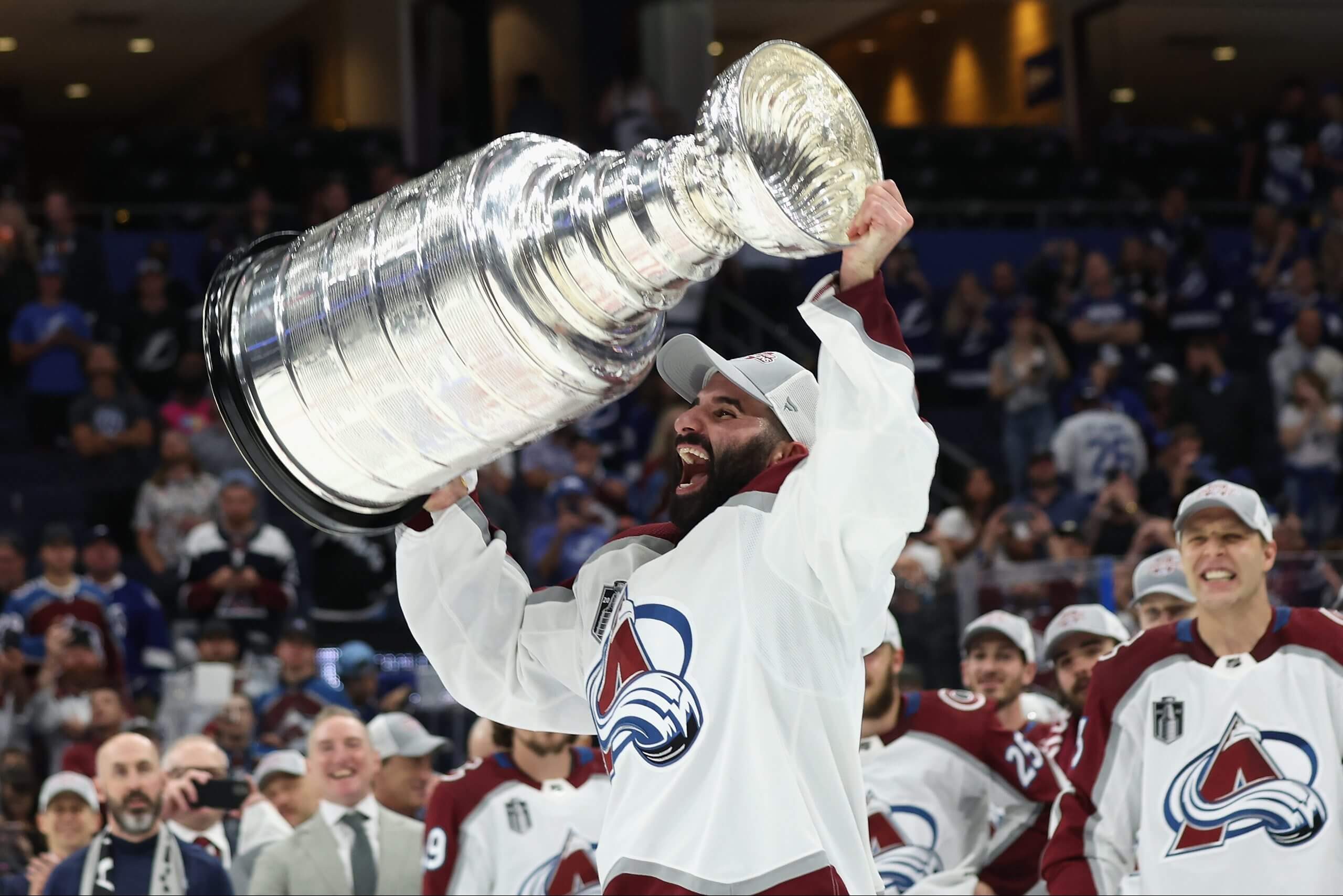
Nazem Kadri won the Stanley Cup with the Colorado Avalanche in 2022. (Christian Petersen / Getty Images)
Colorado Avalanche: A
The Avalanche went into the deadline hoping to bolster their center depth, and did exactly that. Nazem Kadri’s return is the headliner, as it should be. The 35-year-old had the best season of his career four years ago with the Avs and was instrumental in their Cup win. Adding Kadri and Nicolas Roy gives them as strong a center group as any team in the league. Roy’s price was steep, but he is one of the best fourth-line centers in the league. Not only can he handle defensive-zone starts, he’s great at holding onto pucks down low and has good hands when he gets the puck in dangerous areas. — Jesse Granger
Columbus Blue Jackets: B+
The Blue Jackets have had trouble establishing a second scoring line this season, so Conor Garland’s crafty playmaking and feisty puck pursuit give them another option to shuffle their lines to find a fit. It’s true the Blue Jackets don’t have an elite offensive weapon, but they can be a handful to check if all of their lines are engaged. Garland will help with that, although it could mean a lesser role for captain Boone Jenner or Kent Johnson. — Aaron Portzline
Dallas Stars: B+
Jim Nill made the biggest splash last year when he traded for and signed Mikko Rantanen for two first-round picks and Logan Stankoven. His moves were a lot subtler at this year’s deadline, but this is the second-best team in the NHL, riding a 10-game win streak before Friday’s shootout loss to the Avalanche. Subtle is just fine. Reliable winger Michael Bunting helps offset the loss of Tyler Seguin, who’s out for the season with a knee injury. Bunting is a lock for 15-25 goals every year, and won’t have to do the heavy lifting with Rantanen, Jason Robertson, Wyatt Johnston, Roope Hintz and Matt Duchene already in the top six. A second-round pick is a pittance for a Dallas team in win-now mode after three straight losses in the Western Conference final. Meanwhile, Tyler Myers lengthens — literally and figuratively — the Stars’ back end. He wasn’t the best or the most dynamic right-shot defenseman on the market, but he’s better than his numbers with the moribund Canucks show. In a No. 4 or 5 slot, he can be a useful defender for the Stars, maybe alleviating some of the difficult matchups Miro Heiskanen has to take on. Getting Vancouver to take on half his salary through next season — with a challenging Robertson negotiation looming large — was worth the 2027 second-rounder and 2029 fourth. — Mark Lazerus
Detroit Red Wings: B+
The Red Wings saved their deadline with a last-minute deal to address their biggest need. Justin Faulk immediately fortifies Detroit’s second defense pair next to Ben Chiarot. Faulk will add offense from the back end — his 32 points would rank seventh among all Red Wings skaters, and second among their defensemen — but does so without sacrificing defense. His arrival will also allow Detroit to better slot its current defenders, taking some burden off of 20-year-old rookie Axel Sandin-Pellikka and 25-year-old Jacob Bernard Docker, who has played well of late but is still best cast on the third pair. — Max Bultman
Edmonton Oilers: B
Oilers general manager Stan Bowman faced a challenging trade deadline this week. The club needed a right-handed defenseman who could help on the penalty kill and punish opposition forwards; an upgrade for the third line, a trio that has performed poorly all year; and a rugged forward who could intimidate and disrupt opposition defenders with heavy hits. Bowman got all three and did it under the cap. The price was dear (two early draft picks), but all the “needs” boxes got a check. There were no home runs at the deadline for Edmonton, but the solutions are bona fide bets. — Allan Mitchell
Florida Panthers: C+
It was an extremely quiet deadline for the defending champs. The Panthers flipped depth defenseman Jeff Petry for a seventh-round pick that can upgrade to a fifth-round pick if the Wild have some playoff success. But Florida failed to get creative with some of its UFAs in a rare season out of the playoffs. That said, they plan to take another run at contending next year when they’re healthier and rested, so moving out players with term wasn’t on the table. — James Mirtle

The Los Angeles Kings acquired Artemi Panarin from the New York Rangers in February and signed him to a two-year extension. (Ronald Martinez / Getty Images)
Los Angeles Kings: C+
The Kings have been in a win-now direction for several years without winning a single playoff series. Acquiring an elite-level point producer such as Artemi Panarin and signing him to a pricey two-year extension furthers that, but the cost wasn’t exorbitant. GM Ken Holland did well to get a second-round pick for Warren Foegele, who had become a healthy scratch. He continued to boost his draft capital by getting a second-rounder for Corey Perry, although that’s not until 2028. But Holland then turned around and paid a third-rounder (which could become a second-rounder) for Scott Laughton, a strong locker-room presence and penalty killer, but a player who won’t move the needle. Are they any better or worse? Probably neither. It’s a bit of mixed signaling from a team very much in transition. — Eric Stephens
Minnesota Wild: A+
The Wild’s heavy lifting was done with their mid-December blockbuster for Quinn Hughes, who has absolutely been a game-changer for the franchise. At the deadline, they basically overhauled their bottom six. Michael McCarron brings some size, snarl and strong faceoff ability to the fourth line and the penalty kill. Bobby Brink brings some speed and skill to the middle six, plus he fits Minnesota’s defensive identity and forecheck. Robby Fabbri is a four-time 15-goal scorer who is open to any role and can help with his experience in the room. Nick Foligno, the former Columbus Blue Jackets and Chicago Blackhawks captain, is another potential fourth liner/depth piece who may not play much, but Chicago is doing the veteran a solid to give him a chance to chase the Cup with his brother, Marcus. Nick Foligno has played center all year, so that gives the coaching staff options. The addition of Jeff Petry (for a seventh-round pick) offers an experienced, right-shot defenseman who is OK being a seventh or eighth defenseman. Overall, the Wild didn’t make any flashy moves at the deadline — the Hughes addition brought plenty of that — meaning Guerin and company still have useful assets they can parlay into a bigger move this offseason. This is still a really good team and a Cup contender. Guerin showed some patience here, and time will tell whether the Wild reward his faith. — Joe Smith and Michael Russo
Montreal Canadiens: C
The Canadiens’ lack of trade activity was not for a lack of trying, as they were in on several conversations, including a “significant deal for us” to try to add some playoff competitiveness to their lineup. That didn’t happen. Spending some of their extensive trade capital to invest in this young team would have made some sense, especially with the Eastern Conference looking as wide-open as it does. But while they might regret that come April, they are unlikely to regret it down the road when they are ready to truly contend. — Arpon Basu
Nashville Predators: D
Outgoing GM Barry Trotz got some draft capital for expiring contracts, but he blew the opportunity to bring back a gigantic haul for Ryan O’Reilly. Without specifics available, look around at some of the other returns around the league and at what O’Reilly could have meant to several contenders in the spring. He doesn’t have a no-movement clause. There’s no such thing as a verbal no-movement clause. He may be the ultimate culture setter, but that’s not as valuable as high picks and the kind of prospect 35-year-old O’Reilly could have fetched. So if you aren’t going to deal him, why not just let the whole group stay together and chase a playoff spot? It’s the mushy middle of the trade deadline for a mushy-middle franchise. — Joe Rexrode
New Jersey Devils: D+
The Devils had high expectations this season and have come up short. Moving Ondrej Palát cleared up cap space and was likely the right move with how the season was going, but New Jersey had to give up picks to make the deal happen. The Nick Bjugstad addition is marginal. The Devils didn’t have a lot to sell this deadline, but the team’s record and lack of moves made it hard to give them a higher grade. — Peter Baugh
New York Islanders: B-
Brayden Schenn buys the Islanders more top-six versatility. His playmaking, experience and edge should fit well on a team that has exceeded expectations in the playoff hunt. It’s just his age and contract. If the Islanders were going to move out a first-rounder, it should have been on a younger-difference maker to help push this retool along. So while Schenn looks like a fit for now on the ice, and this deal helped the Isles move out Jonathan Drouin’s contract, the overall direction was somewhat perplexing in the big picture. — Shayna Goldman
New York Rangers: D
The Rangers let the deadline come and go without moving their biggest trade chip: veteran center Vincent Trocheck. It’s a big risk to punt this into the summer, when Trocheck will turn 33, but he does have three years remaining on a contract that carries a $5.625 million cap hit. The Rangers replenished some mid- and late-round picks and snagged a few prospects, but they haven’t done nearly enough to infuse the organization with the young talent it so desperately needs. — Vincent Z. Mercogliano
Ottawa Senators: C+
The Senators are taking a chance on Warren Foegele rebounding and benefiting from a change of scenery through their trade, paying a high price of a second-round pick while also exchanging conditional third-rounders. Foegele could fit as a middle-of-the-lineup winger in a checking-line role who can provide offense and some pace and kill penalties. The Sens also sold off David Perron for a conditional pick as a way to deal with their growing number of bottom-six forwards as a result. Perhaps the Sens could’ve added another defensive piece, but they seem to like their group, feeling they should be a lot higher in the standings than where they are now. — Julian McKenzie
Philadelphia Flyers: C-
The Flyers addressed a logjam at wing by shipping Bobby Brink to the Wild for a defenseman with a high pedigree in David Jiricek, who remains an intriguing prospect but whose development seems to have stalled. But the bigger news may have been that they held on to defenseman Rasmus Ristolainen, who was thought to be generating interest from at least half a dozen teams. Perhaps the Flyers will opt to deal Ristolainen at some point in the future, as he has one season left on his contract at a $5.1 million cap hit, but keeping him now feels like a missed opportunity to add more assets. — Kevin Kurz
Pittsburgh Penguins: B-
There were no blockbusters, but GM/president Kyle Dubas did a reasonable job of avoiding anything foolish and losing important assets. The Penguins’ future looks brighter than it has in many, many years. Their asset cupboard is full, they have cap space and they are way ahead of schedule. This summer will be something. If the Penguins make the playoffs along the way this spring, even better. — Josh Yohe
San Jose Sharks: B
This was a quiet deadline for GM Mike Grier, but it didn’t need to be loud as his Sharks progress nicely out of a rebuild. This wasn’t the time to skip steps and make a hard push when they’re still more than a key player or two away from being a serious divisional threat. Most of Grier’s work came in re-signing Kiefer Sherwood and Alex Nedeljkovic. Timothy Liljegren, traded to Washington, was solid at times and mistake-prone at others, but he’ll have a shot at minutes every night with John Carlson having been traded to Anaheim. Perhaps Grier could have extracted more or better assets from his set of pending UFA defensemen, but this was mostly about not disrupting the locker room and showing Macklin Celebrini that San Jose is ready to turn the corner and make the organization an attractive NHL option for players again. — Eric Stephens
Seattle Kraken: B+
The Kraken added pace and snarl on the wing by acquiring Bobby McMann from the Maple Leafs on deadline day for a cut-rate price of a second- and a fourth-round pick. Amusingly, it’s an exact match for what the Kraken netted in selling Mason Marchment to the Blue Jackets in December. Effectively, Seattle hedged its bets by selling Marchment, then ran hot to position itself to make a value purchase at deadline day. Throw in an eminently reasonable two-year extension for Jordan Eberle, and the Kraken had a solid, if muted, performance for a fringe playoff team. — Thomas Drance
St. Louis Blues: B-
If grades were given out before the last hour of deadline day, the Blues might’ve received an F. They struck out trying to trade Robert Thomas and Colton Parayko to the Sabres, and they were still holding onto aging veterans with term Brayden Schenn and Justin Faulk. But in the final 60 minutes, general manager Doug Armstrong’s report card got a lot better. In separate deals, Armstrong moved Schenn to the Islanders and Faulk to the Wings for a collection of high draft picks and players. Each player fetched a first- and third-round pick, which means the Blues will have three first-rounders (including their own) in 2026. Some might scoff at the B- because the Blues only moved two players from their roster, and that’s understandable. But they attempted to move Parayko in a package that would’ve yielded a significant package. He just turned it down, which is his right with a no-trade clause. Also, with regard to Thomas, Jordan Kyrou and other tradable assets, if the returns weren’t enough, it was perhaps a good decision to wait until the offseason to resume those talks. — Jeremy Rutherford
Tampa Bay Lightning: B
The Lightning were already one of the top teams in the league, despite playing much of the season short-handed. With the team getting closer to full strength, the back end healthy and the return of Brayden Point, management technically didn’t need to make a statement on deadline day. Still, finding a way to move Oliver Bjorkstrand’s contract for a better power-play fit could have made sense. Corey Perry is a fine addition — he is still productive, solid on both ends, and knows the system well — but the cost was just a little steep. Even with the Lightning’s draft-pick philosophy mind, they probably could have spent less. — Shayna Goldman
Toronto Maple Leafs: C+
The Leafs did OK — just OK — in the end. GM Brad Treliving did as well as he possibly could in flipping Nicolas Roy for a first-round pick from the Avalanche. Treliving also ended up moving two of the three players the team sat before the deadline in Bobby McMann and Scott Laughton. Moving off McMann, in the midst of a career season as he heads into unrestricted free agency, for a second and a fourth is fine. Not bad. Not great. Somewhere in the middle. A first-round pick always felt like a stretch for McMann, even with the results he was producing this season. It feels more disappointing for the Leafs to end up with only a conditional third-round pick for Laughton a year, almost to the day, after giving up a 2027 first-rounder along with prospect Nikita Grebenkin to acquire him in the first place. The context is important, of course: The Leafs were getting Laughton for an additional season at half price ($1.5 million cap hit). The Kings are buying him as a rental. Regardless, this deal highlights what an overpay that initial trade was — ultimately a big mistake with ramifications still to be determined. — Jonas Siegel
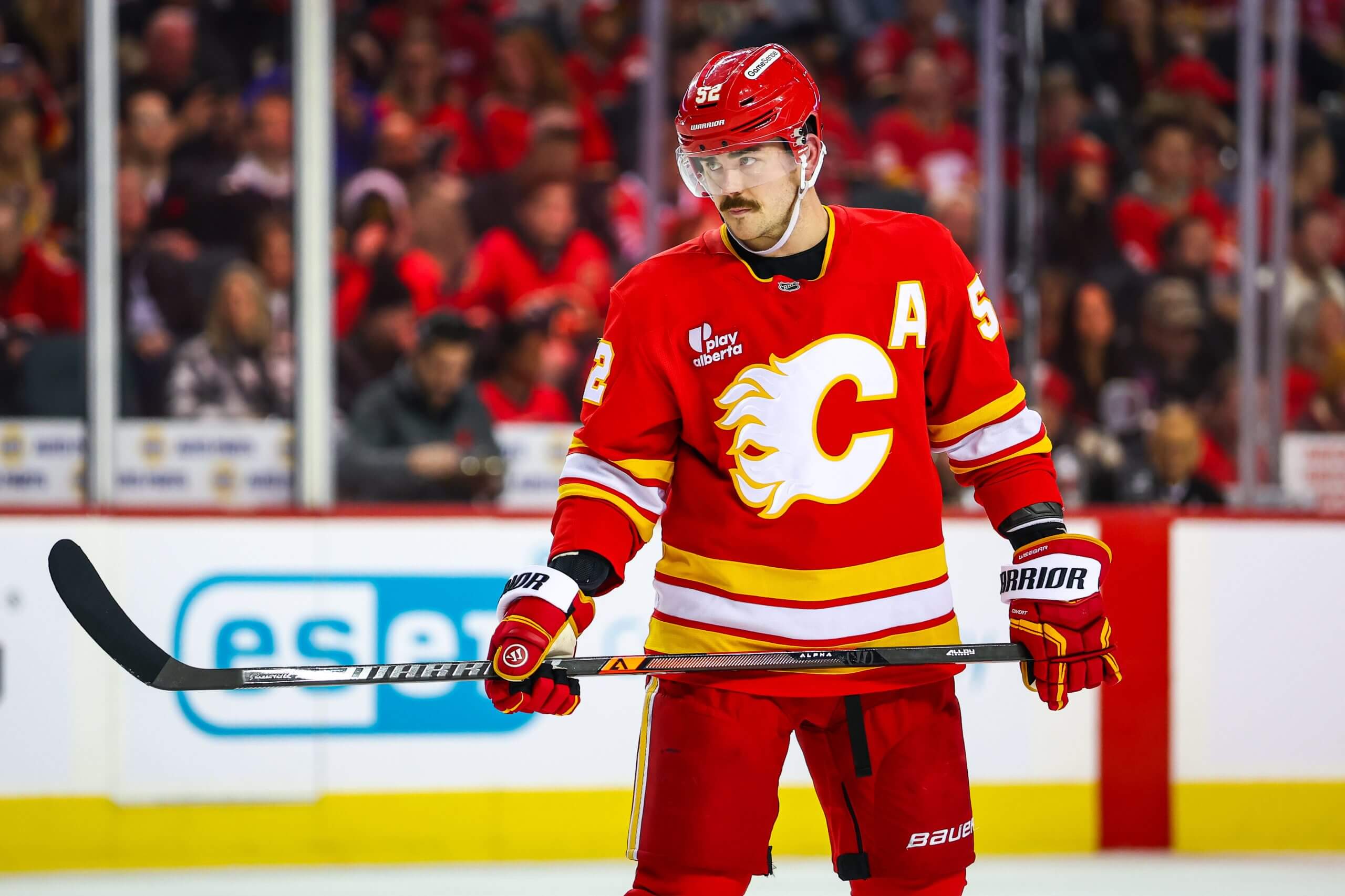
MacKenzie Weegar waived his no-trade clause to head to Utah. (Sergei Belski / Imagn Images)
Utah Mammoth: B+
The Mammoth found a way to add a legitimate difference-maker in MacKenzie Weegar while still keeping their most prized trade chips (first-round picks and top prospects) intact. That deserves credit, especially since Weegar will be a long-term contributor rather than just a rental. There is some risk attached to the deal as Weegar is 32 and in the middle of a down year, but I like that GM Bill Armstrong found a way to reward his team with a strong addition while still keeping his powder dry to make bigger moves in the summer. — Harman Dayal
Vancouver Canucks: C+
The Canucks made a welcome series of forward-looking moves to shed salary cap liabilities and change the mix of their lineup. The work overall is defensible. It wasn’t, however, a home-run trade deadline for an embattled Canucks management group. The club made some smart moves that fit into the bigger-picture priorities of a rebuild team, but wasn’t able to make all of the moves the team had to make. While other teams at the bottom of the standings found clever ways to return better and more voluminous assets, Vancouver’s trade deadline performance was decidedly more middle-of-the-road. — Thomas Drance
Vegas Golden Knights: C-
It was a relatively quiet deadline for a team that has made big splashes in previous years. That’s probably at least partially due to the fact that the Golden Knights are running low on future assets to deal. They added two depth forwards in Cole Smith and Nic Dowd, both of whom should help Vegas improve its forecheck, which it desperately needs. The two have combined for only 10 goals and 16 assists this season, so it remains to be seen how big an impact they can actually make, but they give Bruce Cassidy a more dependable defensive fourth line. — Jesse Granger
Washington Capitals: C-
In a vacuum, sending John Carlson to the Ducks for first- and third-round picks makes tons of sense. Carlson is still effective, but he’s 36 and on an expiring deal. The Capitals need to continue to act with their eyes on the post-Alex Ovechkin era, and stockpiling picks will make that easier, whether they make those selections themselves or use them to acquire players via trade. Second- and third-round picks from Vegas for Nic Dowd are sensible returns, too, and Timothy Liljegren and David Kämpf were decent adds as backfill for Carlson and Dowd. That said, the circumstances surrounding the departure of franchise icon Carlson, coupled with Washington’s previously stated wishes to add a top-six winger, make the day a bit of a downer. — Sean Gentille
Winnipeg Jets: A
Winnipeg didn’t anticipate being a deadline-day seller when the season began, but made the correct decision to trade popular pending UFA defensemen Logan Stanley and Luke Schenn to Buffalo. The Jets did well to get 22-year old forward prospect Isak Rosén, 28-year-old depth defenseman Jacob Bryson, a second-round pick in 2027, and a fourth-round pick in 2026 in return. Rosen has middle-six upside and will get opportunity in Winnipeg, while the draft capital recoups the Jets’ price to acquire Schenn last season. The Jets also returned a seventh-round pick from the Sabres for pending UFA Tanner Pearson — a sensible if not stunning return for the depth forward. — Murat Ates