
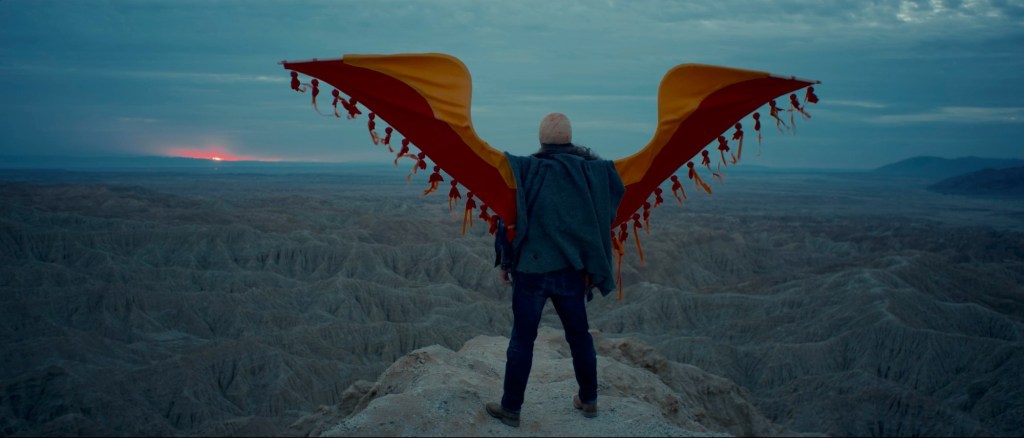
For her part, Andrea Torreblanca was interested in a bit of a departure, a slight shift in what she and her partners at Insite, an arts organization, had been doing.
“I proposed a model which was, instead of only inviting artists and curators to the region, what if we invite curators to work in their places of origin or residence,” she says. “This could spark a different sort of approach to history, in which the curators could really focus on their own genealogies and their own communities.”
The result has been Insite’s “Commonplaces” series, an ongoing project that began in 2021 with curators and artists working with local communities in different regions in Lima, Peru, Johannesburg, South Africa, and San Diego County and Baja California. The organization was founded in 1992 with a series of artist commissions and installations for specific places, focused on public engagement with the arts and the social and political contexts explored in these works.
Based in Mexico City, Torreblanca is the director of the Tamayo Museum there, and is also chief curator at Insite, where her project in “Commonplaces” is “The Sedimentary Effect,” looking at spiritual, ecological, and architectural microhistories of Baja California and Southern California through collaborations with artists and public conversations based in the region. “Erratic Fields” is an exhibition opening and conversations at Bread & Salt, on display from March 14 to June 28, and considered a chapter from “The Sedimentary Effect.” The exhibition features new commissions by artists Alex Bazán, Johnnie Chatman, Lael Corbin, Leslie García, and Archivo Familiar del Río Colorado, as well as new iterations of past projects by Mark Dion, Anya Gallaccio, Allan McCollum, Allan Sekula, Gary Simmons, and Yukinori Yanagi. Torreblanca will be part of a conversation at 2 p.m. March 14 titled “Beyond the Surface: Erratic Landscapes of the ‘The Californias,’” which is followed by another conversation with some of the artists in the show, “Afterthoughts: Mining History,” at 3:15 p.m. that day, both at the Barrio Logan art space. (An opening reception will be held from 5 to 8 p.m. also on March 14 at Bread & Salt.) She took some time to talk about this ongoing project and the connections between history, culture, politics, and the environment.
Q: Can you talk about how “Commonplaces” works as a whole? What is the purpose or goal of this project, overall?
A: We developed this “Commonplaces” curatorial idea where each of us would produce a project. Back then, it was a shorter project, but it kind of evolved into several years. It was quite interesting, Miguel Lopez working in Peru with a Shipibo-Konibo community of indigenous artists. And then Gabi Ngcobo from South Africa, who is developing a project with two different artists, and that has evolved into several years of conversations and texts. We also have a publication, which is called the Insite Journal, and I like to think of it as something that is occurring simultaneously, but not necessarily together or collectively. I think that’s something that we will sort of look into many years from now, looking back at what sort of ideas intersect and what ideas are crossing geopolitically and just aesthetically.
Q: For you, what is meant by your project “The Sedimentary Effect”? How did you come up with this specific concept and what is meant by exploring microhistories?
A: I hope it’s very layered. “The Sedimentary Effect” really started with thinking about the nomad and the forms of inhabiting a place. Then, it evolved into thinking about how sediments sort of layer and form this strata, and making this metaphorical connection with how history operates, which means that layers are accumulating and, at the same time, they’re moving like tectonic plates. So, “The Sedimentary Effect” really evolved into several different chapters of thinking about natural phenomena, architecture, spirituality, how all of these layers—geological, social, political, and also spiritual—are converging in a region. Microhistory was really a point of departure in thinking about how micro events, or things that are very small in scale, can really prompt other things. It’s this idea of the simultaneous, so it’s really a project that has been in the limits between thinking of different notions of the region, without giving one single vision. It’s just understanding that everything is moving and has different layers of political history, cultural history, social history, and how they all converge.For example, one of them, which is part of “Erratic Fields,” is the Santa Ana winds are one microhistory. They occur locally, but at the same time they interfere, or act upon several different aspects of the region. They ignite fires, but they also affect your psyche, and they are also giving nutrients to the ocean. There’s an artist working with the winds, and that is sort of like a history that prompted looking at natural phenomena beyond a physical act, and it intersects with your psychology and with other aspects of human life, or life in general. There are many travelers who came to Baja California, and things that prompted a change in the historical discourse of the of the region.
Q: With “Erratic Fields” being described as one chapter from “The Sedimentary Effect,” what can you tell us about this particular chapter? What will people see in this exhibition? What did you pull out of “The Sedimentary Effect” to focus on?
A: The project really began as an exploration of how sediments travel and how they affect the cultural imagination. There’s something about California that always has been sort of shaped by the geopolitical context, but also by the myths that surround the formation and origin as an island. The idea of this ecotopia, or utopia as a natural place, as a promised land. The exhibition begins by presenting three different layers, which are sort of presented as a stratum. The first one is really looking at tectonic plates, or fault lines, volcanoes, and underwater phenomenon that really intersect with how drilling, energy extraction, or military testing really converge in this sort of industrial ambition. There’s another layer in which artists are exploring the more technological, with regard to how migration and settlement occur. This is the atmosphere in which wind, oxygen, and dust influence psychological landscapes. What you will really find is not only is it an exhibition about ecology, but I would say it’s an exhibition that converges in the limit between aesthetics and politics, and personal and collective microhistories; between social ecology and the vision of landscape. There’s something important about making a distinction between landscape and territories and the environment because the artists are really making this critical approach to industry and surveillance and tourism and economy. To how landscape is being domesticated and regenerated, so there’s a very poetic look into what a landscape could be. It’s this sort of spectacular landscape of the West, this idea of utopia and dystopia. In cinema, it’s this idea of how culture has been presented for many centuries and makes this region-which I like to call the Californias, in the plural in which there is no physical boundary-connected as one territory, a land mass.
Q: What kinds of pieces are in the exhibition? What kind of media did the artists work in?
A: The exhibition has new commissions of artists who have been working for five years, and it’s basically film, sculpture, drawings, photography, and a complete conceptual installation. It also involves artists who were part of Insite 20 years ago and who are making new iterations of those works. It was interesting to present both. There are amazing works that include sculptures, there’s a machine that builds a mountain, there’s a sonar radar, which is documenting the seismic activity of the San Andreas Fault in real time. Mark Dion is rebuilding a house that he made in the Tijuana estuary, where you could actually go in and sort of learn about the biodiversity of birds in the region. It’s quite a big show.
Q: On March 14, you’ll be in conversation with cultural critic T.J. Demos, discussing political ecology in “Beyond the Surface: Erratic Landscapes of ‘The Californias.’” In your work studying and creating art around Baja and Southern California, what are you seeing in terms of some of the connections between people and the environment, and how this is shaped by the intersection of politics, economics, and power that leads to environmental inequalities and injustices?
A: I think there’s something quite interesting about what I was mentioning earlier, in terms of territory and landscape, and the difference between both. There’s always been this idea that California is a place for healing-“the sunny state,” “the promised land,” all of these names that it has been given, historically. Also, we know that it has produced very toxic landscapes that industry has sort of pulled in since the 1970s, also the Salton Sea and all of these tragic crises that have really made territories quite complicated in terms of migration. I think it’s interesting to develop, to think about this. I think artists are approaching it from a really interesting way since the 2000s. For example, Allan Sekula did this photo essay about how a political convention really is in tension with what happens with the maquiladoras (factories) in Baja California, but also with commerce in the Pacific. This is something that interests me very much in terms of how everything is intertwined; it’s not one way or the other. That’s why the exhibition is a crossover, an intersection between this seduction of the landscape, even when it’s toxic, and industry and regeneration. All of these things are the layers, which are quite interesting.
Q: Has this work led to any ideas or conversations on how to move further in correcting the destruction of the environment and the social inequities that result from this imbalance of power in politics and economics?
A: I think what’s interesting about contemporary art is that it brings the conversation to culture. More than providing a solution, they are really making questions and interrogating not only what has been done, but also how we perceive of history and how we perceive of these territories and landscapes. I think we are very much obsessed with the idea of utopia. It doesn’t matter if the landscape changes or if we know that it’s toxic, we are always obsessed with domesticating it and making it better. So, I think all of these questions about cultural imagination is what’s really at stake in this exhibition, and how politics and aesthetics really converge. I think, by bringing these ideas, we can continue to unfold what lies underneath the surface and what we are really addressing today as inhabitants of the region. Or, how we have shaped our idea of a place.
” ]