
Immigrants held in Kern County-based ICE facilities are challenging their detention in federal court at some of the highest rates nationwide.
The Eastern District of California, which encompasses the Central Valley and is home to three of the state’s seven ICE detention centers, has the second-highest concentration of habeas corpus petitions nationwide, data shows.
An estimated 2,061 writ of habeas corpus petitions have been filed in the Eastern District of California since January 2025, according to an analysis by nonprofit investigative newsroom ProPublica.
Immigration lawyers using this strategy nationwide are successfully getting their clients out of ICE custody, according to staff attorneys with the American Civil Liberties Union of Northern California.
“ICE doesn’t have to operate this way. It’s clearly in violation of the law. They’re losing cases over and over again,” Bree Bernwanger, senior staff attorney with the ACLU of Northern California, said in an interview.
A petition for a writ of habeas corpus is a legal procedure challenging an unlawful deprivation of liberty, most commonly illegal detention or incarceration. The legal principle dates back to English common law and has long served as a check on executive authority. In the United States, habeas corpus allows federal courts to review whether a person’s detention complies with the U.S. Constitution and federal law and to order release if it does not. In immigration cases, habeas petitions are often used to challenge prolonged or unjustified detention, Bernwanger said.
The Eastern District of California is one of the largest districts in the country, extending 87,000 square miles from the Oregon border in the north to Bakersfield in the south. The district includes nearly eight million residents and six large urban areas: Sacramento, Fresno, Bakersfield, Stockton, Vallejo and Fairfield, according to the U.S. Department of Justice.
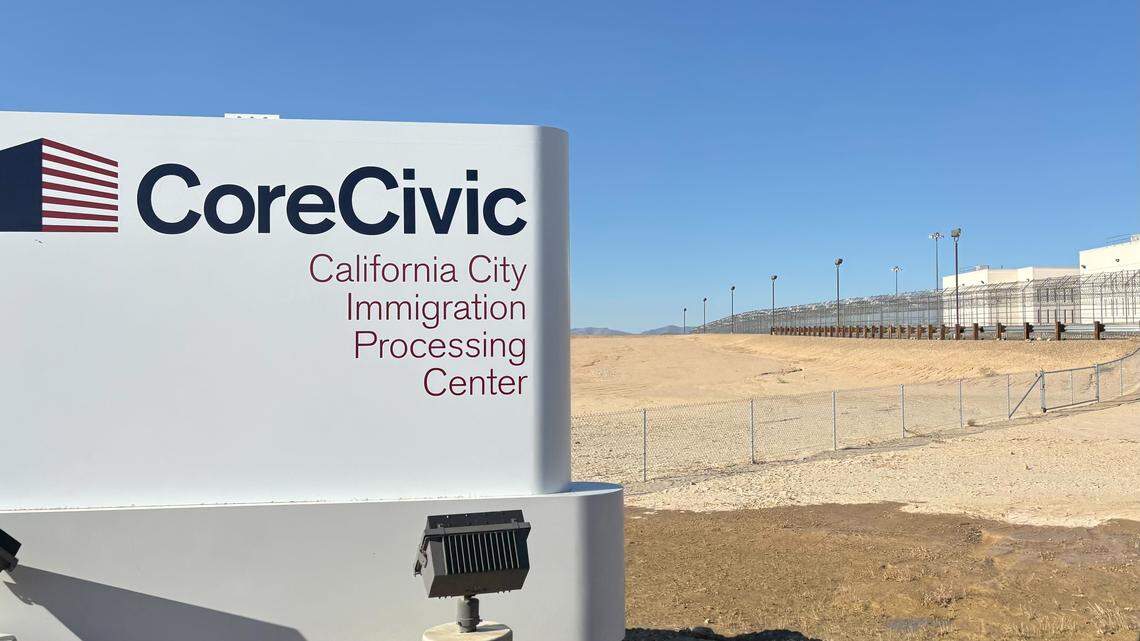
Between Golden State Annex in McFarland, Mesa Verde ICE Processing Facility in Bakersfield and the newly-opened California City Immigration Processing Center in eastern Kern County, the district is home to 3,660 of the 8,500 ICE detention beds in California.
“I think that concentration is unique to other areas of the state and maybe to other areas of the country as well,” Lauren Davis, another attorney with ACLU of Northern California, said in an interview.
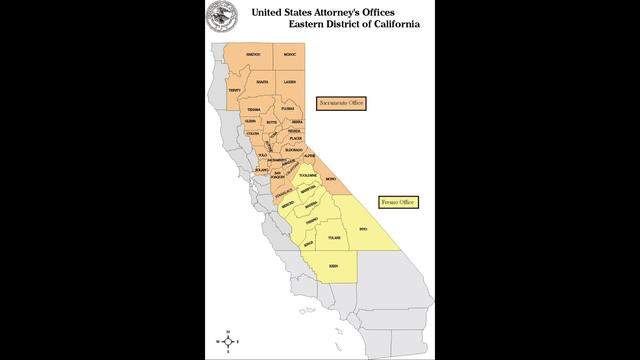 Courtesy of the Department of Justice website
Another reason this district has one of the highest concentration of cases is that habeas petitions must be filed in the district where people are currently detained, Davis said.
“Even if people are detained in immigration court in San Francisco, for example, but they’re transferred to California City, for example, their habeas petition will be filed in this district,” Davis said.
Habeas at a historic high
Only the Western District of Texas, which encompasses Austin, San Antonio, El Paso, and Del Rio, has a higher concentration of habeas filings than the Eastern District of California. The nation’s largest ICE detention center, Camp Montana at Fort Bliss, is located in this district. As of Feb. 5, the facility had 2,954 detained individuals, according to ICE detention statistics.
As of March 2, 24,403 habeas cases have been filed nationwide since January 2025, according to nonprofit investigative newsroom ProPublica. Of these, 4,522 habeas petitions have been filed in California. About 40% of all habeas cases are filed in California and Texas, ProPublica reported.
Bernwanger said courts in California have treated immigration habeas petitions with urgency amid a sharp increase in detention challenges. Judges have frequently ruled on emergency motions and, in many cases, ordered release from custody.
“The Eastern District is taking these cases very seriously,” Bernwanger said. “But I think courts all over the country are taking these cases very seriously. The trend that we see is ICE’s national trend of detaining people completely arbitrarily in violation of federal law and in violation of the Constitution.”
Spokespeople for U.S. Department of Homeland Security and Immigration and Customs Enforcement didn’t respond to request for comment.
Many habeas cases focus on due process concerns, including detention without a bond hearing or without any procedure to determine whether continued custody is justified. Others argue that detention lacks a lawful purpose altogether. When a person poses no flight risk or danger, Bernwanger said, detention violates the law.
“One of the biggest issues with ICE’s new policies in this administration is that they have a policy of denying bond hearings to people who are legally entitled to them,” Bernwanger said. As a result, bond motions have become less reliable as a path to release, even when individuals meet the legal criteria for bond.
Habeas petitions have increasingly been used to challenge those denials. In some cases, federal judges order immigration authorities to provide bond hearings. In others, judges order release directly.
There are nearly 70,000 individuals detained in ICE facilities nationwide, according to the Transactional Records Access Clearinghouse at Syracuse University.
 California City Immigration Processing Center is California’s largest ICE detention facility. The 2,560-bed facility was formerly a privately-operated state prison until it closed in early 2024. Melissa Montalvo Fresno Bee

The Fresno Bee
Melissa Montalvo is The Fresno Bee’s accountability reporter. Prior to this role, she covered Latino communities for The Fresno Bee as the part of the Central Valley News Collaborative. She also reported on labor, economy and poverty through newsroom partnerships between The Fresno Bee, Fresnoland and CalMatters as a Report for America Corps member.

The Fresno Bee
Marina Peña is the Latino communities reporter for The Bee. She earned a bachelor’s in Political Economy and another one in Journalism from the University of Southern California. She’s originally from Buenos Aires, Argentina, but grew up in Los Angeles.