
© Justin Sullivan / Getty Images
California drivers already pay some of the highest gas prices in the country, and escalating Middle East tensions could push them into shocking territory. National gas prices are already moving fast, and California could be headed somewhere far worse.
The national average gas price sits at $3.45 per gallon as of March 8, 2026, according to AAA, up 16% over the past week. Prediction markets on Polymarket are placing 63% odds that national prices hit $4.50 by the end of March, with a 34% chance prices could soar past $5.00 per gallon.
Let’s dive into why pain at the pump could get extreme in the Golden State. Our findings: regular gas prices could soon soar above $7 per gallon in California. The pain will be felt across the country, but the West Coast will feel it the worst.
California Is Already in a Different World
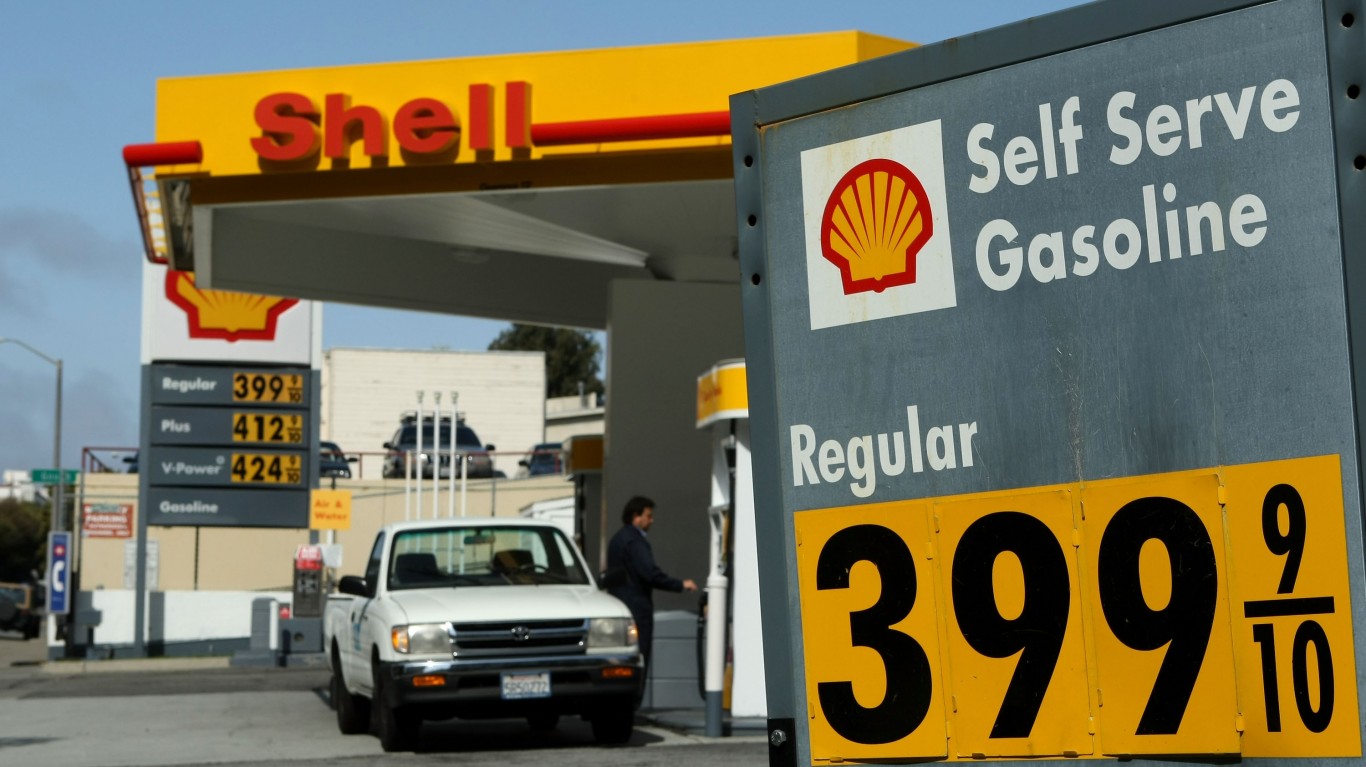
California’s average gas price is already $5.159 per gallon as of March 8, 2026, according to AAA, dramatically above the national average. California is truly in another league compared to the gas prices of most states.
The second most expensive state is Washington at $4.60 per gallon. Hawaii’s average gas price is $4.51 per gallon. Then Oregon pays $4.19 per gallon and Nevada $4.18. No other states in the country pay above $4 per gallon as of March 8th. Also, keep in mind this is the average price for regular gasoline!
California’s average price for premium gasoline is $5.55 per gallon.
Diesel costs $5.91 per gallon.
And certain regions of California are more expensive. Gas in a northern county like Tehama costs $4.77 per gallon while Silicon Valley stations in San Mateo average $5.41.
As you can see, the most expensive gas in the United States is almost purely a West Coast phenomenon. Let’s dive into some more details why this is.
Why West Coast Gas Prices Are So High
California isn’t just paying more because of oil prices. The state runs on a unique CARB-compliant fuel blend that can’t be imported from other states, creating a near-isolated market. Add in some of the highest gas taxes in the nation, a cap-and-trade carbon program adding costs at the refinery level, limited pipeline connections to major U.S. oil hubs, and few refineries vulnerable to outages, and a structural premium is baked into every gallon.
For the broader West Coast, there are a number of reasons gas is more expensive. The Rocky Mountains make it hard to connect the West Coast to the broader pipeline network of the United States. In addition, most refining capacity sits along the Gulf Coast.
The West Coast is often more impacted by the price of oil shocks since it’s so isolated.
Then there are other fees like what we described above. Washington and Oregon generally have more taxes on gasoline and added environmental regulations. There’s a reason Arizona’s gas costs $3.84, while California costs $5.16 and Washington costs $4.60.
Is the Premium Permanent?
California has historically traded at a significant premium to the national average, and that gap has widened as environmental regulations tightened. This isn’t a temporary anomaly — it’s structural. When national prices spike, California’s premium tends to hold or widen.
And here’s where we get to the striking prediction of $7 per gallon in California.
The truth is, it isn’t our prediction, it’s the markets!
Polymarket prediction markets currently assign a 63% chance the national average of gas prices is $4.50 or above by the end of March. Prediction markets place a 34% chance gas prices will exceed $5 by the end of the month.
If that happens and West Coast price increases move in line with the national average, here’s the price you could see in West Coast states.
At a $4.50 national average, California’s average price per gallon would reach about $6.73 per gallon.
At a $5 national average, California’s average prices would hit about $7.48 per gallon.
Once again, these aren’t numbers we’re arbitrarily pulling; they are what prediction markets currently place as either likely or close to likely.
If supply disruptions continue, the U.S. West Coast should prepare for some eye-popping gas prices.