
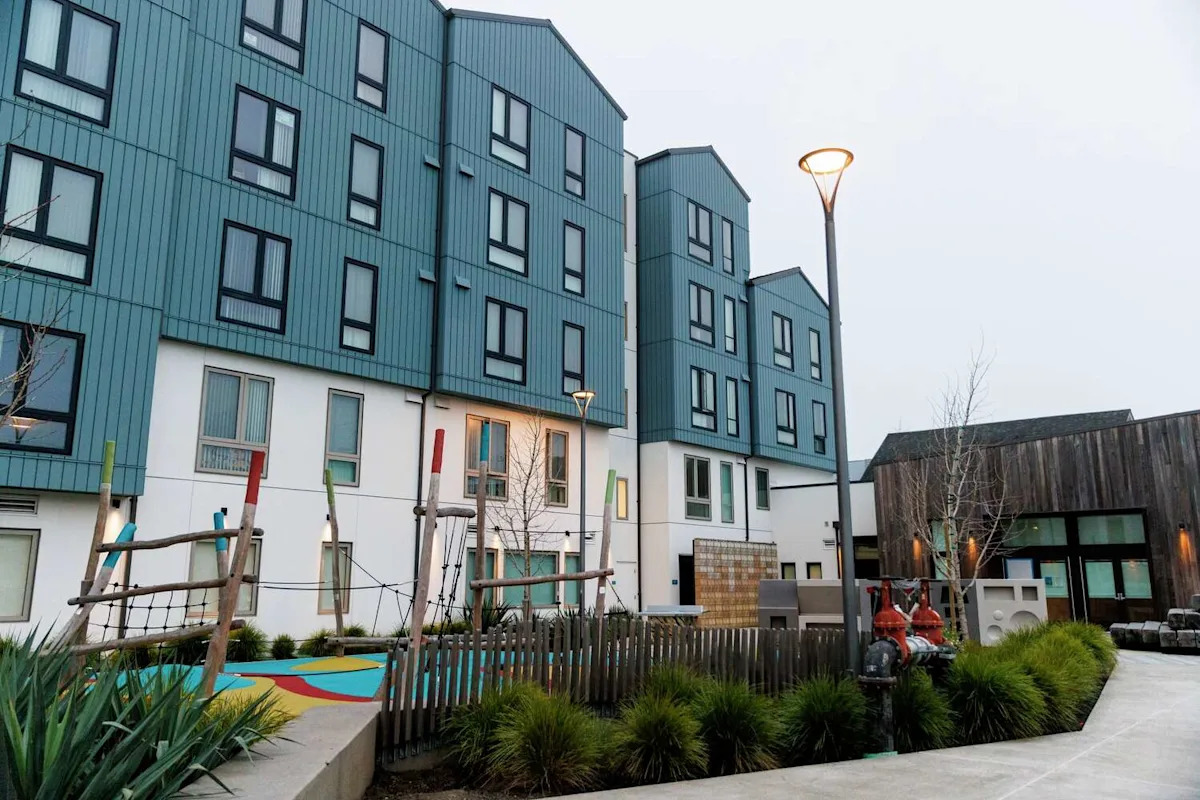
City and school leaders predicted a decade ago if they built affordable housing for educators in San Francisco, teachers would come – and stay.
After several years of planning and construction, their dream became reality in late 2024 with construction complete on a 135-unit apartment complex built in the Sunset neighborhood near the beach. Following a lottery and lengthy application process, it’s now filled with residents.
But not with teachers.
Just 16 classroom teachers are among the 130 renters at the Shirley Chisholm Village in the Sunset neighborhood, built on rent-free school district property, in part using a $48 million city loan and federal tax credits.
The number stands in sharp contrast to what public officials repeatedly described as the primary purpose of this project and with at least two educator housing projects in the works: to recruit and retain teachers, who officials said could not afford to live and work in San Francisco given skyrocketing rents.
So why aren’t teachers living there? District officials wouldn’t say, emphasizing that other kinds of educators, like teachers aides, are renting the units. The United Educators of San Francisco, the teachers union, did not return repeated requests for comment.
While there are likely many reasons why teachers aren’t in the affordable apartments, one stands out: They make too much money to qualify.
The complex offers studios to three-bedroom apartments, all considered “affordable,” but with units divided by various income levels, ranging from 40% to 120% of the average median income – or $43,650 for a single person to $187,000 for a family of four.
Tenured teachers’ salaries run from $88,382 to $131,654, although a recent contract agreement would boost those by 6% between this year and next year. The lowest-paid tenured teacher wouldn’t qualify for a third or more of the units. And any additional household income would likely push a lot of teachers out of contention entirely, even for a family of four or more.

The Shirley Chisholm Village in San Francisco was finished in 2024. (Santiago Mejia/S.F. Chronicle)
It’s unclear how many teachers applied for a unit in the new complex, but overall district demand for the housing was high.
About 15% of the San Francisco Unified School District’s 9,000 workers applied in the initial round for spots in early 2024, said Lyn Hikida, spokesperson for MidPen Housing, the nonprofit developer and manager of the apartment complex.
In the application lottery, top priority was given to educators, a group that included teachers, paraprofessionals as well as other student support staff, including librarians and counselors.
This month, along with the 16 teachers, the 99 other district employees living in the Chisholm Village included two counselors, family liaisons, security aides and attendance clerks. Five units are pending lease agreements and 15 are for residents with special accessibility needs, according to Hikida.
Because of the federal tax credits and other funding used to pay for the project, there are restrictions on income eligibility. Typical affordable housing developments serve households at 80% of the average median income, or about $124,700,000 for a family of four, meaning they are “designed to serve people at the lower levels,” she said.
For the San Francisco project, 33 units are at 120% AMI level, or about $187,000 for a family of four, which was a big win, Hikida said.
Yet over the past five years, district educators have seen an overall 30% raise in annual pay, which has likely made it more difficult for teachers to qualify, especially those higher on the seniority scale.
Ultimately self-selection and total household income are the biggest factors in determining who lives in a project like this, Hikida said.
“It depends on where your school is, and where other people in your household are going to school and working. Or maybe you’re currently happy with your living situation,” she said. “There are so many factors involved.”
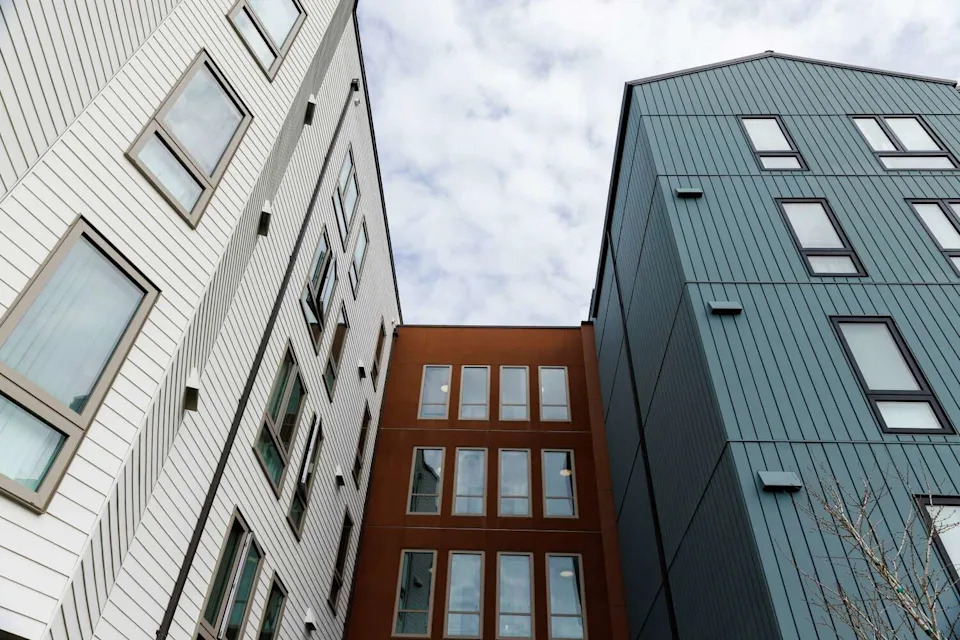
Shirley Chisholm Village in San Francisco’s Sunset District was built to provide affordable housing to teachers. (Santiago Mejia/S.F. Chronicle)
Rent could also be a factor. For the lowest-income residents, a studio starts at $827 per month, while the nine three-bedroom apartments rent for up to $1,835, but only for those at 60% of AMI or lower. For those at the highest income level, the rent for a two-bedroom is $3,358.
With another big raise for educators likely coming with the new contract agreement – which followed a four-day teacher strike – the question is how city and district officials will proceed with the next affordable educator housing projects already in the works for two additional former school sites in the city.
What officials promoted over the course of a decade, doesn’t quite mesh with the current reality in terms of recruiting and retaining classroom teachers.
“Providing this housing opportunity for our teachers is one of the most important things we can do as a city,” said then-Board of Supervisors President London Breed in a 2015 announcement, the first real step to build the housing complex. The future mayor added she was “really a bad kid in school” and the teachers who helped children like her “deserve an opportunity to live in this great city.”
Two years later, in the 2017 city and district agreement for the Sunset neighborhood teacher housing project, the distribution of units was set at 60% for eligible teachers and the rest for lower-income teachers aides.
In April 2024, the apartment building was finally built and ready for residents to apply, with the dream of teachers living and staying in the city still alive.
“If we want to keep families in San Francisco we need more housing and we need good public schools. Good schools require teachers, and teachers need a place to live,” said Supervisor Joel Engardio, who represented the Sunset neighborhood, in a statement at the time when applicants first could apply to live there. “That’s why the affordable housing we’re building in the Sunset for SFUSD employees is essential for our city to thrive.”
With the building now nearly full, officials are putting a positive spin on the situation.
“The goal was always to provide housing for educators,” said Supervisor Shamann Walton, who voted for the housing project while on the school board. “An opportunity to house the people who work with our students is definitely a priority for me. I think we should do more of this.”
He noted he would “love to see more teachers housed.”
School board President Phil Kim said it will be important to focus on the original goal and purpose of the project, to determine whether it remained on or off track and use all the information to best understand how to attract and retain educators.
“Let’s be clear: Our city needs to increase our housing stock,” he said. “And the district should be proud to contribute to that.”
But whether this project met its goals is something to consider as the district moves forward with other surplus properties identified for educator housing, he said.
“I don’t want to shy away from strategies like educator housing without understanding how it can contribute to the success of our educators,” Kim said. “Of course there are going to be lessons learned in this first go around.”
Educator Breayana Jackson would be happy to give her feedback.
When she heard the application lottery was open for the units, she tried to temper her excitement. She had been commuting to Balboa High School from first Fairfield and then Oakland for the past 10 years to her job as a special education paraprofessional, helping special needs students navigate classwork and teenage life.
She loved her job, but not BART delays or getting stuck at the Bay Bridge toll plaza, and she’d always wanted to live in San Francisco, but couldn’t afford to do so. The apartment lottery seemed like her only hope – although she had “never been lucky with bingo or raffles or anything,” she said.
Jackson won the lottery. The 31-year-old moved into Shirley Chisholm Village just over a year ago, into a one-bedroom apartment in San Francisco near the beach. It’s the first time she hasn’t had roommates and while some units require employment with the district as a requirement of tenancy, Jackson can stay as long as she qualifies based on income.
“It’s so surreal,” she said. “I can afford it and I can pay my bills and it’s mine. I don’t have to worry about moving.”
She has no plans to leave her job – or the city.
This article originally published at S.F. built teachers affordable housing. But many make too much money to live there.