
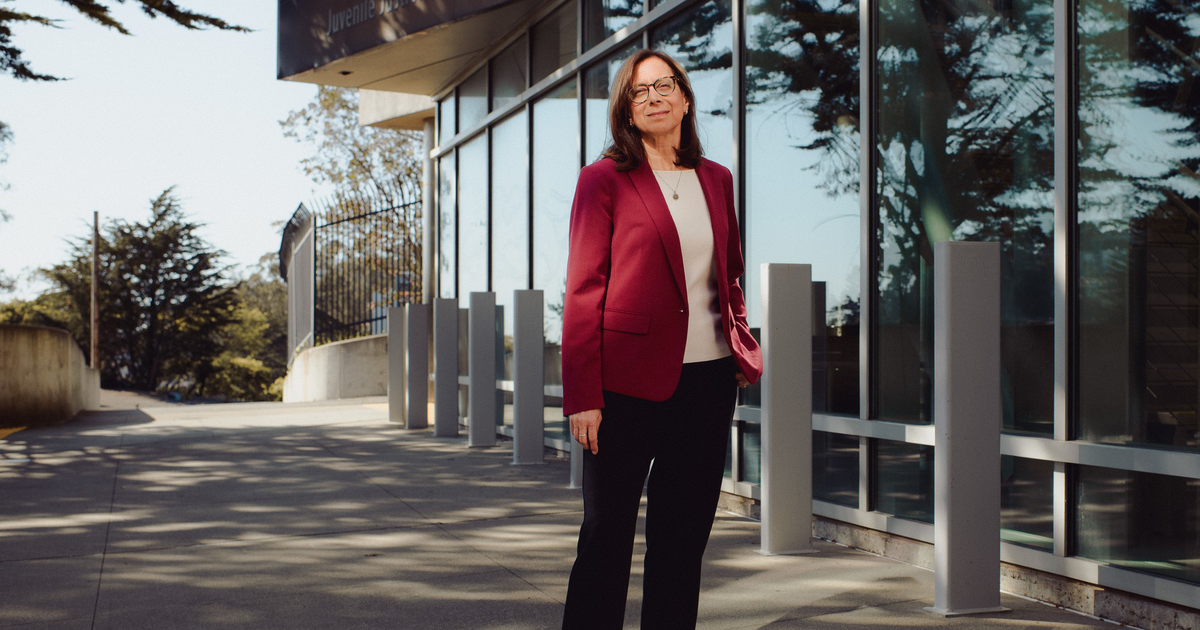
A child arrested and taken to San Francisco’s Juvenile Justice Center first sees the sun-drenched parking lot where a police car or van brings them to the facility. When they step inside, their eyes have to adjust quickly to darkness. In the reception room, staff sitting behind an imposing, semi circular desk process them in and assign them a bed. Next is a hallway so long and curved, from some perspectives it seems to never end.
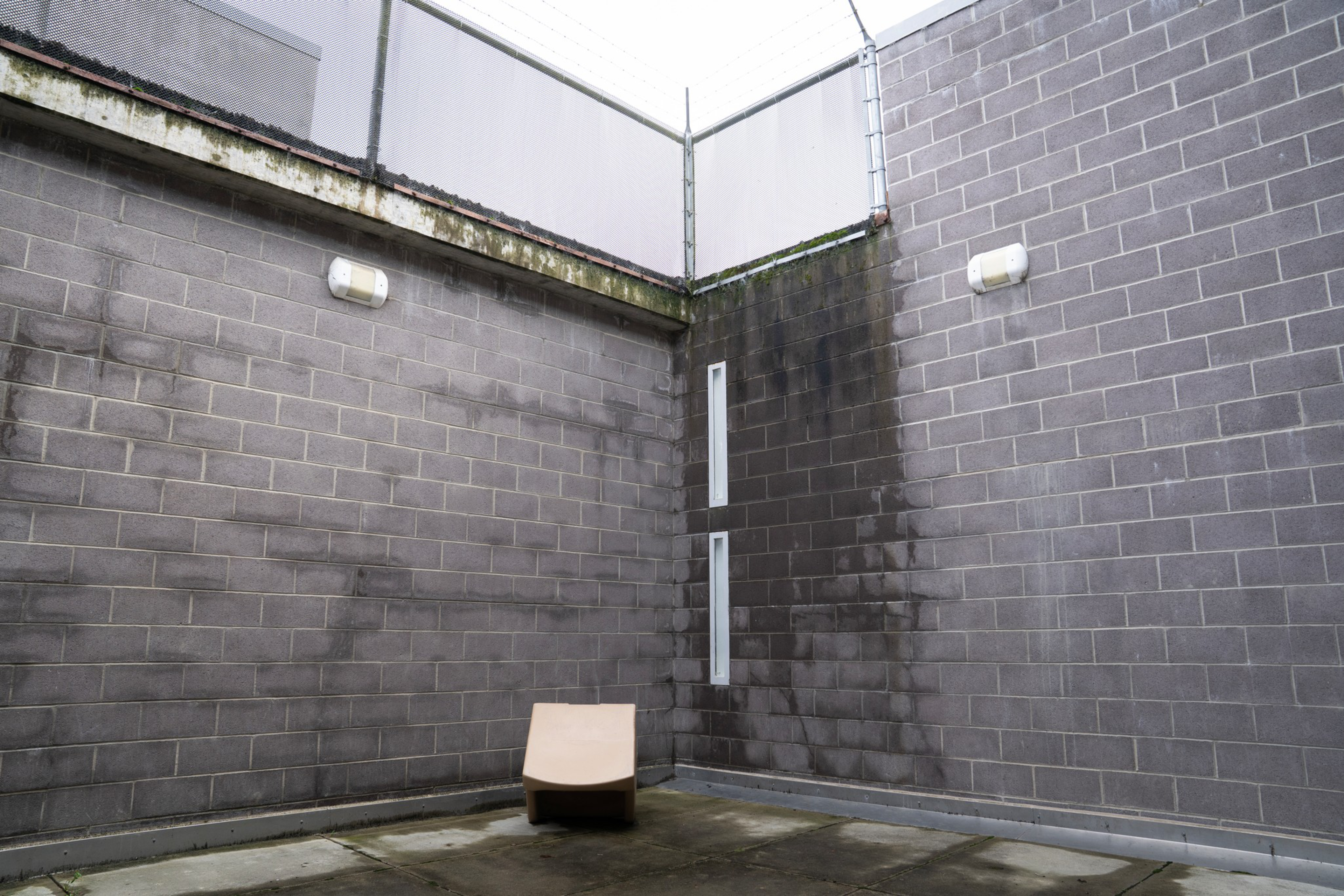
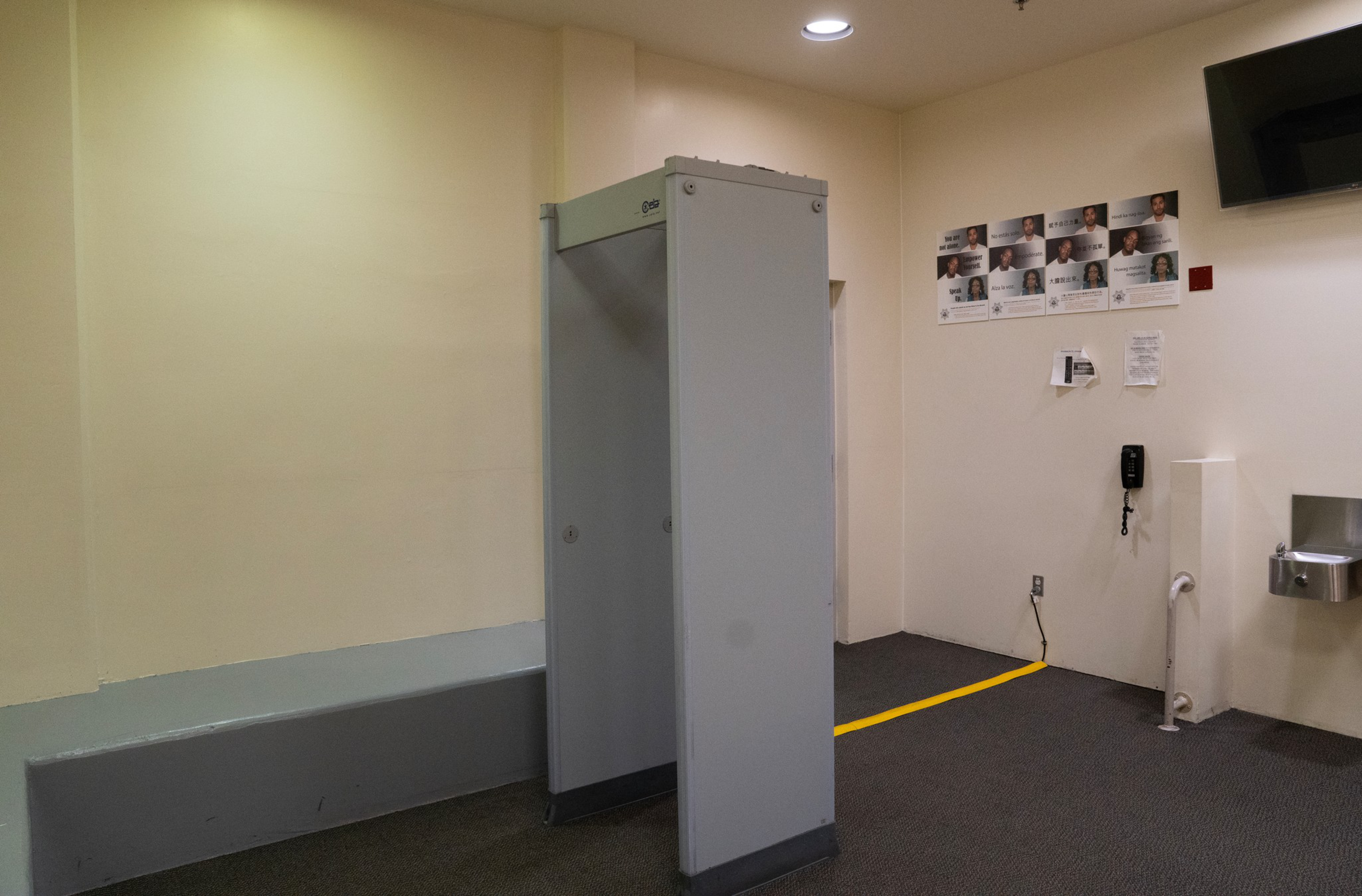
The juvenile hall was built in the classic prison architecture style of the 1990s. Multiple locked doors separate cells from hallways from the yard. They close with loud, reverberating clangs. The 75-square foot cells are painted beige and light blue, and feature bed frames and sinks built into the brick.
For decades, progressive-minded activists, attorneys, and politicians have tried to shut down the hall, arguing that the jail-like space near Twin Peaks is no place for children. The closest they ever came to success was a 2019 vote by the San Francisco Board of Supervisors to close the facility within three years. At the time, Mayor London Breed criticized the legislation as “not the most responsible thing to do without a real plan of action.”
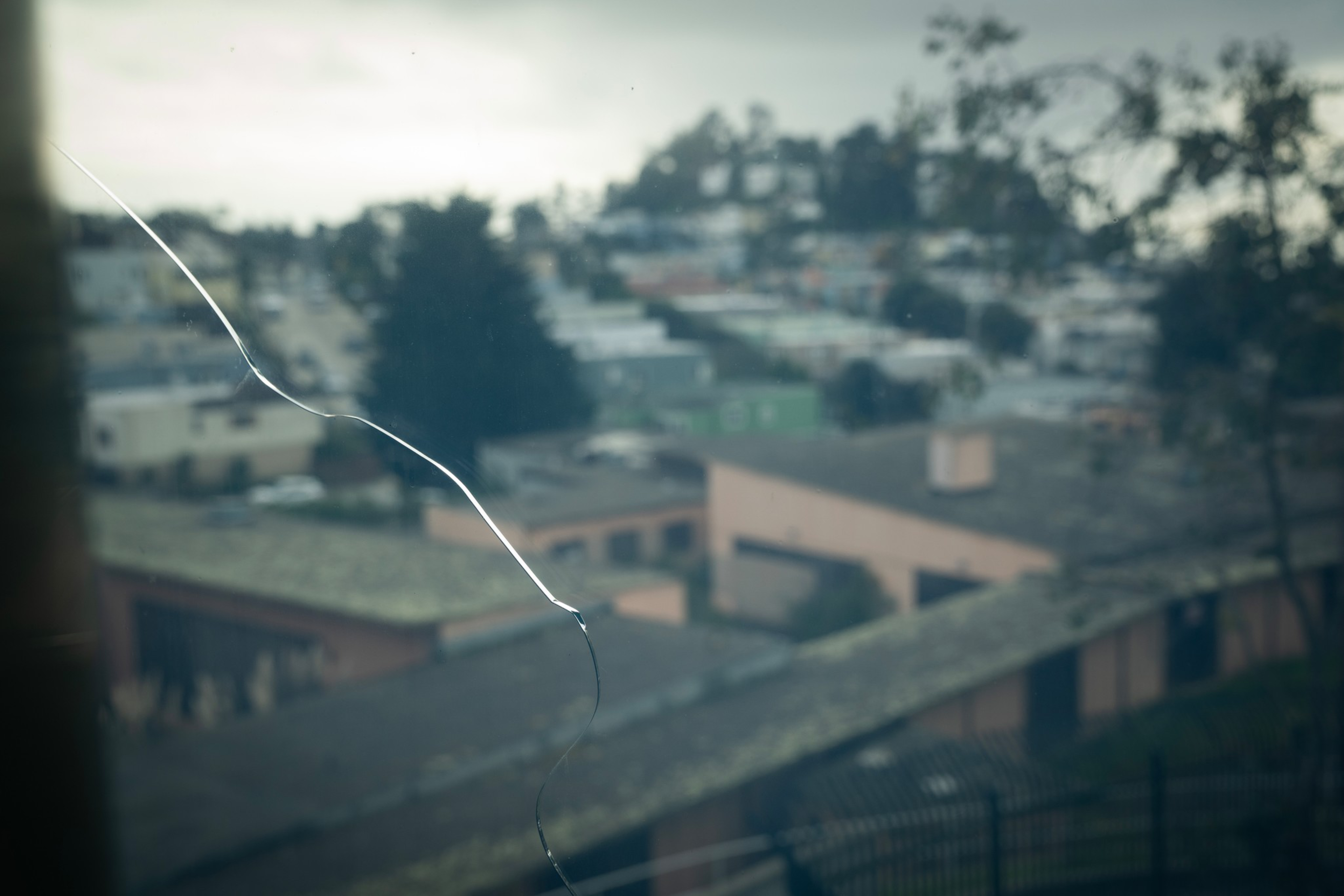 A crack in the window of the multipurpose room at the Justice Juvenile Center in San Francisco. | Source: Minh Connors for The Standard
By 2019, the Juvenile Justice Center had come to exemplify all the apparent wrongs of a previous era’s tendency to lock up children. On an average day, it housed less than a fifth of its capacity, which contributed to an eye-watering cost of $270,000 annually to lock up a child, according to a San Francisco Chronicle investigation (opens in new tab).
But the city never had a clear plan for where to put the young people that had been jailed there. Then California Gov. Gavin Newsom changed the rules — youth who committed the most serious crimes, who had been imprisoned in state facilities, suddenly became San Francisco’s responsibility. This mirrored the “realignment” process that moved many incarcerated people out of state prisons and into local jails.
Chief Juvenile Probation Officer Katy Weinstein Miller was once part of a working group set up to close the facility. Now she runs it.
“This building is far from ideal,” she admitted about the dark, echoey space.
Seven years after the Board of Supervisors’ decisive vote and five years beyond the deadline to close it, the justice center doesn’t just remain open and operational — it is even more expensive than it was when the city vowed to close it.
San Francisco isn’t the only county stuck with an oversized juvenile hall. Giant, chronically empty juvies litter California, a hangover headache from an era of mass incarceration. And like San Francisco’s hall, as the population in these facilities has fallen, the price to keep them open has soared.
What sets San Francisco apart is that its leaders — progressive minded, and maybe a little naive — tried to fix things. They moved to stem the bleeding and close the hall, recruiting high-ranking officials from city government and lifelong juvenile justice activists who dedicated years to the effort. And they completely failed.
Today, the annual cost of jailing one youth in San Francisco is $534,000 — roughly double the 2019 price — with a daily average population of 31.
In part, today’s increased cost is a sign of success. On any given day in 2025, San Francisco jailed one-third fewer youth than it did in 2018. But many of the costs of operating the enormous, mostly empty hall are fixed, meaning the per child cost has ballooned.
Some advocates say this is the price of running a much more humane hall. It may be the most expensive juvie, but it may also be better than it’s ever been before. So what’s San Francisco getting for its money?
‘A major public policy blunder’
In the mid-1990s, the homicide arrest rate for juveniles in California was skyrocketing, mirroring a grim national trend. San Francisco was a poster child for the troubling phenomenon. In 1993, San Francisco’s juvenile arrest rate was the highest in the state, 50% higher than the California average.
In 1995, the California Legislative Analyst’s Office predicted (opens in new tab) that the number of juvenile violent crime arrests in the state would increase 60% by 2004.
“The primary focus of the juvenile justice agenda, at least among the [San Francisco] Probation Department, was to build a new juvenile hall,” said Daniel Macallair, executive director of the Center on Juvenile and Criminal Justice and a practitioner-in-residence at San Francisco State University.
At the time, the justice center consisted of a number of so-called cottages with a maximum occupancy of 135.
 Source: Minh Connors for The Standard
 Source: Minh Connors for The Standard
“It was overcrowded all the time. Kids had been sleeping on the floors,” Miller said. “I worked in the mayor’s office when we built this building and everyone believed we needed that size.”
A prison building boom was already underway in California and other states across the country, and now it had reached the kids. The federal government began distributing hundreds of millions of dollars to states and municipalities earmarked for the construction (opens in new tab) of larger juvenile detention facilities.
But by the time San Francisco’s new juvie opened in 2005, the crime wave was over.
Youth crime rates continued to plummet for the next two decades. According to a 2025 report (opens in new tab) by the advocacy group The Sentencing Project, juvenile arrests fell 75% from 1995 to 2023. From 2000 to 2023, the youth incarceration rate declined 74%. The nation was riddled with empty jails built for kids.
“It was a major public policy blunder,” Macallair said. “And we spent hundreds of millions of dollars on it.”
San Francisco’s juvenile hall “was never full from the day they cut the ribbon,” Miller said.
‘It was a misnomer’
Continuing to operate the current facility is expensive. But after voting to close the hall, the city soon realized the alternatives would cost even more.
The legislation (opens in new tab) vaguely stated the intention to “expand community-based alternatives to detention, and provide a rehabilitative, non-institutional place or places of detention, in a location approved by the Court.” But those alternatives could never have led to the full closure of juvenile hall because state law requires that youth convicted of certain crimes be detained at secure facilities.
The mandate also didn’t come with any funding. To this day, San Francisco is still paying off its mostly empty juvie, paying more than $2 million each year to service the total $22.3 million remaining debt on the facility’s construction. The jail won’t be paid off until 2034. A new justice center or even a remodel of the old one would cost millions the county doesn’t have.
Patti Lee, the assistant chief of defense for the Public Defender’s Office, who previously worked in the public defender’s juvenile unit for three decades, had lobbied for the legislation. She said she told the supervisors at the time that it wouldn’t be that easy. She believes the campaign to close the Juvenile Justice Center mismanaged expectations. “ Maybe we shouldn’t have said close juvenile hall,” she said. “It was a misnomer.”
 Source: Minh Connors for The Standard
A “Close Juvenile Hall Work Group” considered alternative spaces — a former foster home, an old hospital — but ultimately rejected them all. Covid slowed their work, and emptied the hall even further. In 2020, as the average daily population (opens in new tab) at juvie plummeted to 17, the yearly cost to jail a child reached just shy of $900,000.
The work group submitted its final report in November 2021, a month before the Board of Supervisors’ legislation targeted for the closing of the hall. It offered recommendations for how to improve the city’s juvenile justice system writ large, but no plan to wind down operations at the current facility.
Macallair, who was also on the work group, acknowledges that the primary objective of the Close Juvenile Hall Work Group was in its name. It was expected to offer a solution. “I think the [work group] failed on that,” he said.
‘It’s going to cost more’
On an average day in 2018 (opens in new tab), 47 beds at the Juvenile Justice Center were occupied of a total 150, and it cost $266,000 a year to jail a child.
In 2025, the cost had nearly doubled, to $543,015 — calculated by dividing total budget by daily population. The facility had an average daily population of only 31, leaving nearly 80% of beds empty. Many cells are now used for storage.
Fewer kids means more fixed cost for each one. And the population has become more high-needs. The city stopped sending youths to alternative facilities outside the city, some of which closed due to low occupancy.
 Source: Minh Connors for The Standard
In 2022, California dissolved its state youth prison system, which housed children convicted of very violent acts. Counties were suddenly responsible for creating “Secure Youth Treatment Facilities,” requiring additional segregated housing units, individually tailored rehabilitation plans and 24/7 counselors. In San Francisco, the program has cost an additional $8.7 million from fiscal years 2019-20 to 2024-25.
Still, Miller admits that the cost of the hall can seem high. “You have fixed costs when you run buildings, so it’s really expensive,” she said. “And also [the kids] are worthy of really important investments for themselves and for all of us. If we don’t do that, no one is safer. And they’re going to live a kind of life that none of us want for them.”
Macallair frames the cost in terms of the now-shuttered youth prisons formerly run by the state. “ You had one staff person for 30 kids and there was a lot of violence,” Macallair said. “You have to have a good ratio of staff to kids in order to change the environment. So it’s going to cost more.”
But not everyone agrees. “ I think it’s overstaffed for the few kids that we have,” said Lee. When asked about the high cost of running the hall, she replied, “ I still find that shocking.”
‘It’s better now than it was’
At a glance, the justice center hasn’t changed much in decades, from its imposing intake area to its Escher-like hallway.
“All of these secure facilities for kids that came online in the early 2000s, they feel of a particular era,” said Miller. “ We built these institutions that looked like jails and prisons for kids in the early 2000s, probably across the whole country. They all looked the same. One of the architects who helped design this building told me a few years ago that they would never design a building like that today.”
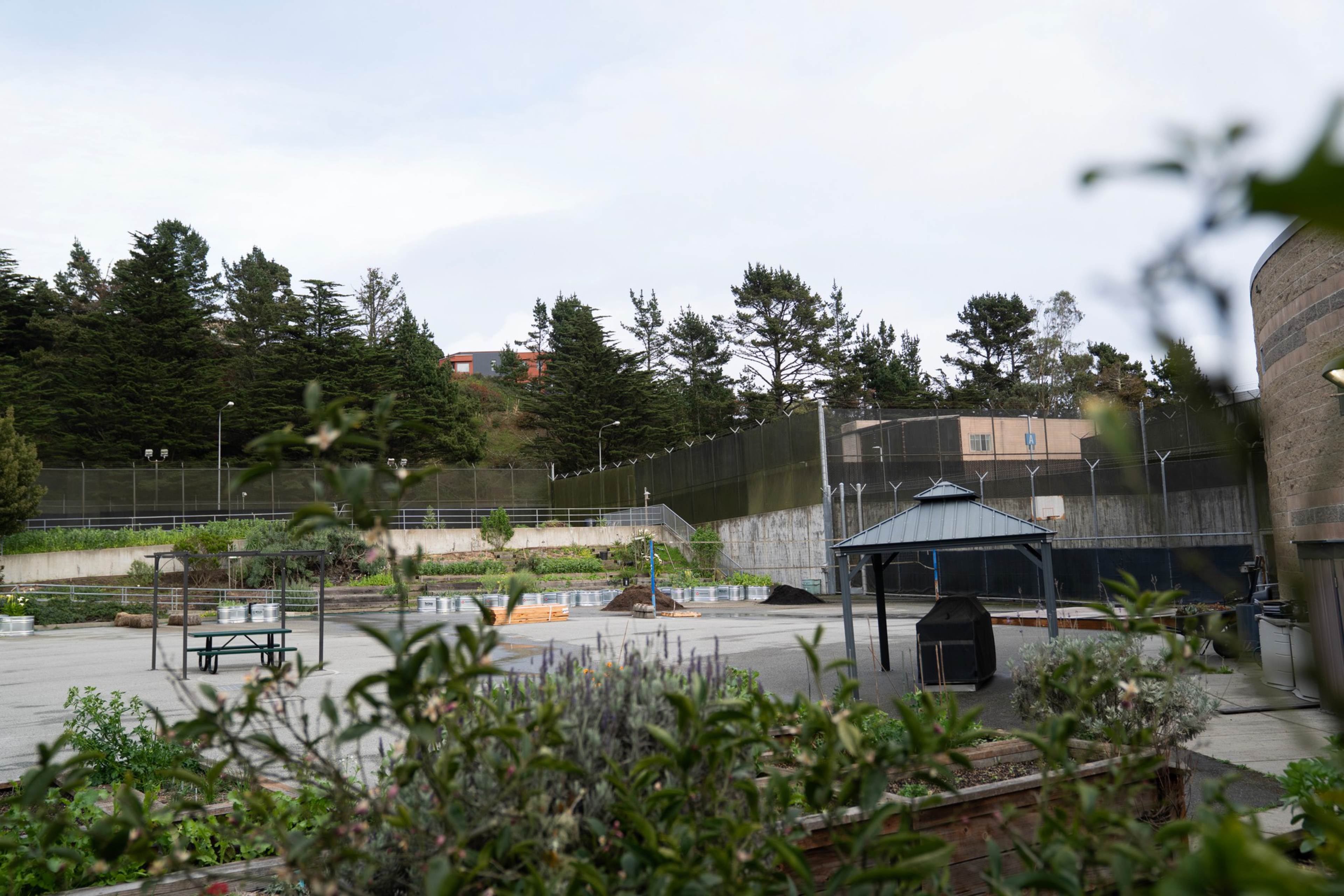 The garden and backyard area. | Source: Minh Connors for The Standard
 A play area for younger children. | Source: Minh Connors for The Standard
But while the building itself is the same, the programming has changed significantly since 2019. Of the eight living units, only five are currently used for their intended purpose. One is a “merit room” with video games, a piano, and a recording studio. Two others were repurposed as a gym and a cooking space for a newly introduced culinary course.
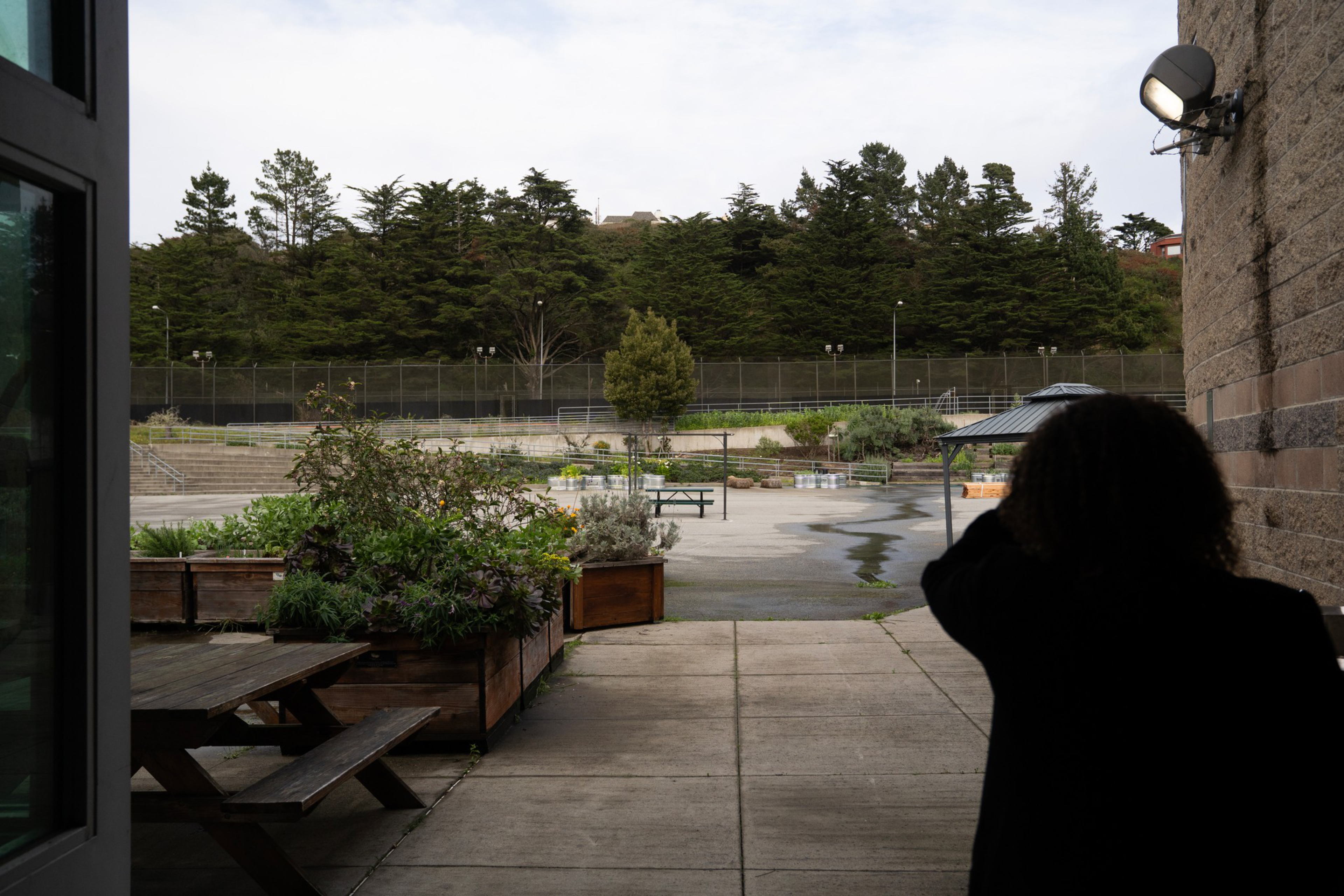
Aside from the living spaces, the justice center also has an indoor basketball court, a dedicated wing for classrooms where the incarcerated attend school, and a very large backyard with a barbecue and planter boxes where food is grown. The homiest room in the facility is a space where families come to visit their imprisoned loved ones. The room has a view of the ocean in the distance.
A colorful side room caters to toddlers and small children, either younger siblings coming to visit their locked up siblings, or babies visiting their young parents. In the corner, a tiny cloth playhouse is set up for toddlers.
The hall hosts workshops aimed at deprogramming toxic masculinity and understanding the impacts of crimes on their victims, developed by incarcerated people at Soledad State Prison and San Quentin, respectively. Soon after children arrive at the hall, they’re greeted by a “credible messenger,” an employee of a community based organization with carceral experience that is more able to connect with the youth than regular staffers. Credible messengers are an almost constant presence.
“Because I’ve been a critic of the place for a long time, it’s hard for me to concede we have a rich array of services,” said Macallair. “It’s better now than it was before.”
Community justice activists, Public Defender’s Office staff and the president of the Juvenile Probation Commission agreed. Much of the praise for how the hall has changed is credited to Miller.
”Katy Miller is probably the best chief probation officer that we’ve had the fortune to work with,” said Lee. “She’s very pro-child.”
 Source: Minh Connors for The Standard
But that praise comes with a caveat that echoes the failed 2019 push to close the hall. “ A jail is a jail is a jail,” Lee said. “You can only slap so much lipstick on a pig. If you ask any youth that goes into juvenile hall, whether it was back in the ’80s, ’90s, or currently, their first request is, ‘When can I get out?’”
In 2024, the Juvenile Probation Department commissioned the architectural firm KMD to design a remodeled justice center. The plans envision a campus-like space, with a green central plaza in place of two of the existing living units. Large windows and natural light accentuate a series of new and renovated buildings. Dedicated training spaces would teach kids how to barber, smith, cook, and grow vegetables.
If the current hall reflects an era that tried to solve youth crime by locking kids up and throwing away the key, the KMD design is a contemporary dream of how to rehabilitate kids into happy, productive adults.
The designs were spurred not by any work group or Board of Supervisors vote, but primarily by the Juvenile Probation Department. Kids detained at juvie for longer stays were paid for their input on the new designs. “ When our kids were given the opportunity to dream, what they actually dreamed up looks like a junior college and not like a house,” said Miller.
The projected cost to realize this new blue sky dream? $220 million.