
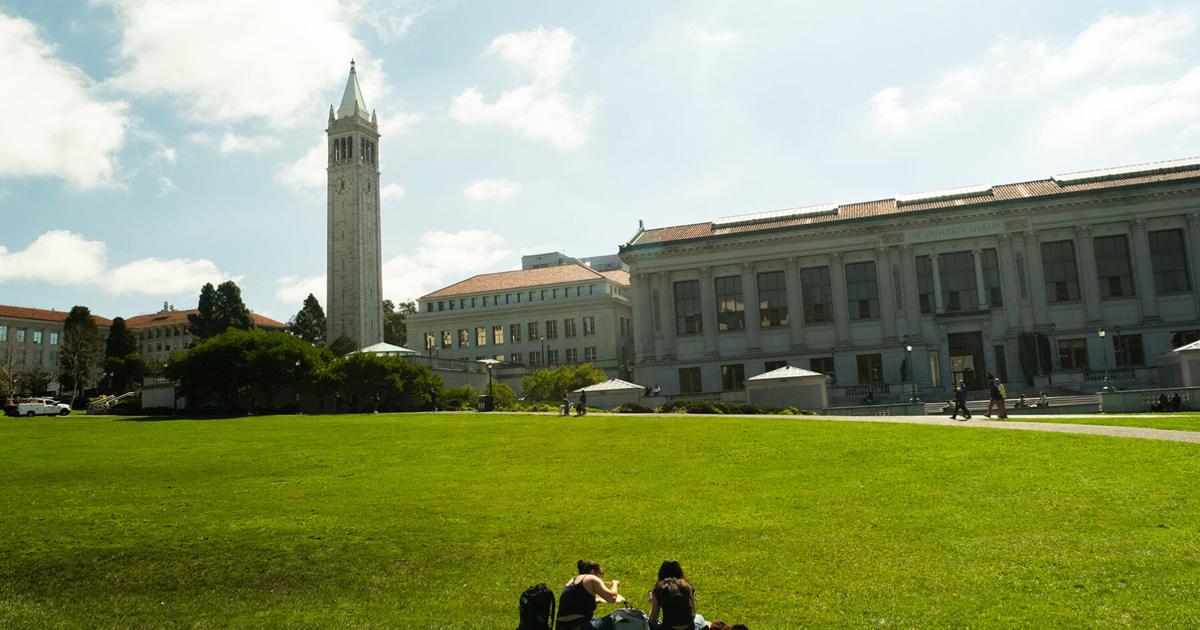
The Russian Ministry of Justice has designated UC Berkeley an “undesirable” organization, placing campus onto a growing blacklist that criminalizes association with its members.
The designation, made Feb. 16 but only publicized March 3, applies to organizations that pose a threat to “the foundations of the constitutional order of the Russian Federation, the country’s defense capability, or state security.” Participation in the activities of an undesirable organization carries at minimum a fine, but could also rise to criminal charges — with six years in jail or years of forced labor on the table.
Russian American professors and an expert in Russian foreign policy interviewed by The Daily Californian have said this legal vagueness is designed to license arbitrary persecution of Russian dissidents.
“It depends on how the law is interpreted, how it is enforced. … It’s something that can be used to harass individuals,” said Thomas Graham, a distinguished fellow at the Council on Foreign Relations. Graham is an expert on Russian foreign policy and was a former adviser to the White House under President George W. Bush.
According to Graham, UC Berkeley students are unlikely to face immediate prosecution, though their affiliation with campus would likely be held against them if they were to act against the government.
What constitutes participation in an “undesirable” organization’s activities in Russian law is broadly defined as organizing for or participating in the organization’s activities and paying it money.
The Daily Cal spoke to multiple Russian international students at UC Berkeley for this story. They all asked to remain anonymous for fear of retribution from the Russian government.
One of those students, a graduate student from Russia, said they felt “sad,” “heartbroken” and “disoriented” after hearing the news of the declaration. However, they were unsurprised by the news due to what they described as an “avalanche of events” since the beginning of the Russian war in Ukraine that have left Russian citizens in “precarious positions” for several years.
One of their biggest worries is being unable to see their elderly parents, who remain in Russia, and who they said will likely be unable to obtain a U.S. visa.
“I’m not sure when I will see them again, and I’m an only child so they don’t have anyone except for me, and of course it is not easy to be away and not knowing when you will be able to see each other again,” the graduate student said. “It’s unclear when it will end.”
Berkeley International Office Director Ivor Emmanuel sent an email to Russian international students March 5 alerting students of the designation and advising extra precautions when planning to travel internationally. Emmanuel said the office was still trying to understand what this designation meant.
In the meantime, that lack of clarity has left campus’s small community of Russian students and professors in limbo, scrambling for answers.
According to campus spokesperson Janet Gilmore, UC Berkeley learned of the designation March 3 and is still assessing ways to support its Russian community.
“I have not returned to Russia for a very long time and I’m not planning to as long as the Nazi regime is in power,” said Russian American campus professor Alexei Efros. “Nobody from the Berkeley community should obviously visit Russia.”
Efros and Alexei Yurchak, another Russian American campus professor, both said they knew no Russian colleagues at UC Berkeley who have returned since the war in Ukraine renewed in 2022 and precipitated an intensified crackdown on personal and academic freedoms in Russia.
Both professors said their concerns were greater for international students on campus.
International students who study in the United States often have to return to their home country once they graduate and their visa expires, whereas professors often have a more permanent status in the US.
“More or less it is just one more manifestation of the repressive trend against education, free thought, free speech and expertise that has been prevalent in Russia for several decades now,” said another Russian graduate student who asked to remain anonymous.
The student added that while they were uncertain as to why UC Berkeley received the designation, the news did not surprise them.
They believe that they could risk legal consequences upon returning to Russia due to both their known affiliation with UC Berkeley and their speaking out and protesting against the war in Ukraine.
That student said they do not plan to “quit” because of the designation and that they will be continuing their education at UC Berkeley.
An undergraduate student from Russia, who also asked to remain anonymous, said they were unsure what the situation would look like due to how “vague” the law surrounding “undesirable organizations” is.
They said they were originally planning on requesting to postpone their mandatory military service because they are studying internationally, as this would allow them to be in Russia legally for two weeks each year without facing Russia’s military draft. However, after the designation, they do not believe they will be eligible for postponement.
They noted that some people have allegedly been arrested while flying into Russian airports and subsequently drafted into the war. The student fears that if they attempt to return to Russia, they too could be detained and drafted without the two week buffer. This means they are unsure if they will be able to visit their family in Russia, or renew their Russian passport.
“I still have some of my family who reside in Russia,” the undergraduate student said. “I still want to visit them over the summer, but I’m not sure how things are going to turn out now or if I’m going to be more targeted.”
When asked for comment, the Russian embassy in Washington, D.C., did not answer specific questions. These included whether students at UC Berkeley would face legal consequences upon entering Russia and what led the Russian government to label campus an “undesirable” organization.
The Russian embassy deferred to a press release dated Feb. 27 — before the designation became public — that does not mention UC Berkeley.
Efros and Yurchak both said they believe the Russian government primarily intends to further gut Russian science with this new designation, as academics in Russia citing UC Berkeley-affiliated research or resources could now face consequences. The Russian government has recently added a number of other universities, including Yale University, to the list.
“What do we do now with research?” Yurchak said. “What about … historians who want to go to the archives or anthropologists who want to go and make interviews?”
Graham said he thought it was unlikely Russian students would qualify for asylum status in the United States because of the new designation.
The Russian Ministry of Justice, the U.S. Department of State and U.S. Immigrations and Customs Enforcement did not respond to requests for comment.
As campus and its Russian community determine how this designation affects Berkeley, the Institute of Slavic, East European and Eurasian Studies plans to host an informal meeting to discuss the designation and its consequences March 11, from 4-5 p.m. in 260 Stephens Hall.