
This story was featured in our SacramenKnow newsletter. Sign up to get updates about what’s happening in the region in your inbox every Tuesday and Thursday.
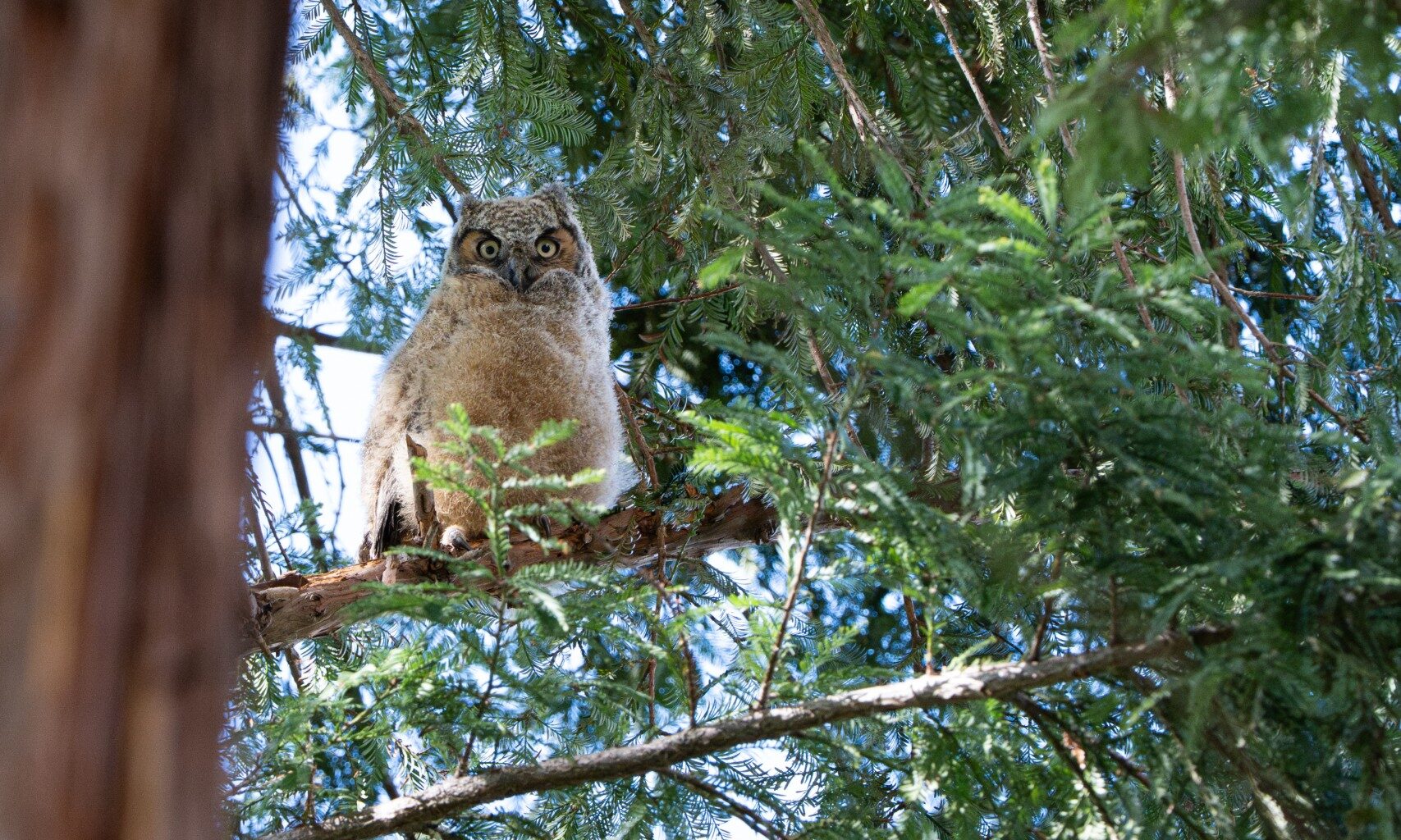
In late February, a great horned owl fledgling was spotted on a fence at Sacramento State near Placer Hall.
The fledgling is just over five weeks old, according to instructional support technician Sam Curtis, who said there has been an active owl nest on campus since at least 2021.
Curtis emphasized the importance of maintaining a distance from wild animals such as owls in urban areas. Although most owls are nocturnal animals, Curtis said it’s not uncommon for a fledgling to be awake during the day.
“I’ve seen the adult [owls] many times during the day where they sit on a branch that’s just a little bit more visible than normal,” Curtis said. “This baby was just so visible in the day because he was on the ground, right out there in the open. So previous clutches [owl eggs], when the fledglings emerge, they tend to just end up in a bush or hidden behind some object, and you just don’t see them because they’re well hidden.”
Curtis said the owls on campus have sparked some educational opportunities for students. He said he was out a lot, showing students owl feathers and hatched eggs he had found around campus in the past.
“I think that for a lot of students, it really opens their eyes to the fact that we’re right here in this really cool location on campus, right next to the river,” Curtis said. “We have a lot of trees, and we draw in a lot of wildlife, lots of birds.”
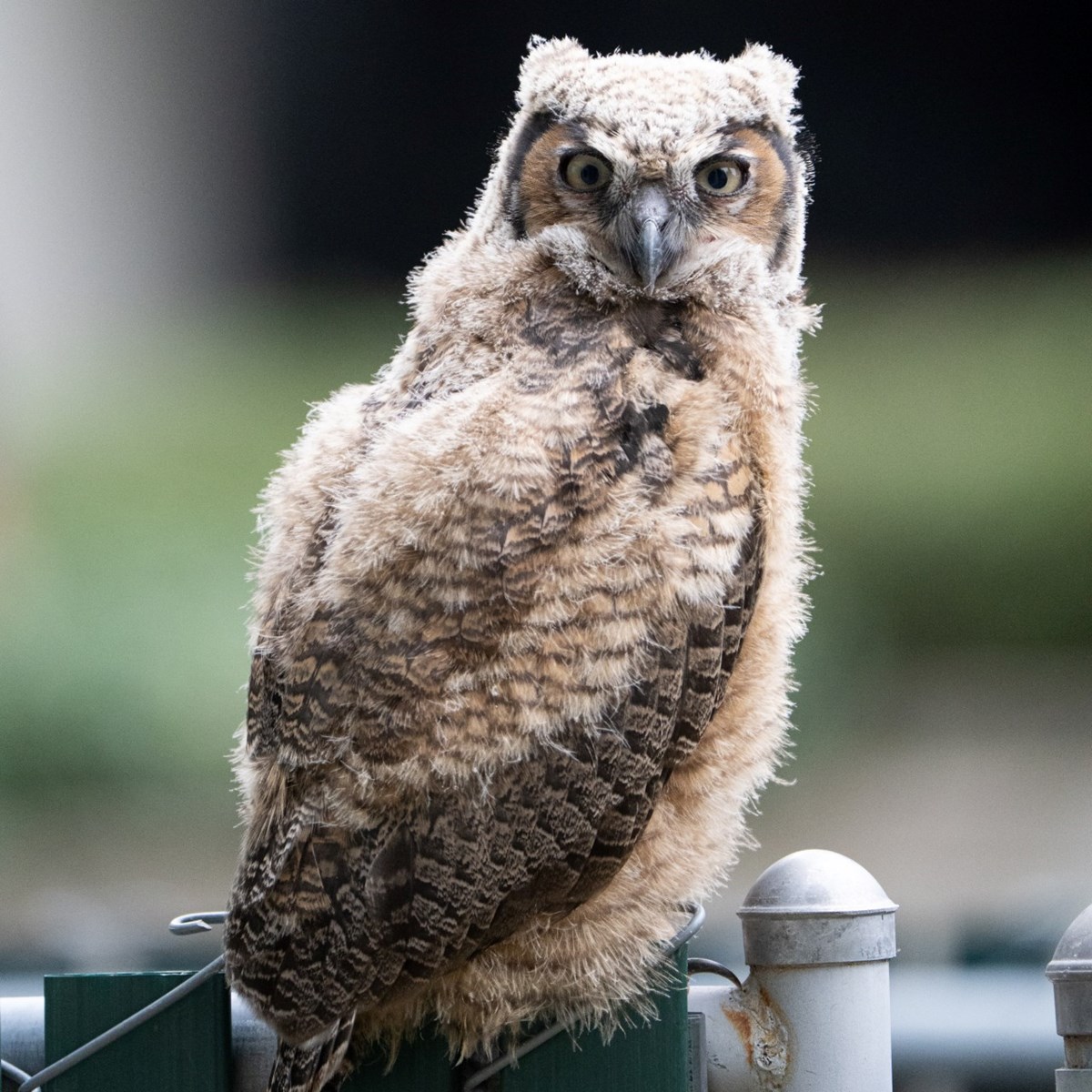 One fledgling great horned baby owl that popped up at Sacramento State in late February near Placer Hall.Photo courtesy of Sam Curtis
Owls in urban areas
In California, there are 14 species of owls, according to birdwatchingdaily.com
Curtis said great horned owls, like the ones on campus, are more common in Sacramento than many people realize.
“They’re all over the place,” Curtis said. “If you’re ever out at night and you hear hooting, it’s one of these great horned owls.”
Curtis said you can find owls in urban parks, neighborhoods and anywhere near wild space with trees all along the American River.
In Sacramento, if you’re ever at Capitol Park downtown, you’ll be able to hear a great horned owl hoot every now and then at night.
The Sacramento Wildlife Care Association, located in McClellan Park, is a nonprofit organization that cares for many owls daily throughout the year.
According to the director of the nonprofit, Sandra Foreman, many species of owls fly rampant in Sacramento.
“So there are western screech owls, and those are pretty small,” Foreman said. “Great horned owls are very common in this area, barn owls, which are like the white and brown owls you’d see on ranches and farmland, vineyards, those guys, they also live in suburban neighborhoods as well.”
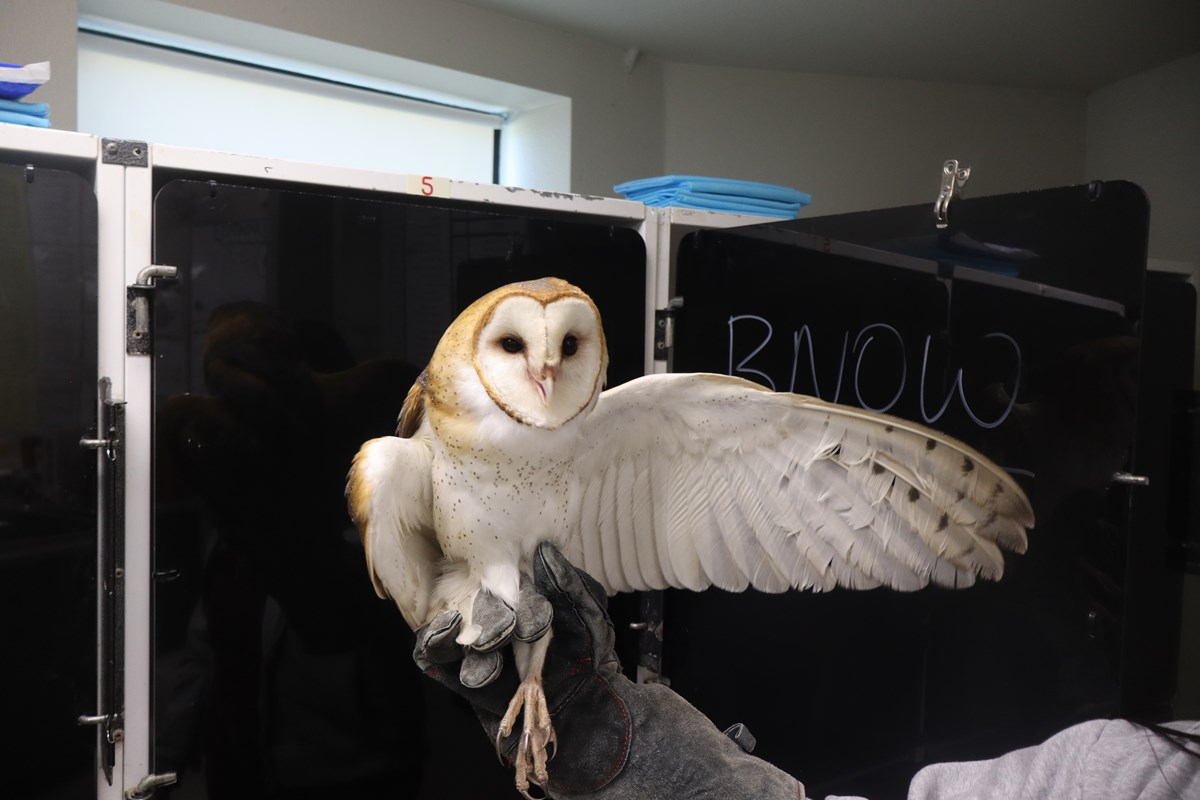 A barn owl that is currently rehabbing at the Sacramento Wildlife Care Association facility on Patrol Road Friday, March 6 2026.Keyshawn Davis/CapRadio
Foreman said owls are appearing more frequently in urban environments because of food and habitat loss.
“They don’t have nowhere to go, so they’re going to roost up in trees that are in neighborhoods,” she said. “If there’s a neighborhood that has mice and rats and other types of other types of game at night that are high in quantity… So if you have a large owl population in a specific area, it’s going to probably be because the food source is good there.”
SWCA rehabilitation
The SWCA currently are housing three species of owls that they’re rehabilitating – two great horned owls, a barn owl and a western screech owl.
The association was founded in 1975, and it dedicates its time and resources to rescuing, rehabilitating, and releasing wild animals in and around Sacramento. SWCA gets animals from Stockton, the Bay Area and surrounding areas.
Their process of caring for owls is rehabbing and releasing them once they no longer have an injury that would prevent them from being able to survive in the wild.
“What we do is, if they come in orphaned, we raise them to release, or if they come in injured or ill, we get them better with a series of medication and specific critical care, and we get them released as well,” Foreman said.
The organization recently rehabbed and released an endangered northern spotted owl in their care that they released around a month ago, according to Foreman.
Foreman said they came into possession of the western screech owl because it fell out of its nest. She said they got their great horned owls because they came in injured.
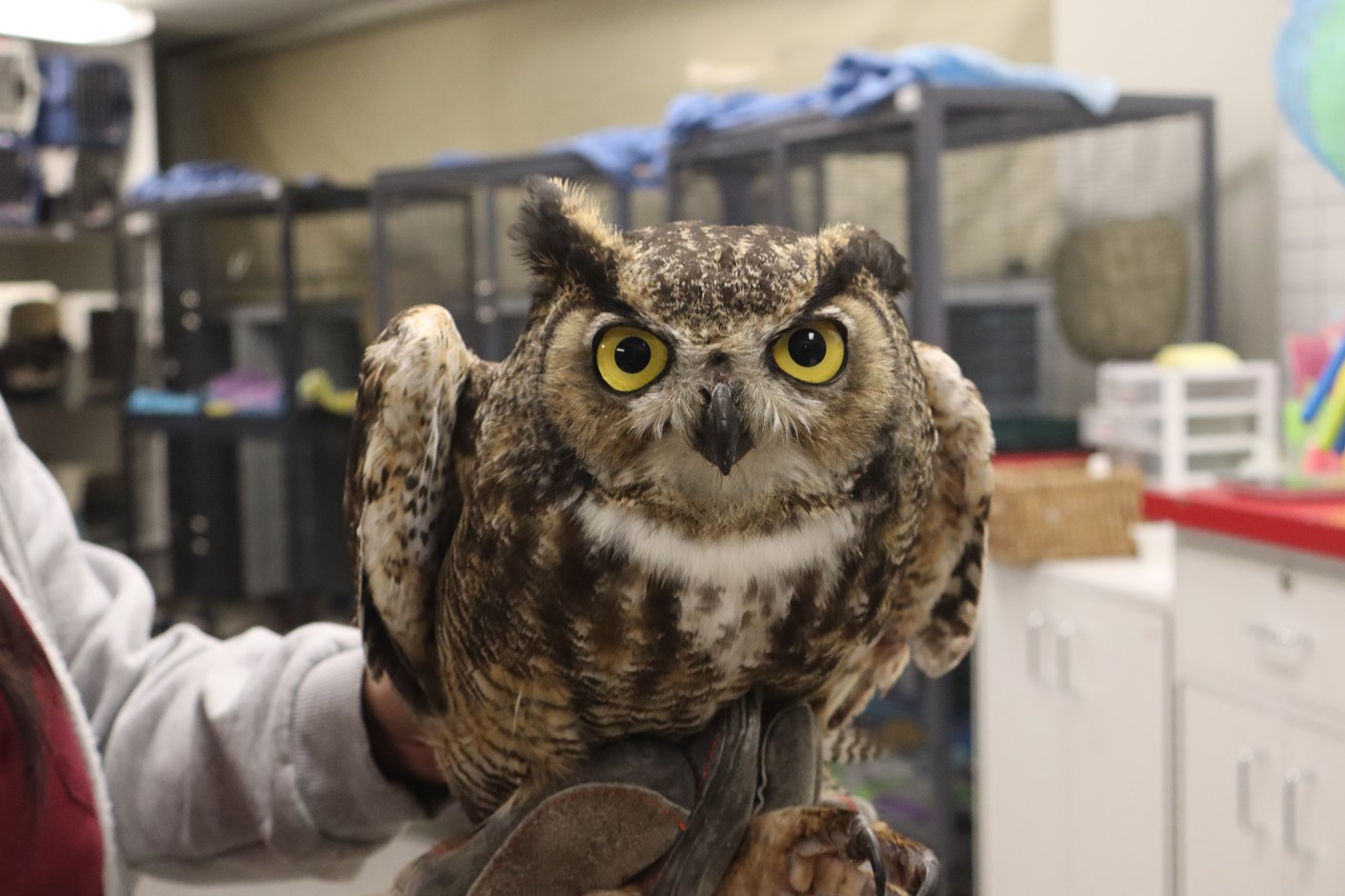 There are two great horned owls that are rehabilitating at the Sacramento Wildlife Care Association facility after injuring themselves on barbed wire Friday March 6, 2026.Keyshawn Davis/CapRadio
“They were tangled on a barbed wire fence,” Foreman said. “So those owls have been with us for a few weeks because their injuries were kind of more severe, so it’s taking more time to make sure those areas are healing correctly, but they’re both definitely releasable.”
The nonprofit also cares for animals that you would see in the wild, that are exotic or not domesticated. They’re hosting their 3rd annual wildlife baby shower on March 21 where people can tour their facility and learn about the animals that they care for.
Rat poisons affecting owls in the wild
In 2024, a California Department of Fish and Wildlife report found that blood-thinning rat poisons are poisoning wildlife at high rates
Lisa Owens Viani, the director of Raptors Are the Solution (RATS), said the anticoagulant rat poisons are the biggest and most problematic danger to owls and other wildlife.
“It’s basically a blood thinner,” Owens Viani said. “They use them to poison rodents, it’s a really high dose, and it kills the rodents pretty quickly.”
She said owls then eat these rodents.
“If they eat those rodents that have eaten the blood thinning poison, they too become secondarily poisoned,” Owens Viani said.
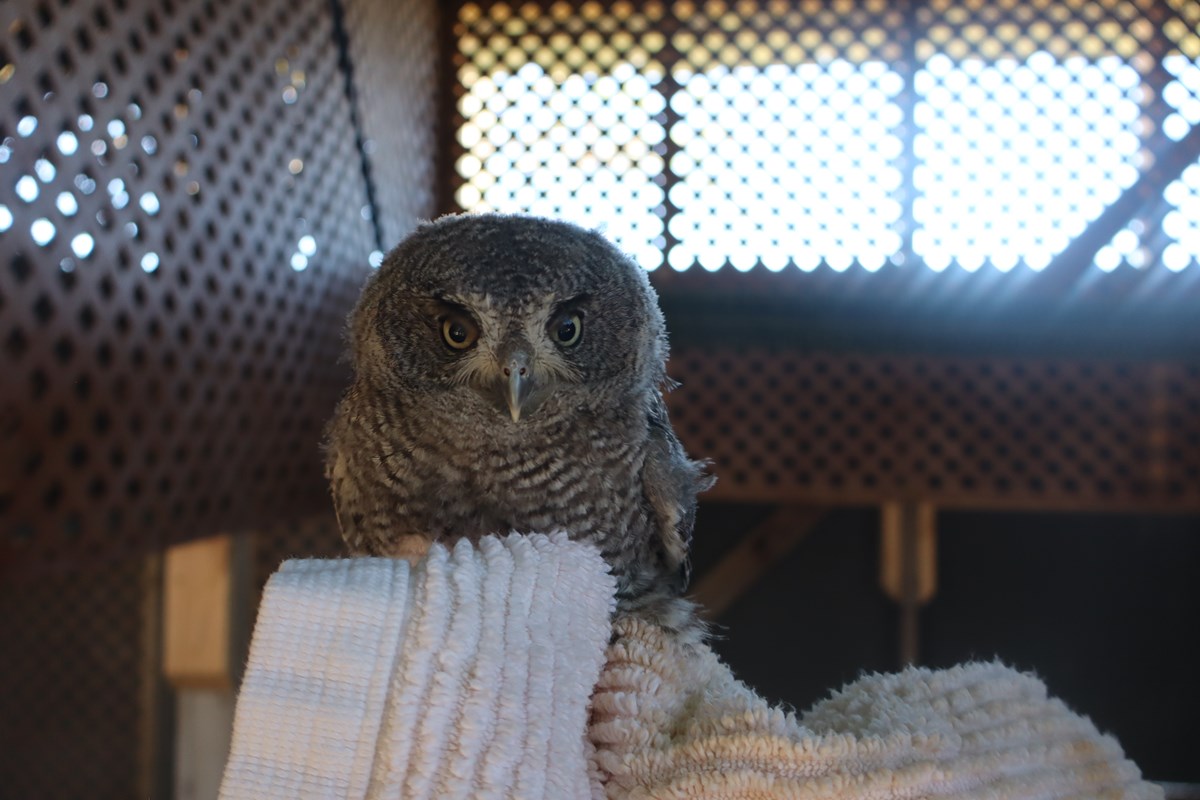 The western screech owl is rehabilitating at the Sacramento Wildlife Care Association facility after falling out of its nest on Friday March 6, 2026.Keyshawn Davis/CapRadio
RATS’ mission is to educate the public about poisons and how they affect the ecosystems, birds of prey and other wildlife.
Symptoms of the anticoagulant poisoning can cause bleeding from beaks and pale gums, according to Owens Viani.
“What often happens is that the owl will bleed out,” she said. “Or what sometimes happens is, if the owl has a minor wound from something else, the wound will hemorrhage out and cause that owl to succumb.”
The two most common owls exposed to these poisonings are the barn owl and the great horned owl in California.
Owens emphasized the importance of non-poisonous rodent control methods in order to help not poison the wildlife.
“There’s a lot of things you can do if you have a rat problem,” Owens Viani said. “The main thing is just keeping everything cleaned up and not leaving pet food outside and cleaning up birdseed if you feed wild birds. Then if a rat does get into your house, which I don’t want either, there are ways to set a trap for the rat and kill it without you using poison.”
CapRadio provides a trusted source of news because of you. As a nonprofit organization, donations from people like you sustain the journalism that allows us to discover stories that are important to our audience. If you believe in what we do and support our mission, please donate today.