
California’s June ballot will feature a closely watched showdown between 10 high-profile candidates — eight Democrats and two Republicans — in the race for governor.
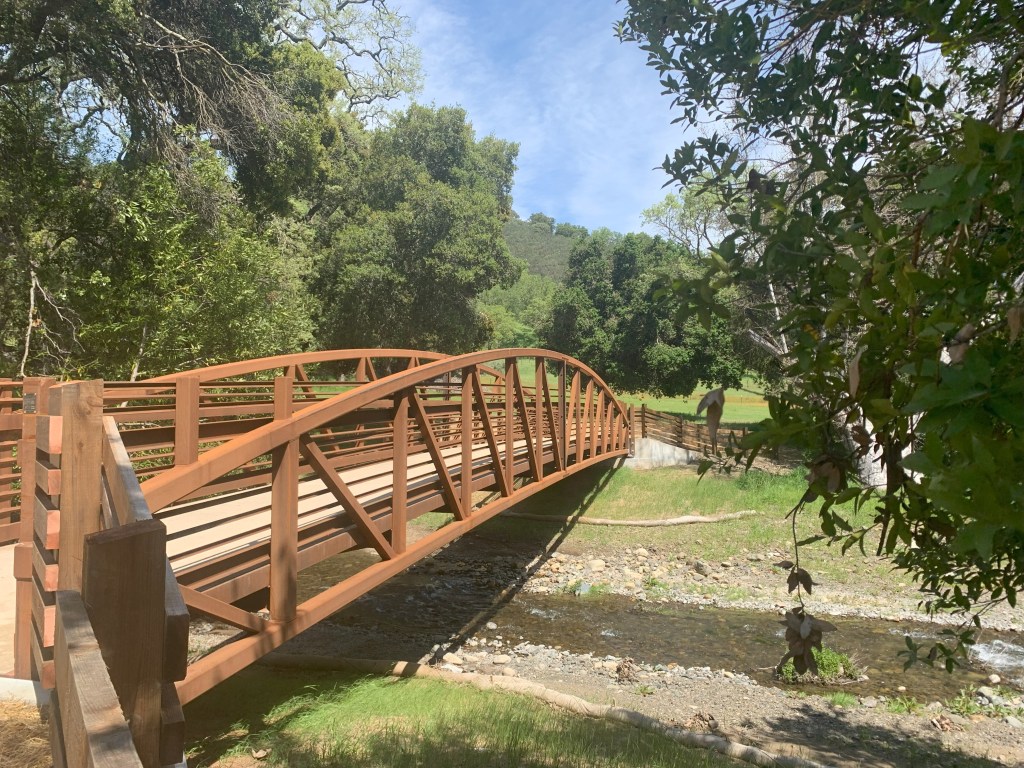
But in Santa Clara County, it also will include something else: Wildlife, scenic views, hiking trails and farmland. A group of environmental advocates successfully collected enough signatures to qualify a parcel tax that would raise roughly $17 million a year for those pursuits.
If approved by more than 50% of voters during the June 2 election, the money would go to the Santa Clara Valley Open Space Authority, a government agency based in San Jose, to acquire land, hire more rangers and maintenance staff, and build new trails, parking lots, restrooms and other facilities.
The measure would impose an annual tax of 2 cents per square foot of buildings on property owners within the district’s boundaries, which include San Jose, Milpitas, Santa Clara, Campbell, Morgan Hill and unincorporated areas of Santa Clara County.
The owner of a typical 1,600-square-foot home would pay $32 a year, and a 2,500-square-foot home would pay $50 a year. Seniors age 65 and over could apply for an exemption, as could low-income residents on Supplemental Security Income, or SSI.
Supporters say the money is needed to help provide more public access as the agency — which was created by state lawmakers in 1994 — expands the land it manages, particularly in Santa Clara Valley’s eastern foothills and the rustic areas of Coyote Valley between San Jose and Morgan Hill.
“These open space preserves provide places for thousands of people to hike and get out into nature and have a place where they can relax and get peace of mind,” said Julie Hutcheson, executive director of Green Foothills, an environmental group based in Palo Alto. “They provide habitat for wildlife, and some of them help us grow local food. A big part of the reason that the Bay Area is so attractive to people is because of the open spaces we have here.”
The cost is a bargain, Hutcheson said.
“On average, residential homeowners would pay $32 a year,” she said. “That’s less than $3 a month, not even the cost of a cup of coffee.”
Opponents say the cost of living is already too high.
“A lot of families are really struggling to survive in such a high-cost region and we have lots of government agencies proposing new taxes,” said Pete Constant, vice president of the Silicon Valley Taxpayers Association. “While one or two may not be much, when they all stack on top of each other the tax burden becomes significant for the average family trying to raise their family and survive in Silicon Valley.”
Constant, a former police officer who served on the San Jose City Council, moved to Roseville, near Sacramento, a few years ago.
“Open space is a wonderful asset,” he said, “but if you have to work day and night to survive, you are not going to have an opportunity to enjoy it.”
Currently, the open space district has four main preserves open to the public. They are Sierra Vista, in the hills east of San Jose (1,611 acres); Rancho Cañada del Oro, adjacent to Calero County Park between San Jose and Morgan Hill (5,675 acres); Coyote Valley (348 acres), in the western hills of Coyote Valley; and Coyote Ridge, on the east side of Highway 101 just north of Anderson Reservoir (1,859 acres).
The district has seen its land and number of visitors steadily grow.
In 2014, the preserves had 150,000 visitors. That doubled to 300,000 by 2020. Last year, there were 500,000 visitors. By 2041, an estimated 1 million will hike, bike, and ride horses in its preserves.
Similarly, in 2014, it had 16,000 acres and 11 miles of trails. Now it has preserved 30,000 acres and has 30 miles of trails. By 2041, those totals are expected to climb to 45,000 acres and 60 miles of trails.
But the agency, which has 60 employees, has not seen an increase in its $12.2 million operating budget since 2014.
That year, voters approved Measure Q, a $24 annual parcel tax, by 68% to 32%. The measure provides $8 million a year. It was set to expire in 2030. Voters extended it indefinitely in 2020 by 81%-19%. The agency also raises an additional $4.2 million from an earlier assessment measure that was approved by voters in 1996.
“Our revenues are no longer sufficient to manage a growing network of open space lands for the public,” said Andrea Mackenzie, general manager of the Santa Clara Valley Open Space Authority. “We’ll need additional revenue to protect, restore and manage our existing and future open space lands, and reduce the risk from wildfires and floods.”
The ballot measure needs 50% to pass, rather than two-thirds, because it was qualified by a signature-gathering effort. That campaign was led by the Peninsula Open Space Trust, a Palo Alto-based environmental group that spent $650,000 through Dec. 31, 2025, according to campaign spending reports.
That organization, known as POST, has been funded by large foundations and wealthy tech industry donors such as the Moore, Packard and Hewlett families. Since 1977, it has purchased dozens of properties in the Peninsula, the San Mateo Coast, Santa Cruz Mountains and Santa Clara County, which have eventually become parks. Last month, it bought Mead Ranch, a 1,921-acre parcel between San Jose and Morgan Hill, for $24.3 million from the Bechtel family, which had owned it since 1954.
In January, POST closed the last significant part of a $63 million deal to buy the 6,500-acre Sargent Ranch, a huge property near Gilroy that had been the center of battles since the 1990s over a proposed casino, subdivisions and most recently a gravel mine.
Like other land trusts, POST sells the properties it buys at the same price or lower than what it paid. If the open space agency’s funding increases, it will be able to continue to buy land from POST and other sellers, as well as provide rangers and maintenance workers to staff them.
The measure needed 37,206 signatures to qualify for the ballot. Supporters turned in more than 56,000.
“We had no problem gathering signatures,” Hutcheson said. “We feel very positive about putting it in front of the voters.”
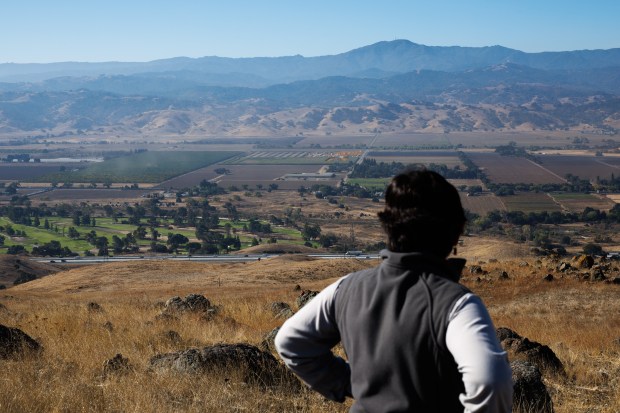 Andrea Mackenzie, general manager of the Santa Clara Valley Open Space Authority looks across Coyote Valley, an area of farmland and open space between San Jose and Morgan Hill, on Friday, Nov. 3, 2023. (Dai Sugano/Bay Area News Group)