
Media coverage profoundly shapes electoral outcomes. The stories we choose to tell — and the ones we choose to ignore — don’t just reflect the race; they determine it.
Right now, the dominant media narrative of LA’s mayoral race would have you believe this is a two-person contest between incumbent Mayor Karen Bass and Councilmember Nithya Raman. Day after day, outlets breathlessly frame Raman as a plucky outsider: bold enough to challenge her own ally, principled enough to court the progressive vote, and exciting enough to generate clicks.
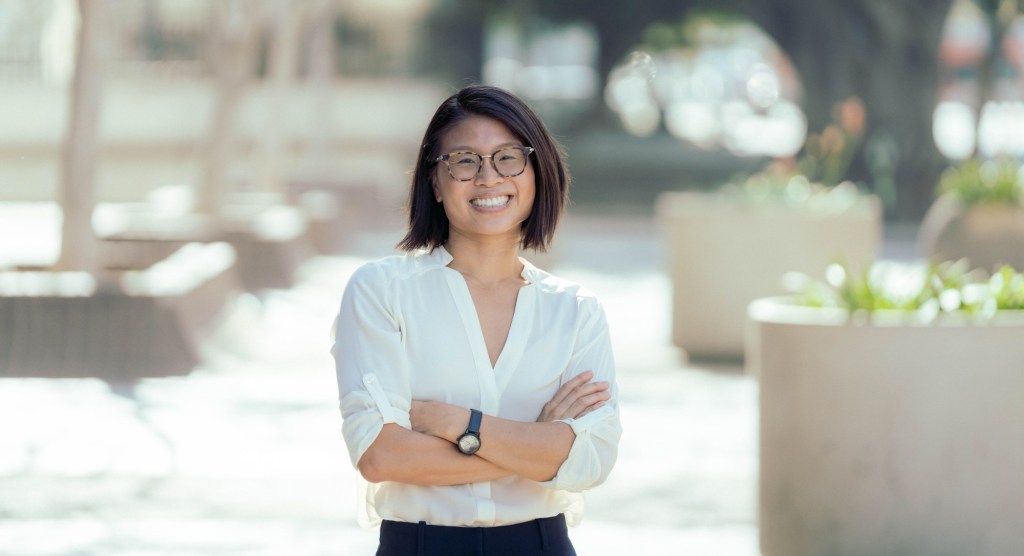
Meanwhile, Rae Huang — a pastor, an organizing leader, and a working mother — is treated as an afterthought. That is a disservice to voters, and it needs to be said plainly: Huang is not only a serious candidate, she is the only frontrunner whose platform is urgent and bold enough to actually meet this moment.
The Platform That Fits the Crisis
Los Angeles is not facing a typical policy challenge. It is facing compounding, interconnected crises — a housing market that has abandoned working people, a transit system that fails them daily, an economy that enriches developers while squeezing everyone else, and a city government that too often responds to these failures with programs that look bold on paper and fall apart in practice.
Huang’s platform takes the full weight of that reality seriously. She is fighting for social and public housing as a genuine alternative to the endless cycle of market-rate development that has driven costs out of reach for most Angelenos. She is demanding fast, free public transit that treats mobility as a right, not a luxury.
She has promised to increase the minimum wage across sectors, strengthen workers’ rights to organize, end wage theft, and close the racial wealth gap. She is advancing a vision of public safety grounded not in policing and punishment, but in meeting people’s basic needs — because, as her campaign puts it, real safety begins with people having what they need to survive and thrive.
This is what governing for working people actually looks like — and Los Angeles has been waiting for it long enough.
The Numbers Don’t Lie
Los Angeles County’s housing crisis is not a mystery. Fifty-nine percent of renters in the county are cost-burdened, meaning they spend more than 30 percent of their income on housing. And despite years of promises that market-rate development would eventually bring costs down, a 2025 study by Neighborhood Data for Social Change from USC’s Lusk Center found that of the nearly 152,000 units built between 2018 and 2024, only 10 percent were affordable to lower-income residents.
The math simply does not work. Building market-rate housing in one of the most expensive cities in the country does not produce affordability — it produces profit for developers while the crisis deepens for everyone else. Any candidate who points to market-rate development as the primary solution to LA’s housing emergency is either not grappling with the data or not being straight with voters.
Huang understands this. Her platform centers affordable, social, and public housing precisely because she recognizes that the market, left to its own devices, will never prioritize the people who need housing most.
What Raman Actually Believes
The sudden media fascination with Nithya Raman deserves scrutiny, not celebration.
Raman built her political brand — and won two council terms — with the endorsement of Democratic Socialists of America (DSA), an organization with a platform that includes public banking, bold uses of eminent domain, and structural alternatives to the privatized economy that has produced so much of LA’s inequality. DSA’s electoral infrastructure is formidable, and Raman benefited enormously from it.
But in two recent interviews — one with NBCLA and one with KTLA — a very different picture emerged. Raman distanced herself from public banking, creative uses of eminent domain, and government-owned grocery stores. She declined to say whether she would make public transit free. She offered only vague assurances of “more oversight” when pressed on the failures of the city’s Inside Safe homelessness program. And when asked directly about her local DSA chapter’s demands, she said, simply, “The things that I’ve really pushed are the things that I believe in” — a pointed departure from the platform that got her elected.
The break with DSA-LA became impossible to ignore when the chapter formally censured Raman for seeking and accepting an endorsement from Democrats for Israel – Los Angeles (DFI-LA) — a Zionist organization that has unequivocally supported Israel’s campaign against the Palestinian people. For a candidate who built her career on a progressive, people-first brand, aligning with an organization that has stood against one of the most urgent humanitarian demands of our time is not a minor inconsistency. It is a revealing one.
Rather than address these issues, Raman has instead built her mayoral candidacy around easing requirements for housing developers and prioritizing market-rate construction as the path to affordability. That is not a progressive housing policy. It is the conventional wisdom that the development industry has been selling to city governments for decades — and it has not worked.
The Failure of Inside Safe
Perhaps no issue better illustrates the gap between Raman’s rhetoric and Huang’s courage than the Inside Safe program.
Mayor Bass has championed Inside Safe as a bold, housing-led strategy to address encampments across the city. Raman has echoed that support. But the reality on the ground tells a different story. The program has moved very few clients into permanent housing, while producing significant displacement and destruction of unhoused people’s belongings — the very belongings that many depend on for survival.
For years, unhoused Angelenos and their advocates have been calling for an end to Inside Safe and to the broader criminalization of poverty through ordinances like 48.11. Huang has had the courage to listen to them and to say so publicly. That matters — especially as LA County considers plans to clear unhoused people from areas around sports venues ahead of the 2028 Olympic Games, raising the stakes of this debate considerably.
The next mayor will need to stand firmly on the side of LA’s most vulnerable residents — not on the side of optics, development interests, or Olympic timelines. Huang has already shown she is willing to do that. The question is whether voters will give her the chance.
The Media’s Responsibility — and Ours
The press has enormous power in a race like this. When outlets decide, day after day, to frame Raman as the progressive standard-bearer without interrogating her actual policy positions, they are not covering the race — they are shaping it.
Voters deserve better. They deserve a full accounting of what each candidate is actually proposing, and they deserve to know that Rae Huang is not a footnote in this story. She is its most important character.
The next mayor will either rise to meet the depth of this crisis or manage it at the margins while the city continues to slip away from the people who built it. Rae Huang is the candidate who understands what this moment demands — and who has the platform, the values, and the courage to deliver.
Los Angeles doesn’t need another mayor who arrives at the scene after the damage is done — it needs one who never lets it get that far.
That mayor is Rae Huang
Caleb W. Crowder is a long-time community organizer and communications specialist based in Los Angeles.