
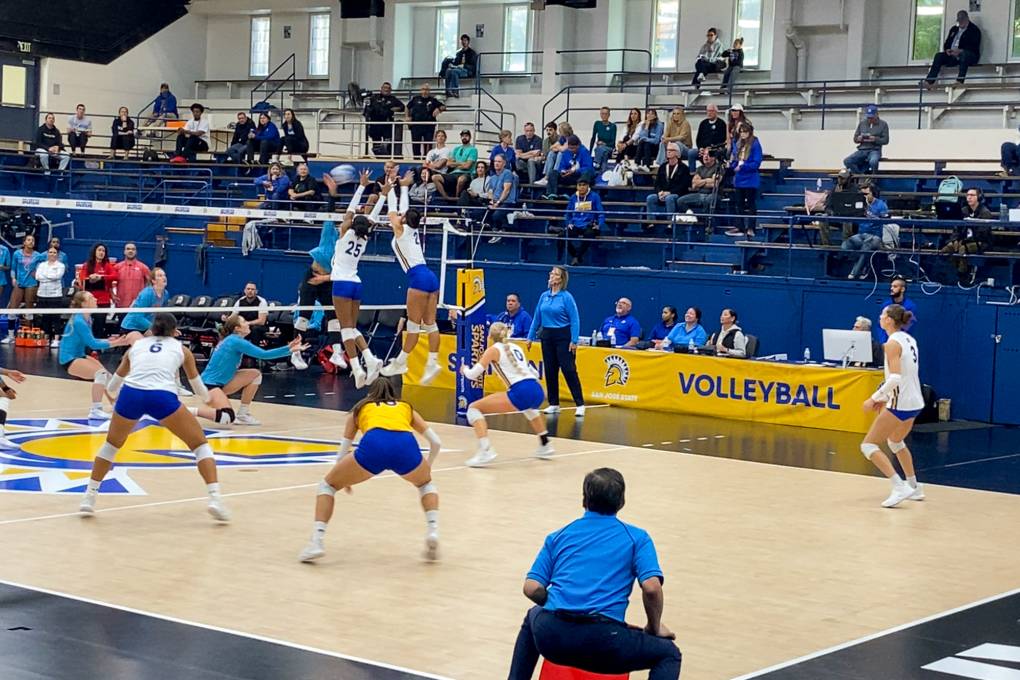
Still, the CSU rejected the proposed resolution agreement from the Department of Education last week.
Attorneys for the school said that its policies allowing transgender players to participate on the team between 2022 and 2024 were in line with federal law, and the DOE’s own interpretation of Title IX at the time. The 9th U.S. Circuit Court of Appeals also issued rulings in 2023 and 2024 upholding the rights of transgender athletes.
“Our position is simple: We have followed the law and cannot be punished for doing so,” SJSU President Cynthia Teniente-Matson said in a statement.
Attorneys for the CSU added that any future change cannot not be applied retroactively.
“The President does not have the authority to override judicial decisions interpreting the Constitution or federal statutes — much less to go back in time and change the rules that applied before he took office,” the suit reads.
In a statement on its website, the CSU said its policies supporting transgender students and prohibiting gender identity discrimination remain in place, and “remains unwavering in its commitment to fostering an inclusive, respectful, and safe environment for all students, faculty, and staff — including LGBTQ+ community members.”
Still, the question of whether transgender athletes could be barred from competing in women’s sports more broadly in the future remains unclear.
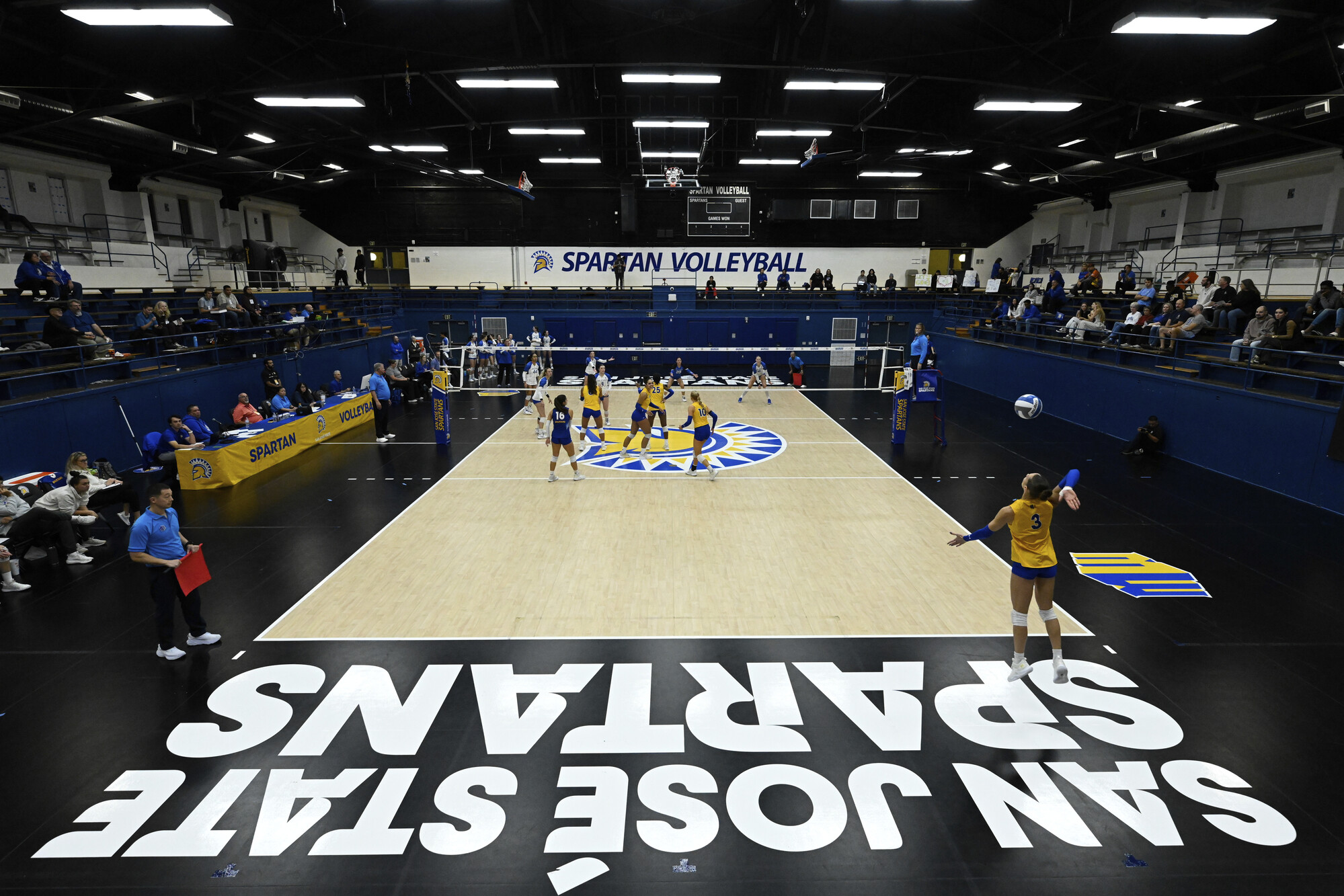 The San Jose State Spartans play the Air Force Falcons during the first set of an NCAA college volleyball match on Thursday, Oct. 31, 2024, in San Jose, California. (Eakin Howard/AP Photo)
Trump’s executive order restricting transgender athletes’ participation is currently being challenged in multiple lawsuits — both alleging that its enforcement violates Title IX precedent, like the CSU case, and that the administration’s process for rescinding federal funding is unlawful.
Shiwali Patel, a senior director of education justice at the National Women’s Law Center and a Title IX attorney, said that federal law limits the government from rescinding funds from an entire institution, as opposed to the program that’s been found in noncompliance with Title IX.
The Supreme Court is also expected to rule on a pair of state laws banning transgender athletes from women’s teams this summer.
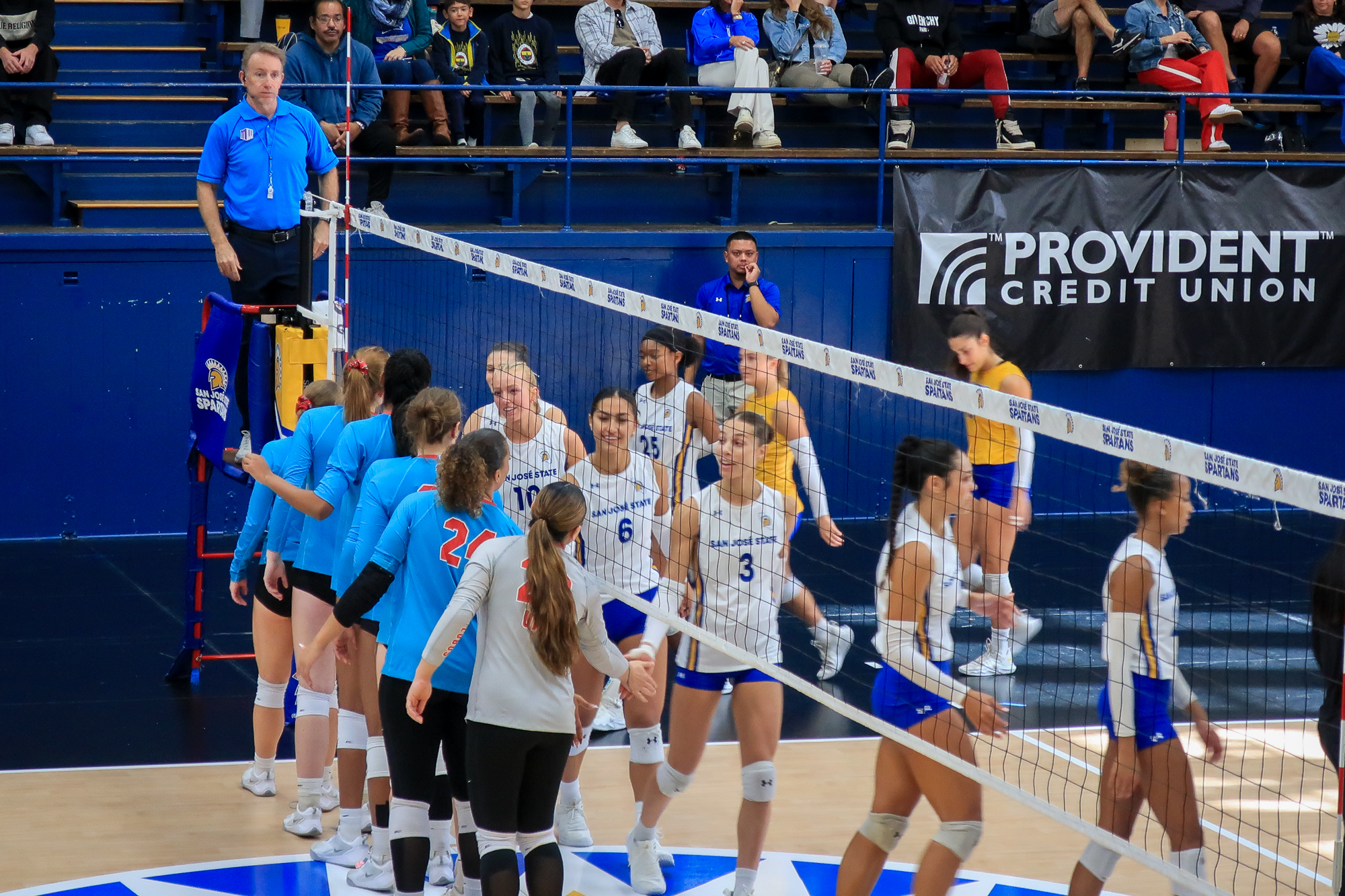 The San José State Spartans volleyball team greets their opponents, the University of New Mexico Lobos, before playing their home game on Nov. 2, 2024. (Natalia Navarro/KQED)
During oral arguments in January, the Court appeared poised to uphold the bans, though depending on how narrowly the court chooses to rule, that decision might not directly impact schools in California, which has state laws protecting transgender students’ rights to participate in sports.
“Assuming that the court does that, and does not hold that Title IX mandates an anti-trans sports ban, then there is even stronger grounds for CSU to fight back against the Trump administration,” said Patel.
Still, some schools that have faced federal funding threats have made concessions or come to agreements with the Trump administration, and the suit says that if the Supreme Court or Ninth Circuit changes the law and imposes new or different requirements, “SJSU will comply going forward.”